
As a food chemist who spends countless hours evaluating bioactive compounds, I often see people view the digestive system as little more than a biological food processor you put nutrients in, extract energy, and discard the rest. But from a chemical and biochemical standpoint, your gut ecosystem is far more complex and dynamic. It operates like a living, breathing fermentation vessel where trillions of microorganisms interact with every compound you ingest.
In my research, particularly around functional ingredients, I’ve found that men frequently overlook how heavily their physical endurance, immune resilience, and metabolic health depend on maintaining this delicate balance. We tend to focus on macros, protein, carbs, and fats while entirely neglecting the microbial workers responsible for converting those nutrients into bioavailable compounds your body can actually utilize.
When your internal flora becomes depleted due to stress, ultra-processed foods, or lifestyle demands, the ripple effect reaches far beyond basic indigestion. Introducing target probiotic strains isn’t about following a health trend; it’s a scientifically grounded strategy to restore biological harmony, fortify your gut barrier, and optimize how your body functions from the inside out.
Probiotics are essential for your health, especially in supporting digestion and boosting immune function. They create a balanced microbiome that helps absorb nutrients and fight harmful bacteria. This can lead to improved energy levels and a better mood. Additionally, probiotics help regulate immune responses, reducing inflammation. By incorporating the right probiotic strains into your daily routine, you can enhance your overall wellness. Discover how easy it is to incorporate these powerful allies into your lifestyle.
KEY TAKEAWAYS
- Probiotics enhance digestive balance, reducing bloating and gas while improving nutrient absorption for better energy levels.
- They combat harmful bacteria, fortifying the gut’s natural defenses and ensuring digestive resilience.
- Probiotics produce antimicrobial substances that protect against harmful pathogens, supporting overall immune function.
- Regular intake of probiotics helps regulate immune responses, reducing inflammation risks and enhancing overall health.
- A diverse range of probiotic sources, including supplements and fermented foods, promotes optimal gut health and immune support.
WHY PROBIOTICS MATTER FOR MEN’S HEALTH
When it comes to maintaining ideal health, you mightn’t realize just how significant probiotics can be for men. Probiotics are live microorganisms (microbes) that can have beneficial effects on or inside your body. Every human body is home to trillions of microorganisms that live with us and help support our bodily functions and health. Not all of the microbes we may carry are helpful to us — some types (germs) can be harmful. But beneficial microbes, like probiotics, help to control the potentially harmful types.
These powerful microorganisms play an important role in balancing your men’s microbiome, which directly impacts your overall well-being.
Contrary to prevalent probiotic myths, it’s not just about digestive health; these beneficial bacteria enhance immune function, boost energy levels, and even improve mood.
By incorporating probiotics into your routine, you’re equipping your body to combat inflammation and support nutrient absorption.
Studies show that a balanced microbiome can lead to improved testosterone levels and metabolic health, advocating for a proactive approach to men’s wellness.
Don’t overlook the power of probiotics; they’re essential allies in your journey to peak health.
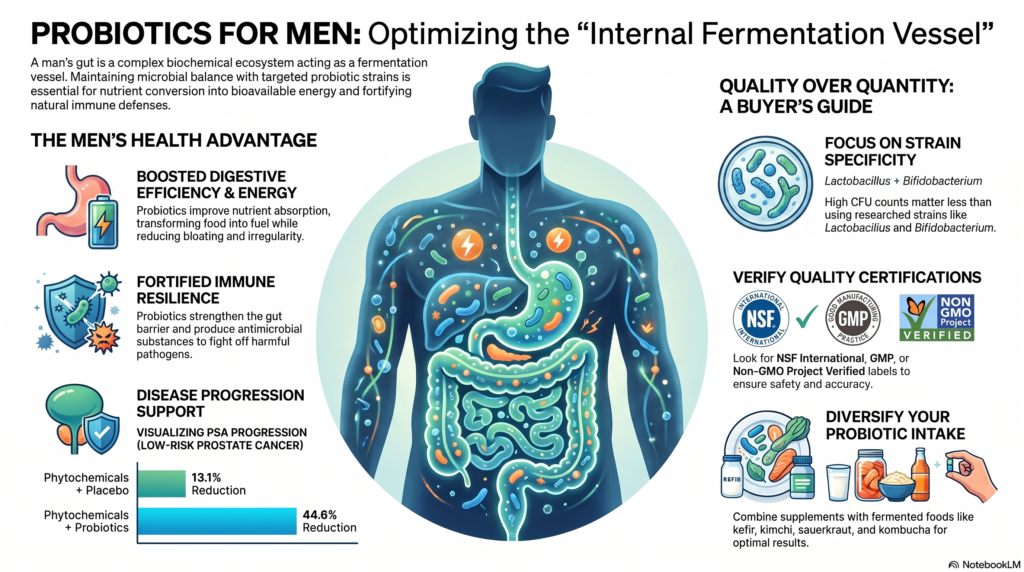
The Importance of Gut Health for Men
Although many people underestimate it, gut health plays an essential role in men’s overall wellness. A thriving gut microbiome can enhance your life in powerful ways, impacting various aspects of your health.
Here are four key reasons why gut health is essential for men:
- Digestive Efficiency: A balanced microbiome aids in nutrient absorption and digestion, fueling your body effectively.
- Immune Support: A healthy gut acts as a barrier against pathogens, boosting your immune system and reducing illness.
- Mental Clarity: Gut health influences mental well-being, supporting cognitive function and emotional stability.
- Hormone Regulation: A robust microbiome helps balance hormones, which is critical for energy levels and overall vitality. Maintaining adequate vitamin d3 levels may also support immune function and overall wellness, complementing the benefits of a healthy gut microbiome.
Prioritizing gut health can markedly enhance your men’s wellness journey.
Probiotics for Men’s Digestive Wellness: Key Benefits
Probiotics offer a powerful boost to men’s digestive wellness, providing numerous benefits that can transform your gut health. Probiotics are microorganisms that provide health benefits when consumed or used in adequate amounts. While commercial probiotic products are mainly made up of bacteria, probiotics can include fungi like yeasts, molds like penicillium, and even some viruses, like bacteriophages.
By incorporating specific probiotic strains, you can enhance digestive balance, easing issues like bloating, gas, and irregularity. These beneficial bacteria work to restore the natural flora in your gut, improving nutrient absorption and supporting overall health.
Additionally, a well-balanced digestive system can lead to increased energy levels and better mood regulation, empowering you to tackle daily challenges with confidence.
Regular consumption of probiotics also helps combat harmful bacteria, ensuring your digestive tract remains resilient.
Embrace the strength probiotics offer and take control of your digestive wellness for a healthier, more active life.
How Probiotics Boost Immune Function for Men
A well-functioning digestive system is closely linked to a robust immune response, making probiotics a valuable ally for men looking to enhance their overall health.
By improving gut bacteria, probiotics can empower your immune system in several ways:
- Enhancing Gut Barrier Function**: Strong gut bacteria help maintain the intestinal lining, preventing harmful pathogens from entering your bloodstream.
- Producing Antimicrobial Substances**: Probiotics produce natural substances that combat harmful bacteria and viruses.
- Regulating Immune Responses: They help balance your immune response, reducing the risk of overreactions that could cause inflammation.
- Boosting Antibody Production: Probiotics can increase the production of antibodies, fortifying your body’s defenses against infections.
Incorporating probiotics into your routine can be a powerful step toward achieving peak immune health.
Finding the Best Probiotics for You
When you’re looking for the best probiotics, it’s essential to take into account the types of strains included, as different strains offer various health benefits. As living microorganisms that support the microbes already found in your body, probiotics tackle a variety of tasks. From balancing flora in the gut to helping boost immunity, thousands of different strains exist, with different objectives. While they aren’t regulated by the FDA, scientific evidence continues to find a positive relationship between these “friendly bacteria” and well-being. That’s why I spoke with a leading dietitian to find the best probiotics that are safe, simple and effective, naming Ritual Synbiotic+ the best option for most people.
You’ll also want to pay attention to dosage recommendations to guarantee you’re getting an effective amount.
Finally, always check for quality certifications to make certain you’re choosing a reputable product that meets safety standards.
Strain Types Matter
Choosing the right strain of probiotics can greatly impact your health, especially for men looking to enhance gut health and overall well-being.
Understanding strain diversity and strain specificity is key in selecting the best probiotics for your needs. Here are four essential factors to take into account:
- Targeted Benefits: Different strains offer unique benefits, from improving digestion to boosting immunity.
- Survivability: Ascertain the strains can withstand stomach acid and reach your intestines.
- Research Backing: Look for strains with clinical studies supporting their effectiveness.
- Personal Needs: Your specific health goals may call for certain strains, so tailor your choices accordingly.
Harnessing the right probiotic strains empowers you to take charge of your digestive and immune health naturally.
Dosage Recommendations
Finding the right dosage of probiotics can greatly influence their effectiveness and your overall health. When considering daily intake, most experts recommend starting with 5 to 10 billion CFUs (colony-forming units) per day, which can vary based on the specific strains you choose.
Focus on recommended strains like Lactobacillus and Bifidobacterium, known for their robust benefits. As you assess your body’s response, you can adjust the dosage accordingly. Some individuals may find that higher doses are necessary for ideal results, especially in addressing specific health concerns.
Always listen to your body and consult with a healthcare professional if you have doubts. While probiotics contain beneficial live microorganisms rather than a single active pharmaceutical ingredient, choosing high-quality products with clinically studied strains can help support their intended health benefits. Empower yourself by understanding how proper dosages can maximize the benefits of probiotics tailored for your unique needs.
Quality Certifications Essential
Guaranteeing you choose high-quality probiotics is just as important as determining the right dosage.
To empower your health journey, look for products that meet strict quality standards and boast reputable certification labels. Here are four essential certifications to take into account:
- NSF International: Confirms products are free from contaminants and accurately labeled.
- USDA Organic: Guarantees ingredients are grown without synthetic pesticides or fertilizers.
- GMP (Good Manufacturing Practices): Verifies manufacturers adhere to quality control protocols.
- Non-GMO Project Verified: Confirms products are free from genetically modified organisms.
DIETARY SOURCES OF PROBIOTICS: FOODS TO INCLUDE
When analyzing probiotic formulations in the lab, one thing becomes crystal clear very quickly: quality always trumps raw numbers. In the supplement aisle, brands love to market massive CFU (colony-forming unit) counts claiming 50 or 100 billion bacteria per capsule. But as someone who studies microbial stability and food matrix interactions, I can tell you that a high count means nothing if those strains can’t survive the harsh, acidic trek through your stomach to colonize the lower GI tract.
Furthermore, individual strains act like unique chemical catalysts; Lactobacillus species interact with your physiology in vastly different ways than Bifidobacterium strains. When selecting a probiotic, I always advise looking for clinical backing and strain specificity rather than just buying the biggest number on the shelf.
Beyond capsules, don’t overlook natural matrixes. Fermented foods like authentic kefir, unpasteurized sauerkraut, and traditional miso provide a complex community of live microbes alongside organic acids and enzymes that foster a thriving environment. Whether you choose dietary fermented sources, a daily supplement, or a combination of both, consistency and strain quality are what ultimately drive real, biological results.
To boost your probiotic intake, consider incorporating a variety of fermented dairy products, like yogurt and kefir, into your diet. Pairing these foods with nutrient-rich sources of vitamin a, such as carrots, sweet potatoes, and spinach, can further support immune function and overall health.
Don’t overlook plant-based sources such as kimchi, sauerkraut, and miso, which are packed with beneficial bacteria.
You can also enjoy probiotic-rich snacks, including certain granolas and bars, to keep your gut health in check while satisfying your cravings.
Fermented Dairy Products
Fermented dairy products are among the most popular and effective sources of probiotics, offering a delicious way to boost your gut health. Incorporating these foods into your diet can considerably enhance your digestive and immune function.
Here are four key options to ponder:
- Fermented Yogurt – Packed with live cultures that promote gut balance.
- Kefir – A probiotic-rich drink that’s known for its numerous kefir benefits, including improved digestion.
- Aged Cheese – Contains beneficial bacteria that support your gut flora.
- Buttermilk – A revitalizing source of probiotics that can aid in digestion.
Including these fermented dairy products can empower you to take control of your health while enjoying their rich flavors.
Embrace these tasty options and feel the benefits!
Plant-Based Sources
When it comes to boosting your gut health, plant-based sources of probiotics offer a diverse and flavorful array of options. Incorporating vegan sources like sauerkraut, kimchi, and miso can greatly enhance your digestive wellness.
These fermented foods are rich in beneficial bacteria that support your gut flora, promoting improved digestion and immune function. Additionally, foods like tempeh and kombucha provide excellent plant-based probiotics while adding unique tastes to your meals.
You can also explore dairy-free yogurts made from almond, coconut, or soy, which often contain live cultures. Embracing these plant-based probiotics not only helps you feel empowered but also aligns with a health-conscious lifestyle, ensuring you harness the full benefits of your diet for peak gut health.
Probiotic-Rich Snacks
If you’re looking for tasty ways to incorporate probiotics into your diet, probiotic-rich snacks can be a delicious solution.
These snacks not only satisfy your cravings but also support your digestive and immune health.
Here are four powerful probiotic snacks to take into account:
- Greek Yogurt – Packed with live cultures, it’s a creamy treat that’s versatile and nutritious.
- Kefir – A fermented drink that’s rich in probiotics, it’s a revitalizing alternative to sugary beverages.
- Sauerkraut – This tangy fermented cabbage adds crunch and flavor to meals while boosting gut health.
- Kimchi – A spicy, fermented vegetable dish that delivers both probiotics and antioxidants.
Incorporate these healthy alternatives into your routine, and enjoy the benefits of enhanced wellness!
Incorporating Probiotics Into Your Daily Life
Incorporating probiotics into your daily life can be a simple yet effective way to boost your gut health and overall well-being. Start by adding probiotic smoothies to your breakfast routine; they’re delicious and packed with beneficial bacteria. Blend yogurt or kefir with fruits for a tasty, nutritious option.
If you prefer convenience, consider daily supplements that contain strains like Lactobacillus and Bifidobacterium. These can easily fit into your schedule and guarantee you’re consistently supporting your digestive system.
Don’t forget to explore fermented foods like kimchi and sauerkraut, which can enhance your diet further. By making these adjustments, you empower your body to thrive, enhance your immune health, and enjoy a more vibrant life.
Embrace probiotics and witness the transformation!

RELATED STUDIES ABOUT PROBIOTICS FOR MEN
Incorporating probiotics into your daily routine is like cultivating a garden for your gut and immune health. Just as plants thrive with the right nutrients, your body flourishes with the support of beneficial bacteria. By choosing the right probiotics and including fermented foods in your diet, you can nurture your digestive system and strengthen your immune defenses. Embrace these tiny allies, and watch as they help you feel your best, naturally enhancing your overall well-being.
Increasing Phytochemical-rich Foods and Lactobacillus Probiotics in Men with Low-risk Prostate Cancer—A Randomised, Double-blind, Placebo-controlled Trial
Overview
The “gut-prostate axis” is an emerging area of study, with evidence suggesting that gut microbiota composition influences prostate cancer (PCa) progression through mechanisms involving inflammation and immune surveillance. This study represents the first double-blind, randomized controlled trial (RCT) to evaluate whether a combination of a concentrated phytochemical-rich supplement (PRS) and a multi-strain Lactobacillus probiotic can impact disease progression in men with low-risk prostate cancer managed under active surveillance.
Study Design
- Participants: 208 men with histologically confirmed prostate cancer suitable for active surveillance.
- Intervention: All participants received a standardized PRS (containing concentrated dried broccoli, turmeric, pomegranate, green tea, ginger, and cranberry) for 4 months.
- Randomization: Participants were randomized (1:1) to receive either an additional Lactobacillus probiotic (with inulin and vitamin D) or a matching placebo.
- Endpoints: The primary endpoint was the rate of prostate-specific antigen (PSA) progression, calculated as the percentage change between baseline and 4 months post-intervention.
Key Findings
- PSA Progression: Both treatment arms showed a slowing of PSA progression, but the addition of the probiotic significantly outperformed the PRS alone. The PRS + probiotic (PB) arm experienced a 44.6% reduction in PSA progression rate, compared to 13.1% in the PRS + placebo (P) arm ($p < 0.01$).
- Inflammation Markers: The PRS + PB arm showed a statistically significant reduction in the neutrophil-to-lymphocyte ratio (NLR)—a surrogate marker for inflammation—compared to the PRS + P arm ($p = 0.04$).
- Symptom Improvement: Both groups reported significant and comparable improvements in urinary symptoms (IPSS) and erectile function (IIEF) scores, likely due to the inherent properties of the phytochemical-rich ingredients.
- MRI Outcomes: Disease stability remained high in both groups (82–85.5%). However, the relative risk of MRI-identified disease progression was 1.86 times higher in the PRS + placebo arm compared to the PRS + probiotic arm.
- Safety: The interventions were well tolerated with no significant adverse changes in liver function, electrolytes, or other hematological parameters.
Conclusion
This study provides the first human clinical evidence that a concentrated phytochemical-rich supplement combined with a multi-strain Lactobacillus probiotic can significantly slow PSA progression and reduce inflammatory markers in men with low-risk prostate cancer. By helping men stabilize their disease, such dietary interventions may assist patients in remaining on active surveillance longer, thereby avoiding or delaying the need for invasive treatments and their associated toxicities.
| REFERENCE: Robert J. Thomas, Stacey A. Kenfield, Madeleine Williams, Robert U. Newton, Jeffrey Aldous, Anita Mitra, Zahoor Fazili, Increasing Phytochemical-rich Foods and Lactobacillus Probiotics in Men with Low-risk Prostate Cancer—A Randomised, Double-blind, Placebo-controlled Trial, European Urology Oncology, Volume 9, Issue 1, 2026, Pages 193-198, ISSN 2588-9311, https://doi.org/10.1016/j.euo.2025.10.003. (https://www.sciencedirect.com/science/article/pii/S2588931125002573) |
Effects of probiotic supplementation on testosterone levels in healthy ageing men: A 12-week double-blind, placebo-controlled randomized clinical trial
Overview
Testosterone levels in men generally remain stable between the ages of 20 and 70 but are known to experience a gradual, age-dependent decline. While testosterone deficiency is common, hormone replacement therapy is often associated with negative side effects, leading researchers to explore alternative interventions such as probiotic supplementation. This study investigated the efficacy of the probiotic Limosilactobacillus reuteri in modulating testosterone levels and lipid profiles in healthy ageing men.
Methodology
- Study Design: This was a 12-week, randomized, double-blind, placebo-controlled clinical trial.
- Participants: Healthy men, aged 50 to 75, were recruited to participate in the study.
- Intervention: Participants were randomized to receive either a daily probiotic supplement containing Limosilactobacillus reuteri or a matching placebo for the 12-week duration.
- Endpoints: The primary objective was to evaluate changes in serum testosterone levels. Secondary objectives included assessing impacts on lipid profiles, specifically triglycerides, and other relevant metabolic markers.
Key Findings
- Testosterone Levels: The study aimed to determine if probiotic supplementation could influence testosterone status in the ageing male population. The results showed that supplementation did not lead to a statistically significant increase in serum testosterone levels compared to the placebo group.
- Lipid Profile: While the primary focus was on testosterone, the study observed that probiotic intervention did not produce significant changes in triglyceride levels or other measured lipid markers in this healthy cohort.
- Safety and Tolerability: The probiotic supplementation was well-tolerated by the participants, with no significant adverse events reported throughout the 12-week study period.
Conclusion
Based on the results of this 12-week randomized controlled trial, supplementation with Limosilactobacillus reuteri does not appear to increase serum testosterone levels in healthy ageing men. While probiotics are widely studied for their benefits in gut health and metabolic function, this specific protocol did not demonstrate a hormonal effect, indicating that further research is required to identify effective, non-hormonal strategies for supporting testosterone levels during the ageing process.
| REFERENCE: Lennart Ljunggren, Eile Butler, Jakob Axelsson, Mikael Åström, Lars Ohlsson, Effects of probiotic supplementation on testosterone levels in healthy ageing men: A 12-week double-blind, placebo-controlled randomized clinical trial, Contemporary Clinical Trials Communications, Volume 39, 2024, 101300, ISSN 2451-8654, https://doi.org/10.1016/j.conctc.2024.101300. (https://www.sciencedirect.com/science/article/pii/S2451865424000474) |
Probiotic Lactobacillus casei Shirota Supplementation Does Not Modulate Immunity in Healthy Men with Reduced Natural Killer Cell Activity1–3
Overview
Natural Killer (NK) cells are essential components of the innate immune system, capable of rapidly identifying and destroying virus-infected or malignant cells. Some research has suggested that individuals with low NK cell activity may have an increased risk of infections and cancer, leading to the hypothesis that probiotic supplementation could serve as an immunostimulatory intervention. This randomized, double-blind, placebo-controlled trial investigated whether a 4-week supplementation with the probiotic strain Lactobacillus casei Shirota (LcS) could modulate NK cell activity in healthy men preselected for reduced lytic NK cell function.
Methodology
- Participants: The study recruited 68 healthy male Caucasian non-smokers (aged 18–60) who were preselected based on having low NK cell activity (<50% at an effector:target ratio of 25:1).
- Study Design: Participants were randomized to receive either a daily probiotic drink (providing $1.95 \times 10^{10}$ CFU LcS/day) or an identical placebo milk drink without the probiotic additive for 4 weeks.
- Protocol: The intervention was preceded by a 2-week “run-in” period to normalize inter-group variability and followed by a 2-week follow-up phase.
- Measurements: Researchers longitudinally measured NK cell numbers, phenotype, and functional capacity (lytic activity). Secondary endpoints included leukocyte counts, phagocytic activity, respiratory burst, and cytokine secretion by peripheral blood mononuclear cells (PBMC).
Key Findings
- No Significant Immunomodulation: The 4-week supplementation with Lactobacillus casei Shirota did not produce any statistically significant changes in NK cell numbers, lytic activity, or phenotype compared to the placebo group.
- Lack of Effect on Innate Immunity: Probiotic intake had no impact on secondary immunological markers, including neutrophil and monocyte phagocytic activity, respiratory burst intensity, or the ex vivo secretion of key cytokines (IFN$\gamma$, IL-1$\beta$, IL-2, IL-10, and TNF$\alpha$).
- Serum Biomarkers: There were no significant differences observed between the probiotic and control groups regarding serum concentrations of TNF$\alpha$ or C-reactive protein (CRP), nor were there changes in standard hematological parameters.
Conclusion
The study concludes that a 4-week intervention with Lactobacillus casei Shirota does not increase NK cell activity or modulate broader innate immune functions in healthy men, even in those preselected for lower baseline NK cell activity. While these findings contrast with some previous studies—particularly those conducted in Asian populations—the researchers suggest that the discrepancies may be due to differences in baseline immune function, dietary background, or probiotic dosage. The study emphasizes the necessity of rigorous, well-controlled trials in verifying the immunomodulatory claims of probiotic products in Western populations.
| REFERENCE: Stephanie Seifert, Achim Bub, Charles M.A.P. Franz, Bernhard Watzl, Probiotic Lactobacillus casei Shirota Supplementation Does Not Modulate Immunity in Healthy Men with Reduced Natural Killer Cell Activity1–3, The Journal of Nutrition, Volume 141, Issue 5, 2011, Pages 978-984, ISSN 0022-3166, https://doi.org/10.3945/jn.110.136440. (https://www.sciencedirect.com/science/article/pii/S0022316622025883) |
CONCLUSION
If my years in food chemistry and my weekend passion for sourdough fermentation have taught me anything, it’s that nature relies on symbiosis. You cannot force a metabolic system to perform optimally without feeding and supporting the microscopic community that powers it. While recent clinical literature reminds us that probiotics are not a silver bullet they won’t magically alter systemic hormones or singlehandedly overhaul immune markers overnight their strength lies in foundational support.
They reinforce the intestinal mucosal barrier, combat unwanted pathogens, and produce essential short-chain fatty acids that keep inflammation in check. True wellness isn’t achieved through drastic quick fixes or overhyped supplements. It’s built on steady, evidence-based choices: incorporating diverse fermented foods into your meals, choosing well-researched probiotic strains when supplementing, and nourishing your microbiome with plenty of dietary fiber.
When you treat your gut health as an ongoing biological investment rather than an afterthought, the dividends show up in your energy, digestion, and long-term vitality. Science continually confirms that when you take care of your gut microbes, they take care of you.