

As an environmental chemist who has spent over fifteen years researching pollution prevention, I often remind my students and community workshop participants that air pollution isn’t always something you can see in the form of thick, dark smoke. Quite often, the most pervasive chemical threats are entirely invisible, floating quietly within the spaces where we live, work, and exercise.
Volatile Organic Compounds (VOCs) represent one of the most intriguing yet deeply concerning challenges in atmospheric chemistry today. What makes VOCs particularly complex is their dual nature; they range from harmless, naturally occurring plant terpenes to aggressive, human-made industrial solvents and combustion byproducts that actively alter the air we breathe. Throughout my academic career, whether analyzing environmental samples in the lab or participating in coastal cleanups, I have observed how readily these compounds vaporize and interact with our surroundings.
They do not simply sit passively in the atmosphere they drive photochemical reactions, worsen urban smog, and quietly compromise human health. Bridging the gap between complex analytical research and everyday public awareness is essential if we want to tackle air pollution effectively. Understanding how these active molecules behave is the critical first step toward advocating for safer chemistry, better product choices, and cleaner air for everyone.
Volatile Organic Compounds (VOCs) are common air pollutants found in products like paints, cleaners, and personal care items. They easily evaporate and can lead to significant health issues, from headaches to long-term diseases like cancer. VOCs also contribute to ozone formation, exacerbating environmental damage. Understanding their sources, impacts, and regulatory measures is essential for improving air quality. Learn how you can address VOC emissions effectively and understand their broader implications on health and the environment.
KEY TAKEAWAYS
- VOCs are organic chemicals that evaporate easily, commonly found in household products, building materials, and industrial processes.
- Major sources of VOCs include paints, solvents, cleaning agents, personal care products, and vehicle emissions.
- Short-term exposure to VOCs can cause headaches and irritation, while long-term exposure may lead to chronic diseases and increased cancer risk.
- VOCs contribute to air pollution and the formation of ground-level ozone, negatively impacting human health and the environment.
- Effective management strategies include stricter regulations, public awareness campaigns, and the promotion of low-VOC alternatives to reduce emissions.
WHAT ARE VOLATILE ORGANIC COMPOUNDS (VOCS)?
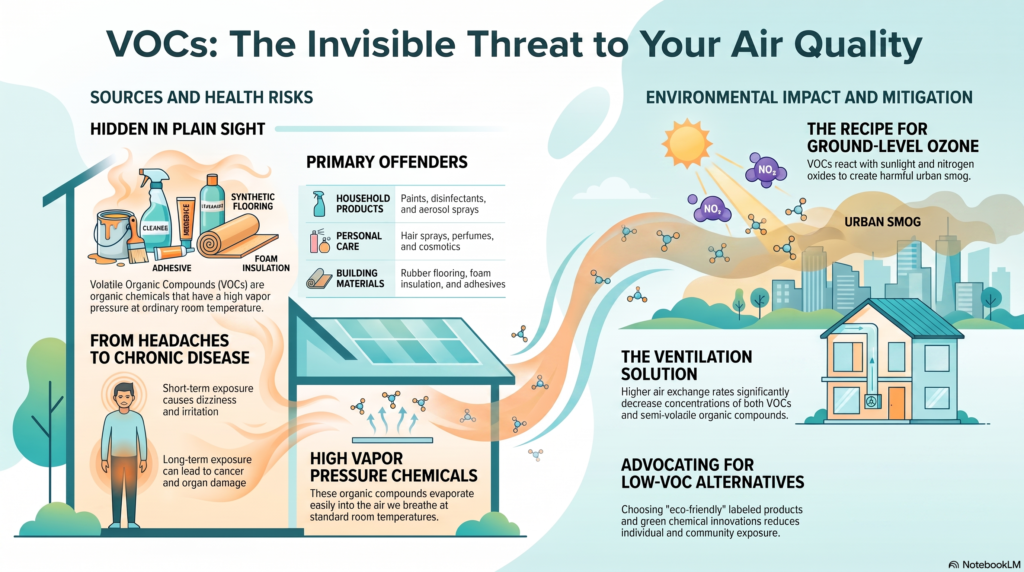
Volatile Organic Compounds (VOCs) are a diverse group of organic chemicals that can easily evaporate into the air at room temperature. You’ll find these compounds in various products, including paints, solvents, and cleaning agents.
Understanding VOCs is essential for effective VOCs regulation, which aims to minimize their harmful effects on health and the environment. Accurate VOCs measurement is important for enforcing these regulations, as it allows you to assess exposure levels and identify sources of pollution.
How VOCs Contribute to Air Pollution?
VOCs come from everyday sources like paints, cleaning products, and vehicle emissions, greatly impacting air quality. Volatile organic compounds are compounds that have a high vapor pressure and low water solubility. Many VOCs are human-made chemicals that are used and produced in the manufacture of paints, pharmaceuticals, and refrigerants. VOCs typically are industrial solvents, such as trichloroethylene; fuel oxygenates, such as methyl tert-butyl ether (MTBE); or by-products produced by chlorination in water treatment, such as chloroform. VOCs are often components of petroleum fuels, hydraulic fluids, paint thinners, and dry cleaning agents. VOCs are common ground-water contaminants.
Their presence can lead to serious health effects, including respiratory issues and long-term illnesses.
Additionally, VOCs contribute to environmental problems, such as the formation of ground-level ozone, which harms ecosystems.
Common Sources of VOCs
While many might not realize it, everyday products and activities around the home and workplace release volatile organic compounds (VOCs) into the air, greatly contributing to air pollution. These emissions can markedly impact indoor air quality and often exceed outdoor levels. Understanding common sources helps you take informed actions to comply with VOC regulations.
| Source | Examples |
| Household Products | Paints, cleaners, adhesives |
| Building Materials | Flooring, insulation |
| Personal Care Products | Fragrances, hair sprays |
| Office Supplies | Ink, toners, paper |
| Vehicle Emissions | Gasoline, diesel exhaust |
Health Effects of VOCs
The presence of volatile organic compounds in your environment can lead to significant health concerns, as they often trigger a range of adverse effects on the respiratory system and overall well-being.
Short-term exposure to VOCs can cause headaches, dizziness, and irritation of the eyes, nose, and throat. However, long-term exposure poses more severe risks, including chronic respiratory diseases and potential damage to the liver and kidneys.
Understanding VOCs health implications is essential, especially for vulnerable populations like children and the elderly. Prolonged inhalation of these compounds can exacerbate existing health conditions or even lead to new ones.
Environmental Impact of VOCs
Although often overlooked, volatile organic compounds play a significant role in contributing to air pollution and its associated environmental issues. When released into the atmosphere, VOCs interact with nitrogen oxides, leading to ground-level ozone formation, which degrades air quality and harms ecosystems.
This ozone can damage vegetation, disrupt photosynthesis, and affect biodiversity. Additionally, VOCs can contribute to the formation of secondary pollutants, exacerbating respiratory problems in both humans and wildlife. Airborne pollutants can also settle onto land, contributing to lead soil contamination in areas affected by industrial emissions and heavy traffic, creating additional environmental and public health concerns.
Effective VOCs regulation is essential to mitigate these impacts. Implementing stricter emission standards and promoting cleaner technologies can protect the VOCs ecosystem, ensuring a healthier environment.
Common Sources of VOCs in Daily Life
You might be surprised to learn that common household cleaning products often contain high levels of VOCs, which can negatively impact your indoor air quality. Volatile Organic Compounds, or VOCs, are organic chemicals that evaporate into the atmosphere at room temperature. Some VOCs can also dissolve into groundwater. They are called organic compounds because they contain the element carbon. There are many types of VOCs. For example, hydrocarbon VOCs have both hydrogen and carbon atoms and include benzene and toluene. Oxygenate VOCs contain carbon, hydrogen, and oxygen, and are a result of car exhaust and atmospheric chemical reactions. Plants make non-harmful VOCs, most commonly terpenes or oils that give some plants their characteristic scent, and forest fires also release VOCs. Some VOCs are toxic and have a negative impact on the atmosphere. VOCs can have both short-term and long-term effects on health, and cause indoor and outdoor air quality to decline.
Additionally, automotive fuels and emissions contribute notably to outdoor VOC levels, affecting both environmental health and air quality.
Industrial manufacturing processes also release VOCs, making them a critical concern in both residential and industrial settings.
Household Cleaning Products
When cleaning your home, you mightn’t realize that many household cleaning products release volatile organic compounds (VOCs) into the air.
These compounds can contribute to indoor air pollution, affecting your health and well-being. Common offenders include sprays, detergents, and disinfectants, often laden with harmful chemicals.
To combat this, consider eco-friendly alternatives that perform effectively without compromising air quality. Always scrutinize product labeling, as it can reveal VOC content and help you make informed choices. Checking the active ingredient listed on product labels can also help you identify chemicals that may contribute to VOC emissions and make it easier to choose lower-emission alternatives.
By opting for products with lower VOC levels, you not only protect your home environment but also contribute to broader efforts in reducing air pollution.
Empower yourself with knowledge and select wisely for a healthier living space.
AUTOMOTIVE FUELS AND EMISSIONS
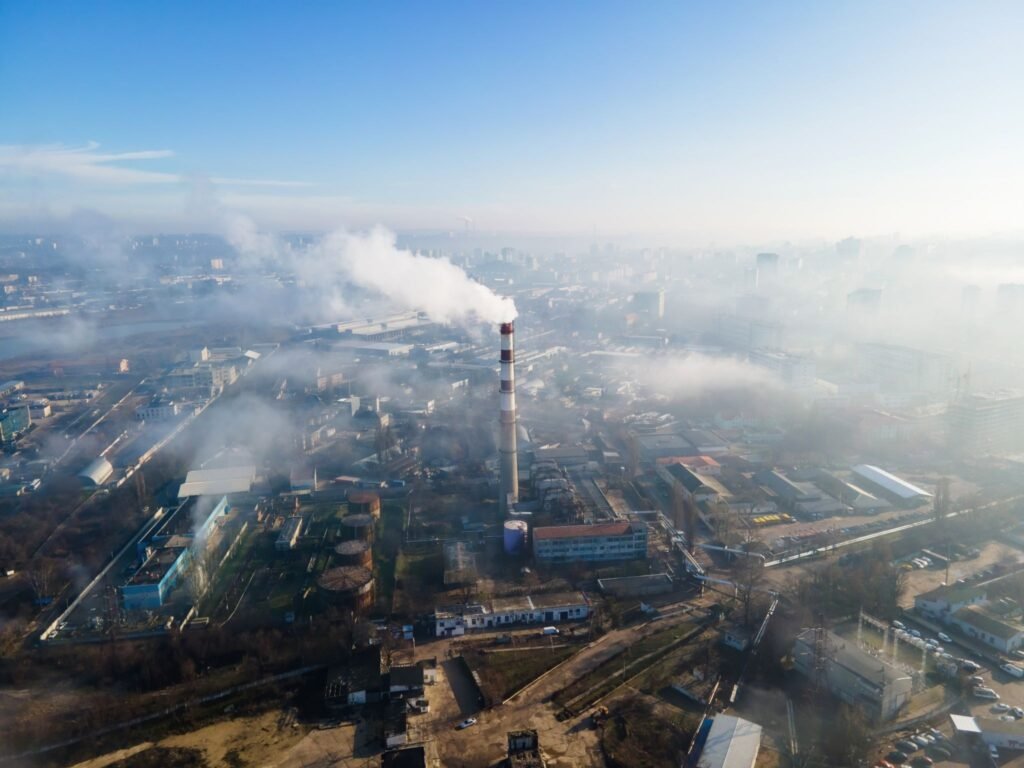
Household cleaning products aren’t the only sources of volatile organic compounds (VOCs) that can impact indoor air quality. Automotive fuels play a significant role through their fuel composition, which directly influences automotive emissions.
When you drive, your vehicle releases hydrocarbons, carbon monoxide, and other harmful VOCs into the atmosphere. These emissions are often found alongside sulfur dioxide air pollution, especially in areas with heavy traffic and industrial activity, where multiple pollutants combine to worsen overall air quality. These emissions can infiltrate your home, especially if you park in an attached garage.
Furthermore, the type of fuel you use—conventional gasoline, diesel, or alternative fuels—affects the amount and type of VOCs produced. By understanding these dynamics, you can make informed choices about your vehicle and fuel to minimize VOC exposure, thereby enhancing your environment and health.
Take control of your air quality; your choices matter.
Industrial Manufacturing Processes
In atmospheric and environmental remediation research, we frequently examine how airborne contaminants behave outside controlled laboratory settings. A recurring issue I encounter and one that constantly emerges in recent environmental studies is the sheer reactivity of VOCs once they enter our microenvironments. Whether we are examining residential spaces, industrial zones, or even sports facilities where synthetic materials off-gas under physical stress, VOCs actively transform the surrounding chemistry.
They react with sunlight and nitrogen oxides to form ground-level ozone, and their persistent off-gassing directly impacts indoor air quality. In my field work and academic evaluations, I’ve seen how easy it is to overlook everyday sources like cleaning agents, vehicle exhaust, and manufacturing solvents. Yet, these compounds exert a measurable, long-term toll on human respiratory systems and broader ecosystems.
What concerns me most as a chemist is not just their immediate volatility, but how they interact with other environmental stressors such as settling into urban soil or accumulating in stagnant air basins. Mitigating these risks requires more than just passive observation; it demands precise measurement, systematic sampling, and a deliberate shift toward low-emission alternatives and green chemical innovations across every industry.
Industrial manufacturing processes contribute greatly to the emission of volatile organic compounds (VOCs) in daily life. When you engage with products from plastics to paints, you’re often encountering the byproducts of industrial emissions.
These compounds can profoundly affect air quality and your health. Manufacturing regulations aim to mitigate these emissions, yet compliance varies across industries.
You need to be aware of the VOCs released during processes like solvent use, product formulation, and chemical production. Understanding the sources empowers you to make informed choices, whether advocating for stricter regulations or selecting low-VOC products.
The Health Impacts of VOC Exposure
Although you may not see or smell them, volatile organic compounds (VOCs) can greatly impact your health. Long term exposure to VOCs can lead to serious health issues, including respiratory problems, neurological effects, and even cancer. Effective symptom management becomes essential in mitigating these risks. Understanding the specific health effects associated with different VOCs empowers you to take action.
| Health Impact | Description |
| Respiratory Issues | Irritation of the eyes, nose, and throat, leading to asthma. |
| Neurological Effects | Headaches, dizziness, and cognitive impairments. |
| Skin Irritation | Allergic reactions and dermatitis from contact. |
| Long-term Consequences | Chronic diseases, including cancer with prolonged exposure. |
VOCs and Ozone Pollution
When considering air quality, it’s crucial to recognize the relationship between volatile organic compounds (VOCs) and ozone pollution. VOCs play a critical role in atmospheric chemistry, directly influencing ozone formation. Volatile organic compounds (VOCs) are a group of chemicals that can vaporize into air. VOCs are in thousands of daily use products, including paint, varnish, wax, and various cleaning, degreasing, and cosmetic products. Exposure to VOC vapors can cause a variety of health effects.
When VOCs interact with nitrogen oxides in the presence of sunlight, they undergo complex photochemical reactions, leading to the production of ground-level ozone. This VOCs-ozone interaction is pivotal, as elevated ozone levels can harm respiratory health and damage ecosystems.
Understanding this dynamic allows you to grasp the broader implications of VOC emissions. By discerning how these compounds contribute to ozone pollution, you empower yourself to advocate for informed policies and practices that can mitigate their impact on air quality and public health.
Effective Strategies for Reducing VOC Emissions
To effectively reduce VOC emissions, you need to adopt a multi-faceted approach that includes regulatory measures, technological advancements, and public engagement.
Here are some effective strategies that can drive emission reduction while promoting sustainable practices:
- Implement stricter regulations** on VOC content in products.
- Encourage the use of low-VOC or VOC-free alternatives** in industrial processes.
- Invest in innovative technologies like catalytic converters and biofilters for emission control.
- Promote public awareness campaigns to educate consumers on the importance of reducing VOCs.
Policy Measures for Managing VOC Pollution
Effective policy measures are essential for managing VOC pollution, as they set the framework for regulating emissions and promoting cleaner alternatives.
You’ll need strong regulatory frameworks and stringent emission standards to effectively mitigate VOCs. Public awareness campaigns can empower communities to understand the risks and support initiatives.
Effective enforcement mechanisms are vital, ensuring compliance and accountability among industries. Incentive programs can encourage businesses to adopt technological innovations that reduce VOC emissions.
Engaging stakeholders, including local governments and environmental organizations, fosters collaboration and shared responsibility. Implementing robust monitoring systems will allow for accurate tracking of emissions and compliance, ensuring that policies remain effective and adaptable to changing circumstances.
Prioritizing these elements will enhance your ability to combat VOC pollution decisively.

RELATED STUDIES ABOUT VOCs VOLATILE ORGANIC COMPOUNDS AIR POLLUTION
In conclusion, understanding VOCs is essential for tackling air pollution effectively. By recognizing their sources and health impacts, you can make informed choices in your daily life. Just as a knight in shining armor combats dragons, you too can wield strategies to reduce VOC emissions and advocate for stronger policies. Embracing these actions not only protects your health but also contributes to a cleaner environment for future generations. Let’s be proactive in our fight against air pollution!
Evaluation of potential sample contamination from a self-designed automatic device for volatile organic compounds (VOCs) active air sampling
Overview
This study evaluated the potential for sample contamination in self-designed active air sampling devices for volatile organic compounds (VOCs). Precise VOC monitoring is essential for air quality assessment, and maintaining sample integrity—specifically avoiding contamination from sampling device components—is a critical quality assurance requirement.
Methodology
- Device Components: The study examined three types of valves commonly used in active air sampling systems: two types of non-return valves (polypropylene) and one solenoid valve.
- Experimental Design: Sorbent tubes were connected to these valves and exposed in a neutral office environment for 15 days. Blank (unconnected) tubes were placed in the same environment as a control to measure background contamination.
- Analysis: VOC profiles were analyzed using Thermal Desorption-Gas Chromatography/Mass Spectrometry (TD-GC/MS) to determine the extent of contamination via diffusion.
Key Findings
- Contamination Presence: All valve types resulted in some contamination of the sorbent tubes over the 15-day period.
- Non-return Valves: These valves exhibited the highest levels of contamination, emitting non-negligible amounts of aromatic hydrocarbons, ethers, and siloxanes.
- Solenoid Valves: These performed best, showing the least contamination; their VOC profiles were very similar to those of the blank (unconnected) tubes.
- Sources of Contamination:
- Background: Highly volatile compounds such as ethanol, acetone, and acetaldehyde were found in both the connected and blank tubes, indicating adsorption from the ambient environment.
- Valve-Related: Contamination specific to the connected tubes (particularly aromatic hydrocarbons and siloxanes) originated from the valve materials themselves. These compounds are common additives in plastics and can diffuse onto sorbent tubes over extended periods.
Conclusion
The study concludes that when designing devices for active air quality monitoring, it is essential to evaluate the individual components for potential VOC interference. Non-return valves, while simpler and cheaper, may compromise sample accuracy due to emissions from their plastic materials. Solenoid valves are a more reliable choice, though practitioners should still utilize proper sealing methods and consider background VOC concentrations when analyzing data.
| REFERENCE: Eva Gallego, José Francisco Perales, Anna Navarro, Pilar Teixidor, Evaluation of potential sample contamination from a self-designed automatic device for volatile organic compounds (VOCs) active air sampling, Journal of Chromatography A, Volume 1762, 2025, 466380, ISSN 0021-9673, https://doi.org/10.1016/j.chroma.2025.466380. (https://www.sciencedirect.com/science/article/pii/S002196732500723X) |
Characterization of volatile and semi-volatile organic compounds in the air of sports facilities
Overview
This study characterizes the indoor air quality (IAQ) of ten diverse sports facilities in western France, including dojos, weight rooms, and motor development (motricity) rooms. Given the intense physical activity and extensive use of synthetic materials in these settings, the research aimed to quantify volatile organic compounds (VOCs) and semi-volatile organic compounds (SVOCs) under both occupied and unoccupied conditions.
Methodology
- Scope: Targeted and non-targeted analytical approaches were used to screen for over 100 chemical contaminants.
- Parameters: Researchers continuously monitored temperature, humidity, and $CO_2$ levels. Carbon dioxide decay was used to estimate air exchange rates (AER).
- Sampling: Two series of measurements were performed for each facility: one during active use (occupied) and one during closed periods (unoccupied).
Key Findings
- VOC Profile: VOC levels were generally comparable to other indoor environments, with a predominance of carbonyls (especially hexanal). Acetone and 6-methyl-5-hepten-2-one (sulcatone) were identified as key occupancy tracers, with concentrations increasing during physical activity.
- Emerging Pollutants: The study identified specific emerging contaminants:
- Benzothiazole: Detected in weight rooms, likely emitted from rubber flooring.
- Siloxanes (e.g., D5): Higher in occupied rooms, attributed to cosmetic and personal care products.
- Glycol ethers: Detected in motricity rooms, linked to cleaning products or water-based paints.
- SVOC Profile: SVOC concentrations ranged from 25 ng/m}^3 to over 2000 ng/m^3 in weight rooms.
- Phthalates (DiBP, DBP): The most abundant SVOCs, found in most facilities. Older facilities showed higher concentrations of restricted phthalates like DEHP.
- PAHs: Particularly high concentrations of fluorene and phenanthrene were measured in weight rooms, likely released from recycled rubber flooring.
- Flame Retardants: Organophosphates (EHDPP, TCPP) were notably detected in dojos, associated with protective wall foam.
Factors Influencing IAQ
- Ventilation: An overall trend indicated that higher air exchange rates lead to decreased concentrations of both VOCs and SVOCs. While ventilation type (natural vs. mechanical) showed less distinct impact than the AER itself, consistent air renewal is confirmed as a critical factor for managing IAQ in these spaces.
- Facility Type & Materials: The highest pollutant levels were found in weight rooms (MUS typology), driven by a combination of high user density and the presence of numerous emitting sources, such as specialized sports equipment and flooring materials.
- Occupancy Impact: Physical activity significantly influences VOC levels, specifically through the emission of human-related tracers (acetone, sulcatone) and the re-emission of SVOCs due to mechanical friction on materials.
Recommendations
The findings underscore that sports facilities act as significant sources of both regulated and emerging organic pollutants. The authors recommend that future design and renovation strategies for sports halls integrate a selection strategy for low-emission building materials—specifically regarding rubber flooring and foam equipment—alongside effective ventilation management to ensure occupant health.
| REFERENCE: Nathalie Costarramone, Hervé Plaisance, Gaëlle Raffy, Barbara Le Bot, Pierre Le Cann, Emilie Surget, Auriane Figué, Valérie Desauziers, Characterization of volatile and semi-volatile organic compounds in the air of sports facilities, Building and Environment, Volume 293, 2026, 114334, ISSN 0360-1323, https://doi.org/10.1016/j.buildenv.2026.114334. (https://www.sciencedirect.com/science/article/pii/S036013232600140X) |
Severe health risks from ambient volatile organic compounds (VOCs) in a Central Asian city: Source attribution and probabilistic risk assessment
Overview
This study provides a comprehensive assessment of volatile organic compound (VOC) concentrations, source attribution, and human health risks in Almaty, Kazakhstan—a major Central Asian metropolitan area. Almaty’s unique challenges include intense vehicular traffic, heavy reliance on coal for heating, and complex topography that hinders pollutant dispersion.
Methodology
- Data Collection: Ambient air samples were collected seasonally in 2020 at six locations representing varying elevations across the city, capturing diurnal and seasonal trends.
- Analysis: Researchers analyzed 23 individual VOC species using headspace solid-phase micro-extraction (SPME) and gas chromatography-mass spectrometry (GC-MS).
- Source Attribution: Potential emission sources were identified using Principal Component Analysis (PCA) and BTEX ratio (toluene/benzene and xylene/ethylbenzene) analyses.
- Risk Assessment: Stochastic health risk modeling (Monte Carlo simulation) was conducted to evaluate non-carcinogenic and carcinogenic risks for both adults and children, based on US EPA guidelines.
Key Findings
- Elevated Concentrations: VOC concentrations were significantly higher during the heating season and in the lower-elevation parts of the city. The levels detected—particularly BTEX and naphthalene—were alarmingly high when compared to urban environments in North America and Europe, and were comparable to highly polluted megacities like Mexico City and Milan.
- Stagnation Factors: Persistent temperature inversions, the wind-blocking effect of the Zailiyskiy Alatau mountains, and stagnant anticyclonic conditions create an exceptionally inefficient pollutant dispersion regime, leading to severe VOC accumulation.
- Source Attribution:
- Heating Season: Primarily influenced by coal combustion from large-scale Combined Heat and Power (CHP) plants in the lower city and small-scale heating units in the upper city.
- Year-Round: Traffic emissions are a major, persistent source.
- Persistence: Pollutants from the heating season (e.g., naphthalene, benzaldehyde) persist into the non-heating season due to surface adsorption, slow degradation, and temperature-dependent resuspension/revolatilization.
- Health Risk Assessment:
- Non-carcinogenic Risk: While median Hazard Indices (HI) generally remain within safe levels (HI < 1), the 95th percentile results indicate that in winter, residents—especially in the lower city—experience high-end exposures three to five times higher than safety thresholds, driven largely by benzene and naphthalene.
- Carcinogenic Risk: Lifetime cancer risks consistently exceeded the acceptable threshold of 1 x 10^-6 across all scenarios. Median risks were in the range of 10^-5 to $10^-4, with high-end (95th percentile) winter risks reaching 10^-3. Benzene was identified as the predominant contributor to these risks.
Conclusion
Almaty’s population faces significantly higher cancer risks compared to counterparts in Europe and North America. These findings represent a serious public health concern, particularly for children who are disproportionately affected. The study underscores an urgent need for targeted regulatory interventions, such as shifting from coal to cleaner heating, enforcing stricter vehicle emission standards, and implementing urban planning strategies that enhance natural ventilation corridors.
| REFERENCE: Alisher Alibekov, Yingkar Bahetnur, Kadisha Yessenbayeva, Nassiba Baimatova, Woojin Lee, Severe health risks from ambient volatile organic compounds (VOCs) in a Central Asian city: Source attribution and probabilistic risk assessment, Atmospheric Environment: X, Volume 28, 2025, 100378, ISSN 2590-1621, https://doi.org/10.1016/j.aeaoa.2025.100378. (https://www.sciencedirect.com/science/article/pii/S2590162125000681) |
CONCLUSION
Reflecting on the analytical data and environmental studies surrounding air quality, it becomes clear that tackling VOC pollution is an urgent priority that connects scientific research directly to daily action. In my work as an educator and advocate for sustainable chemical innovation, I always emphasize that we cannot remediate what we choose to ignore. The active role VOCs play in atmospheric degradation from generating secondary pollutants like ozone to driving severe, long-term health risks demands a multi-tiered response.
We need rigorous policy enforcement, smarter urban ventilation, and continuous research into low-VOC materials and greener chemical formulations. However, institutional change must be paired with individual awareness. Just as practice and patience allow a calligrapher to transform raw ink into a deliberate, balanced composition on paper, managing our environment requires thoughtful, steady, and intentional choices.
Every time we opt for eco-friendly consumer products, support stricter emissions standards, or educate our communities about indoor air quality, we take a concrete step toward restoring chemical balance in our ecosystems. Protecting the air we breathe is a shared responsibility, and through informed, proactive choices, we can build a healthier, more sustainable environment for generations to come.