
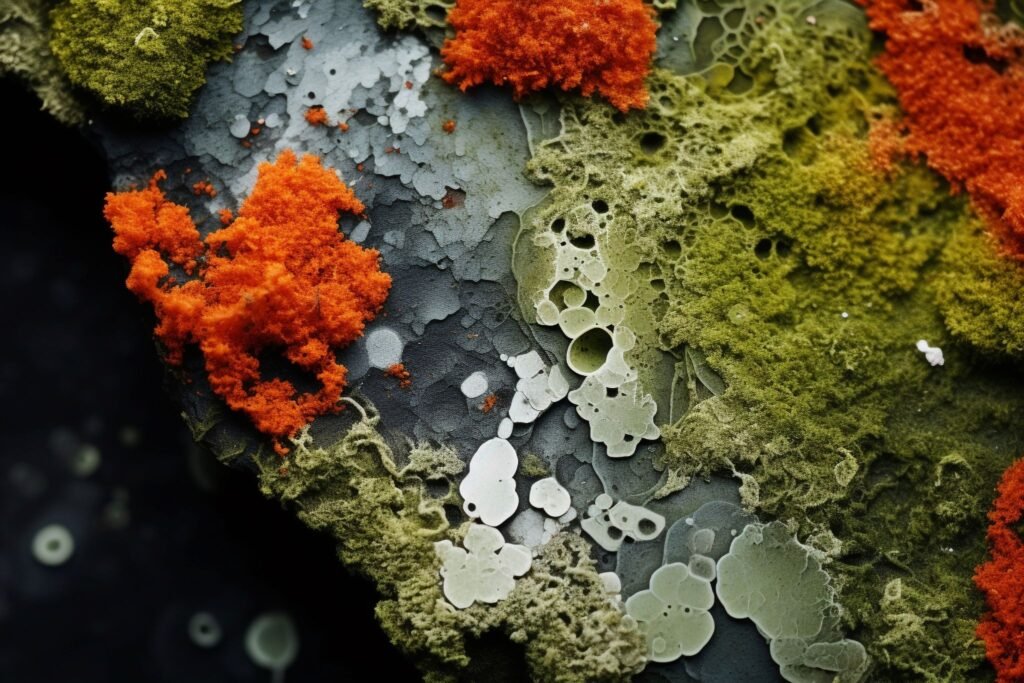
Throughout my years in environmental chemistry, I have constantly found that micro- and macroalgae are among the most misunderstood organisms on our planet. Public perception frequently paints algae as nothing more than an unsightly nuisance, a green film ruining a lake view or an invasive problem in water bodies. However, when you analyze aquatic systems at a molecular level, a completely different reality emerges. These microscopic organisms act as vital carbon sinks, bridging oceans and vegetation to capture atmospheric carbon dioxide while providing the primary nutritional foundation for aquatic food webs.
Beyond their baseline metabolic functions, algae secrete complex bioactive compounds including pigments, peptides, and specialized lipids that actively regulate and stabilize aquatic environments. The challenge we face isn’t the existence of algae itself, but how human activity disrupts its natural dynamics. When agricultural runoff saturates waterways with excess nitrogen and phosphorus, algae growth accelerates unnaturally, causing eutrophication, oxygen depletion, and harmful algal blooms like toxic red tides.
By taking a closer look at the bioactive substances algae naturally synthesize, we can move away from treating algae as a simple environmental pollutant and begin leveraging its biochemical machinery for water quality management, sustainable remediation, and ecological health.
Algae bioactive substances play a vital role in maintaining aquatic environmental balance and enhancing water quality. By absorbing nutrients and carbon dioxide, they prevent harmful algal blooms and stabilize sediments. Their pigments and fatty acids support aquatic life and promote biodiversity. Additionally, the oxygen produced by algae fosters a healthy ecosystem and aids in breaking down organic matter. Understanding these processes reveals more about how algae support aquatic environments and the potential for innovative water purification solutions.
KEY TAKEAWAYS
- Algae produce bioactive compounds like pigments and fatty acids that enhance photosynthesis and promote the growth of aquatic organisms, supporting ecosystem balance.
- Bioactive peptides from algae regulate metabolic processes, contributing to the overall health and resilience of aquatic species.
- Algal compounds improve water quality by absorbing excess nutrients, preventing harmful algal blooms and promoting nutrient cycling.
- The oxygen generated by algae supports aerobic microorganisms, facilitating organic matter breakdown and enhancing water clarity.
- Algae’s natural filtration mechanisms sequester pollutants, mitigating toxicity and promoting biodiversity in aquatic environments.
THE ROLE OF ALGAE IN AQUATIC ECOSYSTEMS
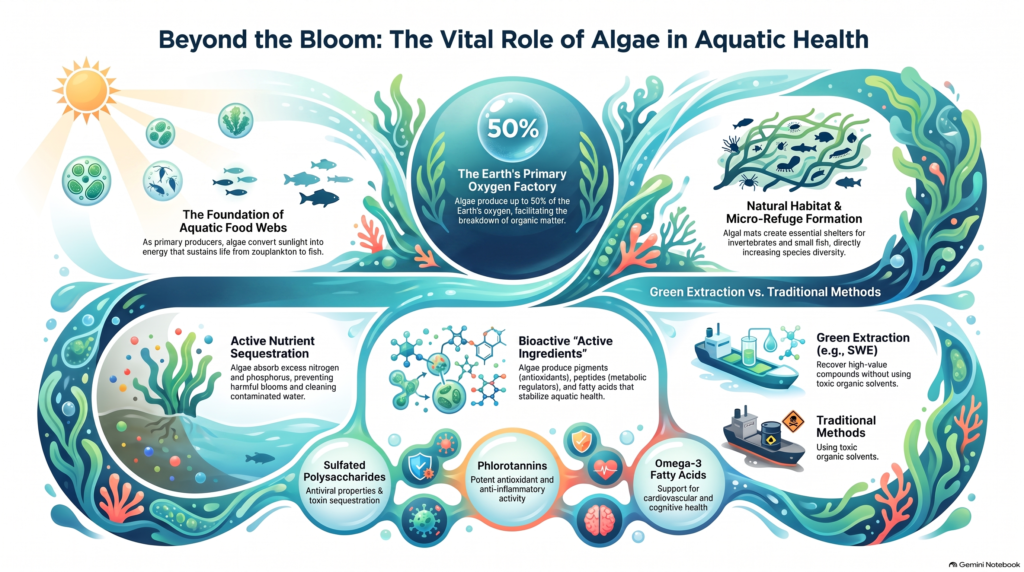
Algae serve as the foundation of aquatic ecosystems, acting as primary producers that convert sunlight into energy through photosynthesis. Their diversity plays a vital role in maintaining ecosystem stability and resilience.
By harnessing sunlight, algae create organic matter that supports a vast array of aquatic life, from zooplankton to larger fish species. Additionally, their involvement in nutrient cycling is significant; they absorb carbon dioxide and nutrients, such as nitrogen and phosphorus, effectively regulating water quality.
This process not only sustains aquatic organisms but also mitigates harmful algal blooms. Fundamentally, understanding algae’s contributions empowers us to leverage their ecological benefits, ensuring the health and balance of aquatic environments while maximizing biodiversity and nutrient efficiency.
Essential Bioactive Compounds Found in Algae
While exploring the diverse world of aquatic life, you’ll find that essential bioactive compounds in algae play a significant role in both human health and environmental sustainability.
Algal pigments, such as chlorophyll and carotenoids, not only enhance photosynthesis but also exhibit substantial antioxidant properties, combating oxidative stress in various organisms.
Furthermore, bioactive peptides derived from algae have shown promising effects in promoting health by regulating metabolic processes. Each bioactive compound functions as an active ingredient that contributes to algae’s beneficial effects on aquatic ecosystems, environmental sustainability, and potential industrial applications. Fatty acids, particularly omega-3 and omega-6, contribute to cardiovascular health and enhance cognitive function.
Harnessing these compounds can empower industries ranging from nutraceuticals to cosmetics, driving innovations that harness the potent capabilities of algae.
Recognizing their value is imperative for advancing sustainable practices and improving overall water quality.
How Algae Contribute to Water Quality
When considering the intricate balance of aquatic ecosystems, it’s clear that algae play a pivotal role in maintaining water quality. Their contributions are multifaceted and essential for sustaining life in water bodies.
Here are three key ways algae enhance water quality:
- Oxygen Production: Through photosynthesis, algae generate the oxygen necessary for aquatic organisms, fostering a balanced ecosystem.
- Nutrient Cycling: Algae diversity facilitates the absorption and transformation of nutrients, preventing excessive nutrient buildup that can harm aquatic life.
- Water Clarity: Algae help stabilize sediments and improve water clarity, allowing sunlight to penetrate deeper, which benefits other aquatic plants.
Balancing Benefits and Challenges of Algal Blooms
Understanding the role of algae in enhancing water quality reveals a complex relationship, particularly when considering algal blooms. While these blooms can indicate nutrient richness, they often lead to detrimental effects such as hypoxia and toxicity, threatening aquatic life and human health.
Effective algae management is vital; it allows you to harness the benefits of algae while mitigating the risks. Implementing strategies for bloom prevention, such as nutrient reduction and monitoring, is essential in maintaining ecological balance.
You must recognize that the power of algae is twofold; it can either support or undermine the aquatic environment. Striking this balance not only preserves biodiversity but also safeguards water quality, ensuring a sustainable future for aquatic ecosystems and their stakeholders.
How Do Algae Benefit Aquatic Organisms?
Algae play an essential role in supporting aquatic organisms by serving as a primary food source in many ecosystems. Their presence fosters crucial algae interactions that enhance the overall health of aquatic environments.
Here’s how algae benefit aquatic organisms:
- Nutritional Foundation: Algae provide essential nutrients, fueling the growth of various aquatic species, from small zooplankton to larger fish.
- Oxygen Production: Through photosynthesis, algae generate oxygen, critical for the survival of aerobic aquatic life, and consequently promoting aquatic symbiosis.
- Habitat Formation: Algal mats create habitats that shelter smaller organisms, ensuring biodiversity and ecological stability.
Using Algae for Effective Water Purification
You’ll find that algae play an essential role in water purification through their natural filtration mechanisms.
Currently, marine algae are still an under-exploited natural bioresource of bioactive compounds. Seaweeds represent a sustainable source for obtaining bioactive compounds that can be useful for the fabrication of new active products with biomedical benefits and applications as biomedicinals and nutraceuticals. The objective of this review is to highlight scientific papers that identify biocompounds from marine macroalgae and emphasize their benefits. The method used was data analysis to systematize information to identify biocompounds and their various benefits in pharmaceuticals, cosmetics, and nutraceuticals. The research results demonstrate the multiple uses of seaweeds. As pharmaceuticals, seaweeds are rich sources of bioactive compounds like polysaccharides, protein compounds, pigments, and polyphenols, which have demonstrated various pharmacological activities such as antioxidant, antibacterial, anti-inflammatory, antiviral, anticoagulant, and potentially anticarcinogenic effects. Seaweed has gained recognition as a functional food and offers a unique set of compounds that promote body health, including vitamins, minerals, and antioxidants. In conclusion, the importance of this review is to expand the possibilities for utilizing natural resources by broadening the areas of research for human health and marine nutraceuticals.
These organisms effectively remove excess nutrients, which can lead to harmful algal blooms if left unchecked.

ALGAE’S NATURAL FILTRATION MECHANISMS
From an environmental engineering and chemistry perspective, what makes algal bioactives so compelling is their dual functionality as both ecosystem stabilizers and valuable bioresources. Microalgae cultivation offers immense potential across industries from bio-refining, pharmaceuticals, and sustainable biopesticides to biodegradable alternatives for traditional plastics. Yet, despite these benefits, large-scale deployment remains slow. Traditional petroleum-based products and intensive agriculture continue to externalize their environmental costs, making them artificially cheaper than algal technology.
Furthermore, processing marine algae presents distinct practical challenges; extracting target compounds like sulfated polysaccharides or carotenoids requires specialized green extraction techniques such as subcritical water extraction or ultrasound-assisted methods to avoid toxic organic solvents and high energy demands. From a practical standpoint, we must also address challenges like heavy metal bioaccumulation, sensory limitations like grassy odors, and strict regulatory standards.
Nevertheless, when integrated directly into water treatment and agricultural strategies, algae serve as biological biofilters that sequester toxins, absorb agricultural runoff, and cycle key nutrients. By pairing genetic optimization and advanced bioprocessing with controlled aquatic cultivation, we can transform algae from a potential ecological hazard into an active agent for environmental remediation.
While many water purification methods rely on complex technologies, algae offer a natural and effective alternative for enhancing water quality.
Utilizing their inherent capabilities, algae contribute to ecological balance through remarkable natural filtration mechanisms. Here’s how they do it:
- Suspended Particulate Matter Removal: Algae absorb and trap particles, clarifying water and reducing turbidity.
- Toxin Absorption: They effectively sequester harmful pollutants, mitigating toxic effects on aquatic ecosystems.
- Oxygen Production: Through photosynthesis, algae release oxygen, supporting aerobic microorganisms essential for breaking down organic matter.
Nutrient Removal Capabilities
When considering effective water purification methods, utilizing algae’s nutrient removal capabilities stands out as a sustainable solution.
Algae, both micro- and macroalgae, are recognized for their rich repository of bioactive compounds with potential therapeutic applications. These marine organisms produce a variety of secondary metabolites that exhibit significant anti-inflammatory, antioxidant, and antimicrobial properties, offering promising avenues for the development of new drugs and nutraceuticals. Algae-derived compounds, including polyphenols, carotenoids, lipids, and polysaccharides, have demonstrated efficacy in modulating key inflammatory pathways, reducing oxidative stress, and inhibiting microbial growth. At the molecular level, these compounds influence macrophage activity, suppress the production of pro-inflammatory cytokines, and regulate apoptotic processes. Studies have shown that algae extracts can inhibit inflammatory signaling pathways such as NF-κB and MAPK, reduce oxidative damage by activating Nrf2, and offer an alternative to traditional antibiotics by combatting bacterial infections. Furthermore, algae’s therapeutic potential extends to addressing diseases such as cardiovascular disorders, neurodegenerative conditions, and cancer, with ongoing research exploring their efficacy in preclinical animal models. The pig model, due to its physiological similarities to humans, is highlighted as particularly suitable for validating the bioactivities of algal compounds in vivo. This review underscores the need for further investigation into the specific mechanisms of action and clinical applications of algae-derived biomolecules.
Algae excel in algal nutrient uptake, efficiently absorbing nitrogen and phosphorus from contaminated water. This process not only cleanses aquatic environments but also mitigates harmful algal blooms, promoting ecological balance.
The bioactive interactions between algae and other microorganisms further enhance nutrient assimilation, creating a dynamic purification ecosystem.
By harnessing these processes, you can greatly improve water quality, leading to healthier aquatic life and safer drinking water.
Implementing algae-based systems in your water treatment strategy empowers you to achieve superior results, positioning you at the forefront of innovative environmental management.
Embrace algae’s potential, and transform water purification into a powerful, sustainable practice.
Future Perspectives on Algae and Ecosystem Health
As you consider the future of algae in promoting ecosystem health, it’s clear that their role in biodiversity is vital.
Implementing sustainable water management practices can enhance the benefits algae provide, while innovations in bioremediation techniques may offer new solutions for environmental challenges.
Understanding these dynamics will be essential for advancing both algae utilization and ecosystem resilience.
Algae’s Role In Biodiversity
Algae play an essential role in maintaining biodiversity, serving as foundational components of aquatic ecosystems that support a diverse array of life forms.
Their ecological significance can’t be overstated, as they contribute to the balance of various habitats.
Consider these key aspects:
- Primary Producers: Algae convert sunlight into energy, forming the base of the food web and sustaining numerous species.
- Habitat Formation: Certain algae species create microhabitats that shelter fish and invertebrates, enhancing species diversity.
- Nutrient Cycling: Algae facilitate the recycling of nutrients, essential for sustaining the ecological balance and promoting further algae diversity.
Understanding these dynamics empowers you to appreciate the intricate relationships within ecosystems and emphasizes the need for preserving algae’s role in maintaining biodiversity.
Sustainable Water Management Practices
While effective water management practices are essential for ecosystem health, integrating algae into these strategies can enhance both water quality and biodiversity.
Marine algae are rich sources of essential bioactive compounds, including polyunsaturated fatty acids, proteins, polysaccharides, and polyphenols. These compounds exhibit various biological activities, such as antioxidant, antimicrobial, anti-inflammatory, and anticancer effects. Their properties make algal bioactive compounds valuable for enhancing nutritional value, improving texture, and serving as natural preservatives in the food industry. These chemicals are used in farming as biostimulants, biofertilizers, and biopesticides. They enhance soil fertility and promote increased crop productivity. Integrating nanotechnology into algal applications further enhances the efficacy and delivery of these compounds. However, safety and regulatory compliance challenges—such as heavy metal contamination and potential allergic reactions—pose risks to consumer health. Additionally, the grassy taste and fishy odor associated with marine algae can limit consumer acceptance. Despite these challenges, algal biomass provides sustainable solutions for low-carbon agriculture through carbon sequestration and recycling, supporting a circular economy and reducing environmental impact. This review looks at the main biomolecular compounds from marine algae and how they are used in food and agriculture. It also talks about the safety, regulatory, and consumer acceptance issues associated with these compounds, as well as possible future directions and innovations.
You should consider algae’s bioactive substances as pivotal in sustainable water management, serving as natural filters that promote water conservation. By stimulating nutrient cycling, they aid in ecological restoration, ensuring that aquatic environments thrive.
Utilizing algae in water treatment processes not only mitigates pollution but also supports the natural balance within ecosystems. These systems may also help reduce the environmental effects associated with sulfur dioxide air pollution by improving overall water quality and supporting healthier aquatic ecosystems affected by atmospheric deposition. This approach empowers you to harness the benefits of algae while addressing pressing environmental challenges.
Embracing these practices positions you at the forefront of sustainable development, enabling effective stewardship of water resources and fostering a resilient ecosystem for future generations.
Innovations In Bioremediation Techniques
Innovations in bioremediation techniques are reshaping how we address environmental contamination, particularly through the application of algae.
As you explore these advancements, consider the following powerful strategies:
- Genetic Engineering: Tailoring algae species to enhance pollutant absorption can greatly improve efficiency in detoxifying contaminated water.
- Microbial Interactions: Leveraging synergistic relationships between algae and bacteria can accelerate nutrient cycling and pollutant degradation.
- Integrated Systems: Combining algae-based treatments with existing water management systems optimizes resource use and maximizes impact on water quality. These integrated approaches are also being explored for reducing contaminants associated with VOCs volatile organic compounds air pollution, demonstrating algae’s broader potential in environmental remediation beyond aquatic ecosystems.
These innovations not only promise a more effective approach to environmental remediation but also enhance ecosystem resilience.

RELATED STUDIES ABOUT ALGAE BIOACTIVE SUBSTANCES ENVIRONMENT
In conclusion, algae play an essential role in maintaining aquatic environmental balance and water quality. Fascinatingly, studies show that algae can produce up to 50% of the Earth’s oxygen, underscoring their importance. While their bioactive substances benefit aquatic organisms and help purify water, we must also be mindful of the challenges posed by algal blooms. By understanding these dynamics, you can appreciate the delicate interplay between algae and ecosystem health, paving the way for innovative solutions to environmental challenges.
Emerging methods to extract bioactive compounds from brown algae: a comprehensive review of performance, readiness, and sustainability
Overview
Brown algae (Phaeophyceae) are rich sources of bioactive compounds—such as polysaccharides (fucoidan, laminarin, alginate), polyphenols (phlorotannins), and carotenoids (fucoxanthin)—with high potential across the pharmaceutical, nutraceutical, and food industries. Traditional extraction methods (e.g., solvent extraction, maceration, and Soxhlet) are limited by high resource consumption, reliance on hazardous organic solvents, low selectivity, and the potential for thermal degradation of sensitive compounds. This study provides a comprehensive review of emerging “green” extraction technologies and introduces a novel framework for assessing their readiness for industrial and societal adoption.
Emerging Extraction Technologies
The review evaluates several advanced methods designed to improve yield, sustainability, and process efficiency:
- Physical Methods:
- Pulsed Electric Field-Assisted Extraction (PEF-AE): Uses electric pulses to induce electroporation, enhancing mass transfer without high heat.
- Pressurized Liquid Extraction (PLE): Utilizes elevated temperatures and pressures to increase solvent solubility and diffusion.
- Microwave-Assisted Extraction (MAE): Employs microwave radiation for rapid, localized heating of the biomass.
- Ultrasound-Assisted Extraction (UAE): Uses acoustic cavitation to disrupt cell membranes and facilitate solute release.
- Thermal/Supercritical/Biochemical Methods:
- Subcritical Water Extraction (SWE): Uses pressurized water at temperatures between 100^C and 374^C to tune polarity and dissolve compounds.
- Supercritical Carbon Dioxide Extraction (SCCO_2): A selective, non-flammable, and residue-free method ideal for thermolabile compounds.
- Enzyme-Assisted Extraction (EAE): Uses enzymes to degrade cell wall matrices (e.g., alginate networks), allowing for mild, selective extraction.
- Solvent-Based Methods:
- Natural Deep Eutectic Solvents (NADES): Biocompatible, non-toxic, and tunable mixtures that serve as sustainable alternatives to conventional solvents.
Technology and Societal Readiness
To standardize the assessment of these technologies, the authors introduced rubrics for Technology Readiness Level (TRL) and Societal Readiness Level (SRL), establishing minimum evidence requirements for each development stage (from conceptualization to operational deployment).
- Assessment Summary: Most emerging methods (PEF-AE, PLE, MAE, UAE, SWE, EAE) currently show high technical maturity (TRL 7–8) with successful pilot demonstrations.
- Market Leaders: SCCO_2 stands out as the most mature technology (TRL 8–9), with well-established industrial use in coffee decaffeination and botanical extractions.
- Emerging Interest: NADES methods remain at an earlier stage (TRL 3–4), as they face hurdles related to solvent viscosity, downstream recovery, and regulatory approval for industrial use.
Strategic Conclusions and Future Directions
The study emphasizes that there is no “universally superior” technology. Instead, the selection of an extraction platform must be tailored to the specific target compound, required purity, and economic constraints.
Strategic Recommendations:
- Downstream Focus: Future optimization must consider downstream processing (purification, solvent recovery) rather than focusing solely on extraction yield.
- Seaweed-Specific Validation: Technical readiness must be validated under representative marine biomass conditions (addressing salinity, viscosity, and potential corrosion), as results from terrestrial or botanical systems are not always directly transferable.
- Integrated Design: Sustainability and profitability are best achieved through integrated process designs (e.g., heat recovery in SWE, co-product valorization in EAE).
- Standardized Reporting: Standardizing metrics—such as reporting yields on a dry-weight basis and including quality indicators—is essential for benchmarking and ensuring regulatory compliance in the food and pharmaceutical sectors.
| REFERENCE: Irvin Fonseca-Barahona, Kaveh Shahbaz, Saeid Baroutian, Emerging methods to extract bioactive compounds from brown algae: a comprehensive review of performance, readiness, and sustainability, Separation and Purification Technology, Volume 395, Part 2, 2026, 137731, ISSN 1383-5866, https://doi.org/10.1016/j.seppur.2026.137731. (https://www.sciencedirect.com/science/article/pii/S1383586626009974) |
Subcritical water extraction as a green technology for the recovery of bioactive compounds from algae: A comprehensive review
Overview
This study reviews the application of Subcritical Water Extraction (SWE) as a sustainable “green” technology for recovering high-value bioactive compounds from various algae species. As global demand for natural antioxidants, pigments, and nutraceuticals grows, SWE presents a high-efficiency alternative to traditional solvent-based extraction methods that often rely on hazardous chemicals and high energy input.
The SWE Process
- Operating Principle: SWE utilizes water as a solvent at temperatures ranging from $100^C to 374^C under pressure sufficient to maintain the liquid state.
- Tunable Polarity: By adjusting the temperature and pressure, the dielectric constant of water decreases, allowing it to act like a non-polar solvent. This enables the extraction of a broad spectrum of compounds—from polar antioxidants to non-polar carotenoids—within a single process.
- Environmental Benefit: SWE is classified as a green technology because it eliminates the need for toxic organic solvents, significantly reducing environmental impact and disposal costs.
Key Applications for Algae
- Bioactive Peptides: SWE facilitates the efficient release of peptides from algal proteins, which are essential for pharmaceutical and health-supplement applications.
- Carotenoids & Antioxidants: The technology is highly effective at recovering heat-sensitive and high-value pigments, such as those used in natural food coloring and dermatological products.
- Sustainability: The use of subcritical water enhances mass transfer and reduces extraction time, leading to significant savings in both energy and operational costs compared to conventional maceration or Soxhlet extraction.
Advantages Over Traditional Methods
- Safety & Regulatory Compliance: Being non-flammable and non-toxic, SWE avoids the risk of residual solvent contamination in final products, making it ideal for food-grade and pharmaceutical-grade ingredients.
- Efficiency: The high pressure and elevated temperature enable rapid cell wall disruption, which significantly improves the recovery rate of intracellular bioactive compounds.
- Scalability: The review highlights that SWE is increasingly viable for industrial-scale operations due to its ability to process large batches of biomass quickly with minimal environmental footprints.
Strategic Recommendations
- Optimization: The study emphasizes the need for precise control over process parameters (temperature, pressure, and extraction time) to ensure the stability of thermolabile compounds and prevent degradation during the heating cycle.
- Integrated Processing: Future industrial adoption should focus on biorefinery approaches, where the remaining solid biomass after SWE is further utilized (e.g., for biofuels or animal feed) to maximize total resource value.
- Research Needs: Further research is required to standardize the operational conditions for specific algal species, as variations in cell wall composition can significantly alter the required thermodynamic settings for optimal extraction.
| REFERENCE: Hadiya Tahir, Aamir Hussain Dar, Kshirod Kumar Dash, Toiba Majeed, Shivangi Srivastava, Anurag Singh, Madiya Manzoor, Urba Shafiq Sidiqi, Arsheed Ahmad Ganaie, Subcritical water extraction as a green technology for the recovery of bioactive compounds from algae: A comprehensive review, Food Physics, Volume 3, 2026, 100077, ISSN 2950-0699, https://doi.org/10.1016/j.foodp.2025.100077. (https://www.sciencedirect.com/science/article/pii/S2950069925000313) |
Bioactive metabolites from algae: occurrence, extraction techniques, functional properties, food applications and therapeutic prospects
This study provides a comprehensive review of the potential of marine algae—both macroalgae (seaweeds) and microalgae—as a sustainable source of bioactive compounds for use in innovative food, nutraceutical, and therapeutic applications.
Key Bioactive Compounds
Algae are rich in a diverse array of metabolites that offer significant health-promoting benefits:
- Phenolic Compounds: Includes phenolic acids, flavonoids, bromophenols, and phlorotannins, which are noted for their antioxidant, anti-inflammatory, and antimicrobial activities.
- Sterols: Primarily phytosterols like fucosterol, which are structurally similar to cholesterol and have demonstrated hypocholesterolemic effects.
- Sulfated Polysaccharides: Complex macromolecules including fucoidan, carrageenan, ulvan, and agar, which are valued for their rheological properties and broad spectrum of bioactivities, such as anticoagulant and immunomodulatory effects.
Extraction Methodologies
The selection of extraction techniques is critical to achieving high yields while maintaining the structural integrity and quality of these bioactive compounds. The review systematically compares several advanced and emerging technologies:
- Advanced Techniques: Supercritical fluid extraction (SFE), pressurized liquid extraction (PLE), ultrasound-assisted extraction (UAE), and microwave-assisted extraction (MAE) are highlighted for their improved efficiency, selectivity, and adherence to green chemistry principles.
- Ulterior Techniques: Surfactant-assisted extraction (SAE), enzyme-assisted extraction (EAE), and gas-expanded extraction (GXE) are identified as promising, low-toxicity approaches.
- Performance: Among the advanced methods, UAE was found to be the most versatile, while EAE emerged as a key “ulterior” technique for targeted release of compounds by degrading algal cell walls.
Therapeutic Prospects: Antiviral Focus
The study highlights the therapeutic relevance of algae-derived ingredients, specifically focusing on the antiviral potential of sulfated polysaccharides. These compounds can inhibit viral infection through several mechanisms, including:
- Blocking viral adsorption and invasion by competitively binding to host cell receptors.
- Interfering with viral transcription and replication pathways.
- Modifying host cell membrane properties to inhibit the release of newly formed viral particles.
Conclusion
Algae-based ingredients are promising, biocompatible, and sustainable alternatives to synthetic agents in food and therapeutic formulations. The study concludes that further interdisciplinary research is required to optimize bioprocessing strategies and fully translate these biofunctional agents into commercial value.
| REFERENCE: Cláudia S.G.P. Pereira, M. Carpena, João C.M. Barreira, Cristiana F.C. Silva, M.A. Prieto, M.Beatriz P.P. Oliveira, Bioactive metabolites from algae: occurrence, extraction techniques, functional properties, food applications and therapeutic prospects, Future Foods, Volume 13, 2026, 100866, ISSN 2666-8335, https://doi.org/10.1016/j.fufo.2025.100866. (https://www.sciencedirect.com/science/article/pii/S2666833525003259) |
CONCLUSION
Ultimately, restoring aquatic environmental balance requires us to work alongside natural biochemical processes rather than against them. Algae are responsible for generating up to half of the Earth’s atmospheric oxygen, proving that even the smallest organisms carry immense ecological weight. While unmanaged nutrient pollution continues to trigger devastating hypoxia and fish kills in improperly managed watersheds, the solution lies in smarter management and targeted technology.
Implementing simple field-edge tillage strategies, vegetated buffer strips, and structured runoff management can dramatically reduce the excess nutrient inputs that cause runaway algal blooms. Simultaneously, scaling up algae-based bioremediation systems gives us a sustainable method to restore degraded water bodies while capturing carbon and recovering essential phosphorus and nitrogen.
As research into green extraction methodologies and algal metabolites advances, our ability to harness these bioactive compounds for both human health and environmental restoration will only grow. If we invest in specialized processing infrastructure and adopt holistic water management practices, algae cultivation will undoubtedly serve as a cornerstone technology in our transition toward long-term environmental sustainability and resilient aquatic ecosystems.