

When we look at the sheer numbers of shelter animals and family pets affected by parasitic infections, it becomes clear that selecting the right deworming strategy is about more than just reading a label; it’s about understanding the delicate biological balance between a host and a parasite. Throughout my years in animal science research and my hands-on work consulting for veterinary clinics, I’ve routinely run into a fundamental challenge: making sure pet owners and caretakers comprehend exactly how these interventions affect an animal’s internal ecosystem.
We often talk about functional compounds and complex pharmacology in academic journals, but on the ground, especially when you are fostering a litter of vulnerable, rescue puppies, what you truly need is an intervention that works cleanly, swiftly, and safely. Intestinal worms like roundworms and hookworms aren’t just an unpleasant nuisance; they are aggressive resource thieves that directly compromise nutrient absorption, disrupt gut morphology, and deplete an animal’s vital energy reserves. Over the years, I have seen far too many cases where an incorrect or overly harsh treatment caused more gastrointestinal distress than the parasites themselves.
That is exactly why we look at a compound like pyrantel pamoate with such high regard in the veterinary community. It provides a reliable bridge where high-level pharmacology meets practical, real-world safety. As we dive into how this specific anthelmintic agent protects our canine companions, my goal is to strip away the dense chemical jargon and offer you the clear, evidence-based insights you need to make confident decisions for your dog’s long-term gastrointestinal health.
Pyrantel Pamoate is a preferred anthelmintic for treating intestinal worms in dogs due to its efficacy and safety. It effectively targets roundworms and hookworms by causing neuromuscular paralysis in these parasites, facilitating their expulsion from the gastrointestinal tract. The agent demonstrates minimal adverse effects on the host, making it suitable for young and pregnant dogs. Standard dosage recommendations enhance safety and treatment efficacy. In addition, it can serve as part of a thorough deworming regimen. Understanding its mechanism and alternatives can be beneficial for ideal canine health management.
Key Takeaways
- Pyrantel Pamoate effectively treats common intestinal parasites like roundworms and hookworms, alleviating health issues in dogs.
- It disrupts neuromuscular function in parasites, leading to their paralysis and expulsion from the gastrointestinal tract.
- The safety profile makes it suitable for young puppies and pregnant dogs, minimizing risk during treatment.
- Dosage is straightforward, typically calculated at 5 mg per pound of body weight, allowing for easy administration.
- Regular veterinary check-ups and fecal examinations help ensure effective parasite control and treatment monitoring.
Overview of Dog Worms
A significant number of dogs are susceptible to various types of intestinal worms, which can lead to serious health complications if left untreated. The most common types of intestinal worms in canines include roundworms, hookworms, tapeworms, and whipworms. Each of these parasites can compromise dog health by affecting nutrient absorption, causing gastrointestinal distress, and potentially leading to more severe systemic issues.
Roundworms, for instance, can grow up to several inches in length and can be particularly harmful to puppies, leading to stunted growth and developmental delays. Hookworms attach to the intestinal lining, feeding on the host’s blood, which can result in anemia and lethargy. Tapeworms, often visible in the feces, can cause discomfort and irritation around the dog’s rear end, while whipworms, though less common, can cause significant inflammation of the colon.
Worm prevention is vital in maintaining ideal dog health. Regular deworming schedules, appropriate hygiene practices, and monitoring for any signs of worm infestation are essential components of an extensive preventive strategy. Dog owners should also be aware of the environmental factors that contribute to the lifecycle of these parasites, such as contaminated soil or feces, and take proactive measures to minimize exposure.
Ultimately, understanding the types and implications of intestinal worms, along with effective prevention strategies, empowers dog owners to safeguard their pets’ health and enhance their quality of life.
What Is Pyrantel Pamoate?
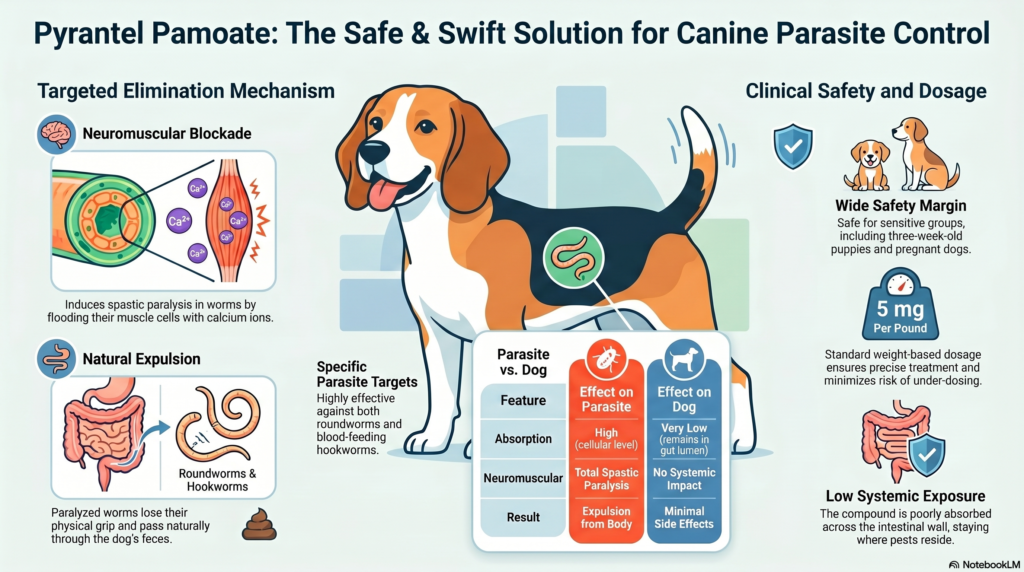
From a researcher’s standpoint, what makes pyrantel pamoate a true “go-to” solution isn’t just that it eliminates worms, but how it eliminates them. In animal nutrition and veterinary chemistry, we are always searching for compounds that exhibit high selectivity, meaning they aggressively target the biology of the parasite while leaving the host’s cellular machinery completely unharmed. Pyrantel pamoate achieves this beautifully through its action as a synthetic tetrahydropyrimidine derivative. It selectively binds to the nicotinic acetylcholine receptors at the parasite’s neuromuscular junction. This induces what we call a depolarizing neuromuscular blockade. In plain terms, it floods the parasite’s muscle cells with calcium ions, causing a sudden surge of muscular contraction that rapidly shifts into total, spastic paralysis.
Because the paralyzed worms can no longer maintain their physical grip on the host’s intestinal lining, they are naturally swept out of the body by regular gastrointestinal peristalsis. What is brilliant about this mechanism from a safety perspective is that pyrantel pamoate is poorly absorbed across the intestinal wall of the dog itself. It stays inside the lumen of the gut where the pests reside, meaning the dog’s systemic exposure to the chemical is incredibly low.
This extraordinarily wide safety margin explains why we can comfortably administer it to fragile, three-week-old puppies and pregnant dams without worrying about toxic systemic side effects. While newer multi-parasiticide combinations, like those blending moxidectin, afoxolaner, and pyrantel, show excellent broad-spectrum efficacy in clinical field trials, understanding the core, localized mechanics of pyrantel remains a foundational piece of veterinary parasite management.
Pyrantel Pamoate is an anthelmintic agent primarily utilized in veterinary medicine for the treatment of various intestinal parasites in dogs. Its chemical composition consists of a pyrimidine derivative that disrupts the neuromuscular function of helminths, leading to their expulsion from the host. Commonly prescribed for roundworms and hookworms, Pyrantel Pamoate plays a critical role in managing parasitic infections in canine patients.
Chemical Composition Overview
Characterized by its effectiveness as an anthelmintic agent, pyrantel pamoate is a synthetic derivative of the tetrahydropyrimidine class of compounds. Its chemical structure features a pamoic acid moiety, which enhances the solubility and bioavailability of the active ingredients. The compound is primarily utilized in veterinary medicine for the treatment of intestinal nematodes and is particularly effective against roundworms and hookworms in dogs.
The active ingredients in pyrantel pamoate function through a unique mechanism of action that disrupts the neuromuscular function of the target parasites. Its chemical structure allows for selective binding to nicotinic acetylcholine receptors, leading to paralysis and subsequent expulsion of the worms from the host’s gastrointestinal tract.
Pyrantel pamoate is formulated in various dosage forms, including suspensions and tablets, ensuring versatility in administration. This adaptability, combined with its favorable safety profile, underscores its prominence in veterinary parasitology. Understanding the active ingredient hub of pyrantel pamoate is essential for veterinarians and pet owners alike, as it highlights the compound’s efficacy and importance in maintaining canine health through effective worm control.
Mechanism of Action
The effectiveness of pyrantel pamoate as an anthelmintic agent is largely attributed to its mechanism of action, which targets the neuromuscular system of susceptible parasites. Pyrantel pamoate acts primarily by inducing depolarizing neuromuscular blockade in nematodes, leading to paralysis and subsequent expulsion from the host’s gastrointestinal tract. This mechanism disrupts the worm lifecycle, effectively interrupting the reproductive and developmental stages of the parasites within the intestines.
The compound achieves its anthelmintic effects by inhibiting cholinergic transmission and blocking the action of neurotransmitters that facilitate muscle contraction in worms. As a result, the affected parasites lose their ability to attach to the intestinal lining, which is critical for their survival and reproduction. By targeting the neuromuscular system, pyrantel pamoate guarantees that these parasites are effectively removed from the dog’s system, thereby promoting intestinal health.
Furthermore, the selective action of pyrantel pamoate minimizes the risk of adverse effects on the host, making it a preferred choice for treating infections caused by common intestinal worms. This targeted approach underscores the importance of understanding drug mechanisms in fostering ideal health in canine patients.
Common Uses in Veterinary Medicine
While various anthelmintic agents are available for veterinary use, pyrantel pamoate stands out due to its extensive efficacy against common intestinal parasites, including roundworms and hookworms. This compound is particularly favored in veterinary medicine for its safety profile, making it suitable for both young puppies and pregnant dogs, thereby enhancing its utility in routine parasite control.
Pyrantel pamoate is commonly used as a preventive measure in canine healthcare, ensuring that infestations do not develop into more severe health issues. It can be administered either as a standalone treatment or as part of a thorough deworming protocol. Adhering to established dosage guidelines is critical, as it optimizes therapeutic outcomes while minimizing potential side effects. Typically, the dosage is calculated based on the dog’s weight, with repeat treatments recommended based on fecal examinations.
While pyrantel pamoate is highly effective against roundworms and hookworms, other deworming agents like ivermectin for dogs are often considered when broader parasite coverage is needed, particularly for heartworm prevention.
The versatility of pyrantel pamoate in treating and preventing parasitic infections makes it an essential tool in veterinary practice, particularly in maintaining the overall health and well-being of canine patients. Its role in preventive care underscores the importance of regular veterinary assessments and proactive management of intestinal parasites in dogs.
How Pyrantel Pamoate Works
The active ingredient in pyrantel pamoate functions through a unique mechanism of action that disrupts the neuromuscular function of the target parasites, leading to paralysis and subsequent expulsion from the host’s system. This anthelmintic agent is particularly effective against various species of roundworms and hookworms, making it a popular choice in veterinary medicine for guaranteeing ideal dog health and effective worm prevention.
The mechanism of action involves the selective binding of pyrantel pamoate to the nicotinic acetylcholine receptors located at the neuromuscular junction of the parasites. This binding causes an influx of calcium ions, which results in muscular contraction followed by paralysis. Once paralyzed, the parasites lose their grip on the intestinal wall and are naturally expelled through the gastrointestinal tract.
The following table summarizes key aspects of how pyrantel pamoate works:
| Mechanism of Action | Details |
| Target Parasites | Roundworms, Hookworms |
| Action on Neuromuscular System | Disruption of neuromuscular activity |
| Resulting Effect | Paralysis of parasites |
| Mode of Expulsion | Natural elimination through feces |
| Administration Route | Oral (tablet or suspension) |
This targeted approach not only safeguards the health of dogs but also contributes to broader worm prevention strategies. By integrating pyrantel pamoate into regular veterinary care, pet owners can guarantee a proactive stance against parasitic infections, promoting a healthier and happier life for their canine companions.

Types of Worms Treated
Various species of intestinal parasites can greatly impact canine health, necessitating effective treatment options. Pyrantel Pamoate is particularly effective against two primary types of worms in dogs: roundworms and hookworms. Understanding the implications of these parasites is essential for both pet owners and veterinary professionals.
Roundworms, specifically Toxocara canis and Toxascaris leonina, are common in puppies and adult dogs. Infected dogs may exhibit roundworm symptoms such as abdominal distention, vomiting, and diarrhea. These parasites can also pose a zoonotic risk, as they can be transmitted to humans, especially children. The use of Pyrantel Pamoate is effective in paralyzing and expelling these worms from the gastrointestinal tract, thereby alleviating the health issues associated with roundworm infestation.
Hookworms, particularly Ancylostoma caninum, are another serious concern. These parasites attach to the intestinal lining and feed on the host’s blood, leading to anemia and potential fatality if left untreated. Effective hookworm prevention is critical, as these parasites can rapidly reproduce and cause significant health deterioration in dogs.
Pyrantel Pamoate effectively disrupts the neuromuscular function of hookworms, facilitating their elimination from the host.Because pyrantel does not eliminate all types of worms or parasites, your veterinarian may perform a fecal test before treatment to pinpoint the type of parasite your pet has.
Dosage and Administration
Proper dosage and administration of Pyrantel Pamoate are essential for ensuring effective treatment against intestinal parasites in dogs. The correct dosage is contingent upon the dog’s weight and the specific type of parasite being targeted. Pyrantel Pamoate is typically administered orally and is available in liquid or tablet form. Adhering to established dosage recommendations and administration guidelines is critical to optimize therapeutic outcomes and minimize the risk of insufficient treatment.
When considering the administration of Pyrantel Pamoate, the following points should be noted:
- Weight-Based Dosage: The standard dosage is approximately 5 mg per pound of body weight, with adjustments made based on veterinary advice.
- Frequency of Treatment: For effective control of roundworms and hookworms, a single dose may suffice, while re-treatment may be necessary in cases of severe infestations.
- Food Considerations: Pyrantel Pamoate can be administered with or without food, although some veterinarians recommend giving it with food to enhance palatability.
- Veterinary Consultation: Always consult a veterinarian prior to administration to confirm the appropriateness of Pyrantel Pamoate for your dog’s specific health needs and to establish an individualized treatment plan.
Safety and Side Effects
Pyrantel pamoate is considered safe for use in dogs and cats and is available in liquid, tablet or paste form. If your vet prescribes pyrantel pamoate for your pet, follow their dosing recommendation as it depends on your pet’s weight and the type of infection.
When administering Pyrantel Pamoate for canine deworming, it is essential to understand the potential side effects and necessary safety precautions. Common side effects may include mild gastrointestinal disturbances, such as vomiting and diarrhea, which generally resolve without intervention. However, to guarantee ideal safety, it is imperative to follow dosage guidelines and consult a veterinarian, particularly for dogs with pre-existing health conditions.
Common Side Effects
Pyrantel pamoate, a commonly prescribed anthelmintic for dogs, is generally well-tolerated; however, it is vital to be aware of potential side effects associated with its use. While adverse reactions are infrequent, proper symptom identification and treatment monitoring are important for guaranteeing the well-being of the animal.
Common side effects may include:
- Vomiting: Occasional gastrointestinal upset can occur, leading to nausea or vomiting.
- Diarrhea: Some dogs may experience loose stools as their digestive system adjusts to the medication.
- Loss of Appetite: A temporary decrease in appetite may be observed shortly after administration.
- Lethargy: Mild fatigue or drowsiness can be noted, particularly in sensitive individuals.
Although these side effects are typically mild and self-limiting, it is advisable for pet owners to remain vigilant and consult a veterinarian if persistent or severe reactions occur. By actively monitoring their dog’s response to treatment, pet owners can guarantee that any complications are addressed promptly, thereby maintaining the health and safety of their canine companions while effectively combating parasitic infections.
Safety Precautions Needed
Monitoring for side effects is just one aspect of ensuring the safe administration of pyrantel pamoate in dogs. Prior to treatment, a thorough veterinary assessment is essential to confirm the absence of contraindications, such as pre-existing health conditions or concurrent medications that may interact negatively with pyrantel pamoate. Adhering strictly to prescribed dosages is critical for both effective worm prevention and the minimization of potential adverse reactions.
Side effects of pyrantel pamoate are rare when dosed appropriately, but may include nausea, vomiting, lack of appetite, and diarrhea. If vomiting occurs after receiving a dose on an empty stomach, give future doses with food.
Owners should observe their dogs for any signs of distress following administration, including gastrointestinal upset or changes in behavior, which could indicate an adverse response. It is advisable to avoid self-medication, as dosages tailored for canine health vary based on the dog’s weight and specific parasitic infection.
Additionally, pyrantel pamoate is not effective against all types of worms; hence, regular veterinary check-ups and fecal examinations are essential for monitoring overall canine health and ensuring thorough parasite control. By implementing these safety precautions, dog owners can maximize the benefits of pyrantel pamoate while safeguarding their pets against potential risks associated with its use.

Related Studies About Pyrantel Pamoate
What are the viable alternatives to Pyrantel Pamoate for managing canine intestinal parasites? While Pyrantel Pamoate is a widely accepted treatment, several alternative options merit consideration, particularly for dog owners seeking varied approaches. These alternatives can be categorized into herbal remedies and dietary supplements, both of which may offer supportive roles in parasite management.
Herbal remedies often leverage natural ingredients known for their antiparasitic properties. Some of the most recognized options include:
- Wormwood (Artemisia absinthium): Traditionally used for its effectiveness against intestinal parasites.
- Black Walnut Hull: A potent natural compound known for its broad-spectrum antiparasitic effects.
- Diatomaceous Earth: A non-toxic powder that can disrupt the exoskeletons of certain parasites.
- Pumpkin Seeds: These contain compounds that may paralyze worms, facilitating easier expulsion from the dog’s system.
Dietary supplements also present a viable avenue, often designed to enhance the immune response and promote overall gut health. Probiotics, for instance, can bolster the intestinal microbiome, potentially reducing the likelihood of parasitic infections. Additionally, omega-3 fatty acids may support a robust immune system.
Development Of Acute Pancreatitis After Oral Administering A Praziquantel, Pyrantel Pamoate, And Febantel Combination In A Dog: A Case Report
This case report describes a 12-year-old Chihuahua that developed acute pancreatitis shortly after receiving a single oral dose of a common broad-spectrum dewormer, a combination of praziquantel, pyrantel pamoate, and febantel (PPFC).
Key Findings:
- Initial Presentation: The dog was brought in for a routine checkup. While the physical exam was normal, blood tests revealed elevated liver enzymes, lipase, cholesterol, triglycerides, and total bile acids, suggesting pre-existing liver dysfunction. The dog also had a known but untreated heart condition (tricuspid regurgitation).
- Adverse Reaction: Approximately 4 hours after taking the dewormer, the dog became lethargic and lost its appetite. After 30 hours, it began vomiting and having diarrhea.
- Diagnosis: The dog was diagnosed with acute pancreatitis 72 hours after medication, based on clinical signs, highly elevated pancreatic lipase (Spec cPL), and other blood test abnormalities indicating inflammation and organ dysfunction.
- Underlying Factors: Retrospective analysis of the initial blood sample (stored for 3 days) showed that the dog already had mildly elevated pancreatic lipase and significantly high bile acids before receiving the medication, indicating possible pre-existing subclinical pancreatic or liver issues.
- Proposed Mechanism: The authors hypothesize that the dog’s reduced liver function may have impaired its ability to metabolize the drug (especially praziquantel), leading to higher drug concentrations. This, combined with common side effects of the drug like vomiting (leading to dehydration), may have triggered the acute pancreatitis in a susceptible individual.
- Conclusion: While PPFC is considered very safe, this case suggests that caution should be taken when administering it to dogs with suspected underlying liver disease or other conditions that might increase their risk.
Limitations:
The study’s conclusions are limited because financial constraints led the owner to discontinue treatment, so the full clinical course and confirmation of underlying diseases were not possible. Furthermore, some initial blood tests were performed on samples that had been stored for three days, which may affect accuracy.
In summary, this report presents a rare but serious suspected adverse drug reaction, linking a common deworming medication to the onset of acute pancreatitis in a dog with pre-existing health issues.
| Reference: Masashi Yuki, Hiroto Taira, Takanori Inden, Development of acute pancreatitis after oral administering a praziquantel, pyrantel pamoate, and febantel combination in a dog: A case report, Heliyon, Volume 9, Issue 6, 2023, e17225, ISSN 2405-8440, https://doi.org/10.1016/j.heliyon.2023.e17225. (https://www.sciencedirect.com/science/article/pii/S240584402304433X) |
Efficacy Of An Oral Combination Of Moxidectin, Afoxolaner, And Pyrantel Pamoate For The Prevention Of Heartworm Disease In Dogs
This study evaluated the efficacy of a new oral combination product (NexGard® PLUS) containing moxidectin, afoxolaner, and pyrantel pamoate for preventing heartworm disease in dogs.
Key Findings:
- 100% Efficacy in Lab Studies: In two controlled laboratory studies, dogs were experimentally infected with heartworm larvae. Dogs treated monthly for six months with the test product had zero heartworms at necropsy. In contrast, untreated control dogs had high worm burdens (19-42 worms). The efficacy was a statistically significant 100% in both studies.
- 100% Efficacy in Field Study: A field trial was conducted on 120 client-owned dogs across heartworm-endemic areas of the US through a full transmission season. Dogs received the product monthly for a year. All dogs remained negative for heartworm antigen and microfilariae throughout the entire study, demonstrating 100% effectiveness in a real-world setting.
- Safety Profile: The product was well-tolerated. The most common side effects observed were mild and transient vomiting and diarrhea, which occurred at a similar rate to the control product (a topical moxidectin formulation). No serious adverse reactions were reported.
- Purpose of Combination: The product is designed as a comprehensive parasiticide:
- Moxidectin: Prevents heartworm disease.
- Afoxolaner: Kills fleas and ticks.
- Pyrantel Pamoate: Treats and controls intestinal roundworms and hookworms.
- Dose Selection: The chosen dose of moxidectin (12–24 µg/kg) was specifically designed to be highly effective against heartworm while maintaining a strong safety margin, even for dogs with the MDR1 gene mutation (common in herding breeds), which can make them sensitive to certain drugs.
Conclusion:
The study conclusively demonstrates that monthly oral administration of this moxidectin/afoxolaner/pyrantel pamoate combination is highly effective and safe for the prevention of heartworm disease in dogs, in addition to providing broad-spectrum protection against other common parasites. This offers a convenient, all-in-one option for pet owners to improve compliance with year-round parasite prevention protocols.
| Reference: Elizabeth Mitchell, Eric Tielemans, John W. McCall, Christine Baker, Elizabeth Martin, Justin Frost, Stephen Yoon, Becky Fankhauser, Efficacy of an oral combination of moxidectin, afoxolaner, and pyrantel pamoate for the prevention of heartworm disease in dogs, Research in Veterinary Science, Volume 162, 2023, 104957, ISSN 0034-5288, https://doi.org/10.1016/j.rvsc.2023.104957. (https://www.sciencedirect.com/science/article/pii/S0034528823002023) |
Safety Of An Oral Combination Of Moxidectin, Afoxolaner, And Pyrantel Pamoate In Dogs
This study evaluated the safety profile of the oral combination product NexGard® PLUS (containing moxidectin, afoxolaner, and pyrantel pamoate) in dogs under three specific and challenging conditions.
Key Findings:
- High Margin of Safety (Study #1): In a standard safety study, puppies as young as 8 weeks old received the product at 1x, 3x, and 5x the maximum recommended dose monthly for six months. No clinically significant adverse effects were observed on health, growth, clinical pathology (bloodwork), or organ health (via necropsy). The only findings were occasional, mild, and self-resolving vomiting or diarrhea, which also occurred in the untreated control group.
- Safety in Sensitive Dogs (Study #2): The product was administered to ABCB1-deficient Collies (a breed highly sensitive to certain drugs due to a genetic mutation). These dogs received single doses of 3x and 5x the maximum dose, and a 1x dose was given twice. No signs of macrocyclic lactone toxicity (e.g., neurological signs like tremors, ataxia, or depression) were observed at any dose level.
- Safety in Infected Dogs (Study #3): The product was given to dogs naturally infected with adult heartworms and microfilariae (baby worms in the bloodstream). Dogs received the 1x and 3x dose monthly for three months. The treatment significantly reduced microfilariae counts but did not cause any associated hypersensitivity reactions (e.g., anaphylaxis, shock, or collapse), which is a known risk when treating heartworm-positive dogs. No other treatment-related health abnormalities were observed.
Conclusion:
The study conclusively demonstrates that NexGard® PLUS is safe for use in a wide range of dogs, including:
- Puppies from 8 weeks of age.
- Dogs with the ABCB1 gene mutation (e.g., Collies and related breeds).
- Dogs with pre-existing heartworm infections.
The product was well-tolerated even at multiples of the recommended dose, with only minor and transient gastrointestinal upset occasionally noted. This robust safety profile supports its use as a routine monthly parasiticide.
| Reference: Marlene Drag, Eric Tielemans, Elizabeth Mitchell, John W. McCall, Norba Targa, Richard Bruner, Stephen Yoon, Beth Colley, Becky Fankhauser, Safety of an oral combination of moxidectin, afoxolaner, and pyrantel pamoate in dogs, Research in Veterinary Science, Volume 173, 2024, 105271, ISSN 0034-5288, https://doi.org/10.1016/j.rvsc.2024.105271. (https://www.sciencedirect.com/science/article/pii/S0034528824001371) |
CONCLUSION
Reflecting on the clinical data and the daily realities of canine care, it is easy to see why pyrantel pamoate remains an indispensable tool in our veterinary arsenal. However, as someone who spends a lot of time analyzing the lifecycles of these organisms and looking at holistic gut health, I must emphasize that a single dose of any medication is never a magic wand. True protection relies entirely on a proactive, structured deworming protocol paired with rigorous environmental hygiene. Parasite eggs are incredibly resilient in contaminated soil, and even the most effective anthelmintic cannot prevent a dog from re-infecting itself a few weeks later if its surroundings aren’t properly managed.
Furthermore, we must always respect individual biochemistry. While pyrantel pamoate boasts an excellent safety profile, recent peer-reviewed case studies remind us that dogs with compromised metabolic pathways, or hidden, subclinical liver and pancreatic dysfunction, can sometimes experience heightened sensitivities or secondary complications when given complex broad-spectrum drug combinations.
This is why I always urge pet owners to avoid self-medication and work hand-in-hand with their local veterinarian. Regular fecal examinations and routine diagnostic check-ups are absolutely vital. By combining the targeted power of proven compounds like pyrantel pamoate with a deep commitment to preventive husbandry and strong gut nutrition, we can ensure our dogs don’t just survive parasitic threats, but truly thrive with vibrant, long-term health.