

As a veterinary pharmacologist, I have spent years looking at animal health through a microscopic lens, evaluating how active ingredients interact with complex biological systems. Yet, whenever I step out of the lab and volunteer at local animal rescue centers, my perspective shifts from molecular pathways to the very real, tangible needs of vulnerable animals. One of the most heartbreaking, yet entirely preventable, challenges I constantly see in rescued felines is internal parasitic infection.
Kittens arriving with severely distended abdomens, adult cats struggling with nutrient absorption, and senior felines whose fragile immune systems are stretched to the brink by heavy worm burdens are far too common. When managing these cases, we need pharmaceutical solutions that balance uncompromising efficacy with an exceptionally gentle safety profile. That is exactly why pyrantel pamoate is a staple in both clinical veterinary medicine and rescue protocols.
It bridges the gap between sophisticated chemical engineering and practical, real-world animal welfare. It provides a reliable first line of defense that protects not only our beloved companion animals but also the human households that love them. Understanding how this active ingredient works helps us move past standard pet care routines and make truly informed decisions for our cats’ long-term vitality.
Pyrantel Pamoate is an effective anthelmintic medication that helps maintain a worm-free environment for cats by targeting and paralyzing common intestinal parasites, specifically roundworms and hookworms. This action disrupts the neuromuscular functions of the parasites, effectively preventing them from adhering to the intestinal lining, facilitating their expulsion. It is safe for cats of all ages, including young kittens, making it integral to routine deworming protocols. The availability of various formulations aids in compliance, ensuring efficient treatment. Understanding its mechanism and benefits further illuminates the role of Pyrantel Pamoate in feline health management.
Key Takeaways
- Pyrantel Pamoate effectively paralyzes roundworms and hookworms, facilitating their removal from the cat’s body.
- It is safe for cats of all ages, including kittens as young as two weeks old.
- The medication is available in easy-to-administer forms, such as flavored tablets and liquid suspension.
- Regular use of Pyrantel Pamoate helps prevent serious health issues and reduces the risk of zoonotic infections in humans.
- Accurate dosing and veterinary consultations ensure effective treatment and monitoring of parasitic infections.
What Is Pyrantel Pamoate?
Pyrantel pamoate is an anthelmintic medication commonly used to treat parasitic infections in cats, specifically targeting roundworms and hookworms. This drug is effective due to its ability to paralyze the parasites, allowing for their expulsion from the gastrointestinal tract. Its broad-spectrum efficacy makes it a preferred choice among veterinarians for routine deworming practices. As the active ingredient, pyrantel is responsible for disrupting parasite neuromuscular function, ensuring reliable elimination.
One of the primary pyrantel pamoate benefits is its safety profile; it can be administered to kittens as young as two weeks old, making it an important component of early preventive care. The medication is typically available in oral forms, including liquid and tablet formulations, which facilitate ease of administration. This adaptability is vital for maintaining a consistent deworming schedule, a key aspect of responsible pet ownership.
Pyrantel pamoate by itself is not FDA-approved in cats. It is, however, sometimes used as a sole antiparasitic medication for cats and kittens, and veterinarians can legally prescribe certain drugs in animals in certain circumstances. This is called extra-label or off-label use because this use isn’t described on the drug label.
Veterinarians often recommend a deworming schedule that begins at an early age and continues throughout the cat’s life, particularly for those that have access to outdoor environments where exposure to parasites is heightened. Regular deworming not only protects the health of the cat but also contributes to a healthier household by reducing the risk of zoonotic transmission to humans.
The commitment to a well-structured deworming schedule, including the use of pyrantel pamoate, empowers pet owners to take an active role in their cat’s health management. By understanding the importance of this medication, cat owners can guarantee their pets live healthier, parasite-free lives.
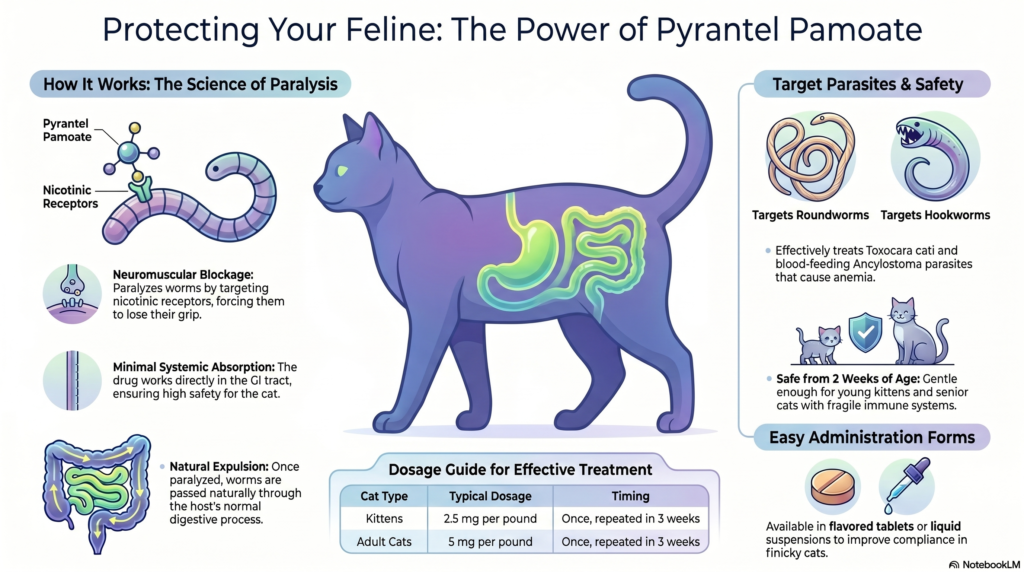
How Pyrantel Pamoate Works
By targeting neuromuscular junctions in parasites, pyrantel pamoate disrupts their ability to maintain grip on the intestinal walls, leading to paralysis and eventual expulsion from the host’s body. This mechanism of action is essential for effective parasite prevention, guaranteeing that felines remain free from the adverse effects of parasitic infections. Pyrantel pamoate is a depolarizing neuromuscular blocking agent that interferes with the transmission of nerve impulses in parasites, rendering them immobile.
Once administered, pyrantel pamoate binds to nicotinic receptors at the neuromuscular junction, causing sustained depolarization. This process results in paralysis of the parasites, preventing them from adhering to the intestinal lining. With their mobility compromised, these parasites can no longer compete for nutrients, making them susceptible to elimination through the host’s normal digestive processes.
The efficacy of pyrantel pamoate in maintaining cat health hinges on its ability to target a range of intestinal parasites, including roundworms and hookworms. By effectively incapacitating these organisms, pet owners can guarantee their cats experience fewer health complications associated with parasitic infestations. In addition to its proven safety for cats, veterinarians also commonly prescribe pyrantel pamoate for dogs, highlighting its versatility as a trusted deworming agent across different species. Regular use of pyrantel pamoate as part of a broader parasite prevention strategy can greatly enhance a cat’s overall well-being.
Types of Worms Treated
Pyrantel Pamoate is effective in treating several common intestinal parasites in cats, specifically roundworms and hookworms. This anthelmintic agent functions by paralyzing the worms, allowing for their expulsion from the host’s system. While it is not effective against all types of worms, it serves as an essential part of a thorough deworming strategy for feline patients.
Roundworms in Cats
Roundworms, a common parasitic infection in cats, primarily include two species: Toxocara cati and Toxascaris leonina. These parasites can lead to a range of health issues, making it essential for cat owners to be aware of roundworm symptoms and prevention strategies. Infected cats may exhibit signs such as vomiting, diarrhea, and a distended abdomen, which can greatly affect their overall vitality.
To effectively manage and prevent roundworm infestations, consider the following key points:
- Regular Deworming: Administer Pyrantel Pamoate as a preventive measure, especially for kittens and outdoor cats, to eliminate existing roundworms and reduce future infections.
- Hygiene Practices: Maintain a clean living environment by regularly disposing of feces and ensuring litter boxes are kept clean, as roundworm eggs can persist in the environment.
- Routine Veterinary Check-ups: Schedule regular veterinary visits to monitor your cat’s health and detect any parasitic infections early, allowing for timely intervention.
Hookworms Explained
Hookworms, specifically Ancylostoma tubaeforme and Uncinaria stenocephala, are another type of intestinal parasite that can affect cats, often leading to significant health issues. These parasites are known for their ability to attach to the intestinal lining, where they feed on the host’s blood, potentially causing anemia and other complications.
The hookworm lifecycle begins when eggs are passed in the feces of an infected cat. Under favorable conditions, these eggs hatch into larvae, which can then penetrate the skin of the host or be ingested. Once inside, they migrate to the intestines, where they mature and reproduce, completing the cycle. Understanding this lifecycle is vital for preventing and managing infestations.
Common hookworm symptoms include weight loss, lethargy, and gastrointestinal distress, such as diarrhea or vomiting. In severe cases, cats may exhibit signs of anemia, including pale gums and weakness. Early detection and treatment are imperative to mitigate these health risks. Pyrantel pamoate is effective against hookworms, providing a valuable tool in maintaining your cat’s health and freedom from these harmful parasites. Regular veterinary check-ups can help guarantee your feline companion remains worm-free.
Tapeworms Treatment Options
When addressing parasitic infections in cats, tapeworms, primarily represented by the genus Dipylidium and Taenia, require specific treatment options to effectively eliminate these intestinal parasites. Tapeworm symptoms often include weight loss, vomiting, and the presence of segments in the feces, which necessitate prompt intervention.
Treatment options for tapeworms are as follows:
- Praziquantel: This is one of the most effective anthelmintics for treating tapeworms. It works by disrupting the tapeworm’s ability to absorb nutrients, leading to its eventual elimination.
- Fenbendazole: Although primarily used for a broader spectrum of worms, fenbendazole can also be effective against tapeworms. It is often included in multi-worm treatments to enhance efficacy.
- Pyrantel Pamoate: While primarily targeting roundworms and hookworms, it may also provide some level of efficacy against certain types of tapeworms when used in combination therapies.Other antiparasitic options, such as ivermectin for dogs, are sometimes considered in veterinary practice, though they are generally not the first choice for feline tapeworm infections.
In addition to treatment, tapeworm prevention is essential. Regular deworming, maintaining a clean environment, and controlling flea infestations can greatly reduce the risk of tapeworm infections in cats.

Benefits of Using Pyrantel
From a pharmacological standpoint, the elegance of pyrantel pamoate lies entirely in its precise mechanism of action. It behaves as a depolarizing neuromuscular blocking agent, which essentially means it targets the nicotinic receptors at the parasite’s neuromuscular junctions to cause sustained depolarization and complete paralysis. What makes this incredibly brilliant for feline safety is its minimal systemic absorption; the drug does its heavy lifting directly within the gastrointestinal tract, immobilizing roundworms and hookworms so they simply lose their grip on the intestinal lining and pass naturally through the digestive process.
However, transitioning this science into practical application brings unique real-world hurdles, as any cat owner who has tried to medicate a finicky feline will tell you. In the community forums and rescue networks I participate in, a major topic of discussion is always compliance, specifically, how to accurately dose multiple cats or feral colonies without inducing massive stress.
While pyrantel pamoate is highly palatable compared to bitter antibiotics, managing a multi-cat household requires strategy. I always advise caretakers to separate cats during feeding to prevent “plate hopping,” use precise tools like liquid oral syringes for kittens, and leverage thick, highly aromatic purees to mask any therapeutic textures. This combination of robust chemical design and mindful administration is what makes successful parasite management possible.
Pyrantel Pamoate offers several advantages as a deworming agent for cats. It is effective against common intestinal parasites, ensuring thorough treatment. Additionally, it is safe for cats of all ages and can be administered through various convenient methods, enhancing compliance and ease of use.
Pyrantel for cats is used to treat and prevent roundworms and hookworms, though it is not effective against whipworms or tapeworms. It is also found in various combination products for the treatment of intestinal parasites and/or heartworm.
Effective Against Common Worms
Cats are particularly susceptible to various intestinal parasites, making effective deworming solutions vital for their health. Pyrantel Pamoate is a widely recognized treatment that targets common worms, guaranteeing that felines remain free from these harmful organisms. This anthelmintic is particularly effective against:
- Roundworms: One of the most prevalent parasites in cats, roundworms can cause malnutrition and gastrointestinal distress. Pyrantel effectively paralyzes these worms, facilitating their expulsion.
- Hookworms: These parasites latch onto the intestinal lining, leading to blood loss and anemia. Pyrantel Pamoate disrupts their attachment and promotes removal from the host.
- Whipworms: While less common, whipworms can still pose significant health risks. Pyrantel’s mechanism of action helps eliminate these parasites, contributing to overall gut health.
While natural remedies and preventive measures are valuable, they may not always provide sufficient protection against these parasites. Pyrantel Pamoate offers a reliable, pharmaceutical solution that complements a holistic approach to feline health. By maintaining a proactive deworming schedule with Pyrantel, cat owners can guarantee their pets remain vibrant and healthy, free from the burden of intestinal worms.
Safe for All Ages
Effective deworming solutions are necessary not only for adult felines but also for kittens and senior cats, as they are all vulnerable to parasitic infections. Pyrantel Pamoate is a preferred choice for cat owners seeking an effective and safe treatment across all life stages. This anthelmintic agent is particularly beneficial due to its broad-spectrum efficacy against common intestinal worms, including roundworms and hookworms.
For kittens, maintaining ideal health is vital, as parasitic infections can impede growth and development. Pyrantel promotes kitten health by rapidly eliminating these parasites, thereby ensuring that they receive the nutrients essential for their growth. The formulation is gentle enough for young cats, minimizing the risk of adverse reactions.
When it comes to senior safety, Pyrantel Pamoate also shines. Older cats may have compromised immune systems or pre-existing conditions, making them more susceptible to the negative effects of parasitic infestations. Pyrantel’s safety profile allows for effective deworming while reducing potential health risks associated with harsher medications. By prioritizing the well-being of both kittens and senior cats, Pyrantel Pamoate stands out as a reliable deworming solution that supports a healthy, parasite-free life.
Easy Administration Options
For cat owners, the ease of administering Pyrantel Pamoate is a considerable advantage, enhancing compliance and guaranteeing that deworming is performed as recommended. This medication is designed with user-friendly administration options, catering to diverse feline preferences and temperaments. The availability of both flavored tablets and liquid suspension allows for flexibility in dosing, making it suitable for even the most finicky cats.
Key benefits of Pyrantel Pamoate administration include:
- Flavored Tablets: These tablets are often formulated with palatable flavors, making them more appealing to cats. This increases the likelihood of successful ingestion without the need for forceful methods.
- Liquid Suspension: For cats that resist tablets, the liquid form provides an alternative that can be easily administered using a syringe. This method guarantees accurate dosing and can be mixed with food if necessary.
- Versatility: The combination of both forms allows pet owners to choose the best option based on their cat’s individual needs, enhancing the likelihood of effective deworming.
These easy administration options contribute considerably to maintaining a worm-free environment for your feline companion.
Dosage and Administration
How should Pyrantel Pamoate be administered to guarantee maximum efficacy in cats? Proper dosage and administration are critical to making certain that this deworming agent effectively eliminates parasites. Following specific dosage guidelines is essential for ideal results and to take into account the risk of underdosing or overdosing.
Pyrantel pamoate is usually dosed in dogs and in cats at 2.5 to 5 mg per pound (5 to 10 mg/kg) once, repeated in three weeks. The recommended dosage of Pyrantel Pamoate for adult cats is typically 5 mg per pound of body weight, administered once. Kittens can receive a lower dosage, starting at 2.5 mg per pound. It is advisable to consult a veterinarian for confirmation of these guidelines based on the cat’s health status and specific needs.
Here are some administration tips to keep in mind:
| Administration Tip | Description |
| Check Weight | Weigh your cat to ensure accurate dosing. |
| Use a Syringe | Administer liquid form with a syringe for precision. |
| Mix with Food | If your cat is resistant, mix with a small amount of food. |
| Follow Up | Schedule a follow-up appointment to check for effectiveness. |
| Store Properly | Keep Pyrantel Pamoate in a cool, dry place, away from sunlight. |
Potential Side Effects
While Pyrantel Pamoate is generally well-tolerated in cats, some animals may experience potential side effects following administration. Understanding these side effects is vital for pet owners and veterinarians to guarantee the well-being of their feline companions.
The following are some of the potential side effects associated with Pyrantel Pamoate:
- Allergic Reactions: Although rare, some cats may develop allergic reactions to Pyrantel Pamoate. Symptoms can include facial swelling, hives, or difficulty breathing. If any of these signs occur, it is important to seek veterinary attention immediately.
- Gastrointestinal Disturbances: Cats may experience gastrointestinal disturbances such as vomiting, diarrhea, or loss of appetite after receiving Pyrantel Pamoate. These symptoms are typically mild and self-limiting; however, if they persist or worsen, veterinary guidance should be sought.
- Sedation or Lethargy: In some cases, cats may exhibit mild sedation or lethargy following treatment. While not common, this reaction can occur and is generally temporary. Monitoring the cat’s behavior is advisable to guarantee their comfort and recovery.
It is essential for pet owners to observe their cats closely after administering Pyrantel Pamoate. While serious side effects are infrequent, awareness of potential allergic reactions and gastrointestinal disturbances can aid in prompt management. Always consult a veterinarian if adverse effects are suspected, guaranteeing the health and happiness of your feline friend.

Related Studies About Pyrantel Pamoate
Regular deworming is a crucial aspect of feline health management, as it helps to prevent infestations by harmful parasites that can compromise a cat’s overall well-being. Worms such as roundworms, tapeworms, and hookworms can lead to a myriad of health issues, including gastrointestinal disturbances, malnutrition, and anemia. By implementing a routine deworming schedule, pet owners can greatly reduce the risk of these parasites establishing themselves in their pets.
The significance of worm prevention cannot be overstated. Regular deworming not only protects individual cats but also contributes to broader public health efforts, as certain parasites can be zoonotic, posing risks to humans. This preventive measure is particularly crucial for kittens and outdoor cats, who are at higher risk of exposure to parasites.
In addition to safeguarding against infestations, the health benefits of regular deworming are numerous. Cats that receive timely deworming treatments exhibit improved energy levels, better nutrient absorption, and enhanced immune function. This proactive approach to parasite control allows for a more vibrant and healthy life for felines.
Moreover, regular deworming can help pet owners avoid costly veterinary bills associated with treating advanced parasitic infections. By prioritizing worm prevention, cat owners guarantee their pets remain healthy, active, and free from the detrimental effects of parasitic diseases. Establishing a deworming schedule in consultation with a veterinarian is an essential step in responsible pet ownership.
Efficacy Of An Ivermectin/Pyrantel Pamoate Chewable Formulation Against The Canine Hookworms, Uncinaria Stenocephala And Ancylostoma Caninum
This study evaluated the efficacy of a chewable formulation combining ivermectin (6 µg/kg) and pyrantel pamoate (5 mg/kg) against two species of canine hookworms: Uncinaria stenocephala and Ancylostoma caninum.
Key Findings:
- High Efficacy: The combination achieved a 99.6% reduction in worm burdens for both hookworm species.
- Rapid Action: Treated dogs expelled all worms within 48 hours post-treatment.
- Fecal Egg Count Reduction: Eggs per gram (EPG) of feces dropped to zero in most treated dogs by day 4 post-treatment, and only one dog had a low egg count (100 EPG) by day 7.
- Clinical Improvement: Treated dogs showed rapid improvement in symptoms like hematochezia (bloody stool) compared to control dogs.
- Safety: No adverse effects were observed, though some dogs initially vomited or regurgitated the chewable before successful readministration.
Conclusion:
The monthly administration of this ivermectin/pyrantel pamoate combination is highly effective for both preventing heartworm disease and controlling hookworm infections in dogs, offering convenience and broad-spectrum efficacy.
| Reference: Thomas J. Nolan, John M. Hawdon, Susan L. Longhofer, Carolyn P. Daurio, Gerhard A. Schad, Efficacy of an ivermectin/pyrantel pamoate chewable formulation against the canine hookworms, Uncinaria stenocephala and Ancylostoma caninum, Veterinary Parasitology, Volume 41, Issues 1–2, 1992, Pages 121-125, ISSN 0304-4017, https://doi.org/10.1016/0304-4017(92)90015-2. (https://www.sciencedirect.com/science/article/pii/0304401792900152) |
In Vivo Efficacy Of Pyrantel Pamoate As A Post-Exposure Prophylactic For Rat Lungworm (Angiostrongylus Cantonensis)
This study evaluated the effectiveness of pyrantel pamoate as a post-exposure prophylactic (PEP) treatment against the rat lungworm (Angiostrongylus cantonensis), a parasite that causes eosinophilic meningitis in humans.
Key Findings:
- Significant Reduction in Worm Burden: Orally administering pyrantel pamoate (11 mg/kg) to experimentally infected rats at various time points (0 to 8 hours post-infection) resulted in a 53–72% reduction in adult worm recovery from the heart-lung complex compared to untreated controls.
- Timing is Critical: The drug was most effective when administered 4 to 8 hours post-infection, rather than immediately. This counterintuitive result is attributed to factors like gastrointestinal transit time, drug formulation viscosity, and the location of larvae.
- Mechanism of Action: Pyrantel pamoate acts as a paralytic agent in the gastrointestinal tract (GIT), immobilizing larvae and preventing them from entering the systemic circulation, where they would migrate to the brain.
- Safety and Accessibility: As an over-the-counter (OTC) drug with a strong safety profile and minimal systemic absorption, pyrantel pamoate is a practical and accessible first-line intervention.
- Clinical Potential: The study suggests that early use of pyrantel pamoate after known exposure could reduce the severity of infection by lowering the worm burden, potentially delaying progression until prescription drugs like albendazole (which targets established infection) can be administered.
Conclusion:
Pyrantel pamoate shows promise as a post-exposure prophylactic to reduce the severity of rat lungworm disease by paralyzing larvae in the GIT before they migrate. Further research is needed to optimize timing and formulation for human use.
| Reference: John Jacob, Argon Steel, Lisa Kaluna, Steven Hess, Israel Leinbach, Carmen Antaky, Robert Sugihara, Lindsey Hamilton, Peter Follett, Kathleen Howe, Steven Jacquier, Supakit Wongwiwatthananukit, Susan Jarvi, In vivo efficacy of pyrantel pamoate as a post-exposure prophylactic for rat lungworm (Angiostrongylus cantonensis), International Journal for Parasitology: Drugs and Drug Resistance, Volume 19, 2022, Pages 1-5, ISSN 2211-3207, https://doi.org/10.1016/j.ijpddr.2022.04.002. (https://www.sciencedirect.com/science/article/pii/S2211320722000069) |
Apparent Treatment Failure Of Praziquantel And Pyrantel Pamoate Against Anoplocephalid Tapeworms
This study reports a suspected case of anthelmintic treatment failure (potentially resistance) against equine tapeworms (Anoplocephala perfoliata) with both praziquantel and pyrantel pamoate on a Thoroughbred farm in Kentucky, USA.
Key Findings:
- Low Efficacy Against Tapeworms: Treatment with praziquantel (1.5 mg/kg) resulted in only a 23.5% reduction in tapeworm egg counts. Pyrantel pamoate (13.2 mg base/kg) showed a 50.9% reduction, far below the historical efficacy of >95% for both drugs.
- Treatment Failure: Praziquantel eliminated tapeworm eggs in only 3 of 17 yearlings, and 5 yearlings became positive after treatment. Pyrantel pamoate failed to clear infection in any of the 14 treated, infected yearlings.
- Concurrent Strongylid Resistance: The study also confirmed resistance to ivermectin and pyrantel pamoate against strongylid nematodes in the same horses, with fecal egg count reductions well below acceptable thresholds.
- Diagnostic Challenges: Standard fecal egg counting techniques are poorly sensitive for tapeworms, making efficacy testing difficult. The low pre-treatment egg counts limited the statistical power of the analysis.
Conclusion:
This is the first report suggesting possible anthelmintic resistance in equine tapeworms to both praziquantel and pyrantel pamoate. The findings are concerning as there are no alternative anti-tapeworm drugs widely available for horses. The study highlights the urgent need for:
- Improved diagnostic methods for detecting tapeworm infections and assessing treatment efficacy.
- Development of new anthelmintics or alternative treatment options.
- Global monitoring of tapeworm resistance patterns.
| Reference: M.K. Nielsen, Apparent treatment failure of praziquantel and pyrantel pamoate against anoplocephalid tapeworms, International Journal for Parasitology: Drugs and Drug Resistance, Volume 22, 2023, Pages 96-101, ISSN 2211-3207, https://doi.org/10.1016/j.ijpddr.2023.06.002. (https://www.sciencedirect.com/science/article/pii/S2211320723000222) |
CONCLUSION
Reflecting on my dual experiences in scientific drug development and hands-on animal rescue, I am continually reminded that effective veterinary medicine is never just about the molecules we synthesize, it is about how seamlessly those solutions fit into daily animal care. Parasite prevention is a lifelong commitment that requires a proactive, structured approach in close consultation with your family veterinarian.
While a single dose of pyrantel pamoate is highly effective at clearing out active roundworm and hookworm populations, it does not provide permanent immunity, nor does it address every single type of internal parasite, such as tapeworms, which require distinct targeted therapies like praziquantel. Maintaining a consistent deworming schedule is one of the simplest, most profound ways we can advocate for our cats’ welfare, ensuring they live vibrant, pain-free lives.
Every time I watch a once-lethargic rescue kitten transform into a playful, energetic cat after proper treatment, the vital importance of evidence-based veterinary chemistry hits home. By staying diligent with routine diagnostics, proper hygiene practices, and trusted veterinary interventions, we can easily maintain a clean, parasite-free environment that allows our feline companions to truly thrive alongside us.