
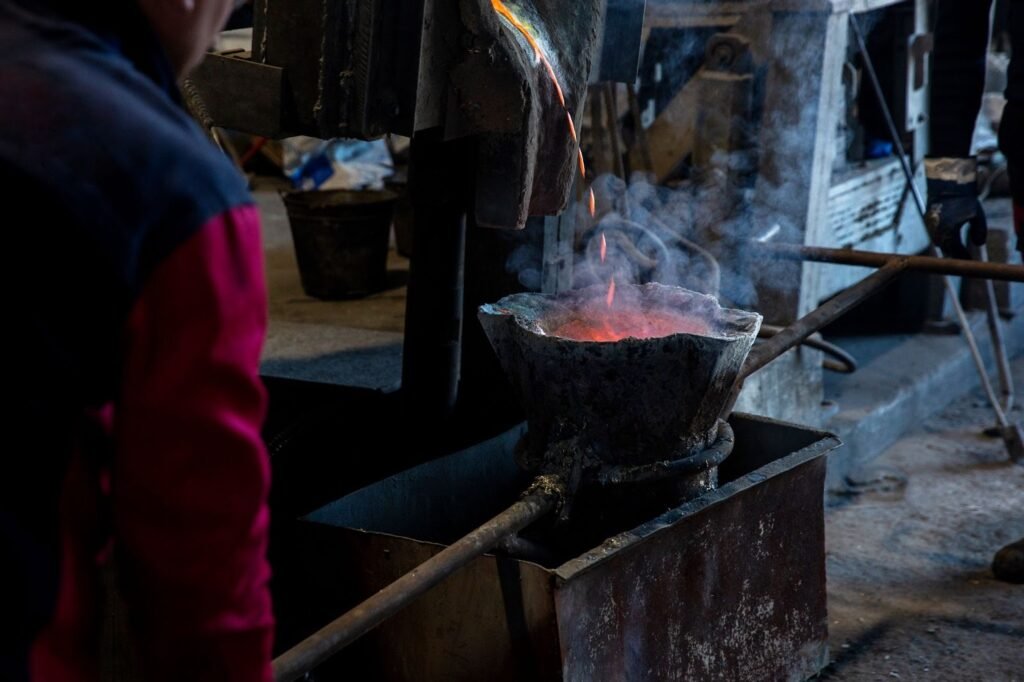
When I first stood before a live blast furnace early in my career, the sheer wall of radiant heat was humbling, it felt less like modern engineering and more like a primal confrontation with nature. In my 18 years as a metallurgical engineer, I have come to view smelting not merely as an industrial extraction technique, but as a profound, transformative journey akin to alchemy. It is the definitive bridge between geology and civilization. We take raw ore—substances that the untrained eye would dismiss as mere stone, and through the precise orchestration of thermal and chemical forces, transmute them into the high-strength alloys that frame our modern world.
My doctoral research at the University of Sheffield deeply instilled in me an appreciation for the microstructural magic that happens when you heat these earth-bound materials to their breaking points. It’s fascinating to think that back in 5000 BCE, early metallurgists in the Near East were driven by that exact same curiosity when they first isolated copper.
Whether I am photographing the rugged, enduring geometry of a mountain landscape or analyzing an ore sample under a scanning electron microscope, I am constantly reminded of the relationship between material durability and the fiery processes that forged them. Smelting fundamentally altered our ancestors’ social structures, and today, it remains the quiet engine behind our global infrastructure, dictating exactly how far we can push the boundaries of structural engineering.
Smelting is a crucial metallurgical process that converts raw ore into valuable metals through high-temperature heating and chemical reduction. This process effectively separates metal from impurities, with efficiency influenced by furnace design and temperature control. Key chemical reactions, such as the reduction of metal oxides, play a pivotal role in achieving ideal extraction rates. Modern advancements, including induction heating and plasma arc technology, enhance energy efficiency and reduce environmental impacts. Understanding these principles is essential for sustainable metal production and aligns with future technological trends. Those interested will find further insights into ongoing innovations and environmental considerations in smelting practices.
KEY TAKEAWAYS
- Smelting transforms raw ore into usable metals through heat and chemical reduction, crucial for economic development throughout history.
- The process involves various types of furnaces and precise temperature control to enhance energy efficiency and metal output.
- Chemical reactions during smelting reduce metal oxides to elemental metals, with slag formation helping to separate impurities efficiently.
- Modern techniques like induction heating and flash smelting improve productivity while minimizing environmental impacts through advanced waste management.
- Future advancements in automation and renewable energy integration aim to align smelting practices with sustainability goals and reduce greenhouse gas emissions.
THE HISTORY OF SMELTING
The history of smelting is a pivotal chapter in the development of metallurgy and human civilization. Emerging from ancient techniques utilized by early societies, smelting transformed raw ore into usable metals, fundamentally altering economic landscapes and social structures. The process involves heating ores to extract metals, a practice that dates back to at least 5000 BCE, with notable discoveries such as the extraction of copper in the Near East, which exemplified the innovative spirit of the time.
Cultural significance is equally profound, as the ability to manipulate material properties of metals facilitated advancements in tools, weapons, and art, thereby shaping societal dynamics. Economic impact was substantial; regions rich in mineral resources experienced growth and increased trade, leading to the establishment of complex economies.
Technological advancements in smelting, such as the development of the blast furnace in the Middle Ages, further revolutionized the production of iron and steel, promoting industrial growth. Global practices evolved, with each culture adapting smelting techniques to local resources and needs, fostering a rich tapestry of mining histories across continents.
In the smelting process a metal that is combined with oxygen—for example, iron oxide—is heated to a high temperature, and the oxide is caused to combine with the carbon in the fuel, escaping as carbon monoxide or carbon dioxide.
The interplay of these factors illustrates not merely the progression of a technical process but also the emergence of interconnected societies driven by a collective desire for advancement. Understanding the historical context of smelting reveals its role as a catalyst for change, laying the groundwork for contemporary metallurgy and its ongoing evolution in a world that increasingly values freedom through innovation.
Understanding Raw Ore
Raw ore serves as the foundational material from which metals are extracted through smelting processes. Understanding the characteristics of raw ore is crucial for effective mineral identification and subsequent extraction. The composition of ore varies greatly depending on its geological formation, which influences the abundance and type of metals contained within.
Metals are commercially extracted from minerals at low cost and minimum effort. These minerals are known as ores. A substance which is added to the charge in the furnace to remove the gangue (impurities) is known as flux.
Ore composition typically includes a mixture of valuable minerals, gangue (non-valuable minerals), and trace elements. For instance, in iron ore, the primary mineral may be hematite or magnetite, while copper ore may consist of chalcopyrite or malachite. Each type of ore presents unique properties that dictate the methods employed for extraction and processing.
Mineral identification is a critical component in the evaluation of raw ore. Techniques such as X-ray fluorescence (XRF) and scanning electron microscopy (SEM) allow geologists and metallurgists to ascertain the specific minerals present in a sample. This analytical approach not only informs the efficacy of smelting operations but also aids in predicting potential environmental impacts associated with mining and processing.
The understanding of raw ore extends beyond mere composition; it encompasses geological history, mineral relationships, and potential economic value. As the demand for metals continues to rise, the ability to analyze and identify raw ore accurately will become increasingly important, particularly as global supply chains evolve and certain processing regions function as an active ingredient hub for refined metals and critical industrial inputs. By leveraging advanced analytical techniques and embracing a meticulous approach to mineral identification, industry professionals can guarantee that the journey from ore to metal is both efficient and sustainable.
The Smelting Process
Typically, the smelting process involves the extraction of metals from their ores through a combination of heat and chemical reduction. Smelting uses heat and a chemical reducing agent to decompose the ore, driving off other elements as gases or slag and leaving the metal behind. This intricate process begins with furnace design, which is crucial in determining the efficiency and output of metal production. Various furnace types, including blast furnaces and electric arc furnaces, are utilized based on the specific metal being extracted and the desired metal purification levels.
Temperature control is critical throughout the smelting process. Precise thermal management ensures that the ore reaches the requisite melting points, making temperature control an active ingredient in maximizing reduction efficiency while minimizing energy consumption. Energy efficiency is paramount not only to reduce operational costs but also to comply with environmental regulations, thereby promoting sustainability in alloy production.
Safety measures are another essential component of smelting operations. Workers are exposed to high temperatures and potentially harmful emissions, necessitating rigorous protocols and protective equipment to mitigate risks. Additionally, effective waste management strategies must be implemented to handle byproducts, which can include slag and gaseous emissions. Proper handling and disposal of these materials are crucial in minimizing environmental impact.
Chemical Reactions Involved
Fundamental to the smelting process are the chemical reactions that facilitate the extraction of metals from their ores. The primary reactions involved include reduction reactions, which are essential for converting metal oxides into their elemental forms, and oxidation processes that often occur simultaneously, as oxygen is released during the reduction. The precise control of temperature is vital, as varying temperatures can lead to different outcomes regarding metal extraction efficiency and the quality of the final product.
During smelting, the following key reactions take place:
- Reduction Reactions: Metal oxides are reduced, often using carbon or other reducing agents, to liberate pure metals from their ores.
- Oxidation Processes: These can arise from impurities or the presence of excess oxygen, leading to the unwanted formation of metal oxides.
- Slag Formation: Flux materials are introduced to bind with impurities and form slag, which floats on the molten metal, allowing for easier separation.
The interaction of these reactions can result in alloy formation, where different metals are combined to enhance material properties. The careful selection of flux materials is an active ingredient in achieving efficient metal extraction and ensuring the desired physical and chemical characteristics of the final product. Consequently, a thorough understanding of these chemical reactions is indispensable for optimizing smelting operations and ensuring efficient metal recovery.
MODERN SMELTING TECHNIQUES
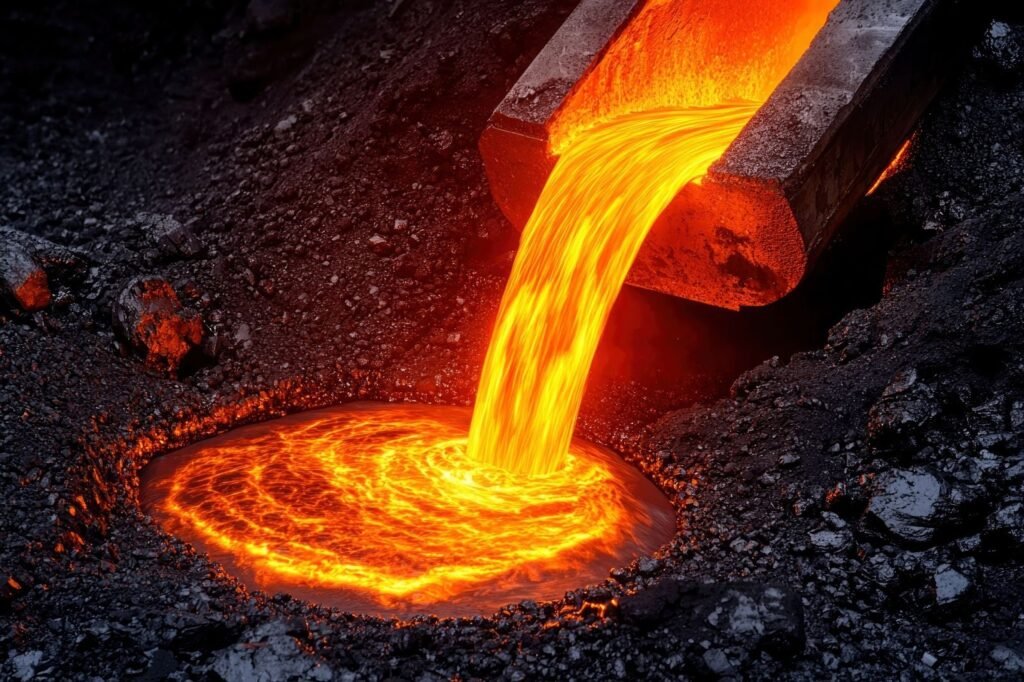
Innovation in modern smelting techniques has greatly transformed the metal extraction landscape, enhancing both efficiency and environmental sustainability. Key advancements include induction heating, which allows for precise temperature control, resulting in improved energy efficiency during the smelting process. Flash smelting has emerged as a highly effective method, utilizing fine ores and enabling the direct reduction of metals with lower energy input.
Plasma arc technology has also gained traction, offering a powerful and efficient means of melting and refining metals. This technique utilizes ionized gas to create intense heat, facilitating the rapid melting of various materials. Additionally, the incorporation of oxygen enrichment in smelting furnaces has markedly boosted the combustion process, further enhancing the efficiency of metal extraction.
Automation in smelting processes has streamlined operations, reducing human error and increasing productivity. Automated systems are capable of monitoring parameters in real-time, thereby optimizing conditions for maximum yield. Moreover, the growing emphasis on recycling metals has spurred the development of sustainable practices in smelting, allowing for the recovery of valuable materials from scrap, thereby reducing the need for virgin ore extraction.
| Technique | Advantages | Applications |
| Induction Heating | Precise temperature control | Steel and aluminum smelting |
| Flash Smelting | Lower energy input | Copper production |
| Plasma Arc | High melting efficiency | Specialty alloys |
These modern smelting techniques not only enhance productivity but also align with the global push for sustainable practices in the metal industry.
Environmental Considerations
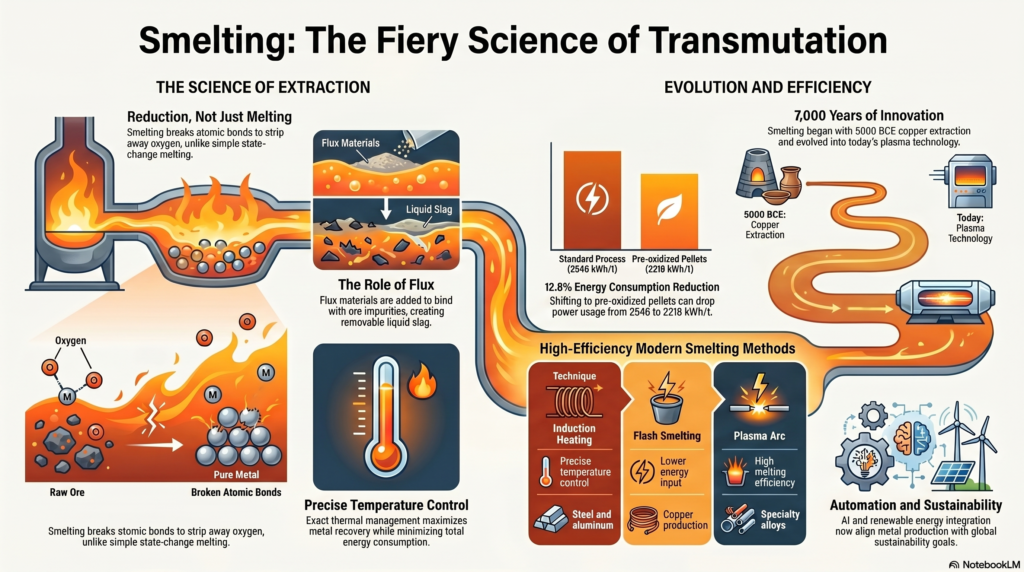
In the lab and out on the factory floor, you quickly learn that smelting is an uncompromising game of parameters. A common misconception I frequently encounter when mentoring young engineers is the conflation of “melting” and “smelting”. As a rule of thumb, melting is a simple phase change from solid to liquid, but smelting is fundamentally a chemical reduction process. You aren’t just changing a state of matter; you are breaking strong atomic bonds, using heat and reducing agents to strip away oxygen and force impurities into a floating slag layer for separation.
Recent literature highlights how beautifully complex this optimization can get. For instance, a 2025 study on industrial-scale EAF smelting demonstrated that by shifting from raw ilmenite powder to pre-oxidized pellets, power consumption dropped from 2546.51 kWh·t⁻¹ to 2218.87 kWh·t⁻¹. That is a massive leap in thermal efficiency, though it introduces a classic metallurgical trade-off: it increases your reductant consumption by about 15.78%.
Similarly, when looking at the semi-molten smelting of complex nickel laterite ores, researchers found that dropping the minimum eutectic temperature of the slag down to 1223 °C required maintaining a very precise slag basicity of 0.3. This delicate balancing act reminds me of setting a tricky piece of protection while lead climbing, one slight miscalculation in your composition or your temperature control, and the entire system loses its balance.
Environmental considerations play an essential role in the smelting industry, particularly as global awareness of ecological impacts intensifies. The smelting process, while vital for metal extraction, poses considerable challenges that necessitate rigorous pollution management and sustainable practices. The ecological footprint of smelting is marked by air and water pollution, habitat destruction, and resource depletion, underscoring the need for enhanced regulatory frameworks.
Key areas of focus in addressing these challenges include:
- Waste Recycling: Implementing advanced technologies for recycling smelting by-products not only reduces waste but also conserves natural resources. This practice minimizes the need for additional mining activities, thereby lessening environmental strain.
- Pollution Management: The adoption of state-of-the-art filtration and scrubber systems can greatly reduce airborne pollutants. Such measures guarantee that emissions remain within permissible limits, thereby safeguarding air quality in surrounding communities.
- Community Impact: Engaging local communities in the decision-making process fosters transparency and accountability. This engagement is vital for understanding the socio-economic implications of smelting operations and for tailoring strategies that mitigate adverse effects.
Future of Smelting Technology
Advancements in smelting technology are poised to reshape the industry, addressing both efficiency and environmental sustainability. As the demand for metals grows and regulatory pressures increase, the implementation of automation advancements and enhanced energy efficiency will be critical in modernizing smelting operations.
Automation is revolutionizing the smelting process by enhancing production schedules, reducing human error, and improving safety. Advanced robotics and artificial intelligence are enabling real-time monitoring and control of the smelting environment, ensuring that temperature, pressure, and chemical compositions are maintained within ideal parameters. This not only maximizes output but also minimizes waste and energy consumption.
Energy efficiency remains a paramount concern in the context of smelting. Current innovations focus on integrating renewable energy sources, such as solar and wind, into the smelting process. In addition, new methods, such as direct reduction and flash smelting, have been developed to enhance the energy efficiency of traditional smelting techniques. These processes greatly reduce the carbon footprint of metal production by minimizing the reliance on fossil fuels and lowering greenhouse gas emissions.
As we look towards the future, the convergence of automation and energy-efficient technologies will not only streamline smelting operations but also align the industry with global sustainability goals. The adoption of these cutting-edge innovations will empower metal producers to operate more efficiently while meeting the increasing demands for responsible resource management and environmental stewardship. The future of smelting technology promises a transformative shift towards a more sustainable and economically viable industry.
RELATED STUDIES ABOUT SMELTING
To summarize, smelting represents a transformative journey akin to alchemy, where raw ore, once viewed as mere stone, is transmuted into valuable metals through intricate chemical processes. Historical advancements in smelting techniques have paved the way for modern practices that prioritize efficiency and sustainability. As the industry evolves, future innovations may further enhance the extraction of resources while mitigating environmental impacts, ensuring that the age-old practice of smelting continues to yield both economic and ecological benefits.
Industrial-Scale Production and Smelting of Oxidized Panzhihua Ilmenite Concentrate Pellets for Titania Slag Production
This study demonstrates the successful industrial-scale production and smelting of oxidized pellets made from Panzhihua ilmenite concentrate as a superior feedstock for titania slag production in a 25.5 MVA electric arc furnace (EAF). The research addresses challenges arising from finer ilmenite concentrates—such as high energy consumption, low recovery, poor hot metal quality, and excessive SO₂ emissions—by replacing raw fine powder with pre-oxidized pellets.
Key Findings:
- Pellet Production & Quality
- Oxidized pellets were industrially produced via disc pelletization and shaft furnace roasting.
- Optimal conditions (1.2 wt% organic binder, roasting at 1050–1100 °C) yielded pellets with 0% cracking rate, 698 N compressive strength, and 83% tumbler index.
- Oxidation removed ~99.87% of sulfur from the concentrate.
- Smelting Performance
- Batch feeding of oxidized pellets caused severe foaming slag, extended smelting time, and increased energy consumption.
- Continuous feeding stabilized the process, prevented foaming, and improved reaction control.
- With continuous feeding and optimized reductant (Coke 2), power consumption dropped to 2218.87 kWh·t⁻¹ (from 2546.51 kWh·t⁻¹ for raw powder) and smelting time reduced to 7 h (from 7.23 h).
- Product Quality & Environmental Benefits
- Hot metal quality improved: Carbon content rose from 1.16% to ~2.5%; sulfur content fell from 0.32% to 0.11%.
- Tapping temperature decreased from ~1480 °C to ~1430 °C.
- SO₂ emissions were significantly reduced, with flue gas SO₂ levels falling below 100 mg·Nm⁻³ (vs. 150–400 mg·Nm⁻³ for raw powder).
- TiO₂ recovery in slag increased to 96.3% (vs. 95.8% for powder), reducing losses to dust.
- Process Economics & Drawbacks
- Continuous feeding enhanced thermal efficiency, melting uniformity, and overall stability.
- Disadvantages: Pellet oxidation increases reductant consumption by ~15.78% and ore consumption by ~3.04% per ton of slag due to the additional reduction required.
Conclusion:
The industrial-scale production and EAF smelting of oxidized Panzhihua ilmenite concentrate pellets is technically feasible and environmentally advantageous. The process mitigates issues associated with fine feedstocks, reduces energy use and emissions, improves product quality, and increases TiO₂ recovery—despite slight increases in reductant and ore consumption. This approach offers a sustainable pathway for upgrading titania slag production from fine ilmenite concentrates.
| REFERENCE: Bing Song, Wei Lv, Jun Xiao, Kaimao Li, Shuxing Qiu, Xueming Lv, Industrial-scale trials for the production of oxidized Panzhihua ilmenite concentrate pellets followed by smelting in an EAF for titania slag production, Results in Engineering, Volume 26, 2025, 105565, ISSN 2590-1230, https://doi.org/10.1016/j.rineng.2025.105565. (https://www.sciencedirect.com/science/article/pii/S2590123025016354) |
Optimization of Semi-Molten Smelting Process for Ferronickel Production Using Blended Saprolitic and Limonitic Laterite Ores
This study systematically investigates and optimizes the semi‑molten smelting process for producing ferronickel from a mixture of saprolitic and limonitic laterite ores, with a focus on the effect of slag basicity (CaO/SiO₂ mass ratio). The research demonstrates that adjusting slag composition and process parameters significantly improves melting characteristics, metal recovery, and product quality.
Key Findings:
- Optimal Slag Composition
- Phase diagram analysis shows that a low‑melting‑point slag system centered on diopside (CaMgSi₂O₆) can be achieved when slag basicity is 0.3 and the limonitic laterite mass fraction is ≥10%.
- The minimum eutectic temperature of the slag can be lowered to 1223 °C by controlling CaO, Al₂O₃, and FeO contents.
- Increasing FeO content improves slag melting characteristics, while excessive Al₂O₃ (>20 wt.%) or CaO leads to refractory phases that hinder slag‑alloy separation.
- Optimized Process Parameters
- Best performance is achieved at:
- Reduction temperature: 1300 °C
- C/O mass ratio: 0.86
- Limonitic laterite mass fraction: 20%
- Slag basicity: 0.3
- Under these conditions, ferronickel with 6.42 % Ni and 86.99 % Fe is produced, with Ni recovery of 88.60 % and Fe recovery of 72.25 %.
- Best performance is achieved at:
- Improved Metal Aggregation
- The optimized slag composition promotes the formation of a sufficient liquid phase, enhancing the aggregation and growth of ferronickel grains.
- Grain size increases notably when limonitic laterite fraction and slag basicity are kept at or below 20% and 0.3, respectively.
- Process Advantages
- The semi‑molten process (operating at 1200–1400 °C) enables better metal coalescence compared to solid‑state reduction.
- Blending limonitic ore (higher Fe, lower Ni) with saprolitic ore (higher Ni, lower Fe) balances the feed, improving overall Ni recovery and product grade.
Conclusion:
The study confirms that controlling slag basicity and blending laterite ores can effectively optimize the semi‑molten smelting process. The identified parameters lower the operating temperature, improve slag fluidity, increase metal recovery, and yield a high‑grade ferronikel product. This approach offers a more energy‑efficient and effective route for utilizing complex nickel laterite resources in ferronickel production.
| REFERENCE: Yu-xiao XUE, Jian-bo ZHAO, Zhi-xiong YOU, Xue-wei LV, Effect of slag basicity on semi-molten smelting process of saprolitic and limonitic laterite ores, Transactions of Nonferrous Metals Society of China, Volume 35, Issue 5, 2025, Pages 1679-1690, ISSN 1003-6326, https://doi.org/10.1016/S1003-6326(25)66775-6. (https://www.sciencedirect.com/science/article/pii/S1003632625667756) |
The Chalcolithic Arsenical Copper Smelting Tradition of the Vera Basin (Southeast Iberia)
This study provides a comprehensive technological and organizational characterization of early copper metallurgy in the Vera Basin of Southeast Iberia during the Chalcolithic period (3100–2250 cal. BC). By integrating new archaeological data from Santa Bárbara and Zájara with previous findings from Almizaraque and Las Pilas, the research defines a coherent regional metallurgical tradition.
Key Findings:
- Raw Materials & Ore Procurement
- Copper production relied on local arsenical ores, primarily from the Pinar de Bédar and Cerro Minado mines (within ~20 km).
- Ores included carbonates (malachite, azurite), mixed Cu-As minerals (e.g., olivenite, cornwallite), and occasional sulphidic minerals.
- Impurities such as As, Fe, Zn, Pb, Ni, Ag, Sb, and S were common, contributing to the characteristic arsenical copper alloys (up to ~6% As) of the period.
- Production Technology & Efficiency
- Metallurgy was domestic and decentralized, conducted in open spaces within settlements, alongside other subsistence activities.
- A two-step process was identified:
- Smelting in flat, open crucibles under relatively oxidising conditions. This produced viscous slag with trapped Cu prills but resulted in high copper losses (up to 40% CuO in slag) and inefficient separation.
- Melting of recovered prills in elongated, deep crucibles to create a homogeneous metal pool for casting.
- Crucibles were made from unusually refractory local clays (high in Al₂O₃), though their thermal potential was not fully exploited.
- Technical Choices & Social Organization
- Vessel morphology was functionally specialized: open crucibles for smelting (maximizing surface area for charcoal and multi-person bellows operation) and deep crucibles for melting (minimizing spillage and retaining heat).
- The technology was “good enough” but not optimized for maximum yield, prioritizing practical and social constraints (e.g., fuel economy, cooperative labor) over efficiency.
- Evidence suggests ore procurement was likely community-based and sporadic, not centrally controlled, with possible collective mining expeditions.
- Regional Coherence & Implications
- The Vera Basin sites (Santa Bárbara, Zájara, Almizaraque, Las Pilas) shared a consistent technological signature, despite using ores from different mines.
- This tradition reflects a conservative, low-intensity production system adapted to local demand and social structures, rather than specialist-driven innovation.
- The study establishes a baseline for the Southeast Iberian Chalcolithic metallurgical tradition, enabling future comparisons with other Iberian regions (e.g., Southwest, Northeast) to understand broader patterns of technological diffusion and social complexity.
Conclusion:
The Chalcolithic communities of the Vera Basin developed a robust, locally adapted arsenical copper smelting tradition characterized by domestic production, selective use of local ores, functionally specialized ceramics, and a two-stage smelting/melting process. While technically inefficient by modern standards, this tradition was socially sustainable and effective for its time, reflecting a society where metallurgy was integrated into daily life rather than controlled by elites. This work provides a crucial foundation for inter-regional studies of early metallurgy in prehistoric Iberia.
| REFERENCE: M. Murillo-Barroso, J. Montes-Landa, D. Pérez-L’Huillier, M.D. Camalich Massieu, D. Martín Socas, M. Martinón-Torres, The arsenical copper smelting tradition of the Vera Basin (Southeast Iberia): New insight from Santa Bárbara and Zájara,Journal of Archaeological Science: Reports, Volume 66, 2025, 105225, ISSN 2352-409X, https://doi.org/10.1016/j.jasrep.2025.105225. (https://www.sciencedirect.com/science/article/pii/S2352409X25002585) |
CONCLUSION
Looking toward the horizon, the future of metallurgy depends entirely on our ability to decouple resource extraction from environmental degradation. The traditional ecological footprint of smelting, marked by heavy greenhouse gases and pollution, is something our industry must aggressively fix through technological evolution. It inspires me to see modern operations adopting automation, advanced artificial intelligence, and renewable energy integration to tightly govern the smelting environment. By utilizing real-time monitoring to keep temperature and chemical compositions within ideal parameters, we can systematically minimize waste and slash emissions.
We can even find sustainable inspiration in prehistoric metallurgy. The Chalcolithic communities of the Vera Basin practiced a highly decentralized, domestic form of copper smelting. While technically inefficient by our modern metrics, their process was deeply integrated into their local social fabrics and strictly constrained by fuel economy, making it remarkably socially sustainable for its era.
Today, our challenge is to match that spirit of localized harmony on an industrial scale. By combining advanced techniques like flash smelting and induction heating with a circular economy focused on scrap metal recycling, we can ensure that this age-old science continues to empower human innovation without compromising the natural landscapes that inspire us.