
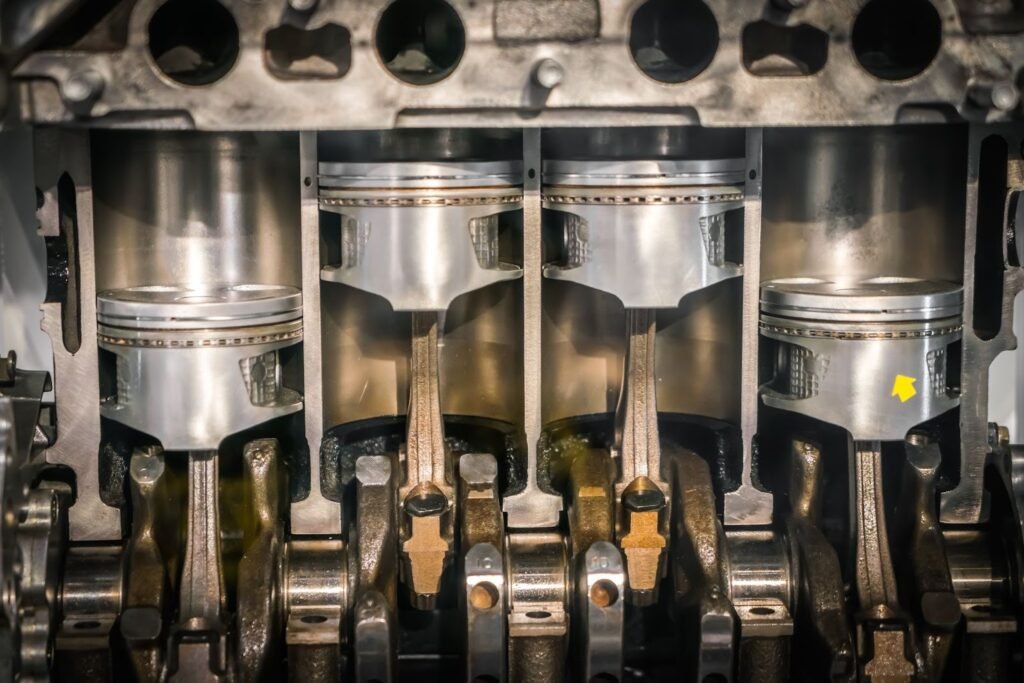
When most people look at a car, they think about horsepower, torque, or maybe fuel efficiency. But as a chemical engineer, my eyes go straight to the exhaust stream and the fascinating chemistry happening right beneath our feet. The catalytic converter is honestly one of the unsung heroes of modern environmental stewardship, turning toxic engine byproducts into manageable emissions before they ever hit the atmosphere. At the center of this engineering marvel sits palladium.
From my perspective, this isn’t just a shiny, ultra-rare noble metal that commodity traders freak out over; it’s an absolute powerhouse of surface science. We live in an era where everyone is looking toward tomorrow’s innovations, like high-capacity EV batteries or smart grid systems, but we can’t forget that optimizing our current internal combustion infrastructure is just as vital for immediate environmental remediation.
Palladium represents exactly how precise material selection can completely alter a system’s ecological footprint. Understanding why this specific element is so irreplaceable gives us a template for how we can use smart chemistry to solve industrial problems. Let’s break down the mechanics of how this metal works its magic under the hood.
Palladium is critical in catalytic converters due to its ability to facilitate essential oxidation and reduction reactions that convert harmful pollutants into less toxic emissions. It enables the effective oxidation of carbon monoxide and hydrocarbons while reducing nitrogen oxides, thereby meeting stringent regulatory standards. With high reaction efficiency and excellent thermal stability, palladium maintains performance under varying conditions. Compared to other catalysts like platinum and rhodium, palladium offers superior activity and durability, making it indispensable in emission control technologies. The rising importance of cleaner automotive solutions underscores its crucial role, leading to further exploration of its applications and impacts.
KEY TAKEAWAYS
- Palladium efficiently facilitates oxidation and reduction reactions, crucial for converting harmful pollutants into less toxic emissions in catalytic converters.
- Its high thermal stability ensures consistent performance under extreme temperatures, enhancing the durability of catalytic converters.
- Palladium’s versatile catalytic properties lower activation energy, accelerating the reduction of nitrogen oxides and oxidation of carbon monoxide and hydrocarbons.
- Compared to other noble metals, palladium offers superior stability and economic viability, making it a preferred choice in modern catalytic converter designs.
- Stricter emission regulations drive demand for palladium, as it is essential for meeting stringent automotive emission standards.
OVERVIEW OF CATALYTIC CONVERTERS
In 2021, Russia exported $6.55B in palladium—including $1.58B to the U.S. With international sanctions disrupting Russia’s exports, the world’s largest producer, palladium prices have climbed to their highest level. Catalytic converters are vital components of modern automotive exhaust systems, designed to facilitate the conversion of harmful pollutants into less harmful emissions. The development of these devices has greatly impacted air quality standards and has evolved in response to regulatory demands and technological advancements. Historically, the introduction of catalytic converters can be traced back to the 1970s, coinciding with the implementation of stricter emissions regulations in many countries. This marked a pivotal shift in automotive engineering, leading to the widespread adoption of catalytic converters in passenger vehicles.
There are primarily three types of catalytic converters: two-way, three-way, and diesel oxidation catalysts. Two-way converters, which were among the first designs, focused on oxidizing carbon monoxide and hydrocarbons. However, they were limited in effectiveness and soon gave way to three-way converters, which simultaneously reduce nitrogen oxides (NOx) while oxidizing carbon monoxide and hydrocarbons. This advancement allowed for a more thorough reduction of pollutants, making three-way converters the standard in gasoline engines.
Diesel oxidation catalysts represent another category, tailored for diesel engines, primarily aimed at oxidizing particulate matter and unburned hydrocarbons. Each catalytic converter type employs a catalyst—often precious metals such as platinum and palladium—to facilitate the chemical reactions necessary for emissions reduction. Understanding these catalytic converter types and their historical development is vital for appreciating their role in contemporary emission control technologies and environmental protection efforts.
Role of Palladium in Emission Control
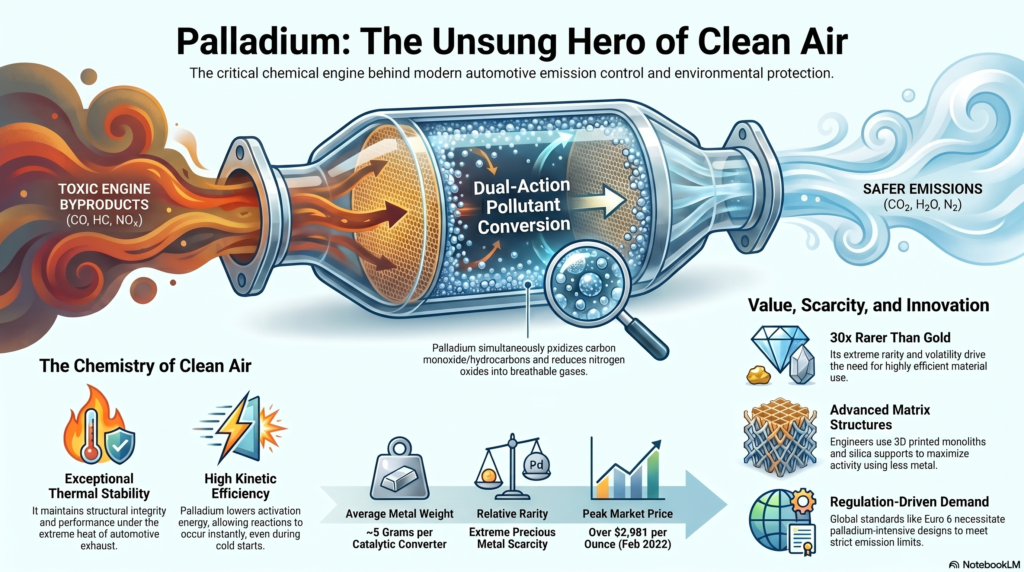
Palladium serves as an essential catalyst in catalytic converters, facilitating the conversion of harmful exhaust emissions into less toxic substances. Palladium is 30 times rarer than gold. This rarity affects its price on commodities markets, and the metal reached record highs of more than $2,981 in February 2022. The record low of $41.70 was set in August 1977. Its ability to efficiently promote oxidation and reduction reactions greatly contributes to the reduction of pollutants such as carbon monoxide, hydrocarbons, and nitrogen oxides. As a result, the integration of palladium in emission control technologies plays a crucial role in mitigating environmental impact and adhering to stringent regulatory standards.
Catalyst Functionality Explained
The effectiveness of modern emission control systems hinges greatly on the role of palladium as a key catalyst. Its unique properties enable palladium to facilitate vital reaction mechanisms that convert harmful exhaust emissions into less toxic substances. In the catalyst composition of catalytic converters, palladium is typically used alongside other noble metals like platinum and rhodium, enhancing the overall catalytic activity and efficiency.
Palladium primarily acts to promote the oxidation of carbon monoxide (CO) and unburned hydrocarbons (HC) while also participating in the reduction of nitrogen oxides (NOx). The reaction mechanisms involved are complex, involving adsorption, surface diffusion, and desorption processes. Upon contact with exhaust gases, palladium atoms interact with CO and HC, lowering the activation energy required for their oxidation. Simultaneously, it facilitates the reduction of NOx to nitrogen (N2) and oxygen (O2), effectively mitigating harmful emissions. Within the catalyst composition of modern catalytic converters, palladium functions as an active ingredient hub, coordinating oxidation and reduction reactions on its surface to maximize emission conversion efficiency under diverse driving conditions.
This multifaceted role underscores palladium’s significance in achieving stringent emission standards. As automotive technologies evolve, understanding the precise functionality of palladium in these systems becomes increasingly essential for developing advanced and environmentally responsible solutions.
Environmental Impact Reduction
As global awareness of environmental issues intensifies, the role of palladium in emission control has gained significant attention due to its effectiveness in reducing harmful pollutants from automotive exhaust. As a key catalyst in catalytic converters, palladium serves as an active ingredient that facilitates critical chemical reactions converting toxic exhaust gases into less harmful emissions, supporting compliance with stringent environmental regulations. This process is essential for meeting stringent regulatory standards and advancing sustainability initiatives.
The integration of palladium not only enhances the efficiency of emission reduction systems but also contributes to overall pollution reduction efforts. By promoting the oxidation of harmful compounds, palladium catalysts minimize the environmental impact of internal combustion engines, thereby supporting the shift towards greener technologies.
Moreover, as industries increasingly prioritize sustainability, the demand for palladium is likely to rise, driving innovation in catalytic converter design and function. The emphasis on palladium underscores the broader commitment to reducing vehicular emissions and fostering a cleaner environment. In a landscape where freedom from pollution is a collective aspiration, the role of palladium becomes indispensable in achieving a sustainable and responsible automotive future.
Advantages of Palladium as a Catalyst
From an automation and process engineering standpoint, what makes palladium so incredible is how efficiently it handles a crowded, high-velocity gas stream. When you look at the reaction mechanisms, it essentially acts as an active ingredient hub, lowering activation energies so reactions happen fast, even when you’re just starting the car up cold. In my lab work, I’ve always been obsessed with thermal stability and kinetic efficiency, and palladium hits the absolute sweet spot.
It distributes heat evenly across its surface structure, preventing those nasty localized hot spots that lead to material degradation and sintering over time. But as much as I love the pure science, we also have to face the real-world manufacturing bottlenecks. As an engineer, you learn quickly that a perfect theoretical design means nothing if you can’t scale it sustainably.
Palladium’s insane price volatility and its 30x rarity compared to gold mean we can’t just throw unlimited amounts at the problem. That’s why the real cutting-edge tech right now isn’t just about mining more metal; it’s about advanced matrix structures, like 3D-printed cermet monoliths or mesoporous silica supports, that let us get way more catalytic activity out of a fraction of the material.
Palladium costs about $50 a gram — more than gold — and each catalytic converter contains about 5 grams of it. Palladium exhibits high efficiency in reaction rates, making it a preferred choice in catalytic applications. Its excellent thermal stability guarantees consistent performance under varying temperature conditions, which is critical for automotive catalytic converters. Additionally, the versatile catalytic properties of palladium facilitate a wide range of reactions, enhancing its utility in emission control technologies.
High Efficiency Reaction Rates
A key characteristic of palladium as a catalyst lies in its ability to facilitate high efficiency reaction rates, greatly enhancing the performance of catalytic converters. This efficiency is primarily attributable to palladium’s unique electronic structure, which allows for ideal interaction with reactants, thereby accelerating reaction mechanisms critical for the conversion of harmful emissions.
Palladium promotes the oxidation of carbon monoxide and hydrocarbons, as well as the reduction of nitrogen oxides, through complex catalytic pathways. Its capability to operate effectively at lower temperatures further contributes to its catalytic efficiency, allowing for quick activation and sustained performance under varying operational conditions.
Moreover, palladium’s high surface area and ability to support various reaction intermediates enable it to achieve superior turnover frequencies compared to other noble metals. This means that fewer catalyst materials are required to achieve the same level of emissions reduction, enhancing overall system efficiency.
Consequently, the integration of palladium in catalytic converters not only minimizes environmental impact but also promotes energy efficiency and longevity, aligning with the growing demand for sustainable and high-performance automotive technologies.
EXCELLENT THERMAL STABILITY
In the domain of catalytic materials, excellent thermal stability is one of the key advantages that distinguishes palladium as a superior catalyst. This attribute is essential for catalytic converters, which operate under extreme temperatures. Palladium exhibits remarkable heat resistance, allowing it to maintain structural integrity and catalytic performance even when exposed to the high thermal demands of automotive exhaust systems.
The thermal conductivity of palladium further enhances its effectiveness as a catalyst. This property guarantees efficient heat distribution across the catalyst surface, which is critical for optimizing reaction kinetics. When the catalyst can uniformly distribute heat, it minimizes localized overheating and associated degradation, thereby prolonging operational lifespan and maintaining efficiency.
In contrast to other catalysts that may suffer from thermal degradation or phase changes at elevated temperatures, palladium’s stable phase under varying conditions enables consistent performance. This resistance to thermal fluctuations not only contributes to the longevity of the catalytic converter but also supports compliance with strict emission standards. Overall, palladium’s excellent thermal stability, combined with its favorable thermal conductivity, positions it as a preferred choice in the development of advanced catalytic systems within the automotive industry.

Versatile Catalytic Properties
The versatile catalytic properties of palladium greatly enhance its role in catalytic converters, building upon its excellent thermal stability. As a noble metal, palladium exhibits remarkable activity for a variety of catalytic cycles, including oxidation and reduction reactions. Its ability to facilitate these processes efficiently is vital for mitigating harmful emissions from internal combustion engines.
Palladium alloys further augment its catalytic capabilities, providing enhanced surface area and improved resistance to poisoning by sulfur and other contaminants. The incorporation of palladium into these alloys allows for a synergistic effect, optimizing the performance of catalytic converters under diverse operating conditions. This versatility is particularly valuable in meeting stringent emissions regulations.
Moreover, the unique electronic and structural properties of palladium enable it to effectively lower activation energies, facilitating faster reaction rates. This efficiency translates to reduced fuel consumption and lower greenhouse gas emissions, aligning with a growing demand for sustainable automotive technologies. Hence, the catalytic properties of palladium not only contribute to immediate environmental benefits but also support the development of advanced emission control systems essential for the future of automotive engineering.
Comparison With Other Catalysts
Palladium stands out among various catalysts used in catalytic converters, particularly when compared to alternatives such as platinum and rhodium. Its unique properties allow it to effectively facilitate the oxidation of carbon monoxide and hydrocarbons while reducing nitrogen oxides. This efficiency is essential in meeting stringent emission standards and underscores its growing prominence in the automotive industry.
When evaluating catalyst longevity, palladium demonstrates superior stability under high-temperature conditions, which is critical for prolonged vehicle operation. In contrast, platinum, while effective, often suffers from faster deactivation due to sintering and oxidation processes. Rhodium, known for its effectiveness in reducing nitrogen oxides, is also limited by its higher cost and scarcity, which can lead to significant fluctuations in palladium pricing.
The pricing dynamics of palladium have become increasingly relevant, especially in light of supply constraints and heightened demand. As vehicle manufacturers prioritize compliance with environmental regulations, the reliance on palladium in catalytic converters has intensified, driving prices upward. This economic factor must be balanced against catalyst longevity, as the higher initial investment in palladium may be offset by its extended operational lifespan and performance efficiency.
Ultimately, while platinum and rhodium remain important in specific applications, palladium’s combination of effective catalytic activity, durability, and economic viability positions it as a preferred choice in modern catalytic converter design. The ongoing advancements in catalyst technology will further solidify palladium’s role in reducing automotive emissions. Similar material innovations can be seen in other high-performance technologies, such as Gold in microchip applications, where precise material selection is equally critical for ensuring reliability, conductivity, and long-term performance under demanding operating conditions.
Impact of Regulations on Palladium Demand
Regulatory frameworks imposed by governments worldwide greatly influence palladium demand within the automotive sector. These frameworks are primarily designed to reduce vehicle emissions, aligning with global environmental objectives. Stricter emission standards, such as the Euro 6 regulations in Europe and similar initiatives in other regions, necessitate the incorporation of advanced catalytic converters that utilize palladium. As automakers endeavor to comply with these stringent regulations, the demand for palladium has surged due to its efficacy in catalyzing the conversion of harmful gases into less toxic emissions.
Market fluctuations also play a critical role in shaping palladium demand. The volatile nature of palladium prices, influenced by geopolitical factors, mining outputs, and technological advancements, can lead to sudden shifts in production strategies among automotive manufacturers. For instance, when palladium prices rise considerably, some manufacturers may seek alternative catalysts or technologies, potentially impacting overall demand. Conversely, if prices stabilize or decrease, automakers may be more inclined to invest in palladium-intensive solutions to meet regulatory standards.
Furthermore, the shift towards electric vehicles (EVs) poses an intriguing challenge to palladium demand, as these vehicles typically require less or no catalytic converters. However, the current regulatory landscape continues to support internal combustion engine vehicles, ensuring that palladium remains a critical component in the automotive sector for the near future. The interplay between regulatory frameworks and market fluctuations therefore remains pivotal in dictating the trajectory of palladium demand.
Future Trends in Palladium Use
As the automotive industry evolves, several future trends are poised to shape the utilization of palladium in catalytic converters. The increasing global demand for cleaner emissions standards is anticipated to sustain palladium’s prominence in exhaust systems, even as the industry explores alternative materials. However, market volatility associated with palladium prices presents significant challenges for manufacturers. Recent price fluctuations have underscored the necessity for a robust supply chain, prompting stakeholders to evaluate palladium recycling as a viable strategy. Recycling presents a dual benefit: it mitigates the pressure on primary palladium sources and helps stabilize market dynamics.
Technological innovations are also influencing future trends in palladium use. Advances in catalytic converter design and production techniques may lead to more efficient palladium utilization, potentially reducing the quantity required per vehicle. As research continues into alternative materials, the industry must weigh the performance and cost-effectiveness against established palladium solutions.
Investment opportunities in palladium are likely to evolve alongside these trends. Investors should monitor the impact of geopolitical factors on supply chains, as disruptions can exacerbate price volatility. Additionally, as the automotive sector adapts towards electrification, the demand for palladium in hybrid vehicles may vary, warranting strategic foresight.
Environmental Benefits of Palladium Catalysts
Frequently regarded as a cornerstone of modern catalytic converter technology, palladium catalysts play an essential role in reducing harmful vehicle emissions. These catalysts facilitate the conversion of toxic gases, such as carbon monoxide (CO), hydrocarbons (HC), and nitrogen oxides (NOx), into less harmful substances, greatly improving air quality. By enhancing the efficiency of combustion processes, palladium-based systems contribute to a substantial decline in pollutants emitted by internal combustion engines.
The environmental benefits of palladium catalysts extend beyond immediate emission reductions. Their durability and effectiveness enable vehicles to operate cleaner over extended lifespans, reinforcing the principles of sustainability and resource conservation. Additionally, the integration of palladium recycling into the lifecycle of catalytic converters exemplifies a commitment to green technology. By reclaiming palladium from spent catalysts, manufacturers can reduce the demand for newly mined materials, thereby minimizing the ecological footprint associated with mining activities.
Furthermore, palladium catalysts are increasingly being employed in hybrid and electric vehicle applications, further supporting the shift to cleaner transportation solutions. Their ability to function effectively at lower temperatures enhances the performance of these vehicles, which is critical as the automotive industry moves towards greener alternatives.

RELATED STUDIES ABOUT PALLADIUM IN CATALYTIC CONVERTERS
In conclusion, palladium’s role in catalytic converters is akin to a key opening the door to cleaner emissions. Its unique properties facilitate the conversion of harmful pollutants into less harmful substances, considerably contributing to environmental protection. As regulatory frameworks become increasingly stringent, the demand for palladium is expected to rise, positioning it as an essential element in the automotive industry. Continued advancements in catalyst technology and recycling methods will further enhance the sustainability and efficiency of palladium use.
3d Printing Of A Palladium-Alumina Cermet Monolithic Catalyst: Catalytic Evaluation In Microwave-Assisted Cross-Coupling Reactions
Objective: To develop a safe, robust, and highly reusable heterogeneous catalyst for microwave-assisted organic synthesis (MAOS), specifically designed to prevent the hazardous phenomena (sparking, arcing) associated with metal catalysts under microwave irradiation.
Key Findings & Outcomes:
- Novel Catalyst Fabrication:
- A Pd⁰/Al₂O₃ cermet monolithic catalyst was successfully fabricated using direct ink writing (DIW) 3D printing followed by sintering at 1500°C.
- The catalyst was custom-designed to fit a standard microwave reactor vessel, featuring a cylindrical shape with interconnected square pores (590 × 590 µm) to maximize surface area and facilitate reactant flow.
- Material & Structural Advantages:
- Palladium is uniformly distributed both within the ceramic matrix and on the surface, existing primarily as metallic Pd⁰ (not oxide), as confirmed by XRD and XPS.
- The cermet structure combines the thermal/mechanical stability of alumina with the malleability and catalytic activity of palladium, resulting in exceptional fracture toughness and durability.
- The geometric surface area is 33.2 cm²/cm³, with a Pd content of 1.66 wt% after sintering.
- Catalytic Performance:
- The catalyst demonstrated high efficiency in four key palladium-catalyzed cross-coupling reactions: Suzuki, Sonogashira, Stille, and Heck, under microwave irradiation (120°C, 200–300 W).
- Reactions were completed in 10–30 minutes with high yields (80–98%) and excellent selectivity.
- Turnover frequencies (TOF) ranged from 100 to 450 h⁻¹, comparable to or better than conventional powdered Pd catalysts.
- Safety & Stability Under Microwave Conditions:
- The catalyst eliminated sparking, arcing, and hot spots—common risks when using metal catalysts in microwaves—due to effective Pd immobilization within the ceramic matrix.
- No palladium leaching was detected (<50 ppb), as confirmed by ICP-OES and hot filtration tests, ensuring true heterogeneous catalysis.
- Exceptional Reusability:
- The catalyst was reused over 200 times across different reaction types without significant loss of activity, structural damage, or surface poisoning.
- It maintained mechanical integrity and catalytic performance, functioning as a “long-life catalytic device.”
- Process Advantages:
- Eliminates need for magnetic stirring; reactant flow is driven by microwave energy.
- Simplifies work-up: no filtration required; the monolithic catalyst is easily removed, washed, and reused.
Conclusion:
The 3D-printed Pd⁰/Al₂O₃ cermet monolithic catalyst represents a significant advancement in safe, sustainable, and efficient heterogeneous catalysis for microwave-assisted organic synthesis. Its design combines additive manufacturing precision with material science to create a durable, leaching-resistant, and hazard-free catalyst suitable for industrial and laboratory-scale applications.
Implications:
This catalyst enables safer, greener, and more economical synthesis of pharmaceuticals, agrochemicals, and fine chemicals, reducing metal waste and operational risks while supporting the principles of green chemistry and process intensification.
| REFERENCE: C.R. Tubio, C. Malatini, V.L. Barrio, C.F. Masaguer, M. Amorín, W. Nabgan, P. Taboada, F. Guitián, A. Gil, A. Coelho,3D printing of a palladium-alumina cermet monolithic catalyst: catalytic evaluation in microwave-assisted cross-coupling reactions,Materials Today , Volume 27, 2023, 101355, ISSN 2468-5194, https://doi.org/10.1016/j.mtchem.2022.101355. (https://www.sciencedirect.com/science/article/pii/S2468519422005845) |
Palladium Nanospheres Embedded Polythiophene Nanocomposite Modified Electrochemical Sensor: A Highly Sensitive Voltammetric Detection Of L-Tryptophan In Sunflower Seeds Oil
Objective: To develop a highly sensitive, selective, and stable electrochemical sensor for the detection of L-tryptophan (L-Try), an essential amino acid, using a novel nanocomposite material suitable for real-sample analysis in food and biomedical applications.
Key Findings & Outcomes:
- Sensor Development:
- A polythiophene-palladium nanocomposite (PT-Pd) was synthesized via electrostatic interaction and weak van der Waals forces.
- The nanocomposite was drop-cast onto a glassy carbon electrode (GCE) to create a modified electrochemical sensor.
- Enhanced Electrochemical Performance:
- The PT-Pd/GCE exhibited a significantly larger electroactive surface area (211.40 cm²) compared to bare GCE, PT/GCE, or Pd/GCE alone, leading to improved electron transfer and catalytic activity.
- Cyclic voltammetry (CV) and square wave voltammetry (SWV) showed a clear, well-defined oxidation peak for L-Try at pH 7 with a peak current of 44.18 µA.
- Analytical Performance:
- Linear Range: 100 nM to 1 mM of L-Try.
- Sensitivity: 0.157 µA M⁻¹ cm⁻².
- Limit of Detection (LOD): 1.46 nM (S/N = 3).
- The sensor demonstrated excellent selectivity against common interferents (dopamine, uric acid, glucose, etc.) even at 100-fold higher concentrations.
- Stability & Reproducibility:
- The sensor retained 99.40% of its initial response after 100 continuous CV cycles.
- After 15 days of storage at 4°C, it maintained 98.20% of its initial activity.
- Reproducibility and repeatability were high, with relative standard deviations (RSD) of 2.8% and 2.6%, respectively.
- Real-Sample Validation:
- Successfully applied to detect L-Try in sunflower seed oil extracts.
- Recovery rate was approximately 99% with an RSD of 1.4%, confirming the sensor’s practicality for food quality control.
- Comparative Advantage:
- The PT-Pd sensor outperforms many previously reported modified electrodes in terms of LOD, sensitivity, and stability (see Table 1 in the study).
Conclusion:
The PT-Pd nanocomposite-based electrochemical sensor is a highly effective, stable, and selective platform for the sensitive detection of L-tryptophan. Its excellent performance in real-sample analysis demonstrates strong potential for applications in food safety, pharmaceutical quality control, and clinical diagnostics.
Implications:
This sensor offers a rapid, low-cost, and reliable alternative to traditional analytical methods (e.g., HPLC) for L-Try detection, supporting advancements in nutritional monitoring, disease biomarker analysis, and industrial quality assurance.
| REFERENCE: S. Dheepthi Gunavathana, P. Nandha kumar, D. Ganesh kumar, Palladium nanospheres embedded Polythiophene nanocomposite modified electrochemical sensor: A highly sensitive voltammetric detection of L-Tryptophan in sunflower seeds oil, International Journal of Electrochemical Science,Volume 20, Issue 8, 2025, 101063, ISSN 1452-3981, https://doi.org/10.1016/j.ijoes.2025.101063. (https://www.sciencedirect.com/science/article/pii/S1452398125001385) |
Investigation Of Palladium Catalysts In Mesoporous Silica Support For Co Oxidation And Co₂ Adsorption
Objective: To develop a bifunctional, stable catalyst-sorbent material capable of both oxidizing toxic carbon monoxide (CO) to carbon dioxide (CO₂) and capturing CO₂ at low temperatures, addressing environmental and industrial air purification needs.
Key Findings & Outcomes:
- Material Synthesis & Characterization:
- A 5 wt% Pd/SiO₂ aerogel was synthesized via a sol-gel method, creating a highly mesoporous structure with a BET surface area of 1114 m²/g.
- Palladium existed as both metallic Pd⁰ nanoparticles (2–3 nm) and Pd²⁺ oxides within the silica framework, confirmed by XRD, TEM, and XPS.
- The material exhibited excellent thermal stability up to ~700°C.
- CO Oxidation Performance:
- The catalyst achieved 100% CO conversion at 249°C in its second reaction cycle, with performance improving after the first cycle due to pore conditioning and enhanced Pd-SiO₂ interface formation.
- The light-off temperature was reduced, indicating lower activation energy.
- The oxidation mechanism involves CO adsorption on Pd, reaction with active oxygen species, and regeneration of oxygen vacancies.
- CO₂ Adsorption Capacity:
- CO₂ adsorption was evaluated from 16°C to 120°C at pressures up to ~1 MPa.
- Maximum adsorption capacity was 2.9 mol CO₂/kg at 16°C and 1 MPa, demonstrating strong physisorption behavior suitable for low-temperature capture.
- Adsorption followed a Type-I isotherm and was well-described by the Langmuir model, with a high theoretical monolayer capacity of 18.04 mol/kg.
- Effect of Moisture:
- CO oxidation activity slightly decreased in humid conditions (5% H₂O), with a small shift in light-off temperature, but remained effective.
- CO₂ adsorption capacity increased in the presence of moisture, from 1.77 to 2.12 mol/kg at 1 MPa, likely due to enhanced interaction between CO₂ and Pd nanoparticles.
- Bifunctional Advantage:
- The Pd/SiO₂ aerogel serves a dual purpose: oxidizing CO at ≤250°C and capturing the resulting CO₂ at low temperatures, enabling integrated emission control.
Conclusion:
The Pd/SiO₂ aerogel is a highly effective, stable, and bifunctional material for environmental remediation. It successfully oxidizes CO at relatively low temperatures and adsorbs CO₂ with competitive capacity, offering a promising integrated solution for mitigating both toxic and greenhouse gases.
Implications:
This material has significant potential for applications in automotive catalytic converters, indoor air purification, industrial exhaust treatment, and carbon capture technologies. Its dual functionality, stability, and efficiency at low temperatures support the development of cost-effective and environmentally sustainable air quality management systems.
| REFERENCE: Rola Mohammad Al Soubaihi, Khaled Mohammad Saoud, Ahmed Awadallah-F, Ahmed Mohamed Elkhatat, Shaheen A. Al-Muhtaseb, Joydeep Dutta, Investigation of palladium catalysts in mesoporous silica support for CO oxidation and CO2 adsorption, Heliyon, Volume 9, Issue 7, 2023, e18354, ISSN 2405-8440, https://doi.org/10.1016/j.heliyon.2023.e18354. (https://www.sciencedirect.com/science/article/pii/S2405844023055627) |
CONCLUSION
Bringing things full circle, the narrative around palladium highlights a truth I strongly believe in: technology is our best tool for environmental responsibility. As regulatory frameworks tighten globally, the automotive industry has no choice but to demand smarter, cleaner engineering solutions. While the long-term trend is undeniably moving toward full electrification, the transition period requires us to make internal combustion and hybrid systems as green as humanly possible. Palladium is our bridge to that cleaner future.
Looking ahead, I’m particularly excited about how we can close the loop on this precious resource through automated, highly efficient recycling technologies. Reclaiming palladium from spent converters isn’t just economically smart; it radically slashes the massive ecological footprint associated with primary mining operations.
By combining additive manufacturing, smart material design, and robust circular lifecycles, we can maximize the life of these critical catalysts. Ultimately, palladium proves that when you pair deep chemical insights with forward-thinking tech engineering, you get real, measurable progress toward a sustainable planet.