
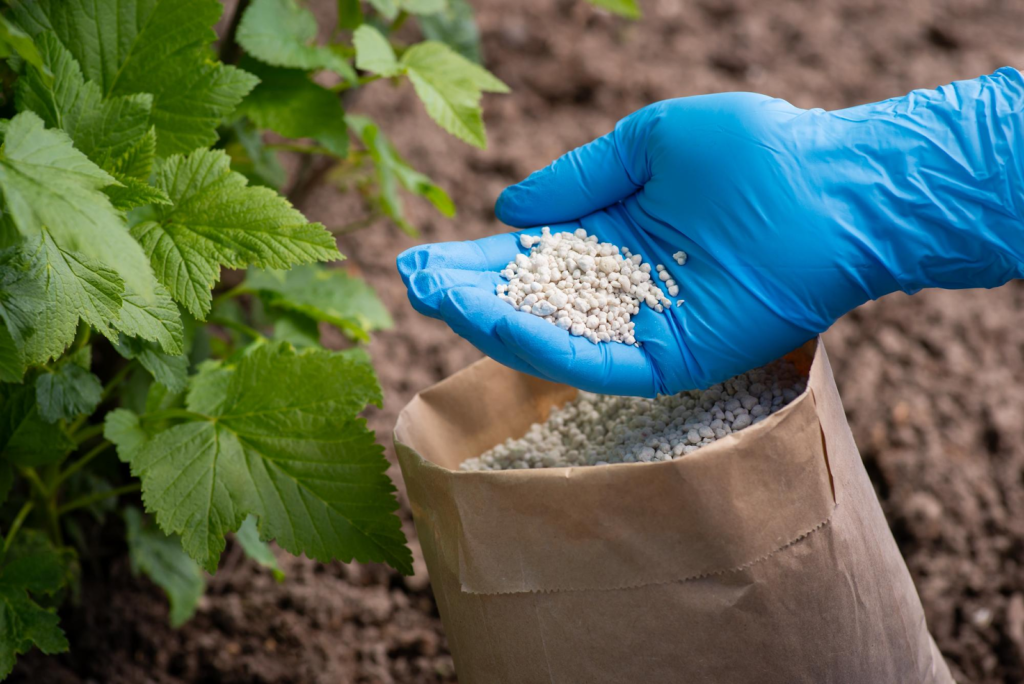
Whenever I’m out walking the fields with growers or evaluating a new community plot, the conversation almost inevitably turns to fertilizers. Everyone wants to talk about nitrogen for that quick, satisfying flush of deep green growth, or phosphorus to jumpstart early rooting. But as a horticulturist, I’m constantly reminding folks not to sleep on potassium. It is truly the unsung workhorse of plant health. Think of it less like a massive growth hormone and more like the ultimate cellular manager.
It coordinates everything from how efficiently a plant drinks water to how well it stands up against an unexpected cold snap or a nasty pest outbreak. When we rely heavily on intensive agricultural harvesting, we are continuously drawing down the soil’s natural reserves. Every single crop hauled out of the field takes a piece of that local ecosystem’s potassium with it. If we aren’t actively testing our soils and replenishing those macronutrients, we are essentially running our crops on empty.
High potassium fertilizers aren’t just an optional luxury or an extra line item in your seasonal budget; they are absolutely foundational for stabilizing the physiological framework of your crops. Let’s dig into why getting your potash management right is a complete game-changer for long-term farm productivity.
High potassium fertilizers play an essential role in promoting plant health and productivity. Potassium regulates important physiological processes, including enzyme activation, photosynthesis, and nutrient uptake. It enhances crop resilience against drought and disease, leading to increased yields and improved fruit quality. Adequate potassium levels stimulate root growth and facilitate efficient nutrient transport, which is fundamental for overall plant vigor. Additionally, the timing and method of application are imperative for maximizing their benefits. Proper use of high potassium fertilizers can greatly enhance agricultural productivity. Exploring further will reveal additional insights into ideal potassium management and its benefits for diverse crops.
KEY TAKEAWAYS
- High potassium fertilizers enhance plant growth by improving enzyme activation, photosynthesis, and stomatal regulation, crucial for overall health.
- Adequate potassium boosts crop yields by increasing resistance to drought and disease while improving nutrient uptake and utilization.
- Potassium enhances fruit size, taste, and market value, contributing to better overall fruit quality and consumer satisfaction.
- Strategic application of potassium fertilizers optimizes nutrient interactions, fostering robust root systems for efficient nutrient and water absorption.
- Different crop varieties respond uniquely to potassium; tailored application rates and timing are essential for maximizing growth and yield.
IMPORTANCE OF POTASSIUM IN PLANTS
Potassium is an essential macronutrient that functions as the active ingredient in high potassium fertilizers, driving key physiological processes such as enzyme activation, stomatal regulation, and efficient nutrient transport within plants. It is a significant component in enzyme activation, photosynthesis, and the regulation of stomatal opening, which ultimately affects transpiration and nutrient uptake. As a key player in osmoregulation, potassium contributes to maintaining turgor pressure, crucial for cell expansion and growth. Potash fertilizer, essential for plant growth, has evolved from its wood ash origins to become a cornerstone of modern agriculture. Today, potash primarily refers to potassium-based fertilizers like potassium chloride and potassium sulfate, mined from vast natural salt deposits, such as those left by the Devonian Sea in Central Canada and the Northern United States.
Potassium deficiency manifests through various symptoms, including chlorosis, necrosis, and reduced fruit quality, leading to decreased yield and compromised plant vigor. The inability to synthesize proteins and essential metabolites due to insufficient potassium can severely impact plant resilience against biotic and abiotic stresses. Thus, understanding potassium’s role is essential for effective crop management.
To prevent potassium deficiency, it is imperative to identify reliable potassium sources. Common sources include mineral fertilizers such as potassium chloride, potassium sulfate, and organic amendments like compost. Each source has its benefits and limitations, influenced by factors like soil type, crop requirements, and environmental conditions. Soil testing is significant for determining potassium availability and ensuring appropriate application rates.
Benefits of High Potassium Fertilizers
Potassium is associated with the movement of water, nutrients and carbohydrates in plant tissue. It’s involved with enzyme activation within the plant, which affects protein, starch and adenosine triphosphate (ATP) production. The production of ATP can regulate the rate of photosynthesis. High potassium fertilizers offer several advantages that directly enhance plant health and agricultural productivity. The primary benefit of these fertilizers lies in their ability to improve resistance to stress factors such as drought and disease, thereby contributing to higher crop yields. Potassium enhances the overall physiological functions of plants, leading to efficient water uptake and nutrient transport, which are critical for peak growth.
Soil testing plays an essential role in determining potassium levels, ensuring that the application of high potassium fertilizers is both effective and efficient. Understanding the soil’s nutrient profile allows farmers to select appropriate potassium sources, further maximizing the benefits of these fertilizers. This targeted approach minimizes the risk of over-fertilization, which can lead to environmental issues such as nutrient runoff.
The table below summarizes the key benefits of high potassium fertilizers:
| Benefit | Description | Impact on Productivity |
| Enhanced Stress Resistance | Improves plant resilience against drought and pests | Higher crop yields |
| Improved Nutrient Uptake | Facilitates efficient transport of nutrients | Healthier plants |
| Better Water Regulation | Optimizes water usage and reduces waste | Increased efficiency |
| Accelerated Growth Rate | Promotes faster growth and maturity | Early harvest |
| Higher Quality Produce | Enhances fruit size, color, and taste | Greater market value |
Physiological Processes Involving Potassium
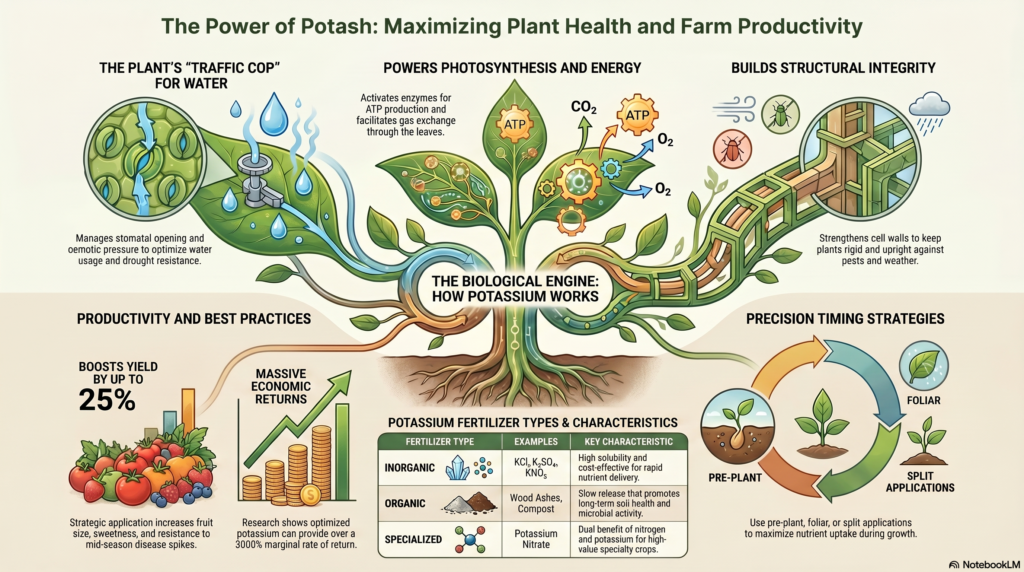
In my years working with both commercial farmers and small-scale heirloom vegetable growers, I’ve seen firsthand how an under-supply of potassium quietly erodes a farm’s bottom line. It’s devastating to watch a beautifully managed field get hit by a sudden drought or a mid-season disease spike, only to see the crops buckle because they lacked the structural integrity to fight back. Potassium is what keeps those cellular walls rigid and holds the plant upright when environmental conditions turn harsh. More than that, it acts like a traffic cop for water regulation, signaling the plant’s stomata when to open and close to minimize moisture waste during the heat of the day.
When we look at the hard data from recent field trials, the practical value of targeted timing becomes incredibly clear. For instance, look at how dramatically potassium management can buffer plants against low-light stress or shading events. Applying potassium intentionally during the critical reproductive stages, such as panicle initiation in grains, can completely turn things around by optimizing leaf surface area and keeping photosynthesis running efficiently even in suboptimal light.
The same logic applies to high-value specialty crops. Whether you’re trying to maximize the sweetness and shelf-life of hybrid watermelons or seeking to boost the active nutrient content and tuber weight of purple sweet potatoes, matching the right fertilizer type to your specific soil chemistry is everything. I always tell growers to look at their fertilizer program as a long-term investment in crop resilience and produce quality, rather than a reactionary fix when leaves start yellowing.
Potassium is a critical macronutrient that plays a pivotal role in the process of photosynthesis, facilitating the conversion of light energy into chemical energy. Additionally, it greatly influences water regulation within plant cells, ensuring ideal turgor pressure and contributing to overall physiological stability. Understanding these functions is essential for optimizing potassium fertilization strategies to enhance plant health and productivity.
Potassium’s Role in Photosynthesis
An essential nutrient for plant health, potassium plays a pivotal role in the physiological processes of photosynthesis. This macronutrient is integral to the regulation of stomatal movement, which directly influences gas exchange and light absorption. Adequate potassium levels facilitate the ideal functioning of enzymes involved in the Calvin cycle, enhancing the conversion of carbon dioxide into organic compounds, primarily glucose. Potassium (K) is one of three macronutrients that all plants require for growth. Potassium is needed to move sugars and other forms of energy throughout the plant, allow gas exchange with the atmosphere through the stomata, and aid in cell wall strength. In dry conditions, potassium helps the plant stay rigid and upright. Adequate potassium fertility is essential to maximizing crop yields.
Potassium deficiency can severely impair photosynthesis, resulting in reduced chlorophyll synthesis and leaf area, ultimately diminishing the plant’s ability to capture sunlight. Symptoms of deficiency include yellowing of leaf margins and stunted growth, indicating a decline in overall productivity. Conversely, potassium toxicity, while less common, can disrupt cellular processes and lead to nutrient imbalances, adversely affecting photosynthetic efficiency. Elevated potassium levels can interfere with the uptake of other essential nutrients, compounding the potential negative impact on plant health.
Thus, maintaining an appropriate potassium balance is essential for enhancing photosynthesis, promoting robust growth, and ensuring overall plant health. High potassium fertilizers, when applied judiciously, can mitigate deficiencies and support the physiological processes that underpin productive agricultural systems.
Impact on Water Regulation
Effective water regulation within plants is greatly influenced by potassium, as it plays an essential role in osmoregulation and stomatal function. This macronutrient is pivotal in managing water retention and transport, directly impacting plant health and productivity. The mechanisms by which potassium facilitates water regulation can be summarized as follows:
- Stomatal Regulation: Potassium ions are actively involved in the opening and closing of stomata, which are critical for gas exchange and transpiration. Proper potassium levels guarantee ideal stomatal function, thereby regulating water loss.
- Osmotic Balance: Potassium enhances osmoregulation, allowing plants to maintain turgor pressure and cellular integrity, particularly under drought conditions. This balance is essential for sustaining cellular functions and overall plant vigor.
- Potassium Transport: Efficient potassium transport within plant tissues guarantees adequate distribution of this nutrient, promoting effective water uptake and retention. This transport mechanism aids in enhancing drought resistance and overall resilience.
Impact on Crop Yield
The application of high potassium fertilizers greatly enhances crop yield through improved nutrient uptake and utilization. This increased availability of potassium not only bolsters plants’ resistance to abiotic stresses but also contributes to higher fruit quality, leading to more marketable produce. Consequently, the strategic use of potassium fertilizers can be an essential factor in optimizing agricultural productivity.
ENHANCED NUTRIENT UPTAKE
Utilizing high potassium fertilizers greatly enhances nutrient uptake in plants, an essential factor influencing overall crop yield. Potassium plays a fundamental role in various physiological processes, from enzyme activation to photosynthesis, directly affecting the efficiency of nutrient absorption. A potassium deficiency can severely hinder these processes, leading to reduced plant vitality and lower yields.
The impact of high potassium fertilizers on nutrient uptake can be summarized as follows:
- Improved Root Development: Adequate potassium levels stimulate root growth, enabling plants to access a broader range of soil nutrients and moisture.
- Enhanced Nutrient Interactions: High potassium availability facilitates better interactions among essential nutrients, particularly when balanced with inputs from phosphorus fertilizers, promoting a coordinated uptake that is vital for plant health.
- Increased Photosynthetic Efficiency: Sufficient potassium enhances the photosynthetic capacity of plants, leading to more energy production and, consequently, higher yields.
Improved Stress Resistance
High potassium fertilizers greatly enhance plants’ resilience to various stress factors, which is fundamental for maintaining crop yields in challenging environmental conditions. Adequate potassium sources contribute considerably to stress adaptation mechanisms, enabling crops to withstand drought, salinity, and temperature extremes. This resilience is closely tied to nutrient balance; potassium plays a significant role in regulating water uptake and osmotic pressure, thereby improving plant health under adverse soil conditions.
Different crop varieties exhibit varying responses to potassium application, making it essential to tailor application rates based on specific growth stages and environmental factors. The timing of potassium fertilization can influence stress indicators such as chlorophyll content and leaf turgor pressure, which directly correlate with plant productivity. By optimizing potassium levels, farmers can enhance plant resilience, leading to improved overall yields even in suboptimal conditions.
Moreover, effective potassium management fosters a robust root system, which is crucial for nutrient and water absorption. Consequently, integrating high potassium fertilizers into agronomic practices not only addresses immediate stressors but also contributes to sustainable agricultural productivity. This approach is key in ensuring that crops can thrive amidst the increasing variability of environmental challenges.
Increased Fruit Quality
Potassium’s role extends beyond stress resistance; it markedly influences fruit quality, which in turn impacts overall crop yield. High potassium levels enhance several critical aspects of fruit development, leading to improved marketability and consumer satisfaction. The following factors highlight the contribution of potassium to fruit quality:
- Fruit Flavor: Increased potassium availability promotes the synthesis of sugars and organic acids, resulting in enhanced flavor profiles. Fruits with balanced potassium levels are often sweeter and more palatable, appealing to consumers.
- Fruit Firmness: Sufficient potassium guarantees proper cell wall structure, contributing to fruit firmness. Firm fruits are less prone to bruising and damage during transport, thereby reducing post-harvest losses and improving shelf life.
- Nutritional Value: Potassium plays a critical role in the synthesis of essential nutrients, positively impacting the overall nutritional profile of fruits. Higher potassium levels correlate with increased vitamin and mineral content, making the produce more desirable.
Types of High Potassium Fertilizers
A variety of high potassium fertilizers are available to support plant health and enhance growth. Understanding the different potassium sources is essential for selecting the appropriate fertilizer type to meet specific agricultural needs. High potassium fertilizers generally fall into two main categories: inorganic and organic.
Inorganic potassium fertilizers include potassium chloride (KCl), potassium sulfate (K2SO4), and potassium nitrate (KNO3). Potassium chloride is the most widely used due to its high solubility and cost-effectiveness, providing a concentrated source of potassium. Potassium sulfate is advantageous for crops sensitive to chloride, as it supplies both potassium and sulfur, enhancing nutrient synergy. Potassium nitrate, while more expensive, offers the dual benefit of potassium and nitrogen, making it suitable for high-value crops, particularly when used alongside nitrogen sources such as urea fertilizer to support balanced plant nutrition.
Organic potassium fertilizers, on the other hand, derive from natural sources and often include materials such as potash, wood ashes, and green manure. These fertilizers release potassium more slowly, promoting long-term soil health and microbial activity. Although the potassium concentration in organic sources is lower, their additional micronutrients and organic matter contribute to improved soil structure and fertility.
The choice of potassium fertilizer type depends on various factors, including soil potassium levels, crop requirements, environmental considerations, and economic constraints. By evaluating these elements, growers can make informed decisions, ensuring ideal nutrient availability and supporting plant health throughout the growing season.
Application Methods and Timing
Effective application methods and timing are crucial factors in maximizing the benefits of high potassium fertilizers for plant health. To achieve ideal results, understanding the nuances of fertilizer application and employing strategic timing are necessary. High potassium fertilizers can greatly enhance plant vitality when applied correctly and at the right moments during the growth cycle.
Here are three essential timing strategies for effective fertilizer application:
- Pre-plant Application: Applying high potassium fertilizers before planting can help guarantee that the nutrients are readily available as the seedlings emerge. This method allows for uniform nutrient distribution in the soil, promoting early root development.
- Foliar Feeding: Utilizing high potassium fertilizers through foliar application during critical growth stages—such as flowering and fruit set—can enhance nutrient uptake directly through the leaves. This method is particularly effective when plants exhibit signs of potassium deficiency.
- Split Applications: Dividing the total potassium fertilizer into multiple smaller applications throughout the growing season can improve nutrient absorption and minimize leaching losses. This approach allows for adjustments based on plant growth stages and weather conditions, making sure that potassium remains available when plants need it most.
Implementing these timing strategies in fertilizer application can lead to enhanced plant health and productivity. By recognizing the specific growth needs of crops and utilizing high potassium fertilizers effectively, growers can foster a thriving agricultural environment, ultimately achieving their desired outcomes.
Best Practices for Use
Regularly implementing best practices for the use of high potassium fertilizers is essential for optimizing their benefits in agricultural systems. Proper management of application rates is critical to guaranteeing both plant health and environmental sustainability. Over-application can lead to nutrient imbalances and potential soil salinity issues, while under-application may result in suboptimal crop yields. Consequently, adherence to recommended application rates based on specific crop needs and growth stages is paramount.
Soil testing serves as the foundation for informed fertilizer management. Conducting regular soil tests enables farmers to assess potassium levels and other essential nutrients, allowing for tailored fertilizer applications. This practice not only maximizes nutrient availability but also minimizes waste and potential runoff into surrounding ecosystems. It is advisable to test soil at least once every three years, or more frequently in high-production areas.
In addition, timing of application plays a pivotal role in potassium efficacy. Applying fertilizers during periods of active growth ensures that plants can readily absorb the applied nutrients, thereby enhancing overall productivity. Consideration of environmental factors, such as rainfall and temperature, can further optimize nutrient uptake.
Lastly, integrating high potassium fertilizers within a broader nutrient management plan, which includes crop rotation and organic amendments, can improve long-term soil health and fertility. By following these best practices, agricultural producers can leverage high potassium fertilizers to enhance crop performance while promoting sustainable farming practices.

RELATED STUDIES ABOUT HIGH POTASSIUM FERTILIZERS
High potassium fertilizers play a pivotal role in enhancing plant health and productivity. By facilitating critical physiological processes such as photosynthesis and water regulation, potassium greatly impacts crop yield. Research indicates that ideal potassium levels can increase yields by up to 25%, underscoring its importance in agricultural practices. Implementing best practices for application can maximize these benefits, ensuring that potassium contributes effectively to sustainable farming and food security. The strategic use of such fertilizers is essential for achieving ideal crop performance.
Physiological Studies On Anthocyanin Accumulation, Quality And Yield Of Purple Sweet Potato Tubers With Different Forms Of Potassium Fertilizer
Objective: To determine the optimal type of potassium fertilizer for enhancing anthocyanin content, nutritional quality, and yield in purple sweet potatoes (PSP), a high-value, nutrient-rich crop.
Methodology:
- A two-year (2021-2022) field/pot experiment was conducted in Chengdu, China, using the PSP variety ‘Mianzishu No.9’.
- Five treatments were compared: no potassium fertilizer (Control, CK), KCl, K₂SO₄, K₂HPO₄, and KH₂PO₄, with equal amounts of nitrogen and phosphorus applied.
- Measurements included tuber fresh/dry weight, anthocyanin content and accumulation, activity of key anthocyanin biosynthesis enzymes (PAL, CHI, DFR, UFGT), nutritional quality (starch, sugars, N, P, K), and yield components.
- Data analysis employed hierarchical clustering, principal component analysis (PCA), and a fuzzy mathematical comprehensive evaluation model.
Key Findings:
- Anthocyanin Enhancement: All potassium fertilizers increased anthocyanin content and accumulation compared to the control. KCl was the most effective, showing the highest average increase in anthocyanin accumulation (up to 50.61% higher than CK).
- Enzyme Activity: Potassium application boosted the activity of key anthocyanin synthesis enzymes (PAL, CHI, DFR, UFGT). Different fertilizers affected enzymes differently, but overall, KCl promoted a favorable enzyme activity profile linked to higher anthocyanin production.
- Tuber Yield and Growth: KCl treatment resulted in the most significant increases in tuber fresh and dry weight, especially during the later growth stages. It also increased the number of tubers per plant compared to CK.
- Nutritional Quality: While effects were not always statistically significant, KCl treatment led to the greatest increases in tuber content of total nitrogen, phosphorus, and potassium. Other quality parameters (starch, soluble sugar) showed varied, non-significant responses to different fertilizers.
- Comprehensive Evaluation: PCA and fuzzy mathematical modeling consistently ranked KCl as the best-performing treatment across the two-year study for its combined positive effects on anthocyanin metrics, yield, and quality indicators.
Conclusion:
Among the tested potassium fertilizers, KCl (potassium chloride) is the most recommended for PSP cultivation. It most effectively promotes the biosynthesis and accumulation of valuable anthocyanins, enhances key metabolic enzyme activities, and improves tuber yield and nutritional quality. This study provides a scientific basis for selecting KCl as the preferred potassium fertilizer to support high-quality, efficient, and sustainable PSP production, particularly in regions like southwestern China.
Significance:
This research offers practical guidance for farmers and agronomists to optimize fertilization strategies, maximizing both the health-promoting anthocyanin content and the economic yield of purple sweet potatoes.
| REFERENCE: Jingwei Huang, Qiang Wang, Qingcheng Qiu, Liang Zou, Xueshan Shen, Yan Wan, Huijuan Qu, Physiological studies on anthocyanin accumulation, quality and yield of purple sweet potato tubers with different forms of potassium fertilizer, Scientia Horticulturae, Volume 343, 2025, 114094, ISSN 0304-4238, https://doi.org/10.1016/j.scienta.2025.114094. (https://www.sciencedirect.com/science/article/pii/S0304423825001451) |
Potassium Fertilizer Management Improves Rice Yield By Optimizing The Morphological And Physiological Characteristics Of Leaves Under Shading Stress
Objective: To investigate the impact of different potassium (K) fertilizer management strategies on alleviating shading stress in rice, with a focus on leaf morphology, photosynthetic physiology, and grain yield.
Methodology:
- A two-year (2021-2022) split-plot field experiment was conducted in Sichuan, China, using the hybrid rice variety ‘Fyou 498’.
- Main Plot Factor: Light conditions – Full sunlight (control) vs. 50% shading from heading to maturity.
- Sub-Plot Factor: Potassium management:
- No potassium (K₀₀ – Control)
- All K (90 kg K₂O ha⁻¹) applied as basal fertilizer (K₉₀₀)
- All K applied as panicle fertilizer at panicle initiation (K₀₉₀)
- K split equally between basal and panicle applications (180 kg K₂O ha⁻¹ total; K₉₀₉₀)
- Measurements included leaf area index (LAI), green leaf number, chlorophyll content, net photosynthetic rate (Pn), leaf K⁺/Na⁺ ratio, sucrose/starch content, and final grain yield and its components.
Key Findings:
- Impact of Shading Stress: Shading significantly increased leaf area and chlorophyll content but reduced net photosynthetic rate (Pn), sucrose/starch content, seed-setting rate, and 1,000-grain weight, leading to a 16.21–29.71% reduction in grain yield.
- Beneficial Role of Potassium: Compared to no-K control, K fertilizer application:
- Increased Leaf Area and Photosynthesis: Significantly boosted green leaf number, LAI (by 13.46–29.88%), chlorophyll *b* content, and Pn under shading stress.
- Improved Leaf Physiology: Enhanced the K⁺/Na⁺ ratio and increased sucrose and starch concentrations in flag leaves.
- Mitigated Yield Loss: Increased grain yield by 5.57–17.35% under shading stress, primarily by increasing effective panicles per unit area.
- Optimal Potassium Management: The timing of K application was crucial.
- Applying K as a panicle fertilizer (K₀₉₀) was particularly effective, performing similarly to or better than the split application (K₉₀₉₀) in improving Pn, starch content, and yield under shading stress.
- This suggests that targeted K nutrition during reproductive stages is key to counteracting shading stress.
Conclusion:
Potassium fertilizer, especially when applied as a panicle fertilizer, is a highly effective management strategy to mitigate the negative impacts of shading stress on rice. It does so by optimizing leaf morphological traits (increasing LAI) and enhancing photosynthetic physiological performance (increasing Pn and carbohydrate content), which collectively bolster the plant’s “sink strength” and lead to improved grain yield under low-light conditions.
Significance:
This research provides a practical, fertilization-based strategy to enhance rice productivity and resilience in the face of increasing “global dimming” and low-light stress events caused by climate change and air pollution. It highlights the importance of precise potassium nutrition timing for sustainable rice production.
| REFERENCE: Tingting Liu, Fei Deng, Youyun Zhu, Li Wang, Chenyan He, Rui Liu, Yuting Liu, Jingwen Yang, Qiuping Li, Yujie Yuan, Xiaofeng Ai, Rui Wang, Yunchuan Peng, Xiurong Hu, Hong Cheng, Youfeng Tao, Wei Zhou, Xiaolong Lei, Yong Chen, Wanjun Ren, Potassium fertilizer management improves rice yield by optimizing the morphological and physiological characteristics of leaves under shading stress, Journal of Integrative Agriculture, 2025,, ISSN 2095-3119, https://doi.org/10.1016/j.jia.2025.05.021. (https://www.sciencedirect.com/science/article/pii/S2095311925001467) |
Data On Response Of Watermelon (Citrullus Lanatus) Varieties To Potassium Fertilizer Rates At West Dembia District, Central Gondar Zone, Ethiopia
Objective: To determine the optimal potassium (K) fertilizer rate for maximizing the growth, yield, quality, and economic profitability of two high-potential hybrid watermelon varieties (Lath F1 and Avalion F1) under local Ethiopian conditions.
Methodology:
- A field experiment was conducted at the University of Gondar’s research farm in Gorgora, Ethiopia, using a factorial design with three replications.
- Factors: Two hybrid watermelon varieties (Lath F1 and Avalion F1) and five potassium fertilizer rates (0, 50, 100, 150, and 200 kg K ha⁻¹). Nitrogen and phosphorus were applied uniformly.
- Comprehensive data were collected on phenology, growth, yield components, fruit quality (including total soluble solids, firmness, shelf life), and an economic partial budget analysis was performed.
Key Findings:
- Optimal Potassium Rate: Application of 150 kg K ha⁻¹ produced the best overall results across most measured parameters for both varieties.
- Superior Variety: The Lath F1 variety consistently outperformed Avalion F1, showing better responsiveness to potassium fertilization.
- Yield and Fruit Quality:
- Lath F1 with 150 kg K ha⁻¹ achieved the highest marketable yield (69.60 t ha⁻¹), average fruit weight (16.13 kg), and fruit pulp weight (8.53 kg).
- Potassium application significantly improved fruit quality, increasing total soluble solids (sweetness) and fruit firmness, and extending shelf life.
- Economic Viability:
- The most profitable treatment was Lath F1 fertilized with 150 kg K ha⁻¹, yielding an exceptional Marginal Rate of Return (MRR) of 3509.23%, far exceeding the acceptable minimum threshold of 100%.
- This combination provided the highest net benefit (1,859,450 ETB ha⁻¹), making it the most economically advantageous recommendation for farmers.
Conclusion and Recommendation:
For watermelon production in the Gorgora region and similar agro-ecological zones in Ethiopia, applying 150 kg of potassium per hectare to the Lath F1 hybrid variety is recommended. This practice optimally enhances vegetative growth, maximizes marketable yield and fruit size, improves critical quality attributes (sweetness and storability), and delivers the highest economic return for farmers.
Significance:
This study provides a data-driven, locally validated fertilizer management strategy to address potassium deficiency—a key yield-limiting factor—and supports the adoption of high-performing hybrid varieties to boost the productivity, quality, and profitability of watermelon cultivation in Ethiopia.
| REFERENCE: Hulushum Woreta Kassa, Asrat Ayalew Teka, Aleminew Tagele Dellele, Abebaw Mulugeta Andualem, Data on response of watermelon (Citrullus lanatus [Thunb.] Matsum. and Nakai) varieties to potassium fertilizer rates at West Dembia District, Central Gondar Zone, Ethiopia, Data in Brief, Volume 59, 2025, 111310, ISSN 2352-3409, https://doi.org/10.1016/j.dib.2025.111310. (https://www.sciencedirect.com/science/article/pii/S2352340925000423) |
CONCLUSION
At the end of the day, successful farming isn’t just about chasing the absolute highest volume of produce at harvest time; it’s about building a predictable, resilient, and sustainable agricultural system that protects your soil health for years to come. High potassium fertilizers give us a powerful lever to achieve exactly that, but only if we use them with a bit of strategy and precision. Throwing down inputs blindly without a baseline soil test is a recipe for trouble—it wastes money, risks environmental runoff, and can accidentally lock out other vital nutrients your plants need.
We have to look at the whole picture. Integrating precise potassium applications based on regular soil tests alongside solid organic amendments and smart crop rotations is how we truly maximize our returns. Seeing regional studies prove that optimized potassium rates can yield a massive marginal rate of return while significantly extending fruit shelf-life just confirms what we see out in the dirt every day.
When you take care of the plant’s internal mechanics, the market value follows naturally. Get to know your soil’s specific nutrient profile, treat potassium as an essential pillar of your farm management strategy, and your fields will absolutely reward your efforts when harvest season rolls around.