

When we look at the regulatory landscape surrounding per- and polyfluoroalkyl substances (PFAS), we are witnessing a profound historical mismatch between chemical innovation and public health oversight. For decades, the structural stability of the carbon-fluorine bond was celebrated as a milestone of industrial efficiency. However, from my perspective in environmental toxicology, that very stability is a persistent nightmare. We engineered substances to be virtually indestructible without a strategy for their end-of-life cycle, and now we are paying the price as they cycle endlessly through our water, soil, and biological systems.
The current reality is a wake-up call for anyone working at the intersection of industry and health. The fragmentation of our current framework means that while one jurisdiction implements defensive guidelines, a neighboring state might operate under entirely different thresholds. This lack of uniformity does more than just hamper enforcement; it erodes community trust. When citizens cannot get a straightforward answer about what is safe to drink, the system has failed to safeguard its most basic responsibility.
Addressing this requires us to transcend reactive policy and move toward a unified, proactive model that views water security not as a localized engineering hurdle, but as a non-negotiable pillar of global environmental justice.
Government actions on forever chemicals, particularly PFAS, emphasize the need for coordinated regulatory frameworks. Although federal guidelines exist, they are often inconsistent and lack enforceability, hindering effective management. State-level initiatives are emerging, prioritizing maximum contaminant levels and increased transparency regarding PFAS use. Funding is being allocated for cleanup projects, while public awareness campaigns aim to educate communities about health risks. Proposed policy changes seek enforceable limits and better monitoring practices to protect public health. This urgent issue calls for an all-encompassing approach to tackle PFAS contamination, indicating more layers of complexity and responses to explore.
KEY TAKEAWAYS
- Federal regulations on PFAS lack a comprehensive ban, leading to inconsistent state-level guidelines and enforcement challenges.
- Proposed policies aim to set enforceable limits for PFAS in drinking water to protect public health.
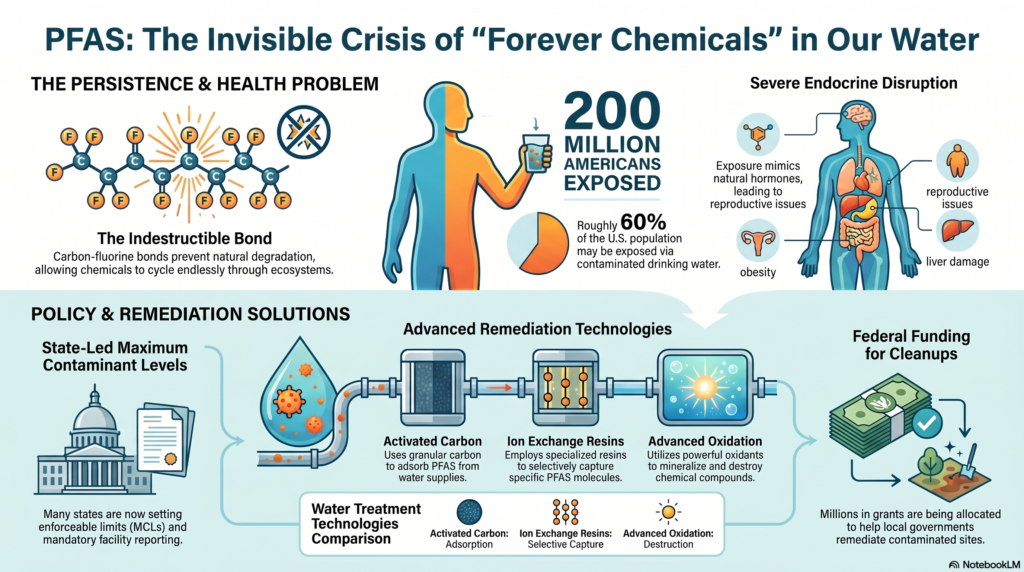
- States are actively enacting measures to regulate PFAS, focusing on Maximum Contaminant Levels (MCLs) and mandatory reporting from facilities.
- Funding initiatives support local governments in cleanup projects for PFAS contamination, with millions allocated for remediation efforts.
- Public awareness campaigns inform communities about PFAS risks and encourage engagement in environmental health initiatives.
OVERVIEW OF FOREVER CHEMICALS
Forever chemicals, scientifically known as per- and polyfluoroalkyl substances (PFAS), have come under increasing scrutiny due to their persistent nature in the environment and human body. These synthetic compounds, first developed in the 1930s, are characterized by carbon-fluorine bonds that confer remarkable stability, resulting in their resistance to degradation. This chemical persistence poses significant challenges for environmental management and public health policy, as PFAS can accumulate in the ecosystem and in human tissues over time.
The environmental impact of PFAS is profound, affecting water sources, soil, and biological systems. Contamination often arises from industrial discharge, the use of firefighting foams, and consumer products such as non-stick cookware and water-repellent textiles, many of which originate from centralized chemical manufacturing systems that function as an active ingredient hub for PFAS production and distribution.
As PFAS infiltrate drinking water supplies, ecosystems, and food chains, they raise alarm regarding their long-term effects on ecological health and biodiversity.
Regulatory agencies and governments worldwide are beginning to recognize the urgency of addressing PFAS contamination. Many are implementing policies aimed at restricting the use of these substances, enhancing monitoring, and mandating clean-up efforts in affected areas. However, the complexity of PFAS chemistry and the extensive legacy of their use complicate regulatory action.
In summation, the persistence and widespread environmental impact of PFAS necessitate a coordinated response from policymakers, scientists, and the public. As society seeks to reclaim autonomy over its natural resources, a focus on sustainable practices and robust regulations is essential to mitigate the influence of these forever chemicals.
Health Risks Associated With PFAS
The pervasive presence of PFAS in the environment raises significant concerns regarding their impact on human health. Evidence from numerous toxicology studies indicates that PFAS exposure can lead to a variety of health effects, as these compounds often serve as the active ingredient in industrial formulations that persist in the environment and accumulate in human tissues over time. The complexity of PFAS chemistry complicates risk assessment, as these compounds exhibit varied toxicological profiles and bioaccumulation tendencies.
Vulnerable populations, particularly pregnant women and children, face heightened risks from PFAS exposure due to their developing physiological systems. The long-term consequences of this exposure are not fully understood, necessitating thorough research and monitoring. The environmental impact of PFAS is also profound, as these chemicals persist in ecosystems, thereby entering food chains and affecting wildlife health.
Despite growing awareness of the risks associated with PFAS, regulatory challenges hinder effective management. Policymakers grapple with the need to establish clear guidelines for acceptable PFAS levels in drinking water, while balancing economic interests and technological capabilities. The absence of uniform federal regulations further complicates local and state efforts to mitigate PFAS contamination.
In light of these factors, it is essential for government agencies to prioritize research and public health initiatives aimed at understanding and addressing the multifaceted risks posed by PFAS. With a commitment to transparency and community engagement, stakeholders can collaborate to develop effective policies that protect public health and the environment from the long-term consequences of PFAS exposure.
Federal Regulations and Standards
The current regulatory framework governing forever chemicals, particularly per- and polyfluoroalkyl substances (PFAS), is characterized by a patchwork of state and federal guidelines that often lack uniformity and thoroughness. Proposed policy changes aim to establish more stringent standards for PFAS, reflecting growing recognition of their pervasive environmental and health impacts. Analyzing these evolving regulations is critical for understanding their potential effectiveness in mitigating risks associated with these persistent contaminants. Frequently referred to as “forever chemicals” because they break down slowly, PFAS can linger in the environment for a very long time—making them a huge concern for our water quality and our health. Aside from lead, PFAS may be the most pervasive and potentially costly contaminant our water supplies have ever dealt with.
Current Regulatory Framework
Maneuvering the complex landscape of federal regulations and standards surrounding per- and polyfluoroalkyl substances (PFAS), commonly known as “forever chemicals,” is essential for understanding current government actions. The existing regulatory framework in the United States is characterized by significant regulatory gaps, particularly in the absence of a thorough federal ban on PFAS. While the Environmental Protection Agency (EPA) has issued guidelines and proposed health advisories, these measures often fall short of regulating PFAS when they are used as the active ingredient in commercial and industrial applications that contribute to water contamination.
Moreover, enforcement challenges further complicate the situation, as state regulations vary widely and often conflict with federal standards. This patchwork approach creates inconsistencies that undermine efforts to manage PFAS contamination in water supplies effectively. The lack of uniformity not only hampers accountability but also confuses stakeholders, from local governments to private citizens, seeking clarity on PFAS safety levels and remediation responsibilities.
In light of mounting evidence linking PFAS to adverse health effects, the urgency for a coherent regulatory strategy is paramount. Policymakers must prioritize addressing these gaps and challenges to protect public health and guarantee that personal freedoms are upheld in the face of environmental hazards.
Proposed Policy Changes
Numerous proposed policy changes aim to strengthen federal regulations and standards governing PFAS, reflecting an increasing recognition of their potential health risks. Recent initiatives include the establishment of enforceable limits for PFAS concentrations in drinking water, with the Environmental Protection Agency (EPA) suggesting maximum contaminant levels. These proposed regulations are designed to mitigate exposure and safeguard public health, particularly among vulnerable populations.
The policy implications of these changes are significant. By implementing stricter standards, the federal government acknowledges the urgent need for action against the pervasive presence of these chemicals. This shift toward more stringent regulation not only aims to reduce health risks associated with PFAS exposure but also encourages industry accountability and innovation in developing safer alternatives.
Moreover, the proposed regulations emphasize the necessity for improved testing and monitoring practices, which are essential for evaluating compliance and effectiveness. As these changes unfold, stakeholders, including state governments and environmental organizations, may need to adapt their strategies and resources to align with evolving federal standards. Ultimately, the proposed policy changes represent a vital step toward ensuring clean water and protecting individual freedoms from the adverse effects of forever chemicals.
State-Level Initiatives
From an analytical standpoint, evaluating the risks of persistent contaminants like PFAS, and now emerging threats like short-chain methylimidazolium ionic liquids (MILs), demands that we overhaul our traditional toxicological frameworks. Historically, regulatory policy has operated on a substance-by-substance basis, which is painfully slow and fundamentally flawed when dealing with families of thousands of synthetic compounds. When we look at the data on endocrine disruption, the molecular mechanisms are deeply alarming. The ability of these chemicals to bind strongly to blood proteins, accumulate in vital organs, and mimic natural hormones, such as short-chain MILs activating human estrogen receptor alpha, demonstrates that low-level, chronic exposure can induce profound physiological shifts, particularly in vulnerable populations.
Furthermore, the discovery of PFOA in remote regions like the atmosphere above the pristine Amazon rainforest completely shatters the illusion that geographical isolation offers protection from industrial pollution. If a contaminant can travel via long-range atmospheric pathways to an ecosystem hundreds of kilometers away from an active ingredient hub, then localized containment strategies are merely temporary band-aids.
State-level legislative measures, such as setting strict Maximum Contaminant Levels (MCLs) and mandating facility reporting, are excellent and necessary steps toward near-term accountability. However, until these are backed by a thorough federal mandate and robust, interdisciplinary funding for advanced remediation technologies like ion exchange resins or advanced oxidation, we are simply shifting the burden of pollution from one community to the next.
State-level initiatives have emerged as critical components in addressing the persistent challenge of forever chemicals, with many jurisdictions enacting legislative measures aimed at regulating their use and mitigating environmental impacts. Funding for cleanup projects has been prioritized to guarantee contaminated sites are remediated effectively, while public awareness campaigns are being deployed to educate citizens about the risks associated with these substances. Together, these efforts reflect a proactive approach by state governments to safeguard public health and the environment in the face of ongoing contamination issues. A class of manmade chemicals known as PFAS—which stands for per- and polyfluoroalkyl substances—is part of what makes these consumer goods water-, stain-, and grease-resistant. PFAS are also toxic at extremely low levels (in the parts per trillion), posing significant risks to our health. And if you’re wondering why they’re called “forever chemicals,” it’s because they are nearly indestructible.
LEGISLATIVE MEASURES IMPLEMENTED
As concerns over the environmental and health impacts of per- and polyfluoroalkyl substances (PFAS) grow, states across the nation are increasingly implementing legislative measures aimed at regulating these so-called “forever chemicals.” Many of these initiatives focus on establishing strict limits for PFAS in drinking water and soil, reflecting a proactive approach to public health and environmental protection. The legislative impact of these measures is significant, as they aim to enhance policy effectiveness in safeguarding communities.
Key state-level initiatives include:
- Setting Maximum Contaminant Levels (MCLs): Many states are establishing enforceable limits for PFAS in drinking water, ensuring that public health standards are met.
- Mandating Reporting Requirements: Legislation often requires facilities that use or release PFAS to report their activities, increasing transparency and accountability.
- Creating Statewide Testing Programs: States are initiating programs to monitor PFAS levels in water sources, facilitating informed decision-making for communities.
These legislative measures not only demonstrate a commitment to environmental stewardship but also empower citizens by prioritizing their right to clean water and safe environments. Such proactive policies are essential for fostering public trust and encouraging community engagement in environmental health.

Funding for Cleanup Projects
Often, funding for cleanup projects targeting PFAS contamination is a vital component of state-level initiatives aimed at mitigating the adverse effects of these persistent pollutants. States are increasingly recognizing the need for robust cleanup funding mechanisms to address the widespread contamination of water sources, which can have severe public health implications.
Many states have established grant programs specifically designed to support local governments and communities in their efforts to remediate PFAS-affected sites. These programs not only provide financial resources but also facilitate technical assistance, ensuring that projects are executed efficiently and effectively. For example, states like Michigan and New Jersey have allocated millions in grant funding to accelerate cleanup efforts, reflecting a proactive stance in environmental protection and public health safety.
Moreover, leveraging federal funds can enhance state-level initiatives, enabling a more thorough approach to cleanup. The collaboration between state agencies, local governments, and federal entities is essential for maximizing the effectiveness of these cleanup projects. As awareness grows regarding the dangers posed by forever chemicals, continued investment in cleanup funding will be vital for restoring safe water sources and safeguarding community health.
Public Awareness Campaigns
Public awareness campaigns play an essential role in educating communities about the risks associated with PFAS contamination and the importance of proactive measures. These initiatives are crucial in fostering community engagement and empowering citizens with knowledge to advocate for their health and environment. State-level efforts have increasingly focused on creating accessible educational resources that inform the public about the dangers of forever chemicals in drinking water.
Key components of effective public awareness campaigns include:
- Educational Workshops: Hosting events where experts explain PFAS issues and mitigation strategies can enhance understanding and community involvement.
- Informational Materials: Distributing brochures, flyers, and online content that elucidate the science behind PFAS and its health impacts guarantees that information is easily digestible.
- Local Partnerships: Collaborating with schools, health departments, and environmental organizations can amplify messaging and broaden reach within communities.
Funding and Research Efforts
Addressing the pervasive issue of forever chemicals, or per- and polyfluoroalkyl substances (PFAS), necessitates substantial funding and dedicated research initiatives. The complexities surrounding PFAS contamination require a multifaceted approach that integrates scientific inquiry with robust financial backing. Government agencies must prioritize funding opportunities to support research collaborations among universities, private sector entities, and non-profit organizations. These partnerships can enhance the development of innovative methods for detecting, analyzing, and ultimately understanding the impacts of PFAS on human health and the environment.
Current funding mechanisms, such as grants from the Environmental Protection Agency (EPA) and the National Institutes of Health (NIH), are essential for advancing this field of study. However, they must be expanded to guarantee thorough and sustained research efforts. The establishment of dedicated funds specifically targeting PFAS research could greatly accelerate progress. It is vital to focus on interdisciplinary studies that evaluate the long-term effects of PFAS exposure and assess potential solutions.
Moreover, fostering international research collaborations can facilitate the sharing of knowledge and best practices, enabling a more global perspective on the PFAS crisis. By leveraging diverse expertise, governments can develop more effective regulatory frameworks that protect public health while promoting transparency and accountability in water management.
Remediation Strategies
Research initiatives focused on PFAS have underscored the pressing need for effective remediation strategies to mitigate the widespread contamination caused by these persistent chemicals. Addressing the challenges posed by per- and polyfluoroalkyl substances (PFAS) requires a multifaceted approach, integrating innovative remediation technologies and treatment methods that can effectively remove or neutralize these contaminants from water sources.
Key remediation strategies include:
- Activated Carbon Filtration: This method utilizes granular activated carbon to adsorb PFAS from water, showing significant effectiveness for shorter-chain PFAS, though its capacity can be limited for longer-chain compounds.
- Ion Exchange Resins: Leveraging ion exchange resins can enable the selective removal of PFAS from water. These resins can be designed to target specific PFAS, thereby enhancing the efficiency of the treatment process.
- Advanced Oxidation Processes (AOP): AOPs employ powerful oxidants to break down PFAS compounds, leading to their mineralization. This method is particularly promising for achieving complete destruction of these persistent chemicals.
While these treatment methods demonstrate potential, their implementation must be accompanied by robust regulatory frameworks and funding mechanisms to guarantee accessibility and scalability. The development of standardized protocols and ongoing research into the efficacy and safety of these technologies will be vital in guiding policy decisions. As communities increasingly demand action against PFAS contamination, the government must prioritize innovative remediation strategies that empower citizens to reclaim their water sources and uphold environmental justice.
Public Awareness and Advocacy
There is a growing recognition among communities and advocacy groups regarding the dangers posed by PFAS, driving a surge in public awareness efforts aimed at educating citizens about these harmful substances. This phenomenon is largely fueled by grassroots movements and citizen initiatives that seek to empower individuals with knowledge about the pervasive nature of forever chemicals in water supplies. Advocacy groups play a pivotal role in this endeavor, providing critical educational resources that elucidate the health risks associated with PFAS exposure.
Media coverage has also been instrumental in amplifying these efforts, bringing the issue to the forefront of public discourse and underscoring the need for immediate action. Investigative journalism has highlighted the potential long-term consequences of PFAS contamination, fostering a sense of urgency among affected communities. Consequently, community engagement initiatives have gained traction, encouraging residents to participate in dialogue with local policymakers and demand accountability.
Furthermore, the intersection of scientific research and public policy has become increasingly relevant as advocacy groups leverage data to influence regulations surrounding PFAS. By raising awareness and promoting informed discussions, these groups are not only educating the public but also advocating for policy changes that address the systemic failures related to chemical safety. PFAS, also known as “forever chemicals,” have emerged as a serious environmental and public health threat due to their persistence and widespread contamination. These man-made chemicals, widely utilized in consumer and industrial products since World War II, are now linked to alarming levels of contamination in drinking water supplies and health risks ranging from cancers to liver toxicity to reduced fertility.

RELATED STUDIES ABOUT FOREVER CHEMICALS IN WATER
In summary, the pervasive presence of PFAS in water sources presents significant public health challenges, with studies indicating that approximately 200 million Americans may be exposed to these chemicals. Thorough regulatory frameworks at both federal and state levels, alongside increased funding for research and remediation strategies, are essential for mitigating risks associated with forever chemicals. Ongoing public awareness and advocacy efforts will play a vital role in driving policy changes that prioritize safe drinking water and environmental health.
Per- and Poly-fluoroalkyl Substances as Forever Chemicals in Drinking Water: Unraveling the Nexus with Obesity and Endocrine Disruption
Objective: This mini-review synthesizes current research on the presence and health impacts of per- and poly-fluoroalkyl substances (PFAS) in drinking water, with a particular focus on their role in promoting obesity and disrupting the endocrine system.
Key Findings:
- PFAS as “Forever Chemicals”: PFAS are highly stable, persistent synthetic compounds widely used since the 1960s in industrial and consumer products (e.g., non-stick coatings, firefighting foam, textiles). Their strong carbon-fluorine bonds make them resistant to environmental degradation, leading to widespread contamination of water sources.
- Primary Exposure Route: Drinking water is identified as a major pathway for human exposure to PFAS. Contamination is especially prevalent near industrial sites, military bases, and airports.
- Health Impacts:
- Obesity: PFAS exposure, particularly during critical developmental stages, is linked to weight gain and obesity. The mechanisms include:
- Disruption of lipid and glucose metabolism.
- Activation of key metabolic regulators (PPARα and PPARγ) that influence fat cell production and energy balance.
- Interference with thyroid hormones, which are crucial for growth and metabolism.
- Endocrine Disruption: PFAS interfere with the synthesis, secretion, and function of hormones, leading to:
- Reproductive issues (e.g., infertility, early menopause, polycystic ovary syndrome).
- Thyroid dysfunction.
- Liver damage and increased risk of non-alcoholic fatty liver disease (NAFLD).
- Adverse effects on the pancreas, kidneys, and cardiovascular system.
- Vulnerable Populations: Pregnant women, infants (via placental transfer and breastfeeding), and children are at heightened risk. Early-life exposure is associated with increased susceptibility to obesity and endocrine-related disorders later in life.
- Detection Challenges: Monitoring PFAS in water is complex due to their low regulatory thresholds (ppt to ppb levels). While traditional methods like HPLC-MS/MS are sensitive, they are costly and lab-bound. Emerging techniques like electrochemical sensors offer promise for real-time, on-site detection but require further development to overcome selectivity and interference issues.
- Cellular Mechanism: PFAS compounds bind strongly to blood proteins (e.g., albumin), accumulate in organs, and induce cellular effects such as oxidative stress, DNA damage, and disruption of hormone receptor signaling pathways.
Conclusion & Recommendations:
The review concludes that PFAS in drinking water pose a significant public health threat due to their persistence, bioaccumulation potential, and demonstrated links to obesity and endocrine disruption. Urgent action is needed to:
- Phase out long-chain PFAS (like PFOA and PFOS) and carefully assess the safety of short-chain replacements.
- Enhance monitoring and develop cost-effective, real-time detection technologies.
- Establish stricter national and regional guidelines for PFAS in drinking water.
- Prioritize research on the health effects of PFAS mixtures, their molecular mechanisms (especially via PPAR pathways), and the long-term impacts of early-life exposure.
Overall Significance:
This study underscores the critical need for integrated environmental and public health strategies to mitigate PFAS contamination, protect vulnerable populations, and prevent associated chronic diseases.
| REFERENCE: Hoda Pezeshki, Saeed Rajabi, Majid Hashemi, Saeideh Moradalizadeh, Habibeh Nasab, Per- and poly-fluoroalkyl substances as forever chemicals in drinking water: Unraveling the nexus with obesity and endocrine disruption – A mini review, Heliyon, Volume 11, Issue 4, 2025, e42782, ISSN 2405-8440, https://doi.org/10.1016/j.heliyon.2025.e42782. (https://www.sciencedirect.com/science/article/pii/S2405844025011636) |
Methylimidazolium Ionic Liquids – A New Class Of Forever Chemicals With Endocrine Disrupting Potential
Objective: This study investigates the environmental persistence, human metabolic stability, and endocrine-disrupting potential of methylimidazolium ionic liquids (MILs), a class of industrial “green” solvents, to assess their risk as emerging contaminants.
Key Findings:
- Environmental Persistence: Short-chain MILs (with 2, 4, and 6 carbon alkyl chains: EMI, BMI, HMI) showed negligible biodegradation and mineralisation in river water over 7 weeks. In contrast, longer-chain MILs (M8OI and DMI) were partially metabolized and mineralized by microbial action.
- Metabolic Stability in Humans: In a human liver cell model (HepaRG), short-chain MILs (EMI, BMI, HMI) were not metabolized, indicating they would not be cleared via hepatic metabolism and could persist in the body. Longer-chain MILs (M8OI, DMI) were metabolized.
- Endocrine-Disrupting Activity:
- In Vitro: Short-chain MILs (EMI, BMI, HMI) activated the human estrogen receptor alpha (hERα) at low concentrations (10⁻⁷ to 10⁻⁶ M). Activation was blocked by known ERα antagonists (fulvestrant, tamoxifen).
- Molecular Modeling: Docking studies predicted short-chain MILs bind to the hERα, similar to the known xenoestrogen bisphenol A (BPA). EMI may also bind at an allosteric site.
- In Vivo (Rat Model): Exposure to short-chain MILs (EMI, HMI) caused a statistically significant increase in uterine wet weight—a classic estrogenic effect—confirming their endocrine-disrupting potential in a living organism.
- Lack of Aryl Hydrocarbon Receptor (AhR) Activity: None of the tested MILs activated the human AhR, indicating specificity for the estrogenic pathway.
- Human Exposure Evidence: The study references recent detection of MILs (HMI and M8OI) in human serum samples, confirming real-world exposure.
Conclusion & Significance:
This research identifies short-chain methylimidazolium ionic liquids (EMI, BMI, HMI) as a new class of potential “forever chemicals.” They are environmentally persistent, resistant to human metabolism, and demonstrate clear estrogenic activity both in laboratory tests and in animals.
Given their increasing industrial use as “green” solvents and their emerging presence in the environment and human bodies, MILs represent a significant emerging risk for endocrine disruption. The study calls for:
- Inclusion of MILs in environmental and human biomonitoring programs.
- Further toxicokinetic studies to understand human exposure and internal doses.
- Detailed risk assessments to establish safe exposure levels and inform regulatory action.
Overall, the findings challenge the “green” label of these solvents and highlight the urgent need to evaluate the long-term health and environmental impacts of this chemical class before widespread adoption.
| REFERENCE: Tarek M. Abdelghany, Shireen Hedya, Alex Charlton, Lanyu Fan, Narges Fazili, Ben Air, Alistair C. Leitch, Martin Cooke, Agnieszka K. Bronowska, Matthew C. Wright, Methylimidazolium ionic liquids – A new class of forever chemicals with endocrine disrupting potential, Chemosphere, Volume 363, 2024, 142827, ISSN 0045-6535, https://doi.org/10.1016/j.chemosphere.2024.142827. (https://www.sciencedirect.com/science/article/pii/S0045653524017211) |
Occurrence Of A “Forever Chemical” In The Atmosphere Above Pristine Amazon Forest
Objective: To investigate, for the first time, whether per- and polyfluoroalkyl substances (PFAS) can be transported via long-range atmospheric transport to a remote, pristine continental interior, far from coastal sources, using the Amazon rainforest as a case study.
Key Findings:
- First Detection in the Amazon: This study reports the first-ever measurements of PFAS in the atmosphere above the Amazon rainforest. The restricted compound perfluorooctanoic acid (PFOA) was detected at the remote Amazon Tall Tower Observatory (ATTO) site, located 150 km from the nearest major city (Manaus).
- Concentration Levels and Profile: PFOA concentrations in total suspended particles (TSP) ranged from 0.01 to 2.0 pg/m³. Concentrations were systematically and significantly higher at 320 meters above ground than at 42 meters (just above the forest canopy).
- Evidence of Long-Range Transport: The vertical concentration profile (higher aloft) and the coincidence of PFOA concentration spikes with specific air mass trajectories strongly indicate long-range atmospheric transport as the source, rather than local emissions. The highest concentrations occurred when air masses originated from the south, passing over the industrial city of Manaus.
- Potential Sources: The likely origin is anthropogenic pollution from urban/industrial areas. Potential sources include:
- Industrial activities in Manaus (historically associated with fluorochemical production).
- The use of PFAS-containing aqueous film-forming foams (AFFF) for firefighting, relevant given regional forest fires.
- The study rules out sea spray as a significant source due to the site’s extreme distance (>800 km) from the ocean.
- Global Context and Concern: The measured PFOA levels are comparable to those reported in other remote environments like the Arctic. Alarmingly, concentrations in this pristine forest were higher than those recently measured in some Brazilian urban areas. This demonstrates the pervasive nature of these “forever chemicals.”
Conclusion & Significance:
This research provides groundbreaking evidence that PFAS contamination has reached one of the world’s most remote and vital ecosystems via atmospheric transport. The detection of PFOA, a known endocrine disruptor and bioaccumulative toxin, in the Amazon atmosphere raises serious concerns about:
- Environmental Impact: Potential adverse effects on the fragile and biodiverse Amazon flora and fauna.
- Human Health: Risks to indigenous populations and local communities.
- Global Pollutant Pathways: Highlights that atmospheric transport mechanisms, beyond the previously studied sea-spray route, are responsible for distributing PFAS to continental interiors.
The study underscores the need for:
- Further investigation into the full suite of PFAS present in the Amazon.
- Enhanced monitoring of atmospheric PFAS in tropical regions.
- Research on the specific sources and transport pathways to inform global mitigation strategies.
Overall, this work shatters the assumption of a pristine Amazon and sounds a critical alarm about the global reach and potential ecological consequences of persistent anthropogenic “forever chemicals.”
| REFERENCE: Ivan Kourtchev, Bruna G. Sebben, Sebastian Brill, Cybelli, G.G. Barbosa, Bettina Weber, Rosaria R. Ferreira, Flávio Augusto Farias D’Oliveira, Cléo Q. Dias-Junior, Olalekan A.M. Popoola, Jonathan Williams, Christopher Pöhlker, Ricardo H.M. Godoi, Occurrence of a “forever chemical” in the atmosphere above pristine Amazon Forest, Science of The Total Environment, Volume 944, 2024, 173918, ISSN 0048-9697, https://doi.org/10.1016/j.scitotenv.2024.173918. (https://www.sciencedirect.com/science/article/pii/S004896972404066X) |
CONCLUSION
Ultimately, the crisis of forever chemicals in our water supplies underscores an urgent need for structural systemic change. We can no longer afford to treat chemical policy as a secondary economic consideration or a legal box to be checked. The mounting evidence linking these persistent compounds to systemic health issues, metabolic disruption, and widespread ecological degradation proves that our historical approach to chemical safety is obsolete. The path forward requires a binding commitment to transparency, where scientific inquiry directly dictates policy without political or corporate dilution.
What gives me hope is the tangible surge in grassroots advocacy and citizen-led monitoring initiatives. When local communities collaborate with scientists and leverage independent data, they effectively force the hands of policymakers to demand real accountability. Reclaiming our autonomy over natural resources means establishing strict national guidelines, phasing out hazardous legacy chains, and aggressively funding real-time detection methods.
As we navigate these evolving frameworks, our guiding principle must remain clear and uncompromising: clean, uncompromised water is a fundamental human right, and protecting it is our collective ecological imperative. Let’s keep pushing the boundaries of what robust regulation can achieve.