

As someone who has spent over a decade navigating the intricate intersection of chemical policy and industrial compliance, I have seen firsthand how legacy chemicals can leave an indelible mark on our regulatory and physical landscape. Dieldrin is a quintessential example of this phenomenon. When we look at the history of synthetic chemistry, the 1940s and 1950s were characterized by an optimistic rush to solve complex agricultural and public health challenges with powerful new compounds. Dieldrin emerged as a remarkably effective tool against persistent pests, but its design prioritized immediate efficacy over long-term environmental safety.
From a policy perspective, the story of dieldrin underscores why predictive risk assessments and stringent regulatory strategies are so vital today. For non-specialists, it can be difficult to understand why a pesticide banned or severely restricted decades ago still warrants intense international scrutiny. The reality is that chemistry does not simply vanish when a factory closes or a product is pulled from the shelf. The molecular stability that made dieldrin so appealing to industrial sectors is precisely what makes it an enduring hazard.
Bridging the gap between pure laboratory science and actionable environmental policy requires us to look closely at these legacy pollutants. By understanding the profound implications of dieldrin’s environmental persistence, we can appreciate why international frameworks work so aggressively to restrict it and why the transition to safer alternatives is a non-negotiable step for modern sustainability.
Dieldrin is on the list of restricted pesticides worldwide due to its harmful effects on human health, persistent environmental contamination, and negative impact on wildlife. This chlorinated hydrocarbon insecticide, introduced in the 1940s, poses risks such as neurological damage and increased cancer susceptibility in humans. Its stability in the environment allows it to remain in soil for 5 to 15 years, leading to bioaccumulation in various organisms. Regulatory bodies, including those adhering to the Stockholm Convention, aim to mitigate these risks through stringent restrictions. Understanding dieldrin’s implications highlights the necessity for safer pesticide alternatives and practices.
KEY TAKEAWAYS
- Dieldrin is a persistent organic pollutant, remaining in the environment for 5 to 15 years, causing long-term ecological damage.
- It poses significant health risks, including neurological damage, developmental effects in children, and increased cancer risk among exposed populations.
- The chemical bioaccumulates in wildlife, leading to toxic effects on bird populations and disrupting entire ecosystems.
- Regulatory scrutiny has increased globally due to dieldrin’s environmental persistence and detrimental impact on biodiversity and soil health.
- International agreements like the Stockholm Convention mandate restrictions on hazardous substances, including dieldrin, to protect human health and the environment.
HISTORY OF DIELDRIN USE
Dieldrin, a chlorinated hydrocarbon insecticide, was first synthesized in the 1940s and rapidly gained popularity for its effectiveness in controlling a variety of pests, particularly in agricultural settings. Initially developed as a derivative of aldrin, dieldrin became the active ingredient in many insecticide formulations due to its strong effectiveness against mosquitoes, termites, and other agricultural pests. This marked a significant advancement in pesticide development during a period characterized by a growing reliance on synthetic chemicals to enhance agricultural productivity.
Aldrin and dieldrin were widely used as pesticides for crops like corn, cotton, and citrus fruit from the 1950s until 1970. They were also used to control termites until 1989. These chemicals have not been used as insecticides after 1989. Throughout the 1950s and 1960s, dieldrin was extensively used not only in agriculture but also in public health sectors for vector control. Its efficacy led to widespread adoption, particularly in developing countries where agricultural practices were evolving. However, as the dieldrin history unfolded, concerns began to emerge regarding its safety profile and environmental impact. Research highlighted potential health risks to humans and wildlife, which prompted regulatory scrutiny.
Environmental Persistence
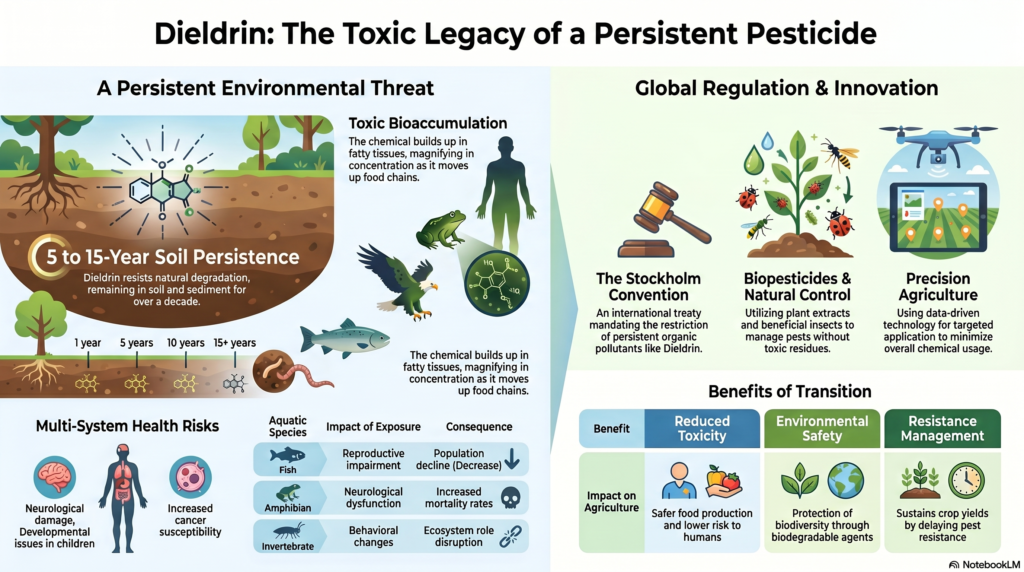
How long can dieldrin remain in the environment after its application? Dieldrin is characterized by its remarkable environmental persistence, often remaining in soil and sediment for several years, with half-lives ranging from 5 to 15 years depending on various factors such as soil type, temperature, and microbial activity. This longevity is primarily attributed to the chemical’s resistance to degradation, a consequence of its stability and the persistence mechanisms inherent in its molecular structure. The persistence of dieldrin in soil and water, much like its predecessor the aldrin pesticide, highlights the challenges posed by chlorinated hydrocarbons in terms of long-term environmental contamination.
The ecological consequences of this persistence are profound. Dieldrin can accumulate in the tissues of organisms, leading to bioaccumulation and biomagnification within food webs. As organisms higher up the food chain consume those lower down, the concentration of dieldrin can increase, potentially leading to toxic effects on wildlife, including birds and aquatic species. These ecological repercussions not only threaten biodiversity but also disrupt ecosystem functions, as affected species may play critical roles in their environments.
Moreover, the persistence of dieldrin poses significant challenges for environmental remediation efforts. Contaminated sites can remain hazardous for decades, complicating land use and restoration initiatives. Understanding the persistence mechanisms of dieldrin is essential for developing effective strategies to mitigate its environmental impact and to inform regulatory decisions aimed at protecting ecosystems and public health. As awareness of these challenges grows, the need for responsible pesticide management becomes increasingly imperative to preserve ecological integrity and guarantee the freedom of future generations to inhabit a safe and healthy environment.
Health Risks to Humans
Exposure to dieldrin, while less common today due to regulatory restrictions, can pose significant health risks to humans, particularly among populations in areas previously subjected to its use. Chronic exposure to this organochlorine pesticide has been linked to a range of adverse health outcomes. Just as ddt is a pesticide associated with long-term health risks, dieldrin exposure may lead to neurological damage, developmental effects in children, and increased cancer susceptibility. Significantly, individuals who have been exposed may experience neurological damage, which can manifest as cognitive impairments and motor dysfunction.
Furthermore, dieldrin is associated with developmental effects in children, leading to concerns about the long-term impact of prenatal or early-life exposure. Its potential to disrupt endocrine function raises alarms about reproductive issues, affecting fertility and hormonal balance. The correlation between dieldrin exposure and increased cancer risk has also been documented, with specific cancers being more prevalent in exposed populations.
Vulnerable populations, such as agricultural workers, face occupational hazards due to direct contact with dieldrin during its application and handling. Additionally, dietary exposure can occur through the consumption of contaminated food sources, further exacerbating the risk of adverse health effects. The immune system may also be compromised as a result of exposure, diminishing the body’s ability to combat infections and diseases.
Given the persistent nature of dieldrin in the environment, the health risks associated with its exposure necessitate ongoing monitoring and research. Protecting public health requires addressing these risks thoroughly, particularly for those in previously contaminated areas, to mitigate the long-term consequences of dieldrin exposure.
Impact on Wildlife
The use of dieldrin and other restricted pesticides has significant implications for wildlife, particularly regarding bird populations, which are susceptible to declines due to the chemical’s toxic effects. Additionally, aquatic life faces heightened vulnerability as these substances can contaminate water sources, disrupting entire ecosystems. Moreover, the impact on soil ecosystems can lead to reduced biodiversity and compromised soil health, ultimately affecting various trophic levels within the environment. Human poisoning from aldrin and dieldrin is characterized by major motor convulsions. Other effects include malaise, incoordination, headache, dizziness, and gastrointestinal disturbances. The seizures have developed with and without other symptoms of poisoning.
Effects on Bird Populations
Among the numerous environmental concerns associated with the use of dieldrin, its detrimental effects on bird populations stand out as particularly significant. Dieldrin toxicity has been extensively documented, revealing a range of adverse impacts on avian species. One of the most alarming consequences is its interference with avian reproduction. Dieldrin accumulates in the fatty tissues of birds, leading to bioaccumulation and biomagnification, which can result in elevated toxicity levels in top predators.
Research indicates that exposure to dieldrin can lead to reduced egg viability, decreased hatching success, and abnormalities in developing embryos. These factors contribute to declining bird populations, particularly among species that are already vulnerable due to habitat loss and other environmental pressures. In addition, the effects of dieldrin extend beyond individual health, disrupting entire ecosystems by altering predator-prey dynamics and diminishing biodiversity.
In light of these findings, the necessity for stringent regulations on dieldrin usage becomes evident. Protecting avian populations is not solely an ecological concern; it reflects a broader commitment to maintaining the integrity of our natural environment. As a result, reducing dieldrin’s presence in agricultural practices is imperative for avian conservation efforts.
Aquatic Life Vulnerability
Dieldrin poses a significant threat to aquatic ecosystems, impacting various forms of wildlife inhabiting freshwater and marine environments. Its persistence in the environment leads to bioaccumulation in aquatic organisms, disrupting food chains and endangering species diversity. Research indicates that dieldrin exposure can impair reproductive systems in fish and amphibians while also affecting the neurological functions of invertebrates.
| Aquatic Species | Impact of Dieldrin Exposure | Consequence |
| Fish | Reproductive impairment | Decline in population |
| Amphibians | Neurological dysfunction | Increased mortality rates |
| Invertebrates | Behavioral changes | Disruption of ecosystem roles |
| Aquatic Plants | Growth inhibition | Reduced habitat quality |
The ramifications of chemical exposure extend beyond individual species, posing a broader risk to the health of entire aquatic ecosystems. As contaminants accumulate in the food web, the potential for long-term ecological damage becomes increasingly apparent. Protecting aquatic life from dieldrin is essential for maintaining biodiversity and the overall integrity of these crucial environments.
Soil Ecosystem Disruption
Chemical contaminants like dieldrin not only threaten aquatic life but also disrupt soil ecosystems, impacting terrestrial wildlife. The integrity of soil health is paramount for sustaining diverse habitats, yet the introduction of dieldrin can lead to significant degradation. This pesticide adversely affects microbial diversity, which is essential for nutrient cycling and organic matter decomposition.
A reduction in microbial populations compromises the soil’s ability to support plant growth and maintain ecological balance. Numerous species, including insects and larger vertebrates, rely on healthy soil ecosystems for food, habitat, and overall survival. Disruptions caused by dieldrin can result in diminished food resources and habitat degradation, ultimately leading to declines in wildlife populations.
Moreover, the persistence of dieldrin in the soil may lead to bioaccumulation within the food web, further threatening species at higher trophic levels. The long-term consequences of such disruptions extend beyond individual species, affecting entire ecosystems and their resilience. Addressing the impact of dieldrin on soil ecosystems is critical to preserving wildlife and ensuring the sustainability of natural habitats. Consequently, it is imperative to limit the use of such hazardous substances to protect both soil health and biodiversity.
INTERNATIONAL REGULATIONS
Steering through the complex landscape of international regulations regarding pesticides, including dieldrin, highlights the global commitment to environmental protection and public health. Numerous international treaties and regulatory frameworks have been established to control the use of hazardous substances, reflecting an increasing recognition of the need for sustainability and safety in agricultural practices.
One key instrument is the Stockholm Convention on Persistent Organic Pollutants, which aims to eliminate or restrict the production and use of persistent organic pollutants (POPs), including dieldrin. This treaty obligates signatory countries to implement measures to mitigate the risks associated with these substances, thereby aligning international efforts towards a safer environment.
In addition to the Stockholm Convention, various regional agreements and national regulations complement these international efforts. Regulatory frameworks often require rigorous risk assessments and the adoption of safer alternatives, fostering a proactive approach to pesticide management. Countries are encouraged to share data and experiences, which enhances the collective understanding of the impacts of pesticides on ecosystems and human health.
The role of international organizations, such as the Food and Agriculture Organization (FAO) and the World Health Organization (WHO), is essential in establishing guidelines and best practices for pesticide use. These organizations facilitate collaboration among nations, ensuring that the regulatory landscape is effective and adaptive to emerging challenges.

Alternatives to Dieldrin
When we dive into the technical details of dieldrin’s environmental behavior, the data paints a stark picture of structural persistence. Its remarkable molecular stability means it resists natural degradation mechanisms, allowing it to linger in soil and sediment for 5 to 15 years. In my work advising firms on regulatory strategy, we frequently evaluate how chemicals behave within broader food webs. Dieldrin’s high lipophilicity causes it to bioaccumulate in fatty tissues, leading to dramatic biomagnification as it moves up the trophic ladder. We see the consequences of this clearly in wildlife, particularly in top avian predators where it disrupts reproduction by reducing egg viability, and in aquatic species where it impairs basic neurological and reproductive functions.
Furthermore, the public health risks are deeply concerning. Chronic exposure is strongly linked to severe neurological damage, cognitive impairments, motor dysfunction, and increased cancer susceptibility. Recent proteomic research on zebrafish even shows that dieldrin disrupts key proteins involved in mitochondrial respiration and oxidative stress in the central nervous system, reinforcing its link to neurotoxic pathways. In rodent models, early-life developmental exposure has been shown to cause male-specific exacerbations of motor deficits and synaptic stress related to neurodegenerative diseases.
Managing these extensive risks requires an active commitment to frameworks like the Stockholm Convention, which aims to eliminate persistent organic pollutants. It also demands that we embrace innovative mitigation strategies. For instance, recent studies suggest that carefully selected fungicides can actually modulate and reduce dieldrin uptake in highly accumulative crops like zucchini, showcasing how creative biochemical insights can help safeguard our food systems while we transition to long-term integrated pest management and biopesticides.
As concerns over the environmental and health impacts of dieldrin have grown, exploring viable alternatives becomes imperative. Natural pest control methods, biopesticides, and integrated pest management strategies offer promising solutions that can reduce reliance on synthetic pesticides. These alternatives not only aim to mitigate ecological risks but also enhance sustainable agricultural practices. Dieldrin is a human-made chemical that was used as an insecticide from the 1950s until 1987. Dieldrin has been detected rarely and at low levels in Minnesota drinking water. Exposure to even low levels of dieldrin can increase a person’s risk of cancer.
Natural Pest Control Methods
Exploring natural pest control methods presents a viable alternative to the use of dieldrin and other restricted pesticides. These environmentally friendly techniques not only mitigate pest issues but also foster a healthier ecosystem. One prominent approach involves the use of natural repellents derived from plants, such as neem oil and essential oils, which deter various pests without harmful residues.
Companion planting is another effective strategy, wherein specific plants are cultivated alongside one another to enhance growth and repel pests. For instance, marigolds planted among vegetables can repel nematodes and aphids, thereby safeguarding crops naturally. This method promotes biodiversity and minimizes the need for synthetic chemicals.
Additionally, the introduction of beneficial insects, such as ladybugs and lacewings, can provide natural pest control by preying on harmful insects. These techniques not only reduce reliance on harmful pesticides but also empower farmers and gardeners to maintain autonomy over their pest management strategies. By adopting natural pest control methods, individuals can take a significant step toward sustainable agricultural practices while promoting environmental health and personal freedom in their cultivation choices.
Biopesticides and Their Benefits
Biopesticides represent an essential advancement in pest management, offering a range of benefits that position them as viable alternatives to traditional pesticides like dieldrin. These naturally derived agents, including microbial pesticides and plant extracts, demonstrate significant biopesticide effectiveness in controlling pests while minimizing environmental impact. Their integration into sustainable agriculture practices fosters a healthier ecosystem, reducing reliance on chemical inputs.
The table below highlights key advantages of biopesticides:
| Benefit | Description | Impact on Agriculture |
| Reduced Toxicity | Lower risk to non-target organisms and humans | Safer food production |
| Environmental Safety | Biodegradable and less persistent in the environment | Protects biodiversity |
| Resistance Management | Helps delay pest resistance development | Sustains crop yields |
| Enhanced Soil Health | Promotes beneficial soil microbes | Improves crop resilience |
Embracing biopesticides aligns with a growing demand for environmentally responsible agricultural practices. As awareness of the adverse effects of conventional pesticides increases, biopesticides present an effective and sustainable solution, ensuring the freedom of farmers to adopt practices that contribute to ecological balance while maintaining productivity.
Integrated Pest Management Strategies
The effectiveness of integrated pest management (IPM) strategies lies in their holistic approach to pest control, combining various techniques to minimize reliance on chemical pesticides such as dieldrin. IPM emphasizes the understanding of pest life cycles and their interactions with the environment, allowing for targeted interventions that reduce chemical inputs.
One key component of IPM is crop rotation, a practice that disrupts pest development by varying the types of crops grown in a specific area over time. This not only helps in managing pest populations but also enhances soil health and fertility. Additionally, companion planting serves as a natural deterrent to pests by utilizing beneficial plant relationships, where certain plants can repel harmful insects or attract natural predators.
Moreover, IPM incorporates monitoring and assessment techniques to evaluate pest populations and environmental conditions, enabling timely and informed decisions on pest management. By integrating these diverse strategies, farmers can achieve sustainable agricultural practices that protect both crops and ecosystems, ultimately promoting the freedom to manage pests effectively without the adverse effects associated with hazardous chemical pesticides.
Future of Pesticide Use
As we look towards the future of pesticide use, it is imperative to contemplate both the advancements in agricultural technology and the increasing regulatory pressures aimed at minimizing environmental impacts. The shift towards sustainable agriculture necessitates a reevaluation of conventional pesticide practices, encouraging the adoption of innovative technologies that enhance crop protection while safeguarding ecosystems.
The future of pesticide use will likely be shaped by several key factors:
- Biopesticides: These environmentally friendly alternatives are derived from natural materials and have shown promise in reducing chemical pesticide reliance. Their development and integration into mainstream agricultural practices could lead to a more sustainable approach.
- Precision Agriculture: Utilizing data-driven techniques, precision agriculture allows for targeted pesticide application based on real-time data, thereby reducing overall usage and minimizing environmental contamination. This approach optimizes crop yield while conserving resources.
- Regulatory Frameworks: Stricter regulations and global agreements will continue to influence pesticide approval and use. As countries adopt more robust environmental policies, the market will shift towards safer, less harmful alternatives, aligning with public demand for sustainable practices.

RELATED STUDIES ABOUT DIELDRIN PESTICIDE
Dieldrin, once widely utilized for pest control, has been banned or severely restricted in over 170 countries due to its environmental persistence and significant health risks. Studies indicate that dieldrin can remain in the soil for over a decade, posing long-term threats to ecosystems and human health. The global shift towards safer alternatives underscores the importance of sustainable pesticide practices. As awareness of dieldrin’s detrimental effects grows, the future of pesticide use must prioritize safety and ecological integrity.
The Pesticide Dieldrin Disrupts Proteins Related To Oxidative Respiration And Mitochondrial Stress In The Central Nervous System
Study Objective
This data article presents a quantitative proteomic analysis of zebrafish hypothalamus following dietary exposure to the legacy organochlorine pesticide dieldrin. The study aimed to identify protein-level changes in the central nervous system (CNS) and uncover molecular pathways affected by dieldrin, with a focus on neurotoxicity and mitochondrial dysfunction.
Key Findings
- Proteomic Response to Dieldrin
- 3,941 proteins were identified in the zebrafish hypothalamus.
- 226 proteins (5.7%) were significantly regulated by dieldrin exposure across three doses.
- The highest dose (1.8 µg/g feed) caused the most pronounced changes, with 61 proteins significantly decreased.
- Protein Expression Patterns
- 27 proteins were consistently upregulated across all doses.
- Only 1 protein was downregulated in all doses.
- Distinct expression clusters indicated dose-dependent and non-linear responses.
- Affected Biological Processes
Dieldrin exposure disrupted proteins involved in:
- Protein folding & endoplasmic reticulum (ER) stress response
- Actin organization & cell structure
- Apoptosis & neuronal cell death
- Mitochondrial function & oxidative phosphorylation
- Mitochondrial & Respiratory Chain Impact
- 18 proteins related to mitochondrial respiration were significantly altered.
- Key affected proteins included:
- SLC8A1, SLC25A12 (solute carriers) IDH2, MDH2 (metabolic enzymes)
- Mitochondrial ATP synthase (Complex V)
- CYP2A6 (cytochrome P450)
- Network Analysis Insights
- Subnetwork enrichment confirmed mitochondrial dysfunction and oxidative stress as central themes.
- Pathways related to energy metabolism, neuronal survival, and protein degradation were prominently affected.
Experimental Design
- Model: Adult female zebrafish
- Exposure: 21-day dietary dieldrin at three doses (0.03, 0.15, 1.8 µg/g dry weight feed)
- Method: iTRAQ-based quantitative proteomics + LC-MS/MS
- Analysis: ProteinPilot software, Pathway Studio for network mapping
Significance & Applications
- Provides a proteomic resource for studying pesticide-induced neurotoxicity.
- Identifies potential protein biomarkers for dieldrin exposure and mitochondrial dysfunction.
- Supports the link between organochlorine pesticides and neurodegenerative pathways.
- Offers a zebrafish CNS proteomic framework applicable to other environmental neurotoxicants.
Conclusion
Dieldrin exposure disrupts key proteins involved in mitochondrial respiration, oxidative stress, and neuronal maintenance in the zebrafish hypothalamus. These findings reinforce the role of mitochondrial dysfunction in pesticide-induced neurotoxicity and provide molecular insights into how legacy pesticides may contribute to neurodegenerative disease mechanisms.
| REFERENCE: Andrew M. Cowie, Kathleena I. Sarty, Angella Mercer, Jin Koh, Karen A. Kidd, Christopher J. Martyniuk, The pesticide dieldrin disrupts proteins related to oxidative respiration and mitochondrial stress in the central nervous system, Data in Brief, Volume 11, 2017, Pages 628-633, ISSN 2352-3409, https://doi.org/10.1016/j.dib.2017.03.008. (https://www.sciencedirect.com/science/article/pii/S2352340917300847) |
Developmental Exposure To The Organochlorine Pesticide Dieldrin Causes Male-Specific Exacerbation Of Α-Synuclein-Preformed Fibril-Induced Toxicity And Motor Deficits
Study Objective
This study investigated whether developmental exposure to the organochlorine pesticide dieldrin increases susceptibility to α-synuclein pathology—a hallmark of Parkinson’s disease (PD)—using a “two-hit” mouse model. The goal was to determine if early-life dieldrin exposure worsens motor and neurochemical deficits induced by α-synuclein pre-formed fibrils (PFFs) and whether these effects differ by sex.
Key Findings
- Male-Specific Exacerbation of Motor Deficits
- In male mice, developmental dieldrin exposure worsened PFF-induced motor deficits on the challenging beam test at 6 months post-PFF injection:
- Increased time to traverse (bradykinesia-like behavior)
- Increased steps (gait alterations)
- Altered error rates (postural instability)
- Female mice showed no motor deficits from PFF or dieldrin exposure.
- No effects were observed on the rotarod test.
- No Effect on α-Synuclein Aggregation
- Dieldrin exposure did not increase the number of phosphorylated α-synuclein (pSyn) aggregates in the substantia nigra at 1 or 2 months post-PFF injection in either sex.
- This suggests dieldrin does not promote α-synuclein aggregation but may worsen the downstream neuronal response to existing aggregates.
- Increased Dopamine Turnover in Males
- At 6 months post-PFF, male mice exposed to dieldrin showed a significant increase in dopamine (DA) turnover (elevated HVA:DA ratio), indicating greater striatal synaptic stress.
- No such exacerbation was seen in females or in DA metabolite levels alone.
- No Exacerbation of Neuronal Loss
- Dieldrin did not worsen PFF-induced loss of:
- Tyrosine hydroxylase (TH+) neurons in the substantia nigra
- NeuN+ neurons (general neuronal loss)
- However, females showed less TH+ neuron loss than males after PFF injection, suggesting greater resilience.
- Sex-Specific Neuroinflammatory Gene Changes
- Dieldrin exposure altered expression of neuroinflammatory genes in a sex-specific manner:
- Males: 9 genes dysregulated (e.g., Il15, Stat1, Nos2 downregulated)
- Females: 18 genes dysregulated (e.g., Csf1, Tfrc, Ager2 upregulated)
- Changes suggest altered immune signaling but not a classic pro-/anti-inflammatory state.
Experimental Design
- Model: C57BL/6 mice
- Exposure: Dams fed 0.3 mg/kg dieldrin orally before mating through weaning.
- Second Hit: Adult offspring received intrastriatal α-syn PFF injections at 12 weeks.
- Assessments: Motor behavior (challenging beam, rotarod), HPLC (DA metabolites), immunohistochemistry (pSyn, TH, NeuN), Western blot (α-syn, DAT, VMAT2), qPCR (inflammatory genes).
Conclusions
- Developmental dieldrin exposure increases male-specific vulnerability to α-synuclein-induced motor and neurochemical deficits.
- The mechanism does not involve enhanced α-synuclein aggregation, but rather persistent changes in striatal dopamine handling and neuroinflammatory pathways.
- Females are more resilient to both PFF and dieldrin toxicity, mirroring the lower PD incidence and severity in human females.
- This two-hit model (developmental toxicant + α-syn PFF) is a novel tool for studying gene-environment interactions in sporadic PD.
Significance
- Provides a mechanistic link between early-life pesticide exposure and increased PD risk later in life.
- Highlights sex-specific neurotoxicology relevant to PD’s male predominance.
- Supports the use of α-syn PFF models for studying environmental contributions to neurodegenerative disease.
| REFERENCE: Aysegul O. Gezer, Joseph Kochmanski, Sarah E. VanOeveren, Allyson Cole-Strauss, Christopher J. Kemp, Joseph R. Patterson, Kathryn M. Miller, Nathan C. Kuhn, Danielle E. Herman, Alyssa McIntire, Jack W. Lipton, Kelvin C. Luk, Sheila M. Fleming, Caryl E. Sortwell, Alison I. Bernstein, Developmental exposure to the organochlorine pesticide dieldrin causes male-specific exacerbation of α-synuclein-preformed fibril-induced toxicity and motor deficits, Neurobiology of Disease, Volume 141, 2020, 104947, ISSN 0969-9961, https://doi.org/10.1016/j.nbd.2020.104947. (https://www.sciencedirect.com/science/article/pii/S0969996120302229) |
Fungicide-Mediated Modulation Of Dieldrin Uptake In Zucchini: Effects On Pollutant Reduction, Plant Physiology, And Endophytic Microbiome
Objective:
This study aimed to evaluate whether the fungicides Benomyl (Be) and Daconil (Da) could reduce the uptake and accumulation of the persistent organochlorine pesticide (OCP) dieldrin in zucchini (Cucurbita pepo cv. Atena Polka), a crop known for its high capacity to accumulate hydrophobic pollutants. The research also investigated the physiological and biochemical impacts of dieldrin and fungicides on zucchini, as well as their effects on the functional diversity of the plant’s endophytic microbiome.
Key Findings:
- Reduction in Dieldrin Accumulation:
- Both fungicides significantly reduced dieldrin accumulation in aboveground zucchini tissues. Benomyl reduced uptake by 31%, and Daconil by 13%, compared to plants exposed only to dieldrin.
- Soil residual dieldrin levels were higher in fungicide-treated plots, indicating reduced plant uptake.
- Role of Major Latex-like Proteins (MLPs):
- The recombinant MLP protein (CpMLP-AP1) from zucchini showed strong binding affinity to dieldrin, confirming the role of MLPs in OCP uptake and transport.
- Fungicides are hypothesized to inhibit MLP gene expression or competitively bind to MLPs, thereby limiting dieldrin translocation to edible tissues.
- Plant Physiological and Biochemical Effects:
- Dieldrin exposure reduced chlorophyll content and increased oxidative stress markers (e.g., lipid peroxidation).
- Fungicide application mitigated these effects, improving pigment retention, reducing oxidative damage, and enhancing plant biomass.
- Antioxidant enzyme activity (GST, POx) was largely unchanged, suggesting non-enzymatic mechanisms (e.g., carotenoids) played a key role in stress tolerance.
- Impact on Endophytic Microbiome:
- Dieldrin alone increased endophytic microbial diversity, possibly selecting for pollutant-degrading microbes.
- Daconil in combination with dieldrin (Di + Da) significantly reduced microbial diversity and evenness, likely due to its broad-spectrum antimicrobial action.
- Benomyl had less disruptive effects on the endomicrobiome compared to Daconil.
Methodology:
The study used a controlled pot experiment with four treatments: Control, Dieldrin (Di), Di + Benomyl, and Di + Daconil. Dieldrin concentrations were measured in soil and plant tissues using gas chromatography. Bioconcentration factors (BCFs) were calculated. Plant health was assessed via biomass, pigment content, oxidative stress markers, and enzyme activities. Endophytic microbial functional diversity was analyzed using Biolog EcoPlates.
Conclusion:
The application of fungicides, particularly Benomyl, offers a promising strategy to reduce dieldrin accumulation in zucchini, thereby lowering food safety risks associated with OCP-contaminated crops. While fungicides improved plant stress tolerance, their impact on beneficial endophytes varied—highlighting the need for careful selection of fungicide type to balance pollutant reduction with microbial ecosystem health.
Implications:
This research provides a practical, short-term approach to cultivating safer crops in OCP-contaminated soils, supporting agricultural sustainability and consumer protection. Further studies are recommended to optimize fungicide use and understand long-term ecological impacts.
| REFERENCE: Magdalena Urbaniak, Elżbieta Mierzejewska-Sinner, Anna Wyrwicka-Drewniak, Harunobu Tsuzuki, Minami Yoshida, Natsumi Chitose, Maho Chujo, Shunsuke Azuma, Sota Kawahara, Hideyuki Inui, Fungicide-mediated modulation of dieldrin uptake in zucchini: effects on pollutant reduction, plant physiology, and endophytic microbiome, Science of The Total Environment, Volume 980, 2025, 179498, ISSN 0048-9697, https://doi.org/10.1016/j.scitotenv.2025.179498. (https://www.sciencedirect.com/science/article/pii/S0048969725011350) |
CONCLUSION
Reflecting on the legacy of dieldrin reminds me of why I am so passionate about mentoring the next generation of scientists and advocating for sound, sustainable chemical policies. The widespread restriction of this compound in over 170 countries is not a regulatory overreach; it is a vital, data-driven response to a chemical that threatens biodiversity, soil health, and human longevity. As an environmental chemist, I believe our ultimate goal must be to build an industrial framework where we no longer have to remediate decades-old contamination because we designed our materials safely from the very beginning.
The future of pesticide use lies in our ability to harmonize rigorous compliance with forward-thinking agricultural technology. Transitioning away from legacy organochlorines toward bio-derived alternatives, precision agriculture, and natural pest control methods is the only viable path forward to protect our ecosystems.
International organizations like the FAO and WHO provide the necessary blueprints, but it requires the collective will of manufacturers, regulators, and educators to implement these changes globally. By looking back at the lessons taught by dieldrin’s history, we gain the clarity needed to enforce stricter safety standards today. Ensuring that our modern chemical strategies prioritize ecological integrity allows us to protect public health and leave a cleaner, more resilient world for the generations to come.