

As someone who has spent years analyzing chemical risks and advising on public safety policy, I often find that the general public doesn’t realize how deeply embedded legacy industrial solvents are in our modern environment. Trichloroethylene, or TCE, is a textbook example of a chemical that revolutionized manufacturing, particularly as a highly effective active ingredient for metal degreasing, but left behind a toxicological footprint that we are still scrambling to manage today. In my research on chemical risk management, I look at compounds like TCE through a dual lens: we must respect its historical utility in industrial growth while fiercely confronting the reality of its environmental persistence.
When a chemical is volatile, colorless, and capable of migrating silently from contaminated soil directly into community drinking wells, it shifts from an occupational hazard to a widespread public health crisis. It reminds me of the intricate precision required in baking; if a single measurement or foundational parameter is off, the entire system collapses.
With TCE, decades of improper disposal and storage leaks mean our foundational environmental systems are compromised. Securing public safety requires a dynamic regulatory framework that can adapt to changing scientific consensus, which is exactly why the EPA’s shifting response and stricter stance on exposure limits are so vital for safeguarding vulnerable populations.
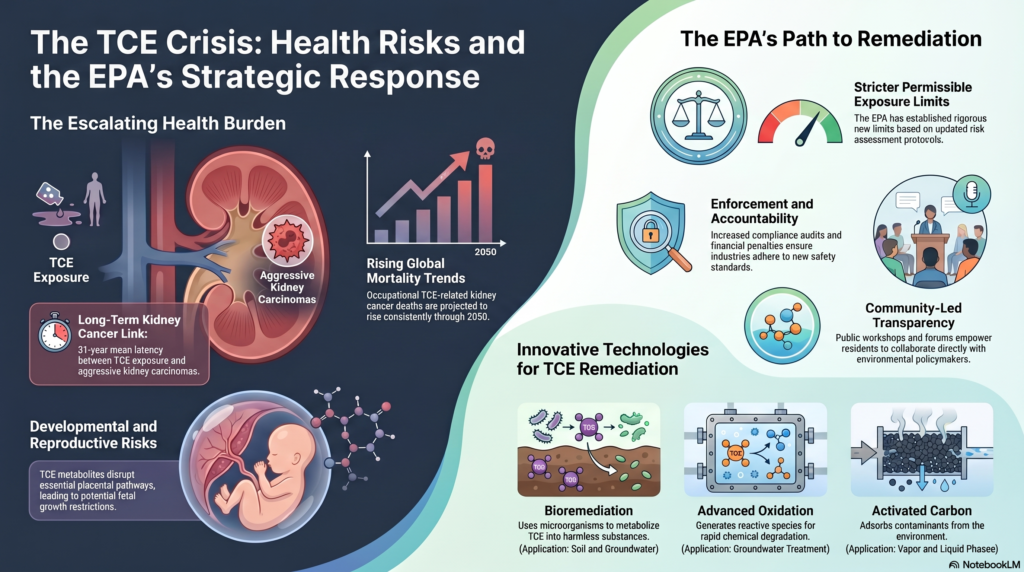
The EPA is responding to trichloroethylene (TCE) exposure contamination through stringent regulations and enforcement actions aimed at minimizing health risks. Recent actions involve establishing stricter permissible exposure limits and enhanced monitoring requirements for industries. The agency employs innovative remediation technologies, such as bioremediation and advanced oxidation processes, to address contamination. Community engagement initiatives are essential, providing forums for residents to voice concerns and collaborate with policymakers. The EPA emphasizes transparency and accountability, ensuring community representation in decision-making. This thorough approach reflects a commitment to improving public health and environmental safety, highlighting ongoing developments in TCE management.
KEY TAKEAWAYS
- The EPA has established stricter permissible exposure limits for TCE to mitigate health risks associated with contamination.
- Regulatory updates include enhanced risk assessment protocols that incorporate the latest scientific research on TCE health impacts.
- The EPA conducts inspections and enforces penalties for non-compliance, ensuring accountability in TCE management and remediation efforts.
- Advanced remediation technologies, such as bioremediation and activated carbon methods, are being integrated for effective TCE cleanup.
- Community engagement initiatives promote awareness and empower residents to advocate for health and environmental protection against TCE exposure.
OVERVIEW OF TRICHLOROETHYLENE
Trichloroethylene (TCE) is a colorless, volatile organic compound that has garnered significant attention due to its widespread use and potential health risks. This solvent has been essential in various industrial applications, particularly in the degreasing of metal parts, where trichloroethylene functions as an active ingredient due to its strong solvent properties. The versatility of TCE makes it a preferred choice in manufacturing settings; however, its presence in the environment raises concerns about contamination and exposure.
Trichloroethylene (TCE) is a chlorinated solvent once widely used as a metal degreaser, chemical intermediate and extractant, and component of some consumer products. Total releases to the environment reported to the U.S. Environmental Protection Agency (EPA) Toxics Release Inventory have declined from > 57 million pounds in 1988 to about 2.4 million pounds in 2010 (U.S. EPA 2012b). Primary trichloroethylene sources include industrial facilities, where it is employed in processes such as dry cleaning, adhesive formulation, and paint stripping. Additionally, TCE can be released into the environment through improper disposal, spills, or leaks from storage tanks. Groundwater contamination is a notable consequence of these activities, leading to significant regulatory scrutiny and public health initiatives.
Given its extensive use, TCE’s presence in the environment is not merely an isolated issue. It is a compound found in various locations, including industrial zones, urban areas, and even household products. The implications of its widespread use and the associated risks necessitate a thorough understanding of its behavior in the ecosystem.
As regulatory bodies, including the Environmental Protection Agency (EPA), continue to address the challenges posed by TCE contamination, it is imperative for industries and communities alike to engage in practices that minimize exposure and promote safer alternatives. Understanding the sources and applications of trichloroethylene is essential for developing effective management strategies that protect both public health and the environment.
Health Risks Associated With TCE
The widespread use of trichloroethylene in various industrial applications raises significant concerns regarding its health implications for those exposed to this solvent. TCE metabolism in the human body primarily occurs in the liver, where it is converted into metabolites that can elicit toxic effects. Chronic exposure to trichloroethylene has been associated with a range of serious health risks, including neurological impairment, liver damage, and an increased risk of certain cancers, particularly kidney cancer.
Health guidelines established by organizations such as the Environmental Protection Agency (EPA) and the Agency for Toxic Substances and Disease Registry (ATSDR) aim to provide a framework for understanding the risks associated with TCE exposure. These guidelines underscore the importance of minimizing exposure, particularly in vulnerable populations such as workers in industrial settings. Studies indicate that even low levels of TCE can lead to adverse health outcomes, necessitating a vital examination of occupational safety practices and environmental regulations.
In addition to carcinogenic risks, TCE exposure has been linked to reproductive issues, including developmental abnormalities in offspring. Similar to concerns raised about phthalates dangerous effects, given their potential to disrupt endocrine function, it is essential for individuals to remain informed about exposure pathways and to advocate for stringent health guidelines. Given the solvent’s potential to disrupt endocrine function, it is essential for individuals to remain informed about exposure pathways and to advocate for stringent health guidelines. As awareness of the health risks associated with trichloroethylene continues to grow, efforts to mitigate exposure and enhance public health protection remain imperative in safeguarding community well-being.
EPA’s Regulatory Framework
Regulatory frameworks established by the Environmental Protection Agency (EPA) are critical in addressing the public health risks associated with trichloroethylene (TCE) contamination. The EPA’s regulatory approach includes a thorough set of TCE regulations designed to limit exposure and mitigate health risks for affected communities. These regulations not only define permissible levels of TCE in various environmental media, such as air and water, but also mandate monitoring and reporting requirements for industries that utilize this solvent.
EPA enforcement plays a pivotal role in guaranteeing compliance with these regulations. By conducting inspections and assessments, the agency can identify violations and take corrective actions to protect public health. This enforcement framework is underpinned by the legal authority granted to the EPA, enabling it to impose penalties on non-compliant entities and to require remediation of contaminated sites. Additionally, the agency collaborates with state and local governments to enhance regulatory effectiveness and guarantee that TCE regulations are implemented consistently across jurisdictions.
The EPA’s commitment to transparency in its regulatory processes is also significant, as it seeks to engage stakeholders, including the public and industry representatives, in discussions regarding TCE management. This collaboration fosters a more informed community that is empowered to advocate for its health and environment. Overall, the EPA’s regulatory framework for TCE represents a critical mechanism for safeguarding public health while balancing the needs of economic development and environmental stewardship.
Recent Actions by the EPA
In response to the ongoing trichloroethylene contamination issues, the EPA has implemented a series of regulatory updates and guidelines aimed at enhancing environmental protection. These measures are complemented by community engagement initiatives designed to inform and involve affected populations in the decision-making process. Together, these actions reflect the agency’s commitment to addressing contamination effectively while fostering transparency and public participation. Trichloroethylene is a clear, colorless liquid with a sweet, chloroform-like odor. It is volatile, producing potentially toxic concentrations at room temperature. It is nearly insoluble in water, but miscible with most organic solvents. Industrial grade trichloroethylene contains small amounts of stabilizers (0.1% by weight) such as epichlorohydrin, which may increase the irritant effects. At elevated temperatures and in the presence of alkali, trichloroethylene may form more toxic compounds such as phosgene, a serious pulmonary irritant, or dichloroacetylene, a neurotoxin. Since trichloroethylene decomposes photolytically, it should be stored in cans or dark glass bottles to minimize decomposition.
Regulatory Updates and Guidelines
Addressing the pressing issue of trichloroethylene (TCE) contamination, the Environmental Protection Agency (EPA) has implemented a series of regulatory updates and guidelines aimed at mitigating health risks associated with this hazardous chemical. These updates reflect the agency’s commitment to overcoming regulatory challenges while safeguarding public health and environmental safety.
Recent guidelines updates include the establishment of stricter permissible exposure limits, recognizing TCE’s potential carcinogenic effects and its implications for both occupational and environmental exposure. The EPA has also enhanced its risk assessment protocols, integrating the latest scientific research to provide a more thorough understanding of TCE’s health impacts. This proactive approach guarantees that regulations are not only responsive to emerging data but also adaptable to changing industrial practices.
Moreover, the EPA is working collaboratively with state and local governments to guarantee effective implementation of these guidelines. By fostering a regulatory framework that emphasizes transparency and accountability, the EPA aims to empower communities and stakeholders in addressing TCE contamination. Ultimately, these regulatory updates represent a critical step toward safeguarding public health and promoting environmental justice in areas affected by TCE exposure.
Community Engagement Initiatives
Following the recent regulatory updates on trichloroethylene (TCE) contamination, the EPA has intensified its focus on community engagement initiatives to further enhance public awareness and involvement in addressing environmental health issues. Recognizing that effective responses to TCE exposure necessitate robust community participation, the agency has rolled out a series of programs designed to facilitate open dialogue between stakeholders and local residents.
One significant initiative involves hosting community forums where residents can voice their concerns and learn about ongoing efforts to mitigate TCE risks. These forums serve not only as platforms for information dissemination but also as opportunities for stakeholder collaboration, allowing community members to work alongside environmental experts and policymakers in identifying local solutions.
Additionally, the EPA has developed educational materials tailored to various demographics, ensuring that complex information regarding TCE contamination is accessible to all. By fostering an informed community, the agency aims to empower residents to take an active role in environmental stewardship. Overall, these community engagement initiatives represent a commitment to transparency and collective action, essential for effectively addressing the challenges posed by TCE exposure.
COMMUNITY ENGAGEMENT INITIATIVES
Regularly engaging with the community is fundamental for effectively addressing the concerns surrounding trichloroethylene contamination. The Environmental Protection Agency (EPA) recognizes that fostering an open dialogue with affected populations is imperative for understanding the scope of contamination and implementing effective strategies. To this end, the agency has initiated several community engagement initiatives aimed at soliciting community feedback and informing residents about health risks associated with trichloroethylene exposure.
Public workshops serve as a cornerstone of these initiatives, providing a platform for residents to voice their concerns, ask questions, and learn about the EPA’s ongoing efforts in their area. These workshops facilitate a two-way communication channel, allowing the EPA to gauge community sentiment while also disseminating essential information regarding safety measures, potential health implications, and the agency’s remediation plans.
Moreover, the EPA encourages participation through surveys and focus groups to gather nuanced insights into community priorities and experiences related to trichloroethylene contamination. This feedback is invaluable, as it guarantees that the agency’s response is tailored to the specific needs and expectations of the community, thereby enhancing the effectiveness of its interventions.

Cleanup and Remediation Efforts
From a toxicological standpoint, the data we are seeing in recent literature underscores just how urgent the enforcement of stricter regulatory boundaries truly is. When we look at how TCE metabolizes in the liver, transforming into destructive metabolites that trigger severe cellular stress pathways, it becomes undeniably clear that even low-level chronic exposure is a ticking clock for human health. This reality hit home for me during a recent review of a 2025 French clinical case series out of Montpellier University Hospital. The study tracked workers who spent decades around open TCE tanks in poorly ventilated spaces, showing a devastating latency period before triggering aggressive kidney carcinomas.
Furthermore, we cannot ignore reproductive vulnerabilities. Emerging placental studies on the TCE metabolite DCVC under low-oxygen conditions show a direct disruption of essential cellular pathways, reinforcing the clear toxicological link to fetal growth restrictions. Much like how exposure to phthalates dangerous developmental effects can alter endocrine harmony and upend systemic balance, TCE forces us to re-evaluate our traditional risk parameters. To fix this, we have to move past ancient, outdated safety limits.
As a researcher, I am encouraged to see the EPA integrating advanced remediation models like bioremediation alongside strict compliance audits. However, policies are only as strong as their enforcement; we must continue holding non-compliant entities financially and legally accountable to truly change corporate behavior.
Effective cleanup and remediation of trichloroethylene contamination requires the integration of advanced technologies that adhere to regulatory compliance measures. These technologies, alongside community involvement initiatives, play an essential role in addressing environmental and public health concerns. A thorough approach guarantees not only the remediation of contaminated sites but also fosters trust and collaboration within affected communities. Trichloroethylene (TCE) is a volatile, colorless liquid organic chemical. TCE does not occur naturally and is created by chemical synthesis. It is used primarily to make refrigerants and other hydrofluorocarbons and as a degreasing solvent for metal equipment. TCE is also used in some household products, such as cleaning wipes, aerosol cleaning products, tool cleaners, paint removers, spray adhesives, and carpet cleaners and spot removers. Commercial dry cleaners also use trichloroethylene as a spot remover.
Current Cleanup Technologies
The landscape of trichloroethylene (TCE) remediation has evolved considerably, incorporating a variety of advanced cleanup technologies designed to address the complexities of contamination. Among the most promising methods are bioremediation techniques, which utilize microorganisms to degrade TCE into less harmful substances. This approach is particularly valued for its sustainability and minimal environmental impact.
Another effective strategy involves advanced oxidation processes (AOPs), which generate highly reactive species to break down TCE molecules rapidly. These technologies can notably enhance the efficiency of remediation efforts within contaminated sites.
| Technology Type | Description | Application Area |
| Bioremediation | Uses microorganisms to metabolize TCE | Soil and groundwater |
| Advanced Oxidation | Generates reactive species for rapid degradation | Groundwater treatment |
| Activated Carbon | Adsorbs contaminants from water and air | Vapor and liquid phase |
| Thermal Desorption | Heats contaminated soil to volatilize TCE | Soil remediation |
These innovative cleanup technologies reflect the ongoing commitment to effectively manage TCE contamination while minimizing risks to public health and the environment. As research continues, the efficacy and application of these techniques are likely to expand further.
Regulatory Compliance Measures
Compliance with regulatory measures is essential in the cleanup and remediation of trichloroethylene (TCE) contamination, as it ensures that remediation efforts meet established environmental standards. This framework also draws lessons from managing forever chemicals in water, highlighting the importance of long-term monitoring and prevention strategies. The Environmental Protection Agency (EPA) implements a framework that necessitates compliance audits to ascertain that organizations adhere to federal, state, and local regulations. These audits serve as a critical tool in identifying areas of non-compliance, thereby promoting accountability among responsible parties.
In addition, the EPA may initiate enforcement actions against entities that fail to comply with regulatory requirements. These actions can include fines, mandates for additional remedial measures, or even legal proceedings aimed at securing compliance. By enforcing regulations, the EPA guarantees that TCE contamination is effectively addressed, safeguarding public health and the environment.
The EPA’s proactive approach to regulatory compliance not only facilitates the successful cleanup of contaminated sites but also fosters a culture of responsibility among businesses and stakeholders. By adhering to these measures, entities can contribute to the broader goal of minimizing TCE exposure and enhancing environmental quality, ultimately empowering communities to thrive in a safer and healthier environment.
Community Involvement Initiatives
Engaging communities in cleanup and remediation efforts for trichloroethylene (TCE) contamination is a significant component of effective environmental management. The U.S. Environmental Protection Agency (EPA) recognizes that fostering public awareness is fundamental in addressing the complex challenges associated with TCE exposure. By ensuring that community members are informed about the risks and remediation processes, the EPA empowers individuals to take an active role in safeguarding their environment.
Stakeholder collaboration is another essential element in these initiatives. The EPA works alongside local governments, non-profit organizations, and industry stakeholders to form extensive strategies that address TCE contamination. This multi-faceted approach not only enhances the effectiveness of cleanup efforts but also builds trust within the community. Engaging stakeholders from various sectors enriches the dialogue surrounding contamination issues, facilitating the exchange of knowledge and resources.
Moreover, the incorporation of community feedback into decision-making processes is fundamental. By valuing the insights of those directly affected, the EPA can tailor its remediation strategies to meet the specific needs and expectations of the community. Ultimately, these community involvement initiatives represent a collaborative effort to mitigate the impact of TCE contamination and foster a cleaner, safer environment for all.
Future Directions and Challenges
Steering through the complexities of trichloroethylene (TCE) contamination requires a multifaceted approach that addresses both existing challenges and future directions. As awareness of TCE’s health impacts grows, the Environmental Protection Agency (EPA) must confront significant policy challenges while promoting future research to mitigate risks associated with TCE exposure.
Future directions will necessitate a focus on the following areas:
- Enhanced Detection Methods: Developing advanced detection technologies to identify TCE contamination in various environments will be essential for timely interventions.
- Comprehensive Health Studies: Future research should prioritize long-term epidemiological studies to better understand the health effects of TCE exposure, particularly among vulnerable populations.
- Integrated Remediation Strategies: Policymakers must push for innovative remediation techniques that not only address existing contamination but also prevent future occurrences, integrating community input for effectiveness.
- Collaborative Policy Frameworks: Engaging stakeholders—government agencies, industry, and communities—in conversations about TCE regulation can create a more cohesive policy landscape, ensuring that all voices are heard in decision-making processes.
Navigating these challenges requires a balanced approach that respects individual freedoms while safeguarding public health. As the EPA advances its mission, it will be essential to align future research initiatives with practical policy solutions, fostering a proactive stance against TCE contamination that resonates with the values of transparency and community empowerment.

RELATED STUDIES ABOUT TRICHLOROETHYLENE EXPOSURE
In conclusion, the EPA’s multifaceted approach to addressing trichloroethylene contamination resembles a carefully orchestrated symphony, harmonizing regulatory frameworks, community engagement, and remediation efforts. By maneuvering through the complexities of TCE exposure, the agency aims to mitigate health risks and restore environmental integrity. Future challenges lie ahead, necessitating continued vigilance and adaptive strategies to safeguard public health and ecosystems alike. The commitment to these initiatives underscores the importance of proactive measures in managing hazardous substances effectively.
Kidney Cancer Following Occupational Exposure To Trichloroethylene: Clinical Case Series And Review Of The Literature
Objective:
This French clinical case series investigates the link between occupational exposure to trichloroethylene (TCE)—a chlorinated solvent classified as a known human carcinogen—and kidney cancer. The study aims to describe clinical, diagnostic, and administrative pathways for patients with work-related renal cancer.
Methods:
- Retrospective analysis of five male patients treated at Montpellier University Hospital for kidney cancer with documented TCE exposure.
- Data were collected from medical records, occupational histories, and patient/family interviews.
- Exposure assessment included duration, intensity, frequency of acute intoxication symptoms, and workplace conditions.
Key Findings:
- Patient Profile:
- Ages 36–64 at diagnosis, all exposed to TCE before 2000.
- Mean latency from first exposure to diagnosis: 31 years.
- Occupations included mechanics, tanners, and dye workers.
- Exposure Conditions:
- All worked in poorly ventilated, high-temperature environments with open TCE tanks.
- Personal protective equipment was available but inconsistently used.
- Frequent acute symptoms (headaches, dizziness, nausea) indicated high exposure levels.
- Clinical Outcomes:
- Histological subtypes varied: clear-cell, chromophobe, and papillary carcinomas.
- Three cases were diagnosed at localized stage (treated with nephrectomy), two at metastatic stage.
- Outcomes ranged from durable remission to metastatic recurrence and death.
- Occupational Disease Recognition:
- Only two of five patients successfully obtained occupational disease status.
- Strict criteria (≥10 years exposure, work before 1995, <40-year latency) limited eligibility.
- Since 2021, kidney cancer from TCE exposure is listed in France’s occupational disease table, simplifying claims.
- Discussion Highlights:
- TCE exposure is linked to increased kidney cancer risk, particularly with prolonged, high-level exposure.
- No distinct histopathological profile was identified compared to sporadic cases, but TCE-associated tumors may show more aggressive behavior.
- Early detection is critical: 5-year survival drops from 80% (localized) to 12% (metastatic).
- Other occupational carcinogens (e.g., cadmium, asbestos, welding fumes) also contribute to renal cancer risk.
Conclusions & Recommendations:
- Clinical Awareness: Urologists and occupational physicians should systematically query TCE exposure in kidney cancer patients, especially in high-risk sectors (metallurgy, chemicals, printing).
- Prevention: Enhanced workplace controls, proper ventilation, and consistent use of PPE are essential.
- Monitoring: Biological surveillance and regular health screenings for exposed workers can enable early diagnosis.
- Administrative Support: Simplified recognition of TCE-related kidney cancer as an occupational disease improves patient access to compensation and care.
Significance:
This study reinforces TCE as a significant occupational carcinogen and underscores the need for integrated clinical-occupational pathways to improve prevention, early detection, and patient support.
| REFERENCE: Sabrina Bernard de Courville, Agnès Roulet, Stéphane Droupy, Rodolphe Thuret, Kidney cancer following occupational exposure to trichloroethylene: Clinical case series and review of the literature, The French Journal of Urology, Volume 35, Issue 2, 2025, 102795, ISSN 2950-3930, https://doi.org/10.1016/j.fjurol.2024.102795. (https://www.sciencedirect.com/science/article/pii/S2950393024002626) |
Exposure To The Trichloroethylene Metabolite S-(1,2-Dichlorovinyl)-L-Cysteine Under Hypoxic Conditions (%O2 =2 %) Alters Differential Gene Expression And Mitigates Decreased Invasion Capacity, Compared To Normoxic Conditions (%O2 ≥ 21 %) In Htr-8/Svneo Cells
Objective:
This study investigates how the trichloroethylene (TCE) metabolite S-(1,2-dichlorovinyl)-L-cysteine (DCVC) affects human placental cells under hypoxic conditions (2% O₂), simulating the low-oxygen environment of the first trimester, compared to normoxic conditions (≥21% O₂). The research aimed to understand DCVC’s impact on cell viability, gene expression, and invasion capacity—critical for placental development and fetal growth.
Methods:
- Used the HTR-8/SVneo cell line, a model for extravillous trophoblasts (EVTs), which invade maternal tissue during early pregnancy.
- Cells were exposed to 5–50 µM DCVC for up to 24 hours under normoxic or hypoxic conditions.
- Endpoints measured: cytotoxicity, RNA-sequencing for differential gene expression, and invasion capacity via Matrigel transwell assays.
- Pathways and transcription factors were analyzed using GSEA and Enrichr.
Key Findings:
- Cytotoxicity:
- DCVC caused significant cell death at concentrations as low as 10 µM after 24 hours, with no major difference between normoxic and hypoxic conditions.
- Gene Expression:
- Hypoxia alone induced expected transcriptional changes (upregulation of HIF1α, glycolysis, EMT pathways), validating the experimental model.
- DCVC altered similar biological pathways under both oxygen conditions, including unfolded protein response (UPR), integrated stress response (ISR), and ATF4 activation.
- The response was less robust under hypoxia (38 differentially expressed genes vs. 295 under normoxia), but patterns were highly correlated (r = 0.73).
- Invasion Capacity:
- Under normoxia, DCVC (10–20 µM) reduced invasion by ~50%.
- Under hypoxia, the same concentrations caused a smaller, non-significant decrease (~25%), suggesting a partial protective effect of hypoxia on EVT function.
- Relevance to Human Exposure:
- Concentrations used reflect occupational exposure levels (aligned with OSHA’s former PEL of 100 ppm TCE).
- Findings support epidemiological links between maternal TCE exposure and fetal growth restriction.
Conclusions:
- Hypoxia partially mitigates DCVC-induced impairment of trophoblast invasion, possibly due to hypoxia-driven enhancement of invasive phenotypes (e.g., EMT).
- DCVC triggers stress-response pathways (UPR/ISR/ATF4) similarly under both oxygen conditions, but hypoxic cells show a dampened transcriptional response.
- Results underscore the importance of studying environmental toxicants under physiologically relevant oxygen conditions to better assess pregnancy risks.
Significance:
This is the first study to evaluate DCVC toxicity under hypoxic conditions mimicking early pregnancy. It highlights the placenta’s vulnerability to TCE exposure and suggests that low oxygen may offer some functional protection against chemical-induced invasion defects. Future work should use primary trophoblast models and longer exposure durations to further elucidate mechanisms.
| REFERENCE: Franny H. Stein, Nora H. Le, Elana R. Elkin, Exposure to the trichloroethylene metabolite S-(1,2-dichlorovinyl)-L-cysteine under hypoxic conditions (%O2 =2%) alters differential gene expression and mitigates decreased invasion capacity, compared to normoxic conditions (%O2 ≥ 21%) in HTR-8/SVneo cells, Toxicology Letters, 2025, 111773, ISSN 0378-4274, https://doi.org/10.1016/j.toxlet.2025.111773. (https://www.sciencedirect.com/science/article/pii/S0378427425027195) |
Global Trends and Projections of Occupational Trichloroethylene (TCE) Exposure-Associated Kidney Cancer: Insights from the Global Burden of Disease (GBD) Study 2021 and Predictions to 2050
Objective: To comprehensively assess the global burden, temporal trends, and future projections of kidney cancer (KC) attributable to occupational exposure to trichloroethylene (TCE) from 1990 to 2021, with forecasts extending to 2050.
Key Findings:
- Global Burden (2021): The age-standardized death rate (ASDR) was 0.0009 per 100,000 persons, and the age-standardized disability-adjusted life years rate (ASDAR) was 0.0284 per 100,000. While the absolute burden is lower than overall KC, it represents a significant occupational health concern.
- Rising Trend (1990-2021): A clear and consistent increase in disease burden was observed over 32 years. The estimated annual percentage change (EAPC) was +1.26% for ASDR and +1.21% for ASDAR.
- Projection to 2050: Predictive models (ARIMA and Exponential Smoothing) forecast a continued rise in both mortality and DALYs until 2050.
- Key High-Risk Groups:
- Gender: Males bear a significantly higher burden than females (ASDAR: 0.0413 vs. 0.0160 per 100,000), with faster increasing trends.
- Age: The burden is heavily concentrated in the 50-79 age group.
- Socioeconomic Status: The highest burdens and most significant increases are observed in middle to high-middle Socio-demographic Index (SDI) regions.
- Geography: Southern Latin America (Uruguay, Argentina, Chile) had the highest regional ASDR and ASDAR. China reported the highest absolute number of death and DALY cases, while Cabo Verde showed the most dramatic increase in trends.
Key Drivers & Correlations:
- SDI Correlation: Disease burden (ASDR/ASDAR) shows a positive correlation with SDI levels up to a point (peaking in middle/high-middle regions), while the rate of increase (EAPC) is negatively correlated with SDI (slower growth in high-SDI areas).
- Decomposition Analysis: The global increase in deaths is primarily driven by population growth (51.75%), followed by epidemiological changes (36.26%) and aging (11.99%). For DALYs, only epidemiological changes had a positive contribution, while aging and population growth factors showed negative impacts in the model.
- Potential Reasons for Disparities: Gender imbalance is attributed to higher occupational exposure rates among males, possible biological susceptibility differences, and a higher prevalence of concomitant risk factors (e.g., smoking). The concentration in middle/high-middle SDI regions is linked to industrialization history, improved detection capabilities, and potentially insufficient occupational health safeguards compared to high-SDI areas.
Conclusions & Implications:
This study establishes that occupational TCE exposure-associated KC is a growing global public health issue with distinct demographic and geographic patterns.
- Primary Concerns: The rising trend and its disproportionate impact on males, the elderly (50-79 years), and populations in middle to high-middle SDI regions require urgent attention.
- Recommendations:
- Enhanced Protection: Strengthen occupational safety measures (e.g., protective equipment, environmental monitoring, and worker education) in industries using TCE.
- Targeted Screening: Implement focused KC screening programs for high-risk groups, particularly middle-aged and older males in relevant industrial sectors.
- Policy Focus: Public health policies should prioritize regions with high and rapidly increasing burdens (e.g., Southern Latin America, certain middle-SDI nations).
- Continued Research: Efforts are needed to better quantify exposure levels and establish direct causal pathways to inform stricter regulations and prevention strategies.
This analysis provides a crucial evidence base for policymakers and health organizations to develop targeted interventions aimed at reducing occupational TCE exposure and mitigating its associated cancer burden worldwide.
| REFERENCE: Hang Huang, Ping Li, Haoran Jiang, Junkai Hong, Yongyong Lu, Global trends and projections of occupational trichloroethylene (TCE) exposure-associated kidney cancer: Insights of the Global Burden of Disease (GBD) Study 2021 from 1990 to 2021 and prediction to 2050, Ecotoxicology and Environmental Safety, Volume 287, 2024, 117252, ISSN 0147-6513, https://doi.org/10.1016/j.ecoenv.2024.117252. (https://www.sciencedirect.com/science/article/pii/S0147651324013289) |
CONCLUSION
Ultimately, managing a systemic contamination issue like trichloroethylene exposure is less about finding a single silver bullet and more about executing a carefully balanced strategy. It requires a delicate, mindful approach, much like finding my own center during a demanding yoga practice. We must successfully harmonize cutting-edge remediation technologies, strict legal enforcement, and active, transparent community forums where everyday citizens can pull up a chair and directly question policymakers. The global burden data explicitly warns us that occupational kidney cancers tied to TCE exposure are projected to rise consistently through 2050 if we remain passive, particularly among older working-class demographics.
We can no longer afford to treat the historical mishandling of industrial chemicals as a localized problem. Just as we have had to adapt our long-term monitoring and prevention strategies to manage forever chemicals in water, we must establish a unified, proactive front against legacy solvents like TCE.
As we look toward future challenges, our priorities must center on funding enhanced molecular detection tools, validating epidemiological health studies, and simplifying the administrative pathways for exposed workers to receive disease compensation. True environmental justice is only achieved when scientific data, regulatory accountability, and community empowerment converge to protect public health for generations to come.