

The debate surrounding glyphosate is one of the most frustrating yet fascinating case studies in modern chemical governance. On one hand, we have an active ingredient that fundamentally transformed modern agriculture, driving unprecedented efficiency and keeping food costs manageable. On the other hand, we are witnessing a profound systemic breakdown in how we evaluate long-term environmental and human risk.
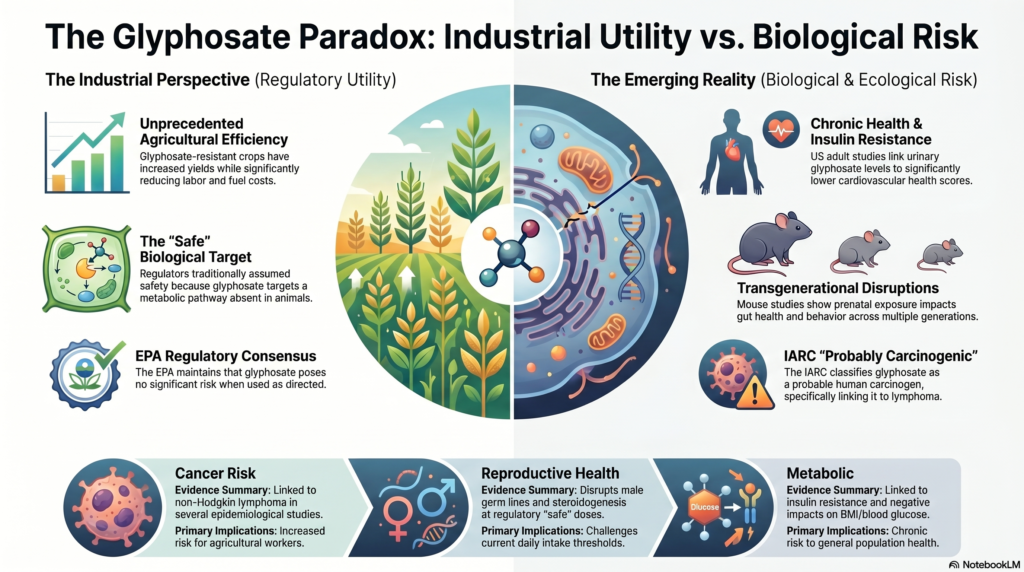
As someone who has spent years analyzing chemical policy, I see the glyphosate narrative not just as a dispute over a single weed killer, but as a glaring reflection of societal tension between industrial convenience and precautionary health principles. When international bodies like the IARC declare a substance “probably carcinogenic” while national agencies like the EPA maintain it poses no significant risk under standard label guidelines, it forces us to ask a critical question: how can the same scientific data yield such radically polarized conclusions?
This divergence exposes deep flaws in our regulatory frameworks, which frequently favor immediate economic utility over the subtle, chronic signals of ecological and physiological harm. If we continue to view “safety” through narrow, outdated parameters, we fail to address the very real anxieties of consumers and independent researchers who demand absolute transparency in our food systems.
Glyphosate, the most widely used herbicide globally, remains under scrutiny regarding its safety. Regulatory agencies, including the EPA, generally conclude that glyphosate is unlikely to pose significant health risks. However, concerns persist due to studies linking chronic exposure to cancer and other health issues. Environmental impacts are also notable, with glyphosate potentially disrupting ecosystems and contributing to biodiversity loss. The discourse around glyphosate reflects a societal tension between agricultural efficiency and public health. As research evolves and regulatory stances shift, the conversation continues to develop, suggesting a complex picture of glyphosate’s role in modern agriculture.
KEY TAKEAWAYS
- Glyphosate is classified as “probably carcinogenic in humans” by the IARC, raising concerns about its safety for long-term health effects.
- Regulatory agencies have mixed assessments on glyphosate’s health risks, with some concluding it unlikely poses significant human health threats.
- Glyphosate use may lead to environmental issues, including biodiversity loss, ecosystem disruption, and water contamination from runoff.
- Legal battles and public demand for organic products reflect growing consumer awareness and skepticism about glyphosate’s safety.
- Alternatives to glyphosate, such as organic herbicides and integrated pest management, are being explored for safer agricultural practices.
OVERVIEW OF GLYPHOSATE
Glyphosate, a broad-spectrum systemic herbicide, is primarily utilized in agriculture to control weeds, making it one of the most widely used herbicides globally, where it functions as the main active ingredient in many commercial formulations. Its effectiveness stems from its ability to inhibit a specific enzyme pathway in plants, which is not present in animals, leading to its widespread acceptance by farmers seeking efficient crop management solutions. However, the use of glyphosate has incited significant debate regarding its safety and environmental impact. Glyphosate is a widely used herbicide that controls broadleaf weeds and grasses. It has been registered as a pesticide in the U.S. since 1974. Since glyphosate’s first registration, EPA has reviewed and reassessed its safety and uses, including undergoing registration review, a program that re-evaluates each registered pesticide on a 15-year cycle.
Public perception of glyphosate has been deeply polarized, influenced by emerging research and regulatory scrutiny. Studies have linked glyphosate exposure to potential health risks, including concerns about carcinogenicity and ecological harm. This has prompted calls for a reevaluation of its safety profile and increased interest in glyphosate alternatives. Various options, such as organic herbicides, mechanical weeding techniques, and integrated pest management strategies, are being explored as means to mitigate reliance on glyphosate.
Furthermore, the challenge remains in balancing agricultural efficiency with public health considerations. While glyphosate-based products contribute to higher yields and lower food costs, the growing awareness of environmental sustainability and health implications has led to heightened consumer demand for transparency and safer agricultural practices. As farmers and policymakers navigate these complex issues, the future of glyphosate usage will likely depend on ongoing research, regulatory frameworks, and evolving public sentiment. Understanding these dynamics is essential for stakeholders committed to fostering a sustainable agricultural landscape while respecting individual freedoms and choices.
Historical Use in Agriculture
Since its introduction in the 1970s, glyphosate has played a pivotal role in modern agricultural practices, particularly through its adoption in conjunction with genetically modified crops. The herbicide was discovered by Monsanto chemist John E. Franz in 1970, and its unique ability to inhibit a specific enzyme pathway found in plants and some microorganisms led to its rapid acceptance among farmers. This pathway is not present in animals, which contributed to the perception of glyphosate as a safer herbicide.
The agricultural adoption of glyphosate profoundly transformed weed management strategies, allowing for more effective control of a wide range of stubborn weed species. By the 1990s, glyphosate-resistant genetically modified organisms (GMOs) were introduced, which enabled farmers to apply glyphosate directly to crops without damaging them. This innovation considerably increased crop yields and reduced the need for mechanical weeding, consequently lowering labor costs and fuel consumption.
Furthermore, glyphosate’s systemic action allows it to be absorbed by plants and translocated throughout their tissues, enhancing its efficacy. Its widespread use has also led to the emergence of glyphosate-resistant weed populations, prompting ongoing discussions regarding sustainable agricultural practices. As glyphosate continues to be a cornerstone of modern farming, its historical use underscores the delicate balance between agricultural efficiency and ecological impact, raising important questions about the future of herbicide reliance in agriculture.
Scientific Studies on Safety
When we delve into the toxicological and epidemiological data, the cracks in our established safety thresholds become impossible to ignore. For decades, regulatory approvals have relied on the assumption that because glyphosate targets an enzyme pathway unique to plants, animal biology remains entirely unaffected. Yet, modern, independent research is completely upending this premise.
Recent cellular and molecular studies reveal that glyphosate exposure, even at legally permitted “safe” levels, can cause severe disruptions to male germ lines and completely eliminate breeding capacity in animal models at higher permitted exposures. Furthermore, population-level evidence in the US links urinary glyphosate levels directly to compromised metabolic and cardiovascular health, showing strong negative correlations with vital metrics like blood glucose and BMI.
What alarms me most as a policy specialist is the emergence of non-monotonic dose-response relationships and multi-generational effects. When prenatal exposure to dietary-level glyphosate can disrupt gut barrier integrity, immune function, and behavior across generations in mice, the traditional regulatory metric of “the dose makes the poison” utterly fails. We are dealing with subtle endocrine disruption , gut microbiome alterations , and water contamination risks that current 15-year cyclical registration reviews are simply not built to catch in real-time.
The safety of glyphosate has been the subject of extensive scientific investigations, particularly by regulatory agencies such as the Environmental Protection Agency (EPA) and the European Food Safety Authority (EFSA). These assessments evaluate both immediate and long-term health effects associated with glyphosate exposure. Understanding these findings is essential for informed discussions surrounding its use in agriculture and potential health implications.
Regulatory Agency Assessments
Regulatory agencies worldwide have conducted extensive evaluations to evaluate the safety of glyphosate, focusing on its potential health impacts and environmental effects. These evaluations are grounded in robust regulatory frameworks and stringent evaluation criteria, ensuring a thorough analysis of the herbicide.
The following key aspects are often considered in these evaluations:
- Toxicological Studies: Investigating the potential acute and chronic toxicity of glyphosate on humans and wildlife.
- Environmental Impact: Evaluating the herbicide’s effects on biodiversity, soil health, and water quality.
- Exposure Assessment: Evaluating the levels of human and ecological exposure through various pathways, including agricultural application and residue in food products.
- Epidemiological Evidence: Analyzing relevant studies that examine associations between glyphosate exposure and health outcomes in populations.
The conclusions drawn from these evaluations vary, with some regulatory bodies deeming glyphosate safe when used as directed, while others express concerns regarding its long-term effects. This ongoing debate underscores the importance of continued research and vigilance in monitoring glyphosate’s safety profile within the context of evolving scientific evidence.
Long-Term Health Effects
Numerous scientific studies have investigated the long-term health effects of glyphosate exposure, yielding a complex and sometimes conflicting body of evidence. Chronic exposure to glyphosate has raised concerns regarding its potential links to cancer risk, particularly non-Hodgkin lymphoma. Studies have also examined its effects on immune response, with findings suggesting that glyphosate may influence immune system function, similar to concerns raised in research on trichloroethylene exposure.
Additionally, there are implications for neurological effects, reproductive health, and endocrine disruption. Research indicates that glyphosate may alter the gut microbiome, potentially leading to health issues. Pediatric exposure is particularly alarming, given the vulnerability of developing systems in children. Occupational hazards for agricultural workers further underline the need for vigilance regarding cumulative effects of glyphosate exposure over time.
| Health Concern | Evidence Summary | Implications |
| Cancer Risk | Mixed results; some studies link it to non-Hodgkin lymphoma. | Potential occupational risk. |
| Neurological Effects | Evidence of neurotoxicity in animal studies. | Concerns for long-term exposure. |
| Reproductive Health | Potential endocrine disruptor; impacts on fertility. | Health implications for families. |
Health Risks and Concerns
Concerns surrounding the health risks associated with glyphosate have sparked significant debate among scientists, regulatory bodies, and the public, similar to discussions on is formaldehyde a carcinogen in other chemical exposures. Glyphosate exposure, primarily through agricultural practices, has raised alarms regarding potential health implications, particularly cancer risk. The International Agency for Research on Cancer (IARC) classified glyphosate as “probably carcinogenic in humans,” which has fueled public opinion against its use and led to increased scrutiny of regulatory challenges faced by farming communities and agricultural sectors.
Several key concerns have emerged in discussions about glyphosate:
- Cancer Risk: Numerous studies suggest a correlation between glyphosate exposure and various types of cancer, including non-Hodgkin lymphoma, prompting health advocacy groups to push for stricter regulations.
- Regulatory Challenges: Different countries have adopted varied stances on glyphosate regulation, causing confusion and inconsistency in agricultural practices.
- Consumer Awareness: Growing awareness among consumers regarding potential health risks has led to increased demand for organic and non-GMO products, influencing market trends.
- Legal Battles: High-profile lawsuits against manufacturers alleging health impacts have highlighted the contentious nature of glyphosate use and the complexities of proving causation.
As the debate continues, safety education becomes paramount for both farming communities and consumers, fostering informed decisions. This ongoing dialogue reflects a broader societal concern regarding the balance between agricultural productivity and public health, emphasizing the need for transparent communication and thorough research.
ENVIRONMENTAL IMPACT
The environmental impact of glyphosate usage raises significant concerns regarding ecosystem disruption and biodiversity loss. Research indicates that the herbicide can adversely affect non-target species, potentially leading to imbalances within local ecosystems. Additionally, the risk of water contamination poses further challenges to environmental health and sustainability, necessitating a thorough examination of its ecological consequences. Glyphosate is an herbicide used to kill certain plants and grasses, manage how plants grow, get crops ready for harvest, and ripen fruit. It’s called a nonselective herbicide, which means that it kills most plants to which it’s applied. It works by stopping plants from making certain types of proteins that enable them to grow.

Ecosystem Disruption Concerns
How does the widespread use of glyphosate influence ecosystem dynamics? The application of this herbicide has raised significant concerns regarding its potential to disrupt ecosystem resilience. Its effects are not isolated, as herbicide interactions can lead to unintended consequences for various ecological processes. Key concerns include:
- Soil Microbial Communities: Glyphosate can alter the composition and function of soil microorganisms, which play a vital role in nutrient cycling and organic matter decomposition.
- Non-target Species: The herbicide may adversely affect beneficial insects and other organisms, disrupting predator-prey relationships and leading to imbalances within the food web.
- Plant Diversity: Continuous glyphosate application can favor the growth of resistant species while diminishing native flora, which can undermine habitat stability and resilience.
- Water Quality: Runoff from treated fields can introduce glyphosate into aquatic ecosystems, potentially harming aquatic life and disrupting local biodiversity.
These factors highlight the intricate relationships within ecosystems, emphasizing the need for careful consideration of glyphosate’s environmental impact. Understanding these interactions is essential for maintaining ecosystem health and resilience in the face of herbicide applications. Glyphosate is the active ingredient in weed killer products such as RoundUp™. Glyphosate products are one of the most widely used weed killers worldwide in farms and in home gardens and lawns. These products typically contain glyphosate in combination with other ingredients that help improve the absorption of glyphosate into plants. Glyphosate-based formulations (GBFs) are easily bought in most stores. These products can have different combinations of other ingredients and different concentrations of glyphosate.
Biodiversity Loss Implications
Amid increasing agricultural practices, glyphosate’s role in promoting biodiversity loss has garnered significant attention. This herbicide, widely utilized for weed management, has been linked to declines in various plant and animal species, thus impacting biodiversity metrics. These metrics serve as essential indicators of ecosystem health, reflecting the complex interdependencies that sustain ecological balance.
Research indicates that glyphosate application can lead to monocultures, reducing habitat diversity important for various organisms. The elimination of non-target flora diminishes food sources and shelter for numerous species, ultimately decreasing population resilience. Additionally, the loss of biodiversity undermines ecosystem resilience, making environments more susceptible to disturbances such as climate change and disease outbreaks.
The implications of biodiversity loss extend beyond ecological concerns; they affect agricultural productivity and sustainability. A diverse ecosystem contributes to pollination, pest control, and soil health, all crucial for robust crop yields. As a result, understanding glyphosate’s implications on biodiversity is essential for informed decision-making in agricultural practices that prioritize both productivity and ecological integrity. As debates surrounding glyphosate continue, the need to evaluate its environmental footprint on biodiversity remains paramount for the future of sustainable agriculture.
Water Contamination Risks
Concerns surrounding glyphosate extend beyond its impact on biodiversity, particularly regarding the potential risks of water contamination. Glyphosate runoff, a significant byproduct of agricultural practices, poses serious threats to both surface and groundwater systems. Research indicates that glyphosate can persist in the environment, leading to widespread contamination.
The risks associated with glyphosate in water sources can be summarized as follows:
- Surface Water Pollution: Glyphosate runoff can enter rivers and lakes, affecting aquatic ecosystems and species.
- Groundwater Contamination: Studies show that glyphosate can leach into groundwater, raising concerns about drinking water safety.
- Bioaccumulation: Aquatic organisms can absorb glyphosate, leading to higher concentrations in the food chain and impacting wildlife.
- Long-term Ecological Effects: Persistent glyphosate presence in water bodies can disrupt the natural balance, affecting flora and fauna over time.
The implications of these contamination risks warrant careful consideration, as they not only jeopardize environmental health but also challenge the autonomy of communities reliant on clean water sources. Consequently, the ongoing debate about glyphosate’s safety must account for its water contamination risks.
Regulatory Perspectives
As regulatory bodies around the world evaluate glyphosate, the assessments often hinge on a thorough review of scientific evidence regarding its safety and environmental impact. The process is complex and highly scrutinized, reflecting the regulatory challenges faced by agencies tasked with making determinations about chemical substances. In the United States, the Environmental Protection Agency (EPA) and the Food and Drug Administration (FDA) have conducted extensive evaluations, leading to conclusions that glyphosate is unlikely to pose a risk to human health when used according to label directions. However, the International Agency for Research on Cancer (IARC) classified glyphosate as “probably carcinogenic in humans,” igniting a contentious debate surrounding its use.
This divergence in regulatory findings reveals significant policy implications that influence agricultural practices and public perception. Countries such as Germany and France have proposed bans or restrictions on glyphosate, responding to public outcry and shifting consumer preferences towards organic farming practices. These decisions underscore the necessity of balancing scientific assessments with societal values and economic considerations.
Furthermore, the evolving landscape of regulatory frameworks necessitates ongoing dialogue among stakeholders, including farmers, consumers, and policymakers. As alternative methods of weed management gain traction, the future of glyphosate may depend not only on scientific data but also on the broader societal context in which these decisions are made. Consequently, the regulatory perspective on glyphosate remains a pivotal component of the ongoing discourse regarding its safety and utility.
Alternatives to Glyphosate
The ongoing debate surrounding glyphosate’s safety has prompted both regulatory bodies and agricultural stakeholders to explore viable alternatives for weed management. As concerns about glyphosate’s potential health and environmental effects grow, a range of methods has emerged that prioritize sustainability and soil health. These alternatives not only aim to control weeds but also enhance ecosystem resilience.
- Organic Herbicides: Derived from natural sources, organic herbicides offer a less harmful option for weed control. Products containing vinegar, clove oil, or corn gluten meal can effectively suppress weeds without the chemical implications associated with glyphosate.
- Crop Rotation: This practice involves alternating different crops in a given area across growing seasons. It disrupts the life cycles of weeds and pests, reducing their prevalence and promoting biodiversity.
- Cover Cropping: Planting cover crops, such as legumes, improves soil health while naturally suppressing weeds. Their roots can inhibit weed germination and provide organic matter that enhances soil quality.
- Integrated Pest Management (IPM): This holistic approach combines various strategies, including biocontrol methods that utilize natural predators, to manage weed populations effectively while minimizing chemical inputs.
Incorporating permaculture practices can further enhance natural weed suppression by fostering a diverse ecosystem. By embracing these alternatives, agricultural stakeholders can contribute to a sustainable future while addressing the concerns surrounding glyphosate. Adopting such methods not only supports healthier crops but also promotes a more resilient agricultural system.

RELATED STUDIES ABOUT IS GLYPHOSATE SAFE
In light of the extensive research and regulatory scrutiny surrounding glyphosate, it remains a paradox that the most extensively used herbicide is simultaneously heralded for its agricultural benefits and vilified for its potential health risks. The ongoing debate encapsulates a broader irony within modern science: the very substances designed to enhance food production may also pose unforeseen threats to human health and the environment. Hence, as society grapples with these complexities, the quest for safer agricultural practices continues to elude definitive resolution.
The Impact Of Glyphosate At Regulatory “Safe” Levels On Reproductive Health: Cellular And Molecular Disruptions On Male Germ Line
Study Objective:
This study investigated whether dietary exposure to glyphosate (GLY)—the active ingredient in herbicides like Roundup®—at doses currently deemed “safe” by European regulators adversely affects male reproductive health. Using adult zebrafish as a model, researchers examined cellular, molecular, and functional outcomes after 21 days of exposure.
Key Findings:
- Reproductive Disruption at “Safe” Doses:
- At the Acceptable Daily Intake (ADI: 0.5 mg/kg/day), glyphosate:
- Increased testicular weight (gonadosomatic index).
- Impaired germ cell differentiation, increasing spermatogonia (immature cells) and decreasing spermatozoa.
- Altered histone acetylation (epigenetic changes) in germ cells, indicating potential heritable effects.
- At the No Observed Adverse Effect Level (NOAEL: 50 mg/kg/day):
- Caused significant DNA damage in testicular cells.
- Disrupted steroidogenesis, elevating levels of cortisol, progesterone, pregnenolone, and estradiol.
- Completely abolished breeding capacity—no offspring were produced.
- Non-Monotonic Dose Response:
An intermediate dose (5 mg/kg/day) showed minimal effects, underscoring a complex, non-linear relationship between glyphosate exposure and reproductive toxicity.
- Mechanistic Insights:
- Proteomic changes: Reduced levels of Gper1 (a receptor linked to spermatogenesis) at ADI, and decreased Sumo3 (involved in DNA repair) at NOAEL.
- Metabolomic shifts: Elevated cAMP, AMP, and GMP levels at NOAEL, indicating disrupted purine metabolism and steroidogenic pathways.
- Genotoxicity & Epigenotoxicity: Significant DNA fragmentation and altered histone marks (H3K9ac, H4K12ac) suggest glyphosate can damage genetic and epigenetic integrity in germ cells.
Conclusions:
The study demonstrates that glyphosate, at regulatory “safe” levels, induces significant adverse effects on male reproduction—from epigenetic and cellular disturbances to complete infertility at higher permitted exposures. These findings challenge current safety thresholds and highlight the need for re-evaluating glyphosate’s risk assessment, particularly concerning long-term reproductive and transgenerational health.
Implications:
The research calls for:
- Revised regulatory standards based on endocrine-disrupting and reproductive risks.
- Further investigation into transgenerational epigenetic effects.
- Consideration of glyphosate’s primary metabolite (AMPA) in future studies.
- Policy discussions aligning agricultural chemical use with public and environmental health.
Limitations:
- Individual variation in feed intake may affect exposure consistency.
- Targeted omics approaches provide focused but not system-wide insights.
- Transgenerational effects were not directly tested but are implied by epigenetic alterations.
This study contributes critical evidence to ongoing debates about glyphosate safety, urging precaution in its continued use and approval.
| REFERENCE: Marta Lombó, Christian Giommi, Angela Amoresano, Gabriella Pinto, Anna Illiano, Fiorenza Sella, Stefania Serpico, Hamid Habibi, Francesca Maradonna, Oliana Carnevali, The impact of glyphosate at regulatory “safe” levels on reproductive health: cellular and molecular disruptions on male germ line, Environment International, Volume 200, 2025, 109544, ISSN 0160-4120, https://doi.org/10.1016/j.envint.2025.109544. (https://www.sciencedirect.com/science/article/pii/S0160412025002958) |
Association Between Glyphosate Exposure And Cardiovascular Health Using “Life’s Essential 8” Metrics In Us Adults
Study Objective:
This study investigated the association between glyphosate exposure and cardiovascular health (CVH) in the general US adult population without pre-existing cardiovascular disease, using the comprehensive “Life’s Essential 8” (LE8) metrics.
Key Findings:
- Inverse Association with Cardiovascular Health:
- Higher urinary glyphosate levels were significantly associated with lower total CVH scores.
- In fully adjusted models, each unit increase in natural log-transformed glyphosate corresponded to a 1.04-point decrease in total CVH score.
- Participants in the highest glyphosate exposure quartile had significantly lower CVH scores compared to the lowest quartile.
- Impact on Specific Health Factors:
- Glyphosate exposure showed strong negative correlations with BMI and blood glucose scores, indicating adverse effects on metabolic health.
- Weaker negative associations were observed with diet and sleep health scores.
- Non-linear Dose-Response Relationship:
- A significant non-linear relationship was found between glyphosate levels and CVH.
- An inflection point was identified at 0.289 ng/mL of urinary glyphosate. Below this level, each increase in glyphosate was strongly associated with reduced CVH; above it, no significant association was observed, suggesting no safe threshold for glyphosate exposure.
- Mediating Role of Insulin:
- Serum insulin levels mediated 18.73% of the adverse effect of glyphosate on CVH.
- Higher glyphosate exposure was linked to elevated serum insulin and increased insulin resistance (HOMA-IR).
- Elevated insulin and insulin resistance were, in turn, negatively correlated with CVH, BMI, and blood glucose scores.
- Subgroup and Sensitivity Analyses:
- The inverse association persisted after excluding participants with recent pesticide use and adjusting for additional confounders.
- No significant interactions were found across most demographic subgroups, though history of hypertension and hyperlipidemia may influence the relationship.
Conclusions:
Glyphosate exposure is associated with poorer cardiovascular health in US adults, primarily through adverse effects on metabolic factors like BMI and blood glucose. Elevated serum insulin and insulin resistance appear to be key mediators in this relationship. The findings suggest that even low levels of glyphosate exposure may pose a risk to cardiovascular health, with no identifiable safe threshold.
Implications:
- Highlights the need to reconsider glyphosate safety guidelines concerning cardiovascular and metabolic health.
- Suggests that insulin resistance may be a critical mechanism linking environmental herbicide exposure to cardiovascular risk.
- Calls for further longitudinal and experimental studies to confirm causality and elucidate underlying biological pathways.
Limitations:
- Cross-sectional design limits causal inference.
- Reliance on single urinary glyphosate measurement and self-reported data may introduce bias.
- Residual confounding cannot be fully excluded.
This study provides novel population-level evidence linking glyphosate exposure to impaired cardiovascular health and identifies insulin dysregulation as a potential mechanistic pathway.
| REFERENCE: Yuankang Zhu, Zhenlin Yang, Yuhao Chen, Lingzi Qian, Changning Hao, Liangshi Hao, Boshen Yang, Junli Duan, Association between glyphosate exposure and cardiovascular health using “Life’s Essential 8” metrics in US adults, Ecotoxicology and Environmental Safety, Volume 290, 2025, 117559, ISSN 0147-6513, https://doi.org/10.1016/j.ecoenv.2024.117559. (https://www.sciencedirect.com/science/article/pii/S014765132401635X) |
Prenatal Glyphosate Exposure Disrupts Metabolic, Immune, and Behavioral Health Across Generations in Mice
Objective:
This exploratory study investigated whether prenatal exposure to glyphosate—a widely used herbicide prevalent in the food supply—at human-relevant dietary levels could induce transgenerational disruptions in gut health, metabolism, immunity, and behavior in mice.
Methods:
- Subjects: Mice with genetic susceptibility to colitis (Muc2⁻/⁻) and healthy controls (Muc2⁺/⁻).
- Exposure: Parental (F0) mice were exposed via drinking water to glyphosate at two doses:
- AAD (Average American Diet): 0.01 mg/kg/day (estimated human dietary intake).
- EPA Upper Limit: 1.75 mg/kg/day (U.S. EPA acceptable daily intake).
- Generations: Effects were assessed in first (F1) and second (F2) generation offspring.
- Outcomes Measured: Intestinal pathology, metabolic function (glucose/insulin tolerance, hormones), behavior (locomotion, memory), gut microbiome composition, and microbe–metabolite interactions.
Key Findings:
- Gut Barrier Dysfunction & Inflammation:
- In healthy (Muc2⁺/⁻) offspring, prenatal glyphosate exposure caused microscopic colitis, goblet cell depletion, reduced mucin-2 expression, and increased macrophage infiltration. These effects persisted into the F2 generation.
- In colitis-susceptible (Muc2⁻/⁻) mice, baseline inflammation masked additional glyphosate effects, though subtle neuroinflammatory markers were elevated.
- Metabolic Disruption:
- Healthy offspring exhibited impaired glucose tolerance, insulin resistance, reduced GLP-1, and dysregulated appetite hormones (leptin/ghrelin).
- These changes were linked to gut barrier damage and systemic immune activation (elevated LIX/CXCL5).
- Effects were more pronounced in the F2 generation and at the EPA dose, but some disruptions (e.g., acetate accumulation) occurred even at the low AAD dose.
- Behavioral & Neurological Changes:
- Healthy F2 offspring (EPA dose) showed reduced locomotor activity and impaired working memory, alongside decreased serum kynurenine (a neuroprotective metabolite).
- Colitis-susceptible mice displayed molecular signs of enteric neuroinflammation (elevated α-synuclein, GFAP, SNAP-25) and reduced serotonin.
- Microbiome Shifts:
- Glyphosate exposure altered gut microbial composition in a dose- and generation-dependent manner.
- Healthy mice: Depletion of beneficial Akkermansia muciniphila and enrichment of Parabacteroides spp. and Christensenellaceae.
- Colitis-susceptible mice: Increase in Bifidobacterium spp. and, strikingly, non-photosynthetic cyanobacteria (Gastranaerophilales) in F2 EPA offspring.
- Microbiome functional predictions indicated shifts toward aerobic, pathogenic, and biofilm-forming taxa.
- Microbe–Metabolite Interactions:
- Strong correlations were found between specific microbes (e.g., A. muciniphila, P. distasonis) and host metabolites (GLP-1, tryptophan), suggesting a microbiota-mediated mechanism for metabolic and neuroendocrine disruption.
- Associations varied by generation and dose, indicating that ancestral exposure reshapes host–microbe relationships.
Conclusion:
Prenatal exposure to glyphosate at doses below current regulatory limits can induce multi-generational disruptions in gut barrier integrity, immune function, metabolism, and behavior in mice. Effects are mediated in part through microbiome alterations and gut–brain axis signaling. The study highlights the need to re-evaluate safety thresholds for glyphosate, particularly during sensitive developmental windows, and to consider non-monotonic dose responses in risk assessment.
Implications:
- Regulatory Reevaluation: Current “safe” exposure levels may not protect against long-term, transgenerational health risks.
- Public Health: Dietary glyphosate exposure, even at low levels, could contribute to the rising prevalence of metabolic, inflammatory, and neuropsychiatric conditions.
- Future Research: Mechanistic studies are needed to clarify causal pathways, including germline epigenetic changes and microbiota transmission.
| REFERENCE: J.A. Barnett, J.K. Josephson, E. Yuzbashian, N. Haskey, M.M. Hart, K.K. Soma, A. Verdugo, C.J. McComb, M.L. Bandy, S. Ghosh, C. Letef, A. Copp, R. Ishida, J. Gibon, J. Ye, R.T. Giebelhaus, S.J. Murch, M.M. Jung, D.L. Gibson, Prenatal exposure to dietary levels of glyphosate disrupts metabolic, immune, and behavioral markers across generations in mice, Science of The Total Environment, Volume 1002, 2025, 180437, ISSN 0048-9697, https://doi.org/10.1016/j.scitotenv.2025.180437. (https://www.sciencedirect.com/science/article/pii/S0048969725020777) |
CONCLUSION
Ultimately, the ongoing gridlock over glyphosate underscores the urgent need for an entirely new paradigm in global chemical ethics and regulatory policy. We can no longer allow corporate manufacturing precedents or agricultural convenience to dictate the parameters of public health. The fact that countries like Germany and France are actively pursuing restrictions or bans while other jurisdictions dig in their heels creates a dangerous, fragmented reality for global agriculture.
It is clear to me that relying on a single, ubiquitous chemical tool is an ecological dead end, not only because of the looming shadow of human health risks , but because the rise of glyphosate-resistant weed populations proves that nature eventually bypasses our chemical band-aids anyway. The path forward must involve shifting our subsidies, research funding, and institutional support toward holistic strategies like Integrated Pest Management (IPM), cover cropping, and organic alternatives.
Science is giving us loud, clear warnings about transgenerational risks and systemic biological damage. If our regulatory agencies refuse to evolve alongside this data, they aren’t practicing sound science, they are merely protecting the status quo at the expense of our long-term biological future.