
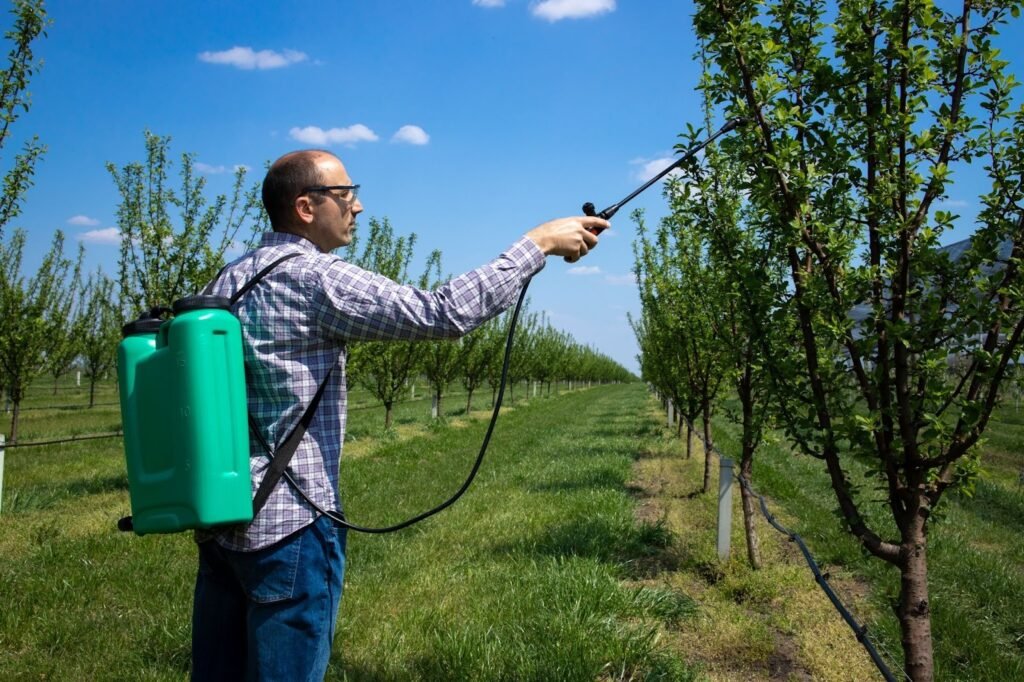
Environmental laws governing aldrin pesticide production and trade focus on mitigating its harmful effects due to its persistence and toxicity to humans and wildlife. Key regulations include the Federal Insecticide Act, which requires safety evaluations and clear labeling, and the Clean Water Act, which addresses pesticide runoff impacting aquatic ecosystems. The Endangered Species Act further protects endangered species threatened by pesticide use. Globally, treaties like the Stockholm Convention aim to standardize pesticide regulations across countries. As public awareness of these issues increases, regulations are evolving towards sustainable agricultural practices, and further insights into these developments offer significant context.
KEY TAKEAWAYS
- Aldrin pesticide faced increasing regulation due to concerns about its toxicity and environmental persistence, particularly in the 1970s and 1980s.
- The Federal Insecticide Act mandates safety evaluations and clear labeling, ensuring public transparency regarding pesticide effects.
- The Clean Water Act regulates agricultural runoff, protecting aquatic ecosystems from pesticide contamination and promoting compliance with water quality standards.
- The Endangered Species Act conserves threatened species affected by pesticides, prohibiting actions that harm listed species and their habitats.
- International agreements like the Stockholm Convention establish global pesticide standards, facilitating sustainable practices and responsible trade negotiations among member states.
OVERVIEW OF ALDRIN
Aldrin, a chlorinated hydrocarbon pesticide, was widely utilized in agriculture and pest control during the mid-20th century, particularly for its effectiveness against soil-dwelling insects. Its application in various agricultural settings considerably increased crop yields, making it a popular choice among farmers. However, concerns regarding Aldrin toxicity began to emerge as studies highlighted its potential health impacts on humans and wildlife. Aldrin (C12H8Cl6), one of the several isomers (compounds with the same composition but different structures) of hexachlorohexahydrodimethanonaphthalene, a chlorinated hydrocarbon formerly used as an insecticide. Aldrin was first prepared in the late 1940s and is manufactured by the reaction of hexachlorocyclopentadiene with bicycloheptadiene (both derived from hydrocarbons obtained from petroleum). Aldrin stimulates the central nervous system and is toxic to warm-blooded animals; poisoning can result from ingestion, inhalation, or absorption through the skin. The chemical is highly persistent in the environment, leading to bioaccumulation in the food chain and raising alarms about its long-term ecological consequences. As a chlorinated hydrocarbon pesticide, aldrin served as the active ingredient in many mid-20th-century pest control formulations, a role that later drew regulatory scrutiny due to its persistence and toxicity.
The regulatory history surrounding Aldrin reflects a growing awareness of these issues. Initially embraced for its agricultural utility, rising public awareness of its health risks prompted regulatory bodies to scrutinize its use. This scrutiny was fueled by evidence linking Aldrin exposure to adverse health effects, including neurotoxicity and potential carcinogenicity. As a result, many countries began to phase out its usage, seeking pesticide alternatives that pose fewer risks to human health and the environment.
The ecological consequences of Aldrin’s persistence cannot be understated. Its presence in soil and water bodies has led to detrimental effects on non-target species and disrupted local ecosystems. This highlights the importance of public awareness in advocating for safer agricultural practices and the adoption of alternative pest control methods. With the challenges posed by Aldrin, the agricultural sector must prioritize sustainable practices that balance productivity with ecological integrity, ensuring a healthier environment for future generations.
Historical Context of Aldrin Regulations
The regulatory landscape surrounding Aldrin evolved considerably from its initial approval and widespread use to its eventual phase-out and restricted status. Initially introduced in the 1950s as a potent insecticide, Aldrin’s historical significance lies in its ability to combat agricultural pests. However, as scientific understanding of its environmental and health impacts grew, so too did the scrutiny of its use.
The regulatory evolution regarding Aldrin can be traced through several key milestones:
- 1950s: Aldrin was readily approved by regulatory bodies, becoming a popular choice among farmers.
- 1960s: Concerns about its persistence in the environment began to surface, prompting early studies on its ecological effects. During its period of widespread use, aldrin production was concentrated within a small number of chemical manufacturers that effectively functioned as an active ingredient hub, supplying both domestic agricultural markets and international trade networks before stricter regulations were imposed.
- 1970s: Growing evidence of Aldrin’s toxicity led to heightened public awareness and calls for regulation.
- 1980s: The EPA initiated strict regulations, limiting its application in agricultural practices.
- 1990s: Aldrin was banned in many countries, reflecting a global shift towards sustainable pest management strategies.
This historical context underscores the significance of ongoing environmental assessments and regulatory frameworks. The shift from unrestricted use to stringent controls illustrates how societal values regarding health and environmental safety can drive legislative change. As freedom-loving individuals, it is vital to advocate for informed policies that balance agricultural efficiency with ecological integrity. The story of Aldrin serves as a cautionary tale, highlighting the need for continuous evaluation of chemical usage in our pursuit of an environmentally conscious future.
Key Environmental Laws
The regulation of aldrin pesticide is markedly influenced by several key environmental laws that aim to safeguard public health and ecological integrity. The Federal Insecticide Act establishes guidelines for pesticide registration and usage, while the Clean Water Act addresses the potential contamination of water bodies from agricultural runoff. Additionally, the Endangered Species Act plays an essential role in protecting vulnerable species impacted by pesticide exposure, thereby framing an extensive legal context for aldrin’s regulation.
Federal Insecticide Act
Enforced under the authority of the Federal Insecticide, Fungicide, and Rodenticide Act (FIFRA), the regulation of pesticides such as aldrin is a vital component of environmental law in the United States. FIFRA establishes a framework for federal oversight, ensuring that pesticides undergo rigorous evaluation prior to their registration for use. This process is fundamental for safeguarding human health and the environment from potential hazards associated with pesticide exposure. Aldrin and dieldrin are insecticides (products that kill insects) that are very similar. Pure aldrin and dieldrin are white powders with a mild chemical odor. They are not found naturally in the environment. Aldrin quickly breaks down to dieldrin in the body and also in the environment.
Key tenets of FIFRA include:
- Pesticide Registration: Mandatory submission of scientific data to evaluate safety and effectiveness.
- Labeling Requirements: Clear instructions and safety precautions for users to mitigate risks.
- Compliance and Enforcement: Federal and state agencies monitor adherence to regulations, imposing penalties for non-compliance.
- Risk Assessment: Thorough evaluation of potential environmental impacts before approval.
- Public Transparency: Ensuring that information about pesticide registration and effects is accessible to the public.
Through these mechanisms, FIFRA plays an essential role in maintaining ecological balance and promoting responsible pesticide use, reflecting a commitment to both public safety and environmental integrity.
Clean Water Act
Addressing water quality issues, the Clean Water Act (CWA) serves as a cornerstone of U.S. environmental legislation aimed at regulating the discharge of pollutants into navigable waters. Enacted in 1972, the CWA establishes a thorough framework to combat water pollution, mandating that states set water quality standards and implement measures to reduce pollutant discharges.
One significant concern addressed by the CWA is pesticide runoff, which poses a threat to aquatic ecosystems and public health. Pesticides, including aldrin, can contaminate water bodies through agricultural practices, leading to detrimental effects on wildlife and human communities. The CWA empowers the Environmental Protection Agency (EPA) to oversee the National Pollutant Discharge Elimination System (NPDES), which requires permits for discharges that may harm water quality.
Moreover, the CWA emphasizes the importance of monitoring and reporting to guarantee compliance and safeguard water resources. By holding industries accountable for their discharges, the CWA plays a vital role in mitigating the impacts of water pollution. Consequently, it remains an essential tool in protecting U.S. waterways from the adverse effects of harmful chemicals, including those derived from pesticide applications.
Endangered Species Act
Underpinning efforts to protect biodiversity in the United States, the Endangered Species Act (ESA) of 1973 serves as a significant legal framework for the conservation of threatened and endangered species and their habitats. The ESA not only focuses on the species themselves but also emphasizes the preservation of endangered habitats essential for their survival. This legislation plays a fundamental role in species protection and the overall health of ecosystems.
Key provisions of the ESA include:
- Listing of endangered and threatened species
- Designation of critical habitats
- Development of recovery plans
- Prohibition of “take” actions that harm listed species
- Collaboration with states and private landowners for conservation efforts
The ESA has been instrumental in the recovery of numerous species, illustrating its effectiveness in balancing ecosystem health with human interests. However, challenges remain, particularly in the face of habitat destruction, climate change, and pesticide impacts, including those from aldrin use. Upholding the ESA is essential for ensuring that future generations can enjoy a rich and diverse natural world, free from the constraints of extinction and habitat loss.
International Treaties and Agreements
International treaties and agreements play a critical role in regulating the use and management of hazardous substances like aldrin. These global agreements establish pesticide standards that aim to mitigate the environmental impact of harmful chemicals. Through treaty enforcement and compliance harmonization, nations are encouraged to adopt sustainable practices that protect ecosystems while facilitating responsible trade negotiations.
One of the most notable international frameworks governing pesticide use is the Stockholm Convention on Persistent Organic Pollutants (POPs). This treaty emphasizes the importance of cross-border regulation, enabling countries to collaborate in reducing the risks associated with aldrin and similar substances. By fostering a cooperative approach, the convention aims to minimize the adverse effects on human health and the environment. International efforts to control hazardous chemicals expanded as ddt is a pesticide widely recognized for similar persistence and ecological harm, reinforcing the need for global agreements that also addressed aldrin and related substances.
| Aspect | Details |
| Global Agreements | Frameworks like the Stockholm Convention |
| Treaty Enforcement | Mechanisms to guarantee adherence to pesticide standards |
| Compliance Harmonization | Aligning national policies with international best practices |
The effectiveness of these treaties hinges on the commitment of member states to actively participate in monitoring and reporting. By integrating sustainability practices into their agricultural policies, countries can navigate the complexities of international trade while safeguarding public health and environmental integrity. Ultimately, a collaborative approach is essential for guaranteeing that hazardous substances like aldrin are responsibly managed on a global scale.
NATIONAL LEGISLATION VARIATIONS
National legislation variations greatly influence the regulation and management of aldrin and other pesticides within individual countries. These differences can lead to distinct compliance strategies, agricultural practices, and pesticide enforcement measures, reflecting local priorities and environmental evaluations. While some nations adopt stringent regulatory frameworks to mitigate environmental and health risks, others may have more lenient approaches, resulting in significant regional differences in aldrin usage and trade policies.
Key factors contributing to these variations include:
- State regulations: Each country sets its own laws governing pesticide production and distribution, leading to diverse compliance requirements.
- Pesticide enforcement: The level of enforcement can vary widely, with some nations adopting rigorous monitoring systems while others lack sufficient oversight.
- Regional differences: Geographic and climatic conditions influence how aldrin is viewed and regulated, affecting agricultural practices tailored to local environments.
- Environmental evaluations: Countries differ in their approaches to evaluating the ecological impacts of aldrin, influencing approval processes for its use.
- Trade policies: National regulations can shape trade dynamics, either facilitating or restricting the export and import of aldrin and similar pesticides.
Understanding these legislative variations is essential for stakeholders maneuvering the complexities of aldrin management. As countries attempt to balance agricultural productivity with ecological sustainability, the ongoing evolution of national legislation will continue to shape the landscape of pesticide regulation and its implications for global trade.

Impact of Regulations on Trade
The regulatory landscape surrounding Aldrin pesticide considerably influences trade dynamics by imposing compliance challenges that can hinder market participation. International trade restrictions often arise from differing national legislation, complicating the export and import of affected agricultural products. Consequently, these regulations can limit market access for producers and exporters, ultimately affecting overall trade flows and economic viability. Aldrin and dieldrin, chlorinated cyclodienes, are broad-spectrum insecticides that are contact, stomach, and inhalation poisons. Aldrin is readily converted to dieldrin, which is considered one of the most persistent of all pesticides. These insecticides were used extensively in agriculture for over 20 yr until their use was suspended by EPA (1974); their use for termite control was retained. Although the use of aldrin and dieldrin is banned in many countries, these insecticides were being manufactured in a number of European countries at least until 1978 and are still used throughout the world.
Regulatory Compliance Challenges
Regulatory compliance challenges associated with aldrin pesticide considerably impact trade dynamics within the agricultural sector. These challenges stem from strict environmental laws that necessitate rigorous risk assessments and compliance measures, which can create significant regulatory hurdles for producers.
The implications of these compliance requirements manifest in various ways:
- Compliance Costs: Producers often face elevated costs to meet stringent regulations, impacting their financial viability.
- Enforcement Mechanisms: Regulatory bodies implement strict enforcement mechanisms, leading to potential penalties for non-compliance.
- Industry Adaptations: Companies must adapt their practices to align with evolving environmental assessments, which may require investment in new technologies.
- Stakeholder Engagement: Engaging with multiple stakeholders, including government agencies and environmental groups, is vital for maneuvering compliance landscapes.
- Market Dynamics: Compliance challenges can alter market dynamics, affecting supply chains and pricing structures.
These factors collectively influence trade by either constraining the market or promoting innovation, and thereby shaping the agricultural landscape around aldrin pesticide production and use. Addressing these regulatory compliance challenges is imperative for fostering a trade environment that balances environmental protection with agricultural productivity.
International Trade Restrictions
Numerous international trade restrictions emerge as a direct consequence of stringent environmental regulations surrounding aldrin pesticide. These regulations, aimed at safeguarding public health and the environment, considerably influence global market dynamics. Countries that have instituted bans or severe limitations on aldrin production often impose restrictions on its importation, thereby reshaping trade flows and competitive advantages.
The trade policy implications of these restrictions are profound. Nations that adhere to strict environmental standards may face diminished access to markets where aldrin is still permitted, leading to potential economic disadvantages. Conversely, countries that embrace such regulations may find themselves at the forefront of a growing demand for sustainable agricultural practices. This shift can incentivize innovation and the development of alternative pest management solutions.
Moreover, the divergence in regulatory approaches can lead to complexities in international trade agreements, as nations negotiate terms that reflect their environmental commitments while seeking to maintain economic competitiveness. Consequently, while the intent behind these regulations is to protect ecological integrity, the resultant trade restrictions can create both challenges and opportunities within the global market, necessitating a careful balance between environmental stewardship and economic freedom.
Market Access Limitations
Market access limitations considerably arise from stringent environmental regulations on aldrin pesticide, impacting both producers and consumers in affected nations. These regulations create significant market barriers that hinder trade negotiations and complicate the introduction of pesticide alternatives. The resultant economic implications affect agricultural practices and consumer prices.
Key factors contributing to these market access limitations include:
- Regulatory Harmonization: Divergent standards across countries create compliance challenges for exporters.
- Consumer Awareness: Increased knowledge about environmental impacts leads to higher demand for safer alternatives, further reducing aldrin’s market viability.
- Environmental Advocacy: Growing movements against harmful pesticides influence policy and restrict market entry.
- Economic Implications: Compliance costs associated with stringent regulations can deter small producers from accessing larger markets.
- Pesticide Alternatives: The rise of innovative alternatives can shift consumer preferences, limiting aldrin’s market share.
Addressing these market access limitations requires strategic dialogue among stakeholders to balance environmental concerns with the economic realities of agricultural productivity. Regulatory harmonization and increased awareness can facilitate smoother trade, ultimately benefiting both producers and consumers while promoting sustainable agricultural practices.
Future Trends in Pesticide Laws
As concerns over environmental sustainability and public health continue to rise, the evolution of pesticide laws is increasingly shaped by scientific advancements and societal expectations. Future trends in pesticide regulation are likely to emphasize sustainable alternatives, particularly in light of the growing popularity of organic farming. This shift is propelled by public awareness of the ecological impacts associated with traditional pesticide use, prompting calls for regulatory innovation that prioritizes both health and environmental justice.
The integration of technology advancements is also set to transform pesticide laws. Innovations such as precision agriculture and biopesticides offer pathways to minimize chemical inputs while maximizing crop yields. These advancements necessitate corresponding regulatory frameworks that are agile and responsive to emerging scientific evidence, facilitating the approval of safer alternatives.
Pesticide education will be crucial in this adaptation. By enhancing the knowledge of farmers and consumers alike about the risks associated with harmful pesticides and the benefits of sustainable practices, stakeholders can make informed choices that align with contemporary values surrounding health and the environment. Additionally, a commitment to transparency in pesticide regulation will foster trust and engagement among the public, guaranteeing that environmental considerations are prioritized in agricultural practices.
Ultimately, the trajectory of pesticide laws will reflect a broader societal commitment to sustainable agriculture, emphasizing ecological integrity, public health, and the pursuit of innovative solutions that align with the principles of freedom and responsibility. Consequently, the future landscape of pesticide regulation will require collaborative efforts among policymakers, scientists, and the community to guarantee a balanced approach to agricultural productivity and environmental stewardship.

RELATED STUDIES ABOUT ALDRIN PESTICIDE
In the intricate tapestry of environmental governance, regulations surrounding aldrin have woven a complex narrative of precaution and protection. As international treaties and national legislation evolve, the pendulum of trade swings between economic interests and ecological stewardship. The future landscape of pesticide laws hints at a tightening grip on hazardous substances, echoing a collective commitment to safeguarding ecosystems. Ultimately, the journey of aldrin regulation illustrates the delicate balance between human activity and environmental integrity, a dance that must continue with vigilance and foresight.
Modeling the Impacts of Corrosion Product Formation on Simultaneous Sorption and Reductive Dehalogenation of Organochlorine Pesticide Aldrin by High Carbon Iron Filings (HCIF)
Objective: This study investigated the effectiveness of High Carbon Iron Filings (HCIF), a common material in permeable reactive barriers (PRBs), for degrading the persistent organochlorine pesticide aldrin. The research specifically focused on how the formation of iron oxide corrosion products (“rusting”) on the HCIF surface impacts both the adsorption and the reductive dehalogenation of aldrin.
Key Findings:
- Dual Mechanism: The interaction of aldrin with HCIF involves two simultaneous processes:
- Rapid Adsorption: Aldrin quickly partitions onto the solid phase, primarily adsorbing to the graphite (carbon) inclusions present on the HCIF surface.
- Slower Degradation: The residual aldrin in the aqueous phase undergoes reductive dehalogenation (a chemical breakdown where chlorine atoms are removed) via interaction with the metallic iron (Fe⁰) in the HCIF.
- Impact of Rusting: The formation of an iron oxide coating (magnetite, maghemite, hematite) on “rusted” HCIF significantly hinders its performance compared to “fresh” HCIF:
- Reduced Adsorption: Adsorption capacity decreased substantially. The Freundlich equilibrium constant (K) dropped from 1.5×10 −2 for fresh HCIF to 9.01×10 −4 for rusted HCIF.
- Slower Degradation: The reductive dehalogenation rate constant (k1) was over 40 times slower for rusted HCIF ( 7.73×10 −5 L g⁻¹ h⁻¹) than for fresh HCIF ( 3.45×10 −3 L g⁻¹ h⁻¹).
- Surface Changes: Analytical techniques (XRD, SEM, EDS) confirmed that the oxide layer covers reactive sites, reduces surface carbon content, and physically blocks access to the underlying metallic iron and graphite.
- Developed Model: A mathematical model successfully described the coupled adsorption-desorption and dehalogenation kinetics. The model fit experimental data well using determined parameters for both fresh and rusted HCIF, demonstrating that partitioning reactions are faster than degradation reactions.
- Reaction Order: The degradation kinetics did not follow simple pseudo-first-order behavior. The high apparent reaction orders (3.115 for fresh, 2.572 for rusted HCIF) reflect the complex coupling between the adsorption equilibrium and the surface-mediated dehalogenation reaction.
Conclusion:
The formation of corrosion products (iron oxides) on HCIF surfaces negatively affects both the adsorption and degradation of aldrin. This leads to a decline in the long-term efficacy of HCIF-based PRBs for remediating such pollutants. While corrosion in anaerobic groundwater may be slow, the study underscores that any oxide formation will reduce the system’s performance over time, impacting both contaminant immobilization and destruction.
| REFERENCE: Yangdup Lama, Alok Sinha, Gurdeep Singh, Sanjeev Anand Sahu, Brijesh Kumar Mishra, Modeling the impacts of corrosion product formation on simultaneous sorption and reductive dehalogenation of organochlorine pesticide aldrin by high carbon iron filings (HCIF), Desalination and Water Treatment, Volume 57, Issue 16, 2016, Pages 7155-7165, ISSN 1944-3986, https://doi.org/10.1080/19443994.2015.1017007. (https://www.sciencedirect.com/science/article/pii/S1944398624024627) |
Global Mapping of Freshwater Contamination by Pesticides and Implications for Agriculture and Water Resource Protection
Objective: This study provides the first comprehensive global assessment of pesticide contamination in surface freshwater (rivers, lakes) and groundwater. It aims to identify regional disparities, analyze key influencing factors (agricultural practices and regulations), and evaluate the implications for drinking water safety and water resource management.
Key Findings:
- Global Disparities in Contamination:
- High-Risk Regions: Countries in Africa, South Asia, and Latin America generally show the highest contamination scores for both surface and groundwater. Malawi, Albania, and Thailand were among the most severely contaminated.
- Lower-Risk Regions: Countries with strong environmental policies, such as Israel, Norway, and many in Europe, exhibited significantly lower contamination levels.
- Health Risks: In high-score countries like Thailand and Malawi, pesticide concentrations posed significant non-carcinogenic health risks to populations, with Hazard Quotients (HQs) far exceeding safe thresholds.
- Weak Link to Usage Intensity: Surprisingly, there was no clear correlation between a country’s pesticide usage intensity (application per land area) and its freshwater contamination score. This disconnect is attributed to:
- The persistence of historically banned but still detectable pesticides (e.g., DDT, HCHs).
- Complex factors affecting pesticide fate, including climate, soil properties, pesticide mixtures, and local regulations.
- Strong Link to Regulation: Robust pesticide regulations were consistently associated with lower surface water pollution. Countries with more comprehensive and stringent water quality standards (notably in Europe) had better contamination outcomes. In contrast, Africa was identified as having the weakest regulatory frameworks, correlating with its high pollution scores.
- Threat to Drinking Water: Pesticide residues in freshwater frequently exceed national drinking water standards, especially in Africa and Asia.
- For persistent organochlorine pesticides like aldrin and dieldrin, over 50% of water samples in many African and Asian countries exceeded safe limits.
- This poses a direct health threat in regions where untreated freshwater is commonly used for drinking.
- Monitoring Gaps: The study revealed severe deficiencies in global water monitoring networks. Data from Africa and Oceania were particularly sparse and unevenly distributed, undermining the representativeness of national assessments and highlighting a critical need for expanded and standardized monitoring.
Conclusions & Recommendations:
The study concludes that freshwater pesticide contamination is a widespread global issue, with Africa being the highest priority region for intervention. Key recommendations include:
- Strengthen Regulatory Frameworks: Implementing and enforcing stricter, more comprehensive pesticide regulations is the most effective downstream strategy to reduce contamination.
- Promote Sustainable Agriculture: Upstream solutions include adopting integrated pest management and low-toxicity biopesticides to reduce reliance on harmful chemicals.
- Expand Monitoring Networks: Establishing comprehensive, long-term monitoring programs for both surface water and groundwater is essential for accurate assessment and management, especially in data-poor regions.
- Adopt Integrated Water Management: Since surface and groundwater pollution trends are often linked, joint management strategies for entire freshwater systems are needed.
- Prioritize Drinking Water Protection: Immediate action is required in regions with high exceedance rates to protect populations consuming untreated water.
This global analysis provides a critical evidence base for targeting resources, informing policy, and fostering international cooperation to mitigate pesticide pollution and protect vital freshwater resources.
| REFERENCE: Yabi Huang, Zijian Li, Global mapping of freshwater contamination by pesticides and implications for agriculture and water resource protection, iScience, Volume 28, Issue 7, 2025, 112861, ISSN 2589-0042, https://doi.org/10.1016/j.isci.2025.112861. (https://www.sciencedirect.com/science/article/pii/S2589004225011228) |
Linking Pesticide Exposure To Neurodegenerative Diseases: An In Vitro Investigation With Human Neuroblastoma Cells
Study Objective
This study investigated the mechanisms of toxicity of four banned organochlorine pesticides (OCPs: aldrin, dieldrin, heptachlor, lindane) and three registered herbicides (trifluralin, triallate, clopyralid) using human neuroblastoma (SH-SY5Y) cells. The goal was to understand how these chemicals induce neurotoxicity and their potential links to neurodegenerative diseases like Parkinson’s and Alzheimer’s.
Key Findings
- Differential Toxicity Among Pesticides
- Aldrin and heptachlor were the most toxic, primarily damaging the cell membrane, leading to necrosis and loss of cell integrity.
- Dieldrin induced moderate toxicity through a combination of necrosis and apoptosis.
- Lindane, trifluralin, and triallate caused low to moderate toxicity, linked to reactive oxygen species (ROS) generation and inhibition of cell proliferation.
- Clopyralid showed no significant toxicity in SH-SY5Y cells.
- Mechanisms of Toxicity
- Aldrin & Heptachlor: Membrane disruption, mitochondrial dysfunction, and no significant apoptosis or ROS induction at tested concentrations.
- Dieldrin: Activated caspase-3/7 (apoptosis) and caused membrane leakage, but to a lesser extent than aldrin.
- Lindane, Trifluralin, Triallate: ROS generation and reduced cell viability, but no apoptosis or membrane damage observed.
- Transcriptomic Insights (RNA Sequencing)
- OCPs dysregulated hundreds of genes, many involved in metabolic processes, neurogenesis, apoptosis, and pathways linked to neurodegeneration (e.g., glycolysis, endoplasmic reticulum stress).
- Herbicides affected far fewer genes, consistent with their lower toxicity.
- Commonly affected pathways included those related to mitochondrial function, cell proliferation, and metabolic dysregulation—key hallmarks of neurodegenerative diseases.
- Link to Neurodegenerative Disease Pathways
- OCPs altered genes and biological processes associated with Parkinson’s and Alzheimer’s disease pathogenesis.
- Dysregulated pathways such as glycolysis, glucagon signaling, and protein processing in the endoplasmic reticulum suggest shared mechanisms between pesticide toxicity and neurodegenerative disorders.
Conclusions
- SH-SY5Y cells are a valid in vitro model for screening neurotoxic pesticides and understanding their mechanisms.
- OCPs exert neurotoxicity through membrane damage, mitochondrial dysfunction, and disruption of cellular processes like apoptosis and metabolism.
- Herbicides are less toxic and act through ROS generation and inhibition of proliferation, without inducing apoptosis.
- The study supports the use of non-animal testing methods (New Approach Methodologies, NAMs) for neurotoxicity risk assessment.
Implications
These findings reinforce the potential role of pesticide exposure in neurodegenerative disease development and highlight the need for continued monitoring and regulation of persistent environmental contaminants. The study also validates SH-SY5Y cells as a cost-effective, human-relevant model for future neurotoxicity testing.
| REFERENCE: M. Alehashem, A.J. Alcaraz, N. Hogan, L. Weber, S.D. Siciliano, M. Hecker, Linking pesticide exposure to neurodegenerative diseases: An in vitro investigation with human neuroblastoma cells, Science of The Total Environment, Volume 933, 2024, 173041, ISSN 0048-9697, https://doi.org/10.1016/j.scitotenv.2024.173041. (https://www.sciencedirect.com/science/article/pii/S0048969724031887) |
