
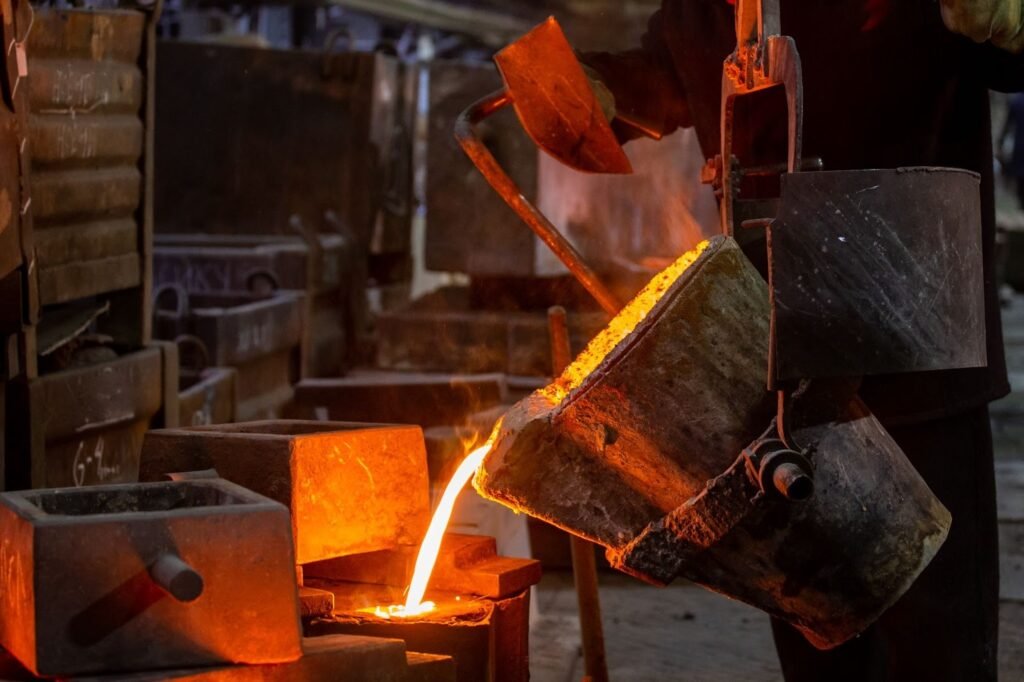
Electrolytic refining is essential in metallurgy for achieving high-purity metals, important for enhancing electrical conductivity and improving industrial performance. This process employs electrolytic cells to remove impurities from metals, thereby promoting efficient ionic movement and reducing barriers for charge carriers. The resulting high-quality metals are critical across various industries, including electronics, aerospace, and automotive, where performance and reliability are paramount. In addition, electrolytic refining aligns with sustainable practices by minimizing waste and energy consumption. Understanding the intricacies of this process reveals its transformative impact on metal production and sustainability initiatives across diverse sectors.
KEY TAKEAWAYS
- Electrolytic refining achieves higher metal purity, enhancing electrical conductivity and performance in industrial applications.
- The process effectively removes impurities, improving the quality and longevity of products across various sectors.
- It minimizes waste generation and promotes environmental sustainability by recovering valuable metals from e-waste.
- Controlled electrolytic environments ensure consistent quality and reduce the risk of contamination during metal purification.
- Electrolytic refining lowers energy consumption compared to traditional methods, contributing to a reduced carbon footprint in metallurgical operations.
OVERVIEW OF ELECTROLYTIC REFINING
Electrolytic refining serves as a critical process in metallurgy, where the primary objective is to purify metals through electrochemical means. This technique utilizes electrolytic processes to separate valuable metals from impurities, with the electrolyte solution acting as the active ingredient that enables controlled ionic movement and selective metal deposition. The fundamental mechanism involves the use of an electrolytic cell, wherein an anode made of impure metal dissolves into the electrolyte solution, releasing metal cations. These cations migrate towards a cathode, typically composed of pure metal, where they are reduced and deposit as refined metal.
Several refining techniques are employed within electrolytic refining, each tailored to specific metal types and desired purity levels. For instance, copper refining utilizes an aqueous solution of copper sulfate, while gold refining may employ cyanide solutions. The choice of electrolyte and operational conditions greatly influences the efficiency and purity of the final product. Furthermore, the process is versatile, adaptable to various metals, including nickel, silver, and lead, thereby enhancing its relevance in the metallurgical landscape.
In addition, electrolytic refining offers environmental advantages by minimizing waste and allowing for the recovery of precious metals from electronic waste. As industries increasingly prioritize sustainable practices, this method’s ability to provide high-quality metal while adhering to ecological standards becomes paramount. Consequently, electrolytic refining not only underscores the importance of advanced metallurgical techniques but also aligns with the growing demand for ethical resource management in today’s economy.
Importance of Metal Purity
Metal purity is a critical factor that greatly enhances electrical conductivity, which is essential for efficient energy transfer in various applications. High-purity metals are increasingly demanded in industrial processes, where performance and reliability are paramount. Additionally, utilizing refined metals contributes to environmental sustainability by reducing waste and minimizing the ecological footprint of metallurgical operations. This method gives the highest-purity metal product as well as the best recovery of valuable impurities.
Enhanced Conductivity Benefits
Achieving enhanced conductivity in metallurgical applications hinges greatly on the purity of the metals involved. The presence of impurities can markedly impede ionic mobility, which is vital for the efficient conduction of electric current. When metals are refined through electrolytic processes, they attain a level of purity that facilitates improved ionic movement. This, in turn, leads to conductivity enhancement, essential in applications ranging from electronic components to energy transmission systems.
High-purity metals exhibit fewer defects and irregularities, allowing for a more uniform lattice structure. Such structural integrity minimizes electron scattering, which is detrimental to conductivity. In contrast, lower purity levels introduce foreign atoms that disrupt this lattice and create potential barriers for charge carriers, thereby reducing the overall conductivity.
Moreover, enhanced conductivity not only optimizes performance but also contributes to energy efficiency, reducing losses associated with resistance. In a world increasingly reliant on advanced technologies, the need for high-purity metals cannot be overstated. The role of electrolytic refining in achieving this purity is foundational, making it an indispensable process in modern metallurgy and vital for innovation in various industrial applications.
Quality in Industrial Applications
Ensuring high-quality metal purity is essential in industrial applications, as the properties of the materials directly influence the performance and longevity of the final products. In sectors such as aerospace, automotive, and electronics, adherence to stringent industrial standards is important. Metals with high purity levels exhibit superior mechanical strength, corrosion resistance, and electrical conductivity, which are imperative factors in optimizing product performance.
Electrolytic refining plays a significant role in achieving the desired metal purity. This method effectively removes impurities and contaminants, thereby enhancing the quality assurance processes within manufacturing. The resulting high-purity metals not only meet regulatory requirements but also exceed performance expectations. For instance, in the production of semiconductors, even trace elements can meaningfully impact functionality, making electrolysis a crucial step in metal preparation.
Moreover, maintaining metal purity is essential for ensuring reliability in end-use applications. Manufacturers can minimize defects and failures, ultimately leading to increased customer satisfaction. By investing in electrolytic refining, companies can uphold quality assurance standards and reinforce their commitment to excellence in production, thereby securing a competitive edge in the market.
Environmental Impact Reduction
While the pursuit of high metal purity primarily boosts product performance, it also plays a critical role in reducing environmental impact during metallurgical processes. Electrolytic refining, as a method, guarantees that the extracted metals meet stringent purity standards, which in turn greatly influences both energy consumption and waste management.
The following factors illustrate the environmental benefits of achieving high metal purity:
- Reduced Energy Consumption: Higher purity metals require less energy for subsequent processing stages, thereby contributing to lower overall energy demands in metallurgical operations.
- Improved Waste Management: By minimizing impurities, the volume and toxicity of waste products generated during refining processes are markedly reduced. This leads to less environmental contamination and lower disposal costs.
- Enhanced Recycling Potential: Pure metals are more easily recyclable, promoting a circular economy and reducing the need for virgin material extraction, which often entails substantial environmental degradation.
Process Of Electrolytic Refining
Electrolytic refining is a process of refining a metal (mainly copper) by the process of electrolysis. The process of electrolytic refining is a critical technique employed in metallurgy to purify metals, enhancing their quality and market value. Central to this refining process is the electrolytic cell, which serves as the apparatus for electrochemical reactions. Metals initially processed in a smelting furnace still contain impurities that require electrolytic refining to achieve the high purity demanded in industrial applications. This cell consists of two electrodes: the anode, typically made of impure metal, and the cathode, often composed of a thin sheet of pure metal.
During the refining process, an electric current is passed through an electrolyte solution that contains metal ions. As the current flows, metal ions from the anode dissolve into the solution, where they migrate toward the cathode. At the cathode, these metal ions are reduced and deposited as pure metal. This method allows for the selective separation of desirable metals from unwanted impurities, which either settle at the bottom of the cell or remain in solution.
The efficiency of the electrolytic cell is influenced by several factors, including the concentration of the electrolyte, the temperature, and the applied voltage. Precise control over these parameters is essential to achieve ideal purification levels. Additionally, the entire process is conducted in a controlled environment to minimize contamination and maintain consistent quality of the final product.
ADVANTAGES OVER TRADITIONAL METHODS
Electrolytic refining offers significant advantages over traditional methods, particularly in achieving higher purity levels of extracted metals. The precision of the electrochemical process minimizes impurities, ensuring that the final product meets stringent quality standards. Additionally, this technique promotes environmental sustainability by reducing waste and energy consumption compared to conventional refining practices. In electrolytic refining, the anode is the impure metal to be purified, while the cathode is a thin strip of high purity metal. The electrolyte used in the solution is metal salt.
Higher Purity Levels
Achieving higher purity levels in metals through electrolytic refining presents significant advantages over traditional methods such as pyrometallurgy or hydrometallurgy. The electrolytic processes employed in this method facilitate the attainment of metals that meet stringent purity standards, essential for advanced applications in various industries.
The key benefits of electrolytic refining include:
- Enhanced Metal Quality: The precision of electrolytic processes allows for the removal of impurities to a degree not achievable with conventional techniques, resulting in metals with superior conductivity and strength.
- Consistent Purity: Electrolytic refining enables a controlled environment where purity levels can be consistently monitored and maintained, ensuring that the final product adheres to the required specifications.
- Versatility Across Metals: This method can be applied to a wide range of metals, including copper, gold, and silver, making it a versatile choice for metallurgical applications seeking high purity.
Environmental Sustainability Benefits
In addition to the enhanced metal quality and consistent purity provided by electrolytic refining, this method offers notable environmental sustainability advantages compared to traditional refining techniques. Primarily, electrolytic refining markedly improves waste management practices. Unlike conventional methods that combine Smelting and refining in a single high-temperature operation, electrolytic refining separates these stages to achieve greater control over metal purity and quality.
Moreover, electrolytic refining enhances resource conservation by employing lower energy consumption and reducing the overall carbon footprint associated with metallurgical operations. This energy efficiency stems from the direct nature of the electrochemical process, which requires less thermal input compared to pyrometallurgical methods. Additionally, the closed-loop system in electrolytic refining can facilitate the reuse of reagents, further diminishing the need for raw material extraction and its associated environmental impacts.
Applications in Various Industries
Numerous industries leverage electrolytic refining techniques to enhance the purity and value of metals. This method is pivotal in various sectors due to its ability to produce high-quality materials necessary for advanced applications. The versatility of electrolytic refining technologies makes them essential in the following industrial uses:
- Electronics Manufacturing: In the electronics industry, high-purity copper and gold are required for circuit boards and connectors. Electrolytic refining guarantees minimal impurities, enhancing conductivity and performance.
- Jewelry and Decorative Arts: The jewelry industry relies on electrolytic refining to produce precious metals like gold and silver. This process assures that the final products are not only aesthetically pleasing but also possess the required durability and resistance to tarnish.
- Battery Production: With the rise of electric vehicles and renewable energy storage, the demand for high-purity lithium and nickel has surged. Electrolytic refining is employed to process these metals, guaranteeing peak performance and longevity in battery applications.
Environmental Impact and Sustainability
Electrolytic refining processes greatly contribute to environmental sustainability by minimizing waste and reducing the ecological footprint associated with metal extraction and processing. This method enhances waste management practices through the efficient recovery of valuable metals, considerably diminishing the volume of tailings and other by-products typically generated in traditional metallurgical processes.
Resource conservation is paramount in electrolytic refining, as it allows for the utilization of lower-grade ores and recycled materials, thereby reducing the need for extensive mining operations. By promoting the use of scrap metals in production, the electrolytic refining process aligns with contemporary recycling initiatives, fostering a circular economy within the metallurgy sector.
Moreover, energy efficiency is a critical aspect of electrolytic refining. The process often operates at lower temperatures than pyrometallurgical methods, leading to decreased energy consumption and a corresponding reduction in greenhouse gas emissions. This contributes to pollution prevention, as the controlled environment of electrolytic cells mitigates the release of harmful substances into the atmosphere.
The implementation of green technologies within electrolytic refining further enhances its sustainability profile. Innovations such as advanced electrolyte formulations and improved cell designs are continuously being developed to optimize performance while minimizing environmental impacts.
Future Trends in Metallurgy
Advancements in metallurgy are increasingly shaped by innovations in materials science and sustainable practices. As industries endeavor to enhance efficiency while minimizing environmental impact, several key trends are emerging that will define the future of metallurgy.
- Smart Materials: The incorporation of smart materials, which respond to environmental stimuli, will revolutionize applications in various sectors, including aerospace and automotive. These materials can enhance performance and reduce weight, contributing to more energy-efficient designs.
- Nanotechnology Advancements: The integration of nanotechnology in metallurgy allows for the development of materials with superior properties. By manipulating materials at the atomic level, manufacturers can create alloys that are stronger, lighter, and more corrosion-resistant, ultimately extending the lifespan of products and reducing waste.
- Automation Integration and Digital Metallurgy: The rise of automation in metallurgical processes is paving the way for digital metallurgy, which employs advanced data analytics and machine learning to optimize production. This integration facilitates real-time monitoring and control of metallurgical processes, leading to improved efficiency and reduced operational costs.
These trends underscore a shift towards more sustainable practices while enhancing the capabilities of metal production. As the field evolves, the synergy between innovative technologies and environmental considerations will empower industries to achieve greater freedom in design and manufacturing, ultimately fostering a more sustainable future in metallurgy.
RELATED STUDIES ABOUT ELECTROLYTIC REFINING
Electrolytic refining plays a pivotal role in metallurgy by ensuring high metal purity, which is essential for advanced applications. Approximately 90% of copper produced globally undergoes electrolytic refining, underscoring its significance in the industry. This method not only enhances the quality of metals but also offers advantages over traditional refining techniques, such as reduced impurities and improved efficiency. As industries increasingly prioritize sustainability, electrolytic refining is poised to remain a cornerstone of modern metallurgical practices.
Electrolytic Refining of High Carbon Ferrochromium to Produce Pure Ferrochromium in NaCl-KCl Melt
This study investigates an efficient molten salt electrolysis method for refining high-carbon ferrochromium (HCCrFe) to produce high-purity, low-carbon ferrochromium—a critical material for specialty steelmaking. Conducted in a NaCl-KCl molten salt system at 710°C, the research demonstrates the feasibility of using HCCrFe as a consumable anode to electrochemically extract pure ferrochromium at the cathode.
Key Findings:
- Successful Production of High-Purity Ferrochromium:
Using potentiostatic electrolysis (0.3 V vs. Ag/AgCl), the process successfully yielded cathode deposits with significantly reduced impurity levels:
- Carbon (C): Reduced from 7.54% in HCCrFe to 0.26 mass% in the product.
- Sulfur (S): 0.0017 mass%.
- Phosphorus (P): <0.008 mass%.
XPS analysis confirmed that residual carbon exists primarily in elemental form, not as chromium or iron carbides.
- Anode Behavior and By-product Formation:
The HCCrFe anode dissolved preferentially, leaving behind a porous carbon-rich residue containing up to ~87% carbon. This residue exhibited interesting microstructures, including carbon sheets with uniform porosity, suggesting potential for use in applications such as supercapacitor electrodes.
- Effect of Current Density in Galvanostatic Electrolysis:
- Particle Size: As current density increased (0.33 to 0.66 A·cm⁻²), cathode deposit particle size grew coarser.
- Oxidation Resistance: Higher current densities reduced the formation of Cr₂O₃ in the product, yielding purer ferrochromium with less oxidation.
- Mechanism: Increased current density accelerates anode dissolution, raising metal ion concentration in the melt, which favors crystal growth over nucleation and reduces concentration polarization.
- Process Advantages:
- Eliminates complex multi-step thermochemical refining.
- Simultaneously produces high-purity ferrochromium and a valuable carbon-rich by-product.
- Offers potential to replace expensive pure chromium as an alloying agent in steel plants.
Conclusion:
The molten salt electrorefining process using HCCrFe as an anode is a promising, scalable route to produce low-carbon ferrochromium suitable for high-performance steels. Optimization of operating parameters—particularly current density and electrode spacing—can further enhance purity and particle characteristics. This method aligns with industrial needs for cost-effective, high-purity ferroalloy production and contributes to sustainable materials processing through by-product valorization.
| REFERENCE: Qian Kou, Weiliang Jin, Guolong Liu, Meichen Wang, Saijun Xiao, Electrolytic Refining of High Carbon Ferrochromium to Produce Pure Ferrochromium in NaCl-KCl Melt, International Journal of Electrochemical Science, Volume 14, Issue 9, 2019, Pages 8557-8568, ISSN 1452-3981, https://doi.org/10.20964/2019.09.05. (https://www.sciencedirect.com/science/article/pii/S1452398123124382) |
Characteristic and Control of Electrochemical Oscillation at the Anode during Electrolytic Refining of Copper
This study investigates the phenomenon of electrochemical oscillations (EOs)—periodic fluctuations in current or potential—during the electrolytic refining of copper, a significant source of energy inefficiency in this high-consumption industry. Using a model system of H₂SO₄-CuSO₄ electrolyte at 335 K, the research characterizes EOs, analyzes their formation mechanism, and evaluates strategies to suppress them for energy savings.
Key Findings:
- Characterization of Electrochemical Oscillations:
- Regular periodic EOs were observed in cyclic voltammetry (CV) and current-time (I-t) curves within a specific potential window (0.05–0.27 V vs. SCE).
- Mechanism: The oscillation is driven by the periodic deposition and dissolution of a surface film on the copper anode, primarily composed of Cu₂O and CuSO₄ particles (0.1–1.0 µm). When this porous film forms, it allows electrolyte penetration, leading to cyclic redox behavior and current oscillation.
- Effect of Applied Potential:
- The frequency of EOs decreases with increasing potential.
- The amplitude first increases and then decreases with potential, peaking around 0.18–0.20 V vs. SCE.
- Impact of Electrolyte Additives:
- Hydrochloric Acid (HCl): Has minimal effect on EOs; slightly widens the oscillation potential range.
- Thiourea (TA): Significantly suppresses both the amplitude and frequency of EOs, likely by forming complexes with copper ions and adsorbing on the electrode, hindering the Cu₂O deposition-dissolution cycle.
- Bone Glue (BG): Amplifies the EOs phenomenon, possibly by increasing electrolyte viscosity and polarization.
- Influence of Electrode Materials:
- Replacing the soluble copper anode with an insoluble lead dioxide (PbO₂) anode dramatically suppresses or eliminates EOs. This is because the PbO₂ anode prevents the cyclic copper dissolution and Cu₂O film formation responsible for oscillations.
- The counter electrode material (platinum vs. stainless steel) has little effect on EOs when using a copper anode.
Conclusions and Practical Implications:
The study demonstrates that electrochemical oscillations are a non-negligible source of energy waste in copper electrolysis, linked to dynamic surface film formation on the anode. Two highly effective strategies for oscillation control and potential energy savings are identified:
- Addition of Thiourea (TA) to the electrolyte.
- Use of an Insoluble Lead Dioxide (PbO₂) Anode.
The PbO₂ anode shows the most pronounced inhibitory effect. These findings provide a new theoretical and practical direction for optimizing electrolytic copper refining, moving beyond traditional equilibrium thermodynamics to manage nonlinear electrochemical dynamics. Implementing such controls could lead to significant reductions in power consumption and contribute to more sustainable, energy-efficient copper production.
| REFERENCE: Lifeng Ding, Qiang Li, Jinxia Yuan, Xiaoyun Dong, Di Peng, Baoyi Li, Hongdao Li, Yanfeng Xue, Yulan Niu, Characteristic and Control of Electrochemical Oscillation at the Anode during Electrolytic Refining Copper, International Journal of Electrochemical Science, Volume 15, Issue 9, 2020, Pages 9532-9542, ISSN 1452-3981, https://doi.org/10.20964/2020.09.85. (https://www.sciencedirect.com/science/article/pii/S1452398123021752) |
Global Tellurium Supply Potential from Electrolytic Copper Refining
This study provides a comprehensive global assessment of tellurium (Te) supply potential as a byproduct of electrolytic copper refining, a critical source for this increasingly important minor metal used predominantly in cadmium telluride (CdTe) thin-film solar photovoltaics.
Key Findings:
- Substantial Untapped Supply Potential:
- In 2018, approximately 1,930 metric tons (median estimate, with a 95% confidence interval of 1,500–2,770 t) of tellurium were contained in copper anode slimes generated globally via electrolytic refining.
- This amount is nearly four times greater than the reported global tellurium production (~500 t) for that year.
- Low Current Recovery Rate:
- Only about 26% (range 18–33%) of the tellurium contained in copper anodes is currently recovered, despite ~90% of mined tellurium reporting to anode slimes during electrolysis. This indicates that current production could more than triple if recovery were maximized.
- China Dominates Future Potential:
- China is the most significant potential source of increased tellurium supply, with its estimated tellurium content in anode slimes rising from ~115 t in 1998 to ~870 t in 2018.
- Most of this tellurium originates from copper ores mined outside China, as the country is a major net importer of copper concentrates.
- Methodology and Uncertainty:
- The analysis combines facility-level copper production data with historical tankhouse surveys of anode/slime compositions, using Monte Carlo simulations to statistically account for missing data and quantify uncertainty.
- The Te/Cu ratio in anodes has remained stable over time, with a global median around 90 g Te per metric ton of Cu.
- Other Notable Producing Countries:
- Besides China, Japan, Russia, and Canada also hold significant potential for increasing tellurium recovery.
- The United States’ potential has declined by about two-thirds over the past two decades due to refinery closures.
- Systemic Losses and Future Outlook:
- Only about 1% of tellurium originally in mined ores is ultimately recovered, with ~90% lost during the initial mineral concentration stage at mines.
- Future supply may be affected by shifts in copper production technology (e.g., increased solvent extraction-electrowinning and recycling) but is not expected to be severely constrained in the near term.
Implications and Recommendations:
The study highlights a significant opportunity to expand tellurium supply to meet growing demand from clean energy technologies, particularly CdTe photovoltaics. Realizing this potential depends on:
- Economic factors: Market prices, recovery costs, and investment in recovery infrastructure.
- Policy incentives: Government policies to encourage byproduct recovery.
- Further research: Detailed mapping of global tellurium material flows and investigation into recovery from tailings and alternative sources.
The methodology presented—using Monte Carlo simulations to address data gaps—provides a robust framework for assessing the supply potential of other byproduct critical minerals, supporting more resilient and transparent supply chains for the clean energy transition.
| REFERENCE: Nedal T. Nassar, Haeyeon Kim, Max Frenzel, Michael S. Moats, Sarah M. Hayes, Global tellurium supply potential from electrolytic copper refining, Resources, Conservation and Recycling, Volume 184, 2022, 106434, ISSN 0921-3449, https://doi.org/10.1016/j.resconrec.2022.106434. (https://www.sciencedirect.com/science/article/pii/S0921344922002774) |
