
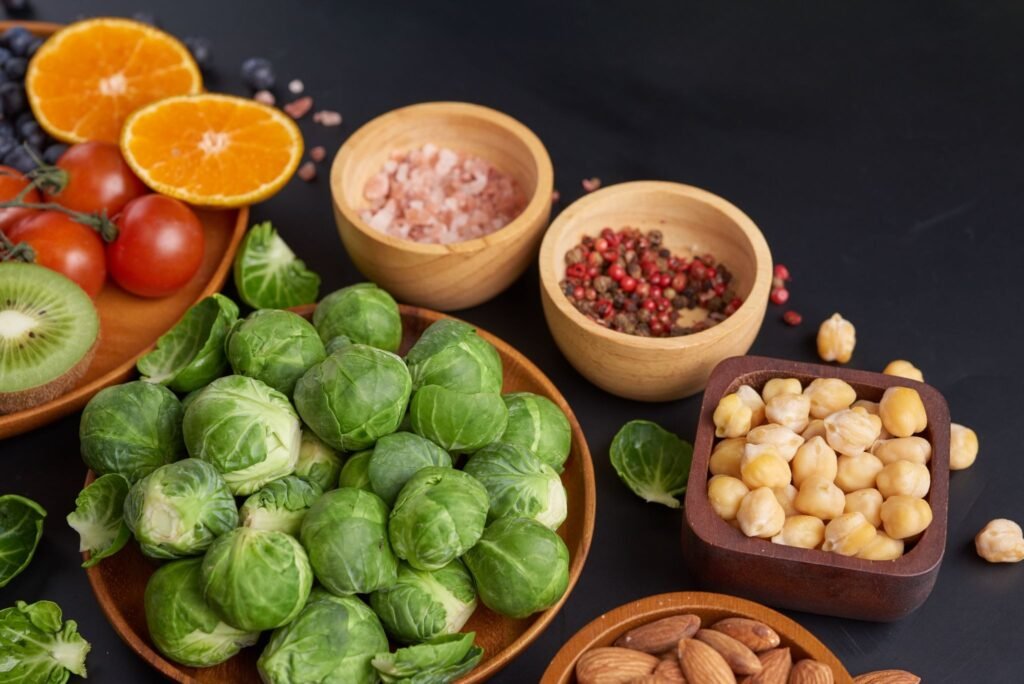
When people talk about “flavonoids,” the conversation often drifts into buzzwords and vague wellness claims. But from a food formulation standpoint, flavonoids are simply nature’s original active ingredients. In my years working in food manufacturing and quality assurance, I’ve evaluated hundreds of raw ingredients and plant polyphenol profiles are among the most fascinating.
These compounds don’t just exist by accident; plants synthesize them as defensive mechanisms against environmental stress, UV radiation, and microbial threats. When we look at functional foods through a processing lens, understanding flavonoid density is critical. Whether we’re talking about stabilizing a beverage or maximizing the natural nutritional yield of fresh produce, these phytonutrients serve a distinct functional purpose.
The trick isn’t just knowing that citrus fruits, kale, or berries are good for you; it’s understanding the underlying chemical matrix that makes them so effective at neutralizing oxidative stress. Instead of treating flavonoids like a mysterious health trend, let’s look at them for what they really are: functional biological compounds with well-documented mechanisms that support cellular resilience, immune defense, and long-term health.
To enhance your antioxidant support and boost immunity, focus on incorporating flavonoid-rich foods into your diet. Fruits like oranges, grapefruits, and mangoes are packed with these powerful phytonutrients, while vegetables like red onions, kale, and bell peppers can elevate your meals. Don’t forget herbs such as oregano and thyme, which add flavor and health benefits. Discovering more delicious ways to incorporate these foods can truly transform your health journey.
KEY TAKEAWAYS
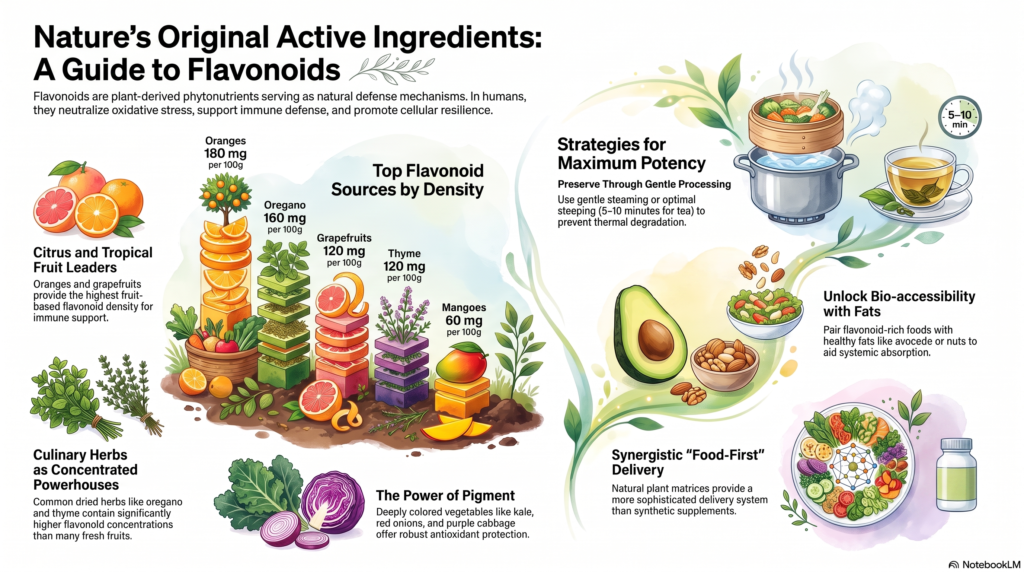
- Oranges and grapefruits are excellent sources with 180 mg and 120 mg of flavonoids per 100g, enhancing antioxidant support and immunity.
- Red onions, kale, and broccoli are rich in flavonoids, providing robust antioxidant properties and supporting overall health.
- Herbs like oregano and thyme contain high flavonoid levels, adding flavor and health benefits to meals.
- Incorporating berries into your diet boosts flavonoid intake, contributing to immune function and cellular protection.
- Enjoy herbal teas like chamomile and hibiscus for additional flavonoids, promoting antioxidant support and overall wellness.
WHAT ARE FLAVONOIDS AND WHY THEY MATTER FOR YOUR HEALTH
Flavonoids, a diverse group of phytonutrients found in many fruits, vegetables, and beverages, play an essential role in promoting your health.
These powerful compounds act as antioxidants, protecting your cells from damage and inflammation. Although flavonoids are naturally occurring plant compounds and not an active pharmaceutical ingredient, they have been extensively researched for their potential role in supporting overall health and wellness. By incorporating flavonoid sources like berries, citrus fruits, dark chocolate, and green tea into your diet, you’re not just savoring delicious flavors; you’re also harnessing substantial health benefits.
Research shows that flavonoids can enhance heart health, boost your immune system, and even improve cognitive function. They help combat oxidative stress and may lower the risk of chronic diseases.
Embracing these nutrient-rich foods empowers you to take charge of your health, releasing a vibrant and resilient lifestyle. It’s time to make flavonoids your ally in achieving peak wellness.
Top Fruits Rich in Flavonoids for a Nutrient Boost
When you think about boosting your nutrient intake, consider incorporating a variety of fruits that are rich in flavonoids. These fruits not only enhance your diet but also provide powerful antioxidant support. Citrus fruits like oranges and grapefruits are particularly high in flavonoids, delivering a invigorating punch of nutrients. Tropical fruits such as mangoes and papayas also pack a flavonoid-rich boost, helping to strengthen your immune system.
| Fruit | Flavonoid Content (mg per 100g) | Additional Nutrients |
| Oranges | 180 | Vitamin C, Fiber |
| Grapefruits | 120 | Vitamin A, Folate |
| Mangoes | 60 | Vitamins A, C, E |
| Papayas | 40 | Vitamins C, K, Folate |
Incorporate these fruits into your meals for ideal health benefits.
Flavorful Vegetables Packed With Flavonoids to Try
If you’re looking to diversify your nutrient intake, consider adding some flavorful vegetables that are high in flavonoids to your meals.
Veggies like red onions, kale, and broccoli aren’t just tasty; they’re packed with powerful antioxidants that support your immune system.
Try creating vibrant stir fries with bell peppers and bok choy, or whip up some delicious flavonoid-rich salads featuring arugula and cherry tomatoes.
These vegetables not only enhance flavor but also boost your body’s defenses against oxidative stress.
Incorporating these nutrient-dense options into your diet can empower you to feel your best while enjoying a variety of textures and tastes. You can also explore a polyphenols rich foods list to discover additional fruits, vegetables, and herbs that complement a flavonoid-rich eating pattern. Make these vegetables a staple in your kitchen for a flavorful, health-enhancing experience.
Make these vegetables a staple in your kitchen for a flavorful, health-enhancing experience! Flavonoids are plant compounds with a variety of health benefits. Many plant-based foods, as well as beverages such as tea and wine, contain flavonoids.
Aromatic Herbs and Spices High in Flavonoids for Cooking
While you may think of herbs and spices primarily as flavor enhancers, many of them are also rich in flavonoids, which can contribute to your overall health. Integrating these aromatic ingredients into your cooking can elevate both taste and wellness. Explore the power of herb blends and spice combinations to maximize your flavonoid intake.
Here’s a quick reference table of some top culinary herbs and spices rich in flavonoids:
| Herb/Spice | Flavonoid Content (mg per 100g) |
| Oregano | 160 |
| Thyme | 120 |
| Parsley | 50 |
| Basil | 30 |
| Dill | 25 |
Start incorporating these ingredients into your meals and reveal their health benefits!
Refreshing Beverages High in Flavonoids
As you seek to boost your flavonoid intake, invigorating beverages can be a delicious and effective way to do so. Consider incorporating flavonoid rich smoothies into your daily routine. Blend fruits like blueberries, strawberries, and bananas with leafy greens for a nutrient-packed drink that supports your immune system.
These smoothies not only taste great but also provide a powerful antioxidant punch.
Herbal iced teas are another excellent option. Varieties like hibiscus and chamomile are rich in flavonoids, and they offer a revitalizing way to stay hydrated while reaping health benefits.
Simply brew your favorite herbs, chill, and enjoy. By choosing these flavorful beverages, you empower your body with essential antioxidants, enhancing your overall wellness.
EASY WAYS TO ADD FLAVONOIDS TO YOUR DIET
In industrial food manufacturing, one of our biggest hurdles is maintaining ingredient stability and flavonoids present a classic processing challenge. It’s one thing to point out that red onions, oregano, or citrus peels are packed with active polyphenols; it’s another thing entirely to ensure those molecules survive heat processing, storage, and digestion. From an engineering standpoint, flavonoids like hesperidin, naringin, and quercetin are sensitive to thermal degradation, pH shifts, and oxygen exposure.
That’s why cooking methods matter so much. When you gently steam vegetables or steep herbal infusions at optimal temperatures, you preserve the structural integrity of these aglycone and glycoside forms. Furthermore, pairing these plant compounds with healthy fats isn’t just a culinary preference, it’s a bio-accessibility strategy.
Lipids help encapsulate lipophilic flavonoids, aiding their transport through the digestive tract and improving systemic absorption. Whether you’re assembling a raw meal at home or evaluating a large-scale commercial formulation, understanding how ingredient interactions and processing methods impact compound stability is the key to unlocking their actual biological value.
Adding flavonoids to your diet is easier than you might think. Flavonoids are plant compounds found in fruits, vegetables, and whole grains. Andrea Shannon, a clinical dietitian at Hebrew Rehabilitation Center, says flavonoid-rich foods have antioxidant properties, which are responsible for reducing free radicals in the body that can damage our cells.
You can start by incorporating berries into your meals, choosing colorful vegetables, and brewing herbal teas.
These simple changes can boost your flavonoid intake and enhance your overall health.
Incorporate Berries Into Meals
Incorporating berries into your meals is a delicious and effective way to boost your intake of flavonoids, which are linked to numerous health benefits.
Start your day with a berry smoothie, blending your favorite fruits like blueberries, strawberries, and raspberries. This not only energizes you but also floods your body with antioxidants.
For lunch or dinner, consider a vibrant berry salad, combining mixed greens, nuts, and a tangy vinaigrette. The sweet and tart flavors enhance your meals while maximizing flavonoid content.
You can also add berries to yogurt or oatmeal for a nutritious snack. By making these small yet impactful changes, you’re empowering your health and fortifying your immune system with every bite.
Choose Colorful Vegetables
When you choose colorful vegetables, you’re not just enhancing your plate; you’re also greatly boosting your flavonoid intake. Flavonoids are rich in antioxidant activity and can help your body ward off everyday toxins. Including more flavonoids in your diet is a great way to help your body stay healthy and potentially decrease your risk of some chronic health conditions.
These vibrant, colorful varieties—like bell peppers, carrots, and purple cabbage—pack a powerful punch of antioxidants and essential nutrients. Their nutrient density means you’re loading up on health benefits with every bite.
Incorporating these vegetables into your meals can elevate not only your immune function but also your overall wellness. Try roasting a mix of these colorful gems, or toss them in salads for a nutrient-rich crunch.
You’ll not only enjoy their exquisite flavors but also arm your body with the protective properties of flavonoids. Make colorful vegetables a staple, and watch your health flourish!
Brew Herbal Teas
Brew herbal teas to effortlessly boost your flavonoid intake and enjoy a delicious, healthful experience.
Herbal infusions, like chamomile or hibiscus, are packed with antioxidants that support your immune system and promote overall wellness. By mastering simple tea brewing techniques, such as steeping for the right duration, you can maximize these herbal infusion benefits.
Aim for 5-10 minutes of steeping to reveal the full potential of the flavonoids. Experiment with different herbal blends to suit your taste and health goals.
Incorporating these powerful beverages into your daily routine not only enhances your diet but also empowers you to take charge of your health.
Tips for Maximizing the Health Benefits of Flavonoids
To maximize the health benefits of flavonoids, you should focus on diversifying your diet with a variety of colorful fruits, vegetables, and beverages rich in these powerful compounds.
Foods like berries, citrus fruits, and dark leafy greens not only enhance flavonoid absorption but also promote dietary synergy, amplifying their antioxidant effects.
Pairing flavonoid-rich foods with healthy fats, such as avocados or nuts, can further boost nutrient uptake. Including a balanced diet with nutrients like acidic amino acids alongside flavonoid-rich foods can help support normal cellular function and overall wellness. Don’t forget to include herbal teas, which are excellent sources of flavonoids.
Don’t forget to include herbal teas, which are excellent sources of flavonoids.
Ultimately, limit processed foods and sugars, as they can inhibit your body’s ability to utilize these antioxidants effectively.
RELATED STUDIES ABOUT FOODS HIGHEST IN FLAVONOIDS
Incorporating flavonoid-rich foods into your diet is like adding vibrant colors to a canvas; it enhances both taste and health. By enjoying a variety of fruits, vegetables, herbs, and beverages, you’re not just indulging your palate but also fortifying your immune system and boosting your antioxidant levels. So, take charge of your meals and let the power of flavonoids work wonders for your well-being. Your body will thank you for this flavorful investment in your health!
Dietary flavonoids for brain health: Molecular mechanisms and functional food applications
Overview
Neurodegenerative diseases—including Alzheimer’s and Parkinson’s—are a critical public health concern, particularly in ageing populations. These conditions involve progressive neuronal structural and functional loss, often driven by mitochondrial dysfunction, chronic neuroinflammation, and oxidative stress. Research increasingly supports the potential of dietary flavonoids—bioactive, plant-derived secondary metabolites—as natural agents to preserve brain health, mitigate neuroinflammation, and improve cognitive function.
Molecular Mechanisms of Neuroprotection
Flavonoids operate through pleiotropic mechanisms that target key pathological pathways of neurodegeneration:
- Antioxidant Action: Flavonoids mitigate oxidative stress by directly scavenging reactive oxygen species (ROS) and by activating endogenous antioxidant defense systems, such as the Nrf2 pathway, which regulates enzymes like superoxide dismutase (SOD) and glutathione peroxidase (GPX).
- Anti-Inflammatory Effects: These compounds inhibit pro-inflammatory signaling pathways, including NF-$\kappa$B, MAPK, and JNK. By doing so, they reduce the release of neurotoxic cytokines (e.g., IL-1$\beta$, TNF-$\alpha$) from activated microglia and astrocytes.
- Synaptic and Metabolic Support: Flavonoids modulate insulin signaling (via the PI3K/Akt pathway) and mitochondrial biogenesis, which helps maintain energy homeostasis in neurons and supports synaptic plasticity, often through the upregulation of brain-derived neurotrophic factor (BDNF).
The Gut-Brain Axis
A significant portion of the neuroprotective effects of flavonoids is indirect, mediated through the gut-brain axis:
- Microbiota Modulation: Flavonoids act as prebiotics, promoting the growth of beneficial gut bacteria such as Bifidobacterium and Lactobacillus.
- Short-Chain Fatty Acids (SCFAs): The fermentation of dietary fiber by these bacteria produces SCFAs (e.g., butyrate, acetate, propionate), which improve intestinal barrier integrity, reduce systemic inflammation, and may enter the CNS to directly modulate neuroinflammation and neuronal signaling.
Bioavailability and Functional Food Strategy
Despite their bioactivity, the clinical efficacy of flavonoids is limited by poor bioavailability. Several factors influence their therapeutic potential:
- Food Matrix & Processing: The structure of the food matrix, food preparation (e.g., thermal treatment), and co-ingestion with macronutrients (proteins, lipids) significantly affect flavonoid release, stability, and absorption.
- Blood-Brain Barrier (BBB) Penetration: The ability of flavonoids to reach the brain depends on their chemical structure, lipophilicity (logP), and molecular size. Aglycone forms generally permeate the BBB more efficiently than their glycosylated counterparts.
- Strategic Application: To optimize neuroprotection, dietary strategies should prioritize the regular consumption of diverse, minimally processed flavonoid-rich foods. For clinical and functional food applications, advanced delivery systems—such as nanoformulations, liposomes, and targeted micelles—are being developed to overcome stability and bioavailability limitations.
Conclusion
Flavonoids represent a safe and promising multi-target approach to neuroprotection. By integrating antioxidant, anti-inflammatory, and gut-microbiota-modulating properties, flavonoid-rich diets or functional foods offer an accessible strategy for slowing age-related cognitive decline and preventing neurodegenerative diseases. Future efforts should focus on large-scale clinical trials and the optimization of delivery systems to maximize their therapeutic impact in human populations.
| REFERENCE: Joanna Sagan, Emilia Reszczyńska, Sławomir Dresler, Marcin Feldo, Magdalena Czelej-Wrzesień, Agnieszka Hanaka, Dietary flavonoids for brain health: Molecular mechanisms and functional food applications, Journal of Functional Foods, Volume 142, 2026, 107357, ISSN 1756-4646, https://doi.org/10.1016/j.jff.2026.107357. (https://www.sciencedirect.com/science/article/pii/S1756464626002070) |
MaMYB12 and MaMYB308 antagonistically regulate flavonoid biosynthesis in mulberry (Morus alba): Implications for functional food ingredient development
Mulberry (Morus alba) is an increasingly important source of bioactive flavonoids, which offer significant antioxidant, anti-inflammatory, and cardioprotective benefits for functional food and nutraceutical applications. To optimize the production of these high-value ingredients, researchers have investigated the transcriptional mechanisms governing flavonoid biosynthesis, which were previously poorly understood in this woody species.
Key Findings
This study identified a critical transcriptional module consisting of two antagonistic R2R3-MYB transcription factors that regulate flavonoid metabolism in mulberry:
- MaMYB12 (Activator): Belonging to subgroup SG7, MaMYB12 functions as a transcriptional activator. Transient overexpression of MaMYB12 in mulberry leaves significantly increased the content of 30 flavonoid metabolites by directly activating the promoters of key biosynthetic genes, including Ma4CL, MaF3H, and MaFLS.
- MaMYB308 (Repressor): Classified as an SG4 repressor, MaMYB308 exerts a broad inhibitory effect. Overexpression of this transcription factor reduced the accumulation of 106 flavonoid metabolites by directly suppressing key genes such as Ma4CL, MaCHS, MaFLS, and MaANS.
Molecular Mechanisms and Validation
- Antagonistic Interaction: Both MaMYB12 and MaMYB308 bind directly to the same sites on target gene promoters, such as Ma4CL, and their antagonistic roles were confirmed through yeast one-hybrid assays, electrophoretic mobility shift assays (EMSA), and dual-luciferase reporter assays.
- Transcriptional Balance: Y2H assays indicated that these proteins do not interact directly at the protein level; rather, they compete for binding sites on target gene promoters to regulate metabolic flux.
- Functional Impact: In stable transgenic mulberry hairy roots, MaMYB12 overexpression enhanced flavonoid content and antioxidant activity, while MaMYB308 overexpression decreased both, demonstrating that manipulating this genetic module directly influences the functional food properties of mulberry tissues.
Implications for Functional Food Development
The identification of this activator-repressor pair provides actionable genetic tools for precision molecular breeding. Strategies to enhance the nutritional profile of mulberry-derived products include the targeted overexpression of MaMYB12 or the knockout of MaMYB308. Furthermore, the established mulberry hairy root system offers a scalable “plant biofactory” for producing high-value flavonoid ingredients, bypassing the challenges associated with field cultivation and the long growth cycles of woody plants.
| Shengmei Han, Teng Zhao, Jiaqi Zhao, Xiaoyan Liu, Jing Xiao, Hong Huang, Zhaoyang Liu, Yingping Gai, Xianling Ji, MaMYB12 and MaMYB308 antagonistically regulate flavonoid biosynthesis in mulberry (Morus alba): Implications for functional food ingredient development, Food Chemistry: Molecular Sciences, Volume 12, 2026, 100395, ISSN 2666-5662, https://doi.org/10.1016/j.fochms.2026.100395. (https://www.sciencedirect.com/science/article/pii/S2666566226000432) |
Influence of Citrus Flavonoids from Food Wastes on Adipocyte Function and Glucose Metabolism
This study explored the potential of utilizing food processing by-products (“pastazzo”) from 11 Mediterranean Citrus species as a sustainable source of bioactive flavonoids for managing metabolic disorders, such as obesity and type 2 diabetes.
Key Findings
- Optimal Extraction: Ultrasound-assisted extraction proved superior to maceration and supercritical $CO_{2}$ extraction for recovering total flavonoids. The most effective settings involved a hydroalcoholic mixture (30% or 70% ethanol) at $30^{\circ}C$ for 30 minutes.
- Chemical Profile: Hesperidin was identified as the predominant flavonoid in most Citrus samples, while naringin was most prevalent in Citrus paradisi (yellow and pink varieties) and Citrus sinensis (late ripening).
- Antioxidant and Antidiabetic Potential:
- Extracts exhibited strong antioxidant activity, with Citrus clementina (#11) demonstrating the highest ABTS radical scavenging capacity (up to $56.18\pm0.87\%$).
- All extracts showed statistically significant $\alpha$-amylase inhibitory activity, which may help modulate postprandial glycemia, with Citrus sinensis (sample #9) providing the best inhibition ($22.14\pm0.98\%$).
- Metabolic Regulation in 3T3-L1 Adipocytes:
- While effects on glucose uptake were modest and only statistically significant for select samples (#5 and #6), all extracts significantly inhibited the adipogenesis process and reduced intracellular neutral lipid (triglyceride) accumulation compared to differentiated controls.
- Extracts from samples #6 through #11 demonstrated a superior ability to inhibit lipid accumulation, showing a tendency to near-zero adipogenesis.
Conclusions
Citrus industrial by-products are promising sources of flavonoids that can be valorized for use in nutraceuticals and dietary supplements. These findings provide a scientific basis for the potential adjuvant use of these extracts in preventing and managing metabolic-nutritional diseases, particularly regarding their antioxidant, anti-inflammatory, and lipid-lowering properties. The authors note that while in vitro results are promising, future in vivo studies and randomized clinical trials are necessary to confirm these therapeutic effects and define the pharmacokinetics of these bioactive compounds.
| REFERENCE: R. Mare, A. Verardi, M. Settino, A. Mirarchi, S. Greco, F.R. Noto, M. Rago, V. Musolino, T. Montalcini, A. Pujia, Influence of Citrus flavonoids from food wastes on adipocyte function and glucose metabolism, Applied Food Research, Volume 6, Issue 1, 2026, 101581, ISSN 2772-5022, https://doi.org/10.1016/j.afres.2025.101581. (https://www.sciencedirect.com/science/article/pii/S2772502225008856) |
CONCLUSION
Ultimately, demystifying health ingredients comes down to looking past the marketing hype and focusing on the evidence. As someone who spends his days analyzing ingredient profiles and label compliance, I always advocate for a grounded, food-first approach. You don’t need synthetic additives or over-promoted, expensive supplements to get meaningful doses of antioxidant support.
The natural plant matrix found in everyday citrus fruits, dark leafy greens, berries, and culinary herbs already provides a highly sophisticated delivery system. Recent food science research continues to confirm that these compounds work synergistically.
From gut microbiota fermentation to vascular health and brain function support, flavonoids demonstrate that nature is the ultimate food scientist. By making intentional, varied choices in your daily diet focusing on raw quality, simple preparation, and colorful whole foods you are effectively taking advantage of a natural, evidence-based formulation designed for long-term vitality.