

In my twelve-plus years in beverage R&D, I’ve seen ingredient trends come and go, but the shift toward magnesium-fortified drinks is one of the most chemically and functionally sound developments in recent memory. Whenever someone asks me why functional beverages are moving so heavily into mineral fortification, my mind goes straight to the benchtop. From a formulation perspective, water alone or even simple sugar-electrolyte solutions often falls short when it comes to sustained metabolic support.
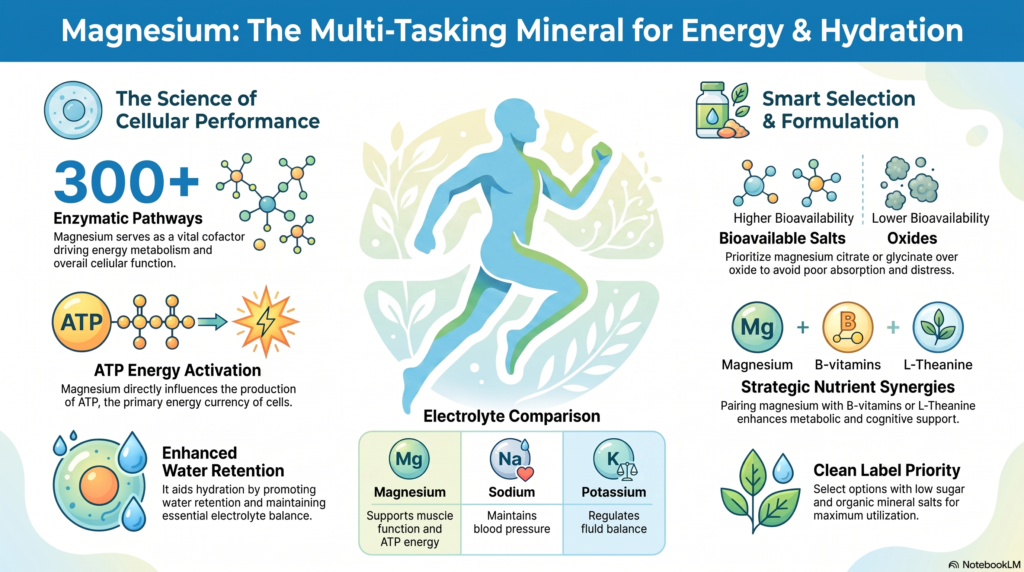
Magnesium isn’t just an additive you toss into a tank for a quick label claim; it is a fundamental cofactor involved in over 300 enzymatic pathways, particularly those driving cellular adenosine triphosphate (ATP) production. When you’re pushing your body during long weekend cycling rides or grueling workdays, sweat loss clears out vital minerals, leading to sluggish cellular function and early fatigue.
Delivering magnesium in a bioavailable beverage matrix allows for efficient osmotic balance and cellular energy activation. Consumers today are moving past quick-fix stimulants like caffeine and looking for true cellular hydration and sustained stamina. That is precisely where magnesium shines, bridging the gap between raw biochemistry and everyday functional refreshment.
Magnesium in functional beverages greatly boosts energy production and aids in hydration. As a cofactor in over 300 enzymatic reactions, magnesium helps convert nutrients into usable energy, preventing fatigue. It also promotes water retention, balancing electrolytes to support ideal cell function. This is essential for active individuals who lose magnesium through sweat. By choosing magnesium-infused drinks, you can enhance your energy levels and hydration simultaneously. Discover how to select the best options for your lifestyle.
KEY TAKEAWAYS
- Magnesium serves as a cofactor in energy metabolism, enhancing ATP production essential for cellular energy.
- Functional beverages fortified with magnesium help combat fatigue and improve overall energy levels.
- Magnesium supports hydration by promoting water retention and balancing electrolytes necessary for optimal cell function.
- Magnesium-rich drinks can replenish lost magnesium during physical activities, aiding in recovery and hydration.
- Combining magnesium with other nutrients enhances energy, hydration, and overall health benefits.
WHAT IS MAGNESIUM AND WHY IS IT IMPORTANT FOR HEALTH?
Magnesium is an essential mineral that plays a significant role in numerous bodily functions. It’s important for energy production, muscle function, and maintaining a healthy nervous system. Drinks high in magnesium help support nerve and muscle function, blood pressure, bone health, and your stress response. Getting enough magnesium helps lower your risk of heart disease and anxiety.
Without adequate magnesium, you may face magnesium deficiency, which can lead to fatigue, muscle cramps, and increased stress. To harness the power of this mineral, it’s critical to incorporate magnesium sources into your diet.
Foods such as leafy greens, nuts, seeds, and whole grains are rich in magnesium. Additionally, functional beverages fortified with magnesium can enhance your intake effectively.
Understanding the importance of magnesium empowers you to optimize your health, ensuring you stay at the top of your game. Prioritizing magnesium isn’t just a choice; it’s a strategy for achieving peak performance.
How Magnesium Boosts Energy Production in the Body
When you think about energy production in the body, you mightn’t immediately associate it with magnesium, but this mineral plays a crucial role in the process.
Magnesium is essential for energy metabolism, acting as a cofactor in over 300 enzymatic reactions. Unlike an active pharmaceutical ingredient, magnesium in functional beverages works as an essential mineral that supports normal physiological processes, including energy production and hydration. It directly influences ATP (adenosine triphosphate) production, the primary energy currency of your cells.
During cellular respiration, magnesium helps convert glucose and fatty acids into usable energy, ensuring your body operates at maximum performance.
Without adequate magnesium, your energy levels can plummet, leaving you fatigued and sluggish.
By incorporating magnesium-rich functional beverages into your routine, you can support peak energy production, enhancing your overall vigor and resilience.
Make magnesium a priority, and release your body’s true energy potential.
The Role of Magnesium in Maintaining Hydration Levels
Magnesium plays a vital role in maintaining hydration levels by promoting water retention in the body. Magnesium is an essential mineral that supports hundreds of biochemical reactions, including muscle and nerve function, blood sugar and blood pressure regulation, and bone health (studies to follow). For these reasons and more, consumer demand is up. According to Nutrition Business Journal data, the magnesium market was valued at approximately $1.85 billion in 2025 and is projected to reach $2.43 billion by 2028. In 2025, magnesium accounted for roughly 43.8% of the total minerals category, and is performing particularly well in sleep, mood, mental health, fitness and energy applications.
It helps balance electrolytes, ensuring your cells function at their best during physical activities.
Magnesium’s Water Retention Role
Although often overlooked, magnesium plays an essential role in maintaining hydration levels within the body. This mineral aids in water retention, ensuring your cells are adequately hydrated.
When you consume magnesium-rich foods or beverages, like leafy greens or nuts, you’re supporting your body’s ability to hold onto water. The right magnesium dosage can enhance electrolyte balance, further promoting hydration.
When you’re active, you might lose magnesium through sweat, making it imperative to replenish this important mineral. By understanding magnesium sources and incorporating them into your diet or functional beverages, you can optimize hydration and energy levels.
This proactive approach empowers you to take charge of your health, ensuring you stay at your peak performance.
Electrolyte Balance and Hydration
Maintaining electrolyte balance is essential for ideal hydration, especially since electrolytes, including magnesium, play an important role in fluid regulation within your body. An electrolyte imbalance can lead to dehydration, fatigue, and impaired performance. To optimize your hydration strategies, consider integrating magnesium-rich functional beverages into your routine.
| Electrolyte | Function |
| Sodium | Maintains blood pressure |
| Potassium | Regulates fluid balance |
| Magnesium | Supports muscle function |
| Calcium | Aids in nerve transmission |
TOP MAGNESIUM-INFUSED FUNCTIONAL BEVERAGES YOU SHOULD TRY
When I’m formulating a functional beverage, choosing the right salt form of magnesium is half the battle. In the lab, we constantly analyze trade-offs between solubility, bioavailability, and taste profile. If you grab a beverage fortified with poorly soluble magnesium oxide, you’ll likely notice a chalky mouthfeel, poor gut absorption, and potential digestive distress. On the flip side, highly soluble and bioavailable forms like magnesium citrate or organic chelates like magnesium glycinate integrate smoothly into liquid matrices without crashing out of solution or ruining the flavor balance.
As an avid cold brew experimenter, I’m obsessed with how minor adjustments in mineral concentration affect the sensory experience. In ready-to-drink formulations, pairing magnesium with complimentary functional nutrients such as B-complex vitamins for metabolic support or L-Theanine to smooth out the central nervous system response creates a powerful physiological synergy.
My advice when evaluating store shelves is simple: look past the marketing claims on the front label and check the ingredient deck. Prioritize organic mineral salts, minimal added sugars, and clean acid profiles to ensure your body actually absorbs and utilizes the mineral effectively.
If you’re looking to boost your wellness routine, trying out magnesium-infused functional beverages can be a game changer.
These drinks are emerging as significant players in beverage trends, providing a dual benefit of hydration and energy support. Notable options include brands that utilize natural magnesium sources such as coconut water or mineral-rich spring water, ensuring you receive peak absorption.
For instance, look for beverages enriched with magnesium citrate, which is known for its bioavailability. Additionally, some options blend magnesium with electrolytes and vitamins, enhancing overall performance.
By incorporating these beverages into your daily regimen, you can effectively combat fatigue and improve recovery, putting you in control of your health and well-being. While magnesium focuses on hydration and energy, exploring collagen drinks benefits can also help you support healthy skin, joints, and connective tissues as part of a comprehensive wellness routine.
Try them out and experience the benefits firsthand.
Choosing the Right Magnesium Drink for Your Lifestyle
How do you choose the right magnesium drink to fit your lifestyle? Start by identifying your magnesium sources.
Look for beverages enriched with magnesium citrate or magnesium glycinate, as these forms are more bioavailable, effectively boosting energy and hydration.
Consider your lifestyle considerations: if you’re active, opt for drinks that include electrolytes for enhanced performance. For those with busy schedules, portable, ready-to-drink options may serve you best.
If relaxation is your goal, select a beverage infused with calming ingredients alongside magnesium. Pairing your routine with L-Theanine in tea may further support a sense of calm while complementing the hydration and wellness benefits of magnesium-containing beverages.
Assess your dietary habits too; make sure your magnesium intake complements your overall nutrition.
Finally, read labels carefully—prioritize low-sugar, natural options to maximize the benefits of magnesium while aligning with your health objectives.
Choose wisely to amplify your liveliness.
Benefits of Magnesium With Other Nutrients in Functional Beverages
While magnesium is a powerhouse nutrient on its own, its benefits are greatly enhanced when combined with other essential nutrients in functional beverages. This magnesium synergy not only boosts energy levels but also optimizes overall nutrient absorption.
For instance, pairing magnesium with vitamin B6 can improve cognitive function and enhance mood, while combining it with electrolytes promotes better hydration and recovery. Additionally, the presence of vitamin D alongside magnesium can amplify bone health benefits, making your functional beverage even more powerful.
How to Use Magnesium Supplements Effectively
Wondering how to maximize the benefits of magnesium supplements? Start by determining the proper dosage for your needs, usually ranging from 200 to 400 mg daily. Magnesium supports everything from muscle function and bone health to sleep, mood, and blood sugar control—but many people don’t get enough. You can boost your intake with nuts, seeds, leafy greens, and magnesium-containing drinks.
It’s essential to consult with a healthcare professional for personalized advice. Next, consider timing strategies: taking magnesium in the evening can improve sleep quality and recovery, while morning doses may enhance energy levels for your day.
Pair your supplement with food to boost absorption and minimize gastrointestinal discomfort. Additionally, stay consistent; establishing a routine will help you reap the full benefits.
RELATED STUDIES ABOUT MAGNESIUM IN FUNCTIONAL BEVERAGES
Incorporating magnesium into your diet through functional beverages can be a game-changer for both energy and hydration. As you sip on these drinks, you’re not just quenching your thirst; you’re also supporting essential bodily functions. With magnesium’s role in energy production and hydration, you’re truly killing two birds with one stone. Remember to choose the right drink that fits your lifestyle, and you’ll be well on your way to reaping the numerous health benefits magnesium has to offer.
Ultrasound pre-treatment of Ginkgo biloba leaves enhances the functional and sensory properties of the fermented beverage
This study investigates the synergistic effects of ultrasound pre-treatment and 7-day microbial fermentation on the physicochemical, functional, and sensory characteristics of a beverage derived from dried Ginkgo biloba leaves.
Key Findings
- Enhanced Bioactive Content: The combined ultrasound-fermentation (FS) process significantly increased the extraction of beneficial compounds compared to a standard infusion, with Total Polyphenol Content (TPC) rising from 6.0 mg GAE/ml in the infusion to 34.0 mg GAE/ml in the FS sample. Total Flavonoid Content (TFC) also increased from 1.46 mg QE/ml to 5.76 mg QE/ml.
- Safety and Toxicity: A critical achievement of this processing method is the reduction of potentially toxic ginkgolic acids to undetectable levels in the fermented products.
- Antioxidant and Therapeutic Potential: The FS beverage exhibited the highest antioxidant capacity across all testing methods (TEAC, RSA, and FRAP). Furthermore, the beverage showed dose-dependent cytotoxicity toward LoVo colon cancer cells, with the FS sample reducing cell viability to approximately 20% at a 25 mg/ml concentration.
- Nutritional and Sensory Quality: Mineral content, particularly magnesium, increased significantly following fermentation. Sensory evaluations indicated that the FS beverage achieved the highest overall acceptability rating, successfully balancing functional bioactivity with desirable taste and aroma characteristics.
- Processing Synergies: While fermentation alone facilitates the release of bound bioactive compounds through microbial metabolism, ultrasound pre-treatment provides further enhancement by disrupting plant cell walls, thereby maximizing extraction efficiency.
Conclusion
The study demonstrates that integrating ultrasound pre-treatment with microbial fermentation is a highly effective, scalable, and scientifically validated strategy for creating novel, safe, and bioactive-rich functional beverages from Ginkgo biloba. This approach successfully transforms an underutilized botanical resource into a product with enhanced health-promoting properties and improved consumer appeal.
| REFERENCE: Patrycja Biernacka, Katarzyna Felisiak, Iwona Adamska, Grzegorz Tokarczyk, Grzegorz Bienkiewicz, Sylwia Przybylska, Wojciech Żwierełło, Marcin R. Lener, Anna Jaroszewska, Dariusz Błażejczak, Elżbieta Bogusławska-Wąs, Ultrasound pre-treatment of Ginkgo biloba leaves enhances the functional and sensory properties of the fermented beverage, Food Chemistry, Volume 499, 2026, 147329, ISSN 0308-8146, https://doi.org/10.1016/j.foodchem.2025.147329. (https://www.sciencedirect.com/science/article/pii/S0308814625045819) |
Effect of lemongrass powder substitution on the physicochemical, nutritional, and sensory properties of chicory-based functional beverage
This study evaluated the impact of substituting roasted chicory (Cichorium intybus) root powder with varying concentrations of lemongrass (Cymbopogon citratus) powder (LGP) to create a caffeine-free, health-promoting functional beverage. The research aimed to enhance the nutritional and functional profile of chicory-based drinks while mitigating the inherent bitterness associated with roasted chicory.
Key Findings
- Physicochemical Changes: As LGP substitution increased (0–30%), the beverage experienced a significant reduction in pH (driven by lemongrass’s natural organic acids) and a decrease in total soluble solids (TSS) due to differences in the plant matrices. Conversely, titratable acidity and moisture content increased significantly.
- Enhanced Nutritional & Antioxidant Quality: Increasing LGP levels resulted in a statistically significant enrichment of minerals, particularly zinc, iron, magnesium, and phosphorus. Furthermore, the beverage showed marked improvements in Total Phenolic Content (TPC) and Total Flavonoid Content (TFC), which directly correlated with enhanced antioxidant activity as measured by DPPH and FRAP assays.
- Sensory Acceptability: Panelists preferred the blends with moderate LGP substitution. Specifically, formulations within the 20–25% LGP substitution range achieved the best balance between functional enhancement and sensory appeal, effectively masking the bitterness of roasted chicory with pleasant citrus and herbaceous notes.
- Market Potential: The 15% LGP substitution blend recorded the highest purchase intent among consumers. The study concludes that the developed beverage is a viable, caffeine-free alternative to traditional coffee or tea, offering both nutritional benefits and high consumer acceptability.
Conclusion
The partial substitution of roasted chicory with 20–25% lemongrass powder is a successful strategy for developing an improved functional beverage. This formulation leverages the synergistic phytochemical and mineral profiles of both botanicals to deliver a health-promoting product that meets consumer preferences for taste, aroma, and mouthfeel.
| REFERENCE: Denis Mariki Karaituma, Monica Mburu, Amos Kipkemoi Ronoh, Effect of lemongrass powder substitution on the physicochemical, nutritional, and sensory properties of chicory-based functional beverage, Applied Food Research, Volume 5, Issue 2, 2025, 101544, ISSN 2772-5022, https://doi.org/10.1016/j.afres.2025.101544. (https://www.sciencedirect.com/science/article/pii/S2772502225008480) |
Prebiotics as Functional Ingredients in Beverages
This review explores the growing trend of fortifying beverages with prebiotics—non-digestible carbohydrates that selectively promote beneficial gut microbiota—to enhance consumer health. As many processed fruit juices and plant-based drinks are inherently low in fiber, prebiotic fortification serves as a strategic method to improve their nutritional value and digestive benefits.
Key Findings
- Types and Sources of Prebiotics: Common prebiotics utilized in beverage formulation include inulin, resistant starch, fructo-oligosaccharides (FOS), galacto-oligosaccharides (GOS), pectin, and $\beta$-glucans. These compounds are naturally derived from diverse sources such as chicory root, onions, garlic, bananas, oats, and various fruit peels.
- Health Benefits: Prebiotic fortification is associated with significant physiological improvements, including:
- Digestive Health: Promoting the proliferation of beneficial bacteria such as Bifidobacterium and Lactobacillus, which aids in gut barrier function, laxation, and the reduction of gastrointestinal issues like diarrhea and constipation.
- Metabolic and Immune Support: Prebiotics contribute to glycemic control, improved lipid profiles, enhanced mineral absorption (e.g., calcium, magnesium), and immune system modulation.
- Technological and Formulation Challenges: Incorporating prebiotics into beverage matrices presents hurdles regarding stability, solubility, and sensory impact.
- Processing Stability: Some prebiotics, particularly FOS, are sensitive to low pH and high temperatures.
- Sensory Perception: High concentrations of prebiotics can alter mouthfeel, viscosity, and sweetness, sometimes introducing bitterness or turbidity in clear beverages.
- Innovation Strategies: Advanced technologies are being employed to overcome formulation barriers, including:
- Micro- and Nanoencapsulation: Techniques such as spray drying and nanoemulsions improve the stability and shelf life of prebiotics and co-delivered probiotics.
- Advanced Processing: Methods like high-pressure processing (HPP) and ultrasound-assisted extraction (UAE) help retain the functional integrity of prebiotics.
- Synbiotic Formulations: Developing beverages that combine prebiotics and probiotics offers synergistic health advantages, though these require careful monitoring of microbial viability.
Conclusion
Prebiotic-fortified beverages represent a promising frontier in functional nutrition. While current research validates their role in improving gut health, metabolic function, and immunity, future innovation must focus on “mechanistically driven product design”. Addressing challenges related to acidic stability, solubility, and regulatory harmonization across global markets will be essential for successful commercialization.
| REFERENCE: Komal Sharma, Hamid, Rafeeya Shams, Kshirod Kumar Dash, Pintu Choudhary, Ayaz Mukarram shaikh, Kovács Béla, Prebiotics as functional ingredients in beverages: A comprehensive review of health benefits and applications, Food Chemistry Advances, Volume 11, 2026, 101294, ISSN 2772-753X, https://doi.org/10.1016/j.focha.2026.101294. (https://www.sciencedirect.com/science/article/pii/S2772753X26000778) |
CONCLUSION
Looking at the recent processing data from ultrasound-assisted extraction of botanicals to novel prebiotic-fortified mineral drinks it’s clear that functional beverage technology has entered a sophisticated new era. We are no longer just flavoring water; we are engineering functional deliverability. Magnesium stands at the center of this movement because it addresses two of the most widespread wellness issues today: persistent low energy and chronic under-hydration.
Through proper formulation, we can now offer beverages that replenish what sweat and daily stress strip away, all while maintaining high sensory appeal and shelf stability. Whether you’re an athlete seeking post-workout electrolyte recovery, a professional managing daily stress, or simply someone looking to optimize your daily water intake, choosing well-formulated magnesium beverages provides an evidence-based approach to metabolic support.
As research continues to refine how we combine minerals, prebiotics, and natural botanicals, staying informed about what goes into your glass is your best strategy for long-term health. Drink intentionally, focus on bioavailable ingredients, and let solid food chemistry work in your favor.