
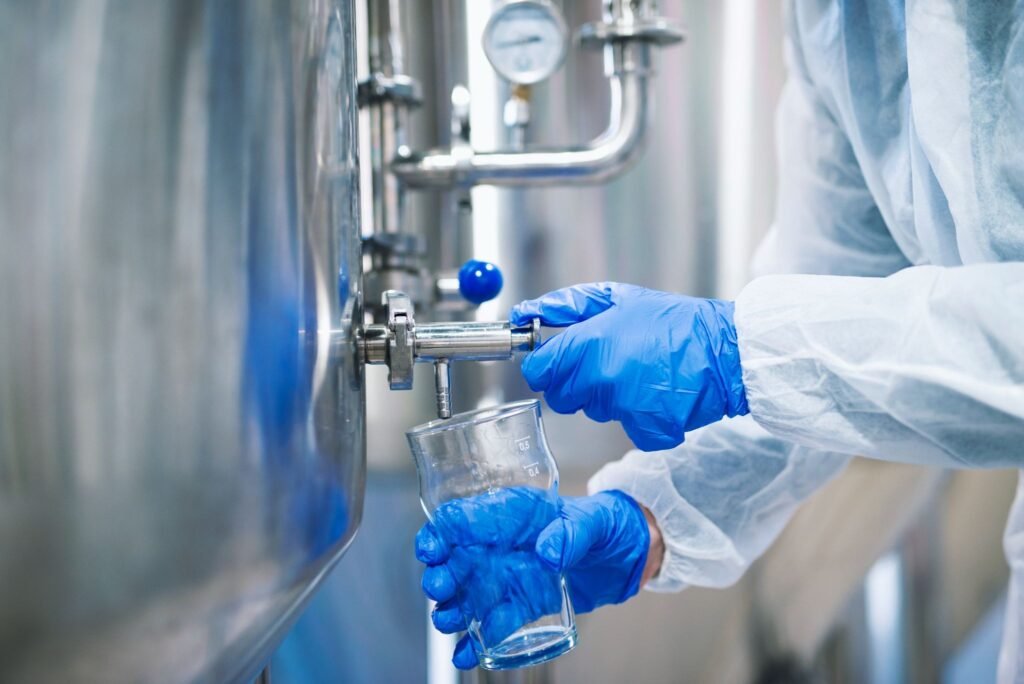
From my years researching green chemistry and spending weekends kayaking along local rivers, I’ve come to appreciate water not just as a natural resource, but as a living ecosystem that requires gentle yet highly effective stewardship. When we talk about water purification, people often assume that adding more heavy-duty chemicals is the only way to make water safe to drink.
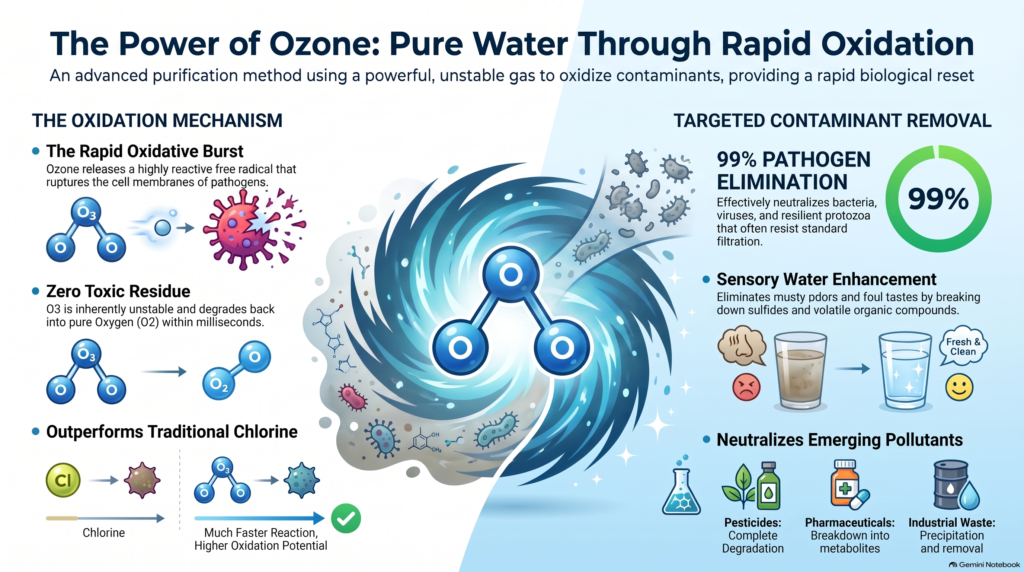
But as someone who spent years studying chemical engineering at MIT, I’ve always advocated for solutions that work with chemical principles rather than forcing harsh synthetic persistence into our waterways. That is precisely why ozone treatment fascinates me so much. Unlike traditional chemical additives that leave behind persistent byproducts, ozone operates on a remarkably elegant mechanism.
It unleashes an intense, rapid oxidative burst to neutralize biological hazards and organic contaminants, and then simply degrades back into pure, harmless oxygen (O2). It doesn’t accumulate in local aquatic habitats or leave long-term toxic footprints downstream. For anyone concerned about what goes into our municipal supplies and eventually flows back into our rivers and lakes, understanding ozonation is a crucial step toward advocating for cleaner, safer, and ecologically sound water management in our communities.
Ozone treatment purifies water by using the powerful oxidizing properties of ozone, which effectively breaks down contaminants and pathogens. This process eliminates bacteria, viruses, and protozoa quickly, enhancing water safety and quality. Unlike traditional methods, ozone decomposes into harmless oxygen, leaving no harmful residues. Its rapid reaction time allows for a broader range of pathogen elimination and improved disinfection capabilities. Discovering more about ozone’s mechanisms can provide deeper insights into its transformative role in water purification.
KEY TAKEAWAYS
- Ozone treatment oxidizes contaminants, breaking them down into harmless byproducts and enhancing water quality without leaving harmful residues.
- Ozone’s potent oxidizing properties allow it to effectively dismantle organic matter and eliminate a wide range of pathogens.
- The process targets and penetrates cell walls of microorganisms, ensuring thorough destruction of bacteria, viruses, and protozoa.
- Ozone decomposes into oxygen post-treatment, eliminating concerns about chemical residues and enhancing safety in drinking water.
- With a rapid reaction time, ozone treatment outperforms traditional methods, providing superior pathogen elimination and improving overall water safety.
WHAT IS OZONE TREATMENT AND HOW DOES IT WORK?
Although you may not realize it, ozone treatment is a powerful method for purifying water. This process utilizes ozone generation techniques to produce ozone, a highly reactive gas that effectively oxidizes contaminants. Ozone water treatment is an advanced method of purifying water using ozone (O3), a powerful oxidizing agent. This process involves introducing ozone gas into water, where it quickly dissolves and reacts with contaminants. Ozone is highly effective at destroying bacteria, viruses, and other microorganisms, making it an excellent choice for disinfection in water treatment systems. As an oxidant, ozone can react with various substances by accepting their electrons, which allows it to break down complex organic compounds and inactivate pathogens.
By employing various ozone application methods, you can guarantee the efficient delivery of ozone into the water, maximizing its purifying potential. When introduced, ozone reacts with microorganisms, organic matter, and inorganic pollutants, breaking them down into harmless byproducts.
This advanced treatment greatly enhances water quality and safety without leaving harmful residues. Understanding the intricacies of ozone generation and application allows you to harness its full potential, positioning you at the forefront of water purification technology.
Embrace this method for superior outcomes in water management and environmental stewardship.
Advantages of Ozone Treatment Over Traditional Methods
While traditional water purification methods often rely on chemical additives and extensive filtration systems, ozone treatment offers a more effective and environmentally friendly alternative.
Ozone generation harnesses the natural power of ozone gas, initiating a rapid oxidation process that effectively neutralizes a wide range of contaminants. Unlike chemicals, ozone decomposes into oxygen, leaving no harmful residues.
This method enhances disinfection capabilities, eliminating pathogens more efficiently than conventional techniques. It also requires less energy and reduces maintenance costs, providing a cost-effective solution for large-scale operations.
What Contaminants Does Ozone Treatment Remove?
Ozone treatment effectively targets various contaminants in water, making it a powerful purification method. Ozone water treatment is a water treatment method that reduces contaminants through ozone’s oxidative strength. Ozone is an oxidant, which means it reacts with other substances and accepts their electrons. For example, when iron is oxidized, it becomes rust. Ozone water treatment begins with the creation of ozone in an ozone generator. Then, ozone is injected into water, and immediately starts oxidizing and eliminating contaminants, such as bacteria, viruses, and metals.
You’ll find that it eliminates microbial contaminants, breaks down chemical pollutants, and removes unpleasant odors and tastes.
Understanding these capabilities highlights the importance of ozone in enhancing water quality.
Microbial Contaminants Elimination
When considering effective methods for purifying water, ozone treatment stands out for its ability to eliminate a wide range of microbial contaminants.
This powerful oxidant effectively targets pathogens, including bacteria, viruses, and protozoa, markedly reducing their survival rates. Unlike traditional methods, ozone treatment overcomes microbial resistance, ensuring that even resilient pathogens are neutralized.
The oxidative process disrupts cellular structures, leading to the rapid inactivation of harmful microorganisms. Ozone’s effectiveness is particularly evident in water sources challenged by high levels of microbial contamination.
By implementing ozone treatment, you enhance the safety and quality of your water supply, providing a robust solution against potential health risks associated with pathogen survival.
This method represents a formidable defense in the quest for pristine water.
Chemical Pollutants Breakdown
As you explore water purification options, it is essential to understand how ozone treatment effectively breaks down various chemical pollutants. This powerful method leverages chemical reactions that transform harmful substances into less toxic or harmless byproducts. Here’s a quick overview of the key chemical pollutants ozone treatment can eliminate:
| Pollutant Type | Example Compounds | Ozone Treatment Effect |
| Industrial Waste | Heavy Metals | Precipitation and removal |
| Pesticides | Atrazine, Glyphosate | Degradation |
| Pharmaceuticals | Hormones, Antibiotics | Breakdown into metabolites |
| Volatile Organic Compounds | Benzene, Toluene | Oxidation |
| Chlorinated Compounds | Trichloroethylene | Reduction of toxicity |
Through effective pollutant interactions, ozone not only purifies but also enhances the safety of your water supply. Ozone treatment is also highly effective in reducing contaminants associated with VOCs volatile organic compounds air pollution, helping improve both water quality and overall environmental health.
ODOR AND TASTE REMOVAL
When looking closely at how ozone functions chemically, it’s helpful to think of it less like a standard cleaner and more like an targeted, fast-acting biological reset. Because O3 is inherently unstable, it eagerly releases a free oxygen radical, a single, highly reactive oxygen atom driven to pair up. In a matter of milliseconds, that radical collides with the cell membrane of a bacterium or pathogen and ruptures its structural proteins through sheer oxidation. The cell simply collapses.
The mechanism itself is conceptually similar to how household chlorine bleach operates via sodium hypochlorite, but with one massive environmental advantage: ozone leaves no lingering chlorine smell, chemical taste, or toxic chlorinated disinfection byproducts. From a practical perspective, there are valid engineering trade-offs to consider. I often talk with homeowners who are eager to install whole-house ozonation systems, but for residential applications, full-scale setups can sometimes be cost-prohibitive and demand steady maintenance as the ozone-generating elements age.
Point-of-use systems like under-sink filtration are usually much more manageable and budget-friendly for daily drinking water needs. Whether deployed in a compact tap unit or scaled up for municipal facilities, ozone’s short half-life makes it one of the cleanest, most efficient tools we have for destroying contaminants without burdening our living waters.
Effective water purification goes beyond just removing harmful pollutants; it also addresses unpleasant odors and tastes that can make water unpalatable.
Ozone treatment excels in odor neutralization, effectively targeting and breaking down organic compounds responsible for musty or foul smells. By introducing ozone into the water, you initiate a powerful oxidation process that eliminates contaminants like sulfides and volatile organic compounds, which often contribute to undesirable flavors.
This process not only purifies but also leads to significant taste enhancement, ensuring your water is invigorating and crisp. The result is a drinking experience that’s not only safe but also enjoyable, empowering you to confidently consume water free from the burdens of taste and odor issues.
Real-World Applications of Ozone Treatment in Water Purification
Ozone treatment has emerged as an essential solution for water purification across various industries, proving particularly beneficial in municipal water systems and wastewater treatment plants.
In industrial applications, it effectively eliminates harmful contaminants, ensuring compliance with stringent regulations. This technology also enhances the safety and quality of water used in manufacturing processes, reducing operational risks.
For residential systems, ozone treatment offers a powerful alternative to traditional methods, delivering clean, safe drinking water that’s free from bacteria, viruses, and chemical pollutants.
The versatility of ozone treatment allows it to adapt to different scales and needs, empowering communities and industries alike to achieve superior water quality. Combining ozone technology with research on algae bioactive substances environment may further enhance sustainable water treatment strategies by improving contaminant removal and supporting healthier aquatic ecosystems.
As you explore these real-world applications, you’ll recognize the transformative potential of ozone in water purification.
Common Misconceptions About Ozone Treatment
Despite the growing adoption of ozone treatment in water purification, several misconceptions persist that can cloud its effectiveness and safety. Ozone is an unstable gas consisting of three oxygen atoms (O₃); the gas will readily degrade back to oxygen (O₂), and during this transition a free oxygen atom, or free radical (O•) will form. The free oxygen radical is highly reactive and short lived; under normal conditions it will only survive for milliseconds.
Many people misunderstand its effectiveness, believing it to be less potent than traditional methods like chlorine. However, ozone’s oxidative properties enable it to eliminate a broader spectrum of contaminants and pathogens.
Additionally, safety concerns often arise from a lack of understanding. Some think ozone leaves harmful residues, but it naturally decomposes into oxygen, ensuring no harmful byproducts remain.
When implemented correctly, ozone treatment is remarkably safe and efficient. By addressing these misconceptions, you can make informed decisions about water purification methods that truly protect public health and enhance water quality.
Understanding these facts empowers you to advocate for superior water treatment solutions.
The Future of Ozone Treatment for Safe Drinking Water
As advancements in technology continue to evolve, the future of ozone treatment for safe drinking water appears increasingly promising.
Future innovations in ozone generation and application methods are set to enhance efficiency and effectiveness, allowing for more thorough contaminant removal. These developments can potentially lower operational costs and improve system reliability, empowering communities to achieve higher water quality standards.
However, maneuvering regulatory challenges remains essential. As ozone treatment gains traction, regulatory bodies must establish clear guidelines to guarantee safety and efficacy.
How Does Ozone Work as a Powerful Oxidizer?
Effective water purification relies on the properties of powerful oxidizers, and ozone stands out for its remarkable ability to break down contaminants. Ozone generation occurs when oxygen molecules are exposed to high voltage, producing ozone—a triatomic form of oxygen.
This potent oxidizer boasts an impressive oxidation potential, considerably higher than that of chlorine. When ozone interacts with contaminants, it initiates a rapid oxidation reaction, effectively dismantling organic matter, pathogens, and various pollutants. In this process, ozone serves as the active ingredient, driving the oxidation reactions that make water purification highly effective without leaving harmful chemical residues.
The powerful nature of ozone allows it to penetrate cell walls of microorganisms, destroying their structural integrity. By utilizing ozone in water treatment, you harness a formidable tool that not only purifies but also enhances the safety and quality of drinking water, ensuring superior results compared to traditional methods.
RELATED STUDIES ABOUT OZONE TREATMENT IN WATER PURIFICATION
To summarize, ozone treatment stands out as a formidable method in water purification, effectively removing up to 99% of pathogens and contaminants. With its ability to break down harmful substances, it not only safeguards public health but also offers a sustainable alternative to traditional methods. As you consider the future of drinking water, remember that over 1.1 billion people currently lack access to safe sources, highlighting the urgent need for innovative solutions like ozone treatment to guarantee clean, safe water for all.
Advanced water purification through sequential hybrid CoOx catalytic ozonation and electrocoagulation for effective contaminant removal and toxicity reduction
This study introduces a novel, sustainable wastewater treatment strategy designed to address the increasing challenge of contaminants of emerging concern (CECs). As water scarcity drives the necessity for reliable water reuse, conventional treatment methods often fail to adequately remove persistent pollutants, necessitating the development of advanced oxidation processes (AOPs).
Research Focus
The research investigates a sequential hybrid system that integrates two powerful technologies:
- Catalytic Ozonation: Employs thin-film CoO_{x} nanocatalysts deposited via cold plasma (PECVD) onto structured kanthal supports to enhance ozone efficiency and hydroxyl radical (^{\bullet}OH) generation.
- Electrocoagulation (EC): Utilizes iron (Fe) or aluminum (Al) sacrificial electrodes to generate coagulants in situ for the removal of suspended solids and oxidation by-products.
Key Findings
- Superior Performance: The sequential hybrid system (Catalytic Ozonation followed by EC) significantly outperforms standalone treatments. It achieves superior pollutant degradation, higher mineralization rates, and effective toxicity reduction for a complex mixture containing imidacloprid (IMI), sulfamethoxazole (SMX), and butylparaben (BuP).
- Synergistic Benefits: The integration of Fe-based electrocoagulation as a post-treatment step proved particularly effective, leveraging the strong electrostatic interactions and flocculation capacity of iron oxides to remove contaminants that are resistant to ozonation, such as IMI.
- Toxicity Reduction: Ecotoxicity assays using Vibrio fischeri confirmed that the hybrid Cat/O_{3} rightarrow EC (Fe) system successfully facilitates the transformation of toxic organic pollutants into more oxidized, biodegradable, and non-toxic forms.
- Process Sustainability: The hybrid approach minimizes sludge production, reduces electrode fouling, and maintains catalyst stability over prolonged operation. Furthermore, kinetic and energy efficiency analyses show that this sequential configuration is more cost-effective and energy-efficient than non-catalytic or simultaneous treatment approaches.
Conclusion
The study concludes that the sequential hybrid Cat/O_{3} rightarrow EC process, particularly utilizing iron-based electrocoagulation, is a robust and scalable solution for advanced water purification. By bridging key knowledge gaps in the simultaneous removal of persistent, mixed CECs, this innovation provides a practical pathway for meeting stringent safety standards for wastewater reuse, aligning with global environmental goals such as the European Green Deal.
| REFERENCE: Robert Karpiński, Aleksandra Kędzierska-Sar, Maciej Fronczak, Magdalena Bilińska, Magdalena Sobczak, Lucyna Bilińska, Marta Gmurek, Advanced water purification through sequential hybrid CoOx catalytic ozonation and electrocoagulation for effective contaminant removal and toxicity reduction, Desalination and Water Treatment, Volume 323, 2025, 101261, ISSN 1944-3986, https://doi.org/10.1016/j.dwt.2025.101261. (https://www.sciencedirect.com/science/article/pii/S1944398625002772) |
Highly Selective Singlet Oxygen Generation via an Asymmetric Co–O–Fe Dual-site for Enhanced Water Treatment: Importance of Switching the Ozone Activation Pathway
This study presents a significant advancement in environmental engineering by developing a novel bimetallic metal-organic framework (MOF) catalyst, MIL-53(FeCo), designed to optimize ozone activation for wastewater treatment.
The Challenge: Overcoming Radical-Dominant Limitations
Traditional heterogeneous catalytic ozonation often relies on a radical-dominant pathway, primarily generating hydroxyl radicals (^{\bullet}OH). While effective, this pathway is limited by the short half-life of these radicals and their high sensitivity to common water constituents, which compromise their practicality in complex water matrices. Furthermore, the symmetric configuration of active sites (e.g., Fe-O-Fe) in conventional catalysts limits the efficient generation of singlet oxygen (^{1}O_{2}), a more stable and selective reactive oxygen species (ROS).
Innovation: Asymmetric Co-O-Fe Dual-sites
The researchers utilized a doping engineering strategy to replace symmetric Fe-O-Fe nodes with asymmetric Co-O-Fe dual-sites within the MOF structure.
- Electronic Modulation: Cobalt incorporation breaks the symmetry of the iron sites, enhancing electron delocalization and optimizing the local electronic structure.
- Pathway Switching: This asymmetric configuration effectively switches the ozone activation pathway from radical-dominant to nonradical-dominant, favoring the selective generation of ^{1}O_{2}.
- Enhanced Performance: The catalyst demonstrated a 6.6-fold increase in ^{1}O_{2} selectivity and a 2.0-fold increase in phenol degradation efficiency compared to state-of-the-art ozonation catalysts.
Key Findings & Practical Significance
- Degradation Capability: The Co-O-Fe dual-site system successfully degrades diverse organic pollutants, particularly those with high ionization potentials (IPs).
- Selectivity: The study established a positive linear correlation (R^{2} > 0.97) between kinetic rate constants and theoretical IP values of various pollutants, confirming the critical role of ^{1}O_{2} in selectively targeting these difficult-to-remove compounds.
- Robustness: The catalyst maintains high stability and activity in complex water matrices containing various salts and humic acid, and it shows excellent reusability over consecutive cycles.
- Industrial Feasibility: Testing with refractory textile industrial wastewater and other secondary effluents demonstrated the system’s ability to achieve significant Chemical Oxygen Demand (COD) reduction and meet water reuse standards, highlighting its high feasibility for sustainable, practical water purification.
Conclusion
This work advances the atomic-level design of heterogeneous catalysts. By precisely engineering the microenvironment of metal centers to create asymmetric dual-sites, the researchers have realized a highly selective, nonradical catalytic ozonation process that offers a more stable and efficient solution for treating recalcitrant organic pollutants in real-world wastewater applications.
| REFERENCE: Qian Hu, Shanli Wang, Kaixing Fu, Guangpeng Yang, Licong Xu, Wenbin Jiang, Minghua Wu, Wangyang Lu, Xiaomin Zhu, Jinming Luo, Highly Selective Singlet Oxygen Generation via an Asymmetric Co–O–Fe Dual-site for Enhanced Water Treatment: Importance of Switching the Ozone Activation Pathway, Engineering, 2025, , ISSN 2095-8099, https://doi.org/10.1016/j.eng.2025.12.016. (https://www.sciencedirect.com/science/article/pii/S2095809925008033) |
Rankala Lake quarry water purification via a dual strategy involving hydrodynamic cavitation and ozonation
This study evaluates a pioneering, dual-strategy approach for purifying wastewater using a sequential combination of hydrodynamic cavitation (HC) and ozonation (O3). The research was conducted on eutrophic rainwater collected from the Rankala Lake quarry in Kolhapur, India, which contained significant microbial loads, organic contaminants, and undesirable physical characteristics.
Key Findings
- Performance and Efficiency: The sequential application of HC followed by ozonation proved highly effective. Over a three-week treatment period, the process transformed greenish, malodorous water into clear, purified water.
- Microbial Disinfection: The treatment resulted in a substantial reduction in microbial populations, with bacterial concentrations decreasing from approximately 10^5 t{ CFU/mL} to 10^2{ CFU/mL} (a three-log reduction), alongside a marked decrease in fungal occurrence.
- Pollutant Degradation: The process demonstrated strong efficacy in removing organic matter.
- COD: Reduced from an initial level above 110{ ppm} to below 40{ ppm} within one week, eventually reaching approximately 10{ ppm}.
- BOD: Decreased significantly from 55 { ppm} to undetectable levels (0{ ppm}).
- Water Quality Metrics: The treatment also reduced turbidity and hardness while leaving chloride and total dissolved solids (TDS) levels relatively unaffected, thereby maintaining the water’s bleaching capacity and utility for diverse purposes, including swimming and support for local wildlife.
Mechanism and Sustainability
- Synergistic Action: The efficacy of the treatment is attributed to the combination of physical and chemical effects. HC generates shock waves during the collapse of cavitation bubbles, which cause physical disruption and inactivation of microorganisms, while also creating reactive hydroxyl (^{\bullet}OH) radicals. These radicals, in conjunction with the strong oxidizing power of ozone, facilitate the breakdown of organic pollutants.
- Cost-Effectiveness: The method is highly cost-effective, with an estimated purification cost of approximately Rs. 8.33{m}^3. The process is energy-efficient, relying primarily on a centrifugal pump to drive the cavitation reactor and requiring minimal energy for ozone generation.
Conclusion
This dual-strategy approach offers a scalable, sustainable, and eco-friendly solution for wastewater treatment, particularly for stagnant or eutrophic water bodies. By successfully converting polluted water into a resource suitable for recreational and ecological use, this study validates HC coupled with ozonation as a practical and innovative technology for addressing water scarcity and pollution challenges.
| REFERENCE: Amarsinh L. Jadhav, Parvez A. Gardi, Amruta A. Bhosale, Prajeet A. Kadam, Dhairyasheel P. Ghorpade, Rankala Lake quarry water purification via a dual strategy involving hydrodynamic cavitation and ozonation, Cleaner Water, Volume 2, 2024, 100033, ISSN 2950-2632, https://doi.org/10.1016/j.clwat.2024.100033. (https://www.sciencedirect.com/science/article/pii/S2950263224000310) |
CONCLUSION
Looking at the broader global picture, clean water access remains one of the most pressing environmental and humanitarian challenges of our era. Over a billion people still lack reliable, safe drinking water, and as persistent industrial pollutants, micro-pesticides, and pharmaceuticals continue to strain our freshwater sources, traditional treatment methods are hitting their limits. As environmental analysts and everyday citizens alike, we have to push for technologies that solve one problem without creating another.
Ozonation, especially when paired with modern advancements like catalytic supports or hydrodynamic cavitation, represents the exact kind of sustainable innovation we need. It gives us the power to break down stubborn recalcitrant pollutants and neutralize lethal microbial threats while completely respecting the natural chemistry of water.
When we choose treatments that revert harmlessly back into oxygen, we aren’t just protecting our taps, we are protecting the watersheds, wildlife, and future generations that rely on them. Empowering our local communities with this knowledge allows us to demand better infrastructure, make smarter home choices, and ensure that clean, safe water remains a fundamental right for everyone.