

When people think of environmental regulation, they usually picture legislative bills, regulatory compliance frameworks, or international treaties. But in my years as an environmental consultant, I’ve continually found that the most fundamental regulatory systems aren’t written by lawmakers, they are driven by organic chemistry. Carbon compounds form the active chemical infrastructure of our planet, functioning as a delicate thermodynamic blanket and a planetary engine.
Looking at the carbon cycle through the lens of atmospheric and environmental chemistry reveals a remarkable truth: life on Earth hasn’t just adapted to its climate; it has actively constructed and regulated it through continuous molecular exchanges. Whether we are examining how carbon dioxide acts as a heat-trapping mechanism in the atmosphere or observing how photosynthesizing organisms fix inorganic carbon into organic compounds, the entire balance relies on precise, natural equilibrium.
What often gets lost in high-level discussions, however, is how fragile this equilibrium becomes when chemical inputs are rapidly modified by industrial activity. From analyzing industrial compliance to teaching ecological chemistry to kids on weekend camping trips, my goal is always to make these chemical flows tangible. Understanding carbon cycle chemical compounds isn’t just an academic exercise, it is the foundation for managing environmental health and implementing actionable sustainability solutions.
Carbon cycle chemical compounds, like carbon dioxide, play an essential role in regulating climate and ecosystem function. CO2 traps heat in the atmosphere, driving climate change and altering weather patterns. Through photosynthesis, plants convert CO2 into organic matter, forming the foundation of ecosystems. Respiration and decomposition further influence carbon levels and nutrient recycling. Human activities disrupt this delicate balance, highlighting the need for effective carbon management strategies. There’s much more to explore about these dynamics and their implications.
KEY TAKEAWAYS
- Carbon compounds, particularly CO2, act as greenhouse gases, trapping heat and regulating Earth’s temperature and climate patterns.
- Photosynthesis converts atmospheric CO2 into organic matter, forming the foundation of food webs and supporting ecosystem function.
- Respiration and decomposition release CO2 back into the atmosphere, maintaining a balance in carbon levels essential for ecosystem health.
- Soil health and diverse plant species enhance carbon storage capacity, promoting resilience against climate change and supporting ecosystem stability.
- Human activities, such as fossil fuel combustion and deforestation, disrupt the carbon cycle, escalating atmospheric CO2 levels and threatening climate regulation.
OVERVIEW OF THE CARBON CYCLE
The carbon cycle, which encompasses the movement of carbon among the atmosphere, oceans, soil, and living organisms, plays an essential role in regulating Earth’s climate. Understanding this cycle is vital for anyone seeking to wield influence over environmental policies.
Carbon sources, such as fossil fuels and deforestation, release significant amounts of carbon dioxide into the atmosphere, exacerbating climate change. Conversely, carbon sinks like forests, oceans, and soil absorb carbon, mitigating its impact.
How Does Carbon Dioxide Regulate Our Climate?
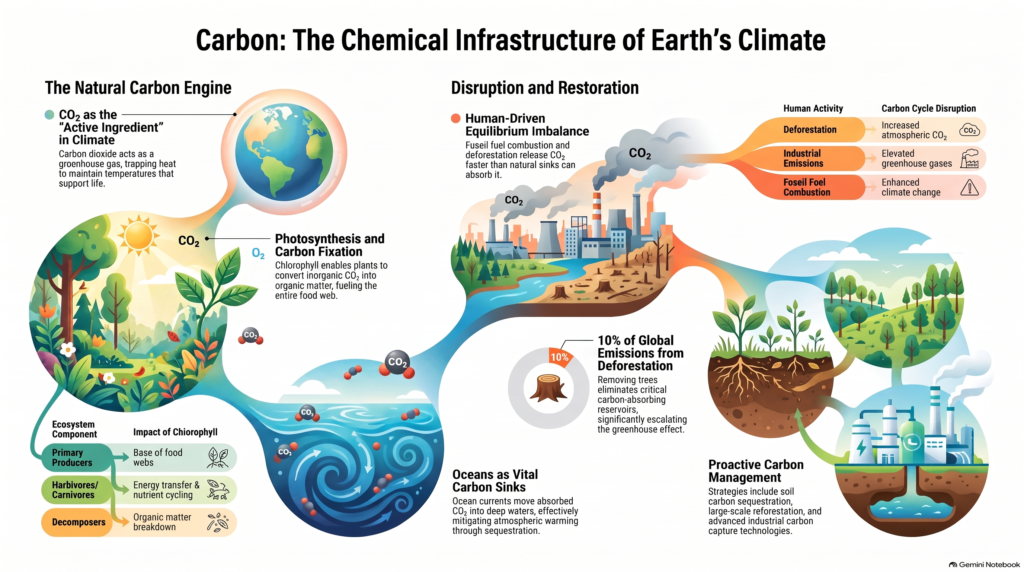
Carbon dioxide plays an essential role in regulating our climate through its greenhouse gas effects, trapping heat in the atmosphere.
You’ll notice that as CO2 levels rise, so does the Earth’s temperature, altering weather patterns and ecosystems.
Additionally, the oceans absorb a significant amount of this gas, affecting marine life and further influencing global climate dynamics.
Greenhouse Gas Effects
While many factors influence climate, carbon dioxide (CO2) plays a pivotal role in regulating Earth’s temperature. As a potent greenhouse gas, CO2 traps heat in the atmosphere, enhancing atmospheric warming. In this context, carbon dioxide acts as the active ingredient in the greenhouse effect, influencing heat retention and shaping global climate patterns. This process is vital for maintaining a balance that supports diverse ecosystems and human prosperity.
However, excessive CO2 emissions from industrial activities and deforestation intensify this natural phenomenon, leading to accelerated climate change. You must understand that the implications are profound: rising temperatures can disrupt weather patterns, threaten food security, and increase the frequency of extreme weather events.
Ocean Absorption Mechanisms
As carbon dioxide (CO2) levels rise in the atmosphere, oceans play an essential role in regulating climate by absorbing significant amounts of this greenhouse gas.
The interplay between ocean currents and CO2 absorption is fundamental; warm currents facilitate the movement of CO2 to deeper waters, enhancing its sequestration.
These dynamic systems transform oceans into powerful carbon sinks, effectively mitigating climate change impacts.
Your understanding of these mechanisms empowers you to advocate for policies that protect marine ecosystems.
By recognizing the oceans’ role in climate regulation, you can push for sustainable practices that enhance their capacity to absorb CO2.
Ultimately, strengthening ocean health fosters resilience against climate fluctuations, ensuring a balanced planetary system for future generations.
How Photosynthesis Shapes Ecosystem Dynamics
Photosynthesis is essential for sustaining ecosystems, as it drives carbon fixation and fuels the food web.
Chlorophyll plays a central role in capturing light energy, enabling plants to convert carbon dioxide into organic matter.
Understanding these processes helps clarify how they influence ecosystem dynamics and overall climate regulation.
Role Of Chlorophyll In Ecosystems
Chlorophyll plays a pivotal role in ecosystems, acting as the primary pigment that drives photosynthesis in plants, algae, and cyanobacteria. This process is fundamental to ecosystem productivity, as it converts light energy into chemical energy, fueling food webs and supporting biodiversity. The chlorophyll function allows organisms to harness sunlight, transforming it into organic matter that sustains life.
| Ecosystem Component | Impact of Chlorophyll |
| Primary Producers | Base of food webs |
| Herbivores | Energy transfer |
| Carnivores | Nutrient cycling |
| Decomposers | Organic matter breakdown |
| Microbial Life | Soil health maintenance |
CARBON FIXATION PROCESSES EXPLAINED
From an applied environmental chemistry perspective, looking at carbon dynamics requires us to trace individual chemical pathways across ecosystems. In consulting work, we often focus on point-source emissions or atmospheric gas retention, but the real magic and vulnerability of the carbon cycle happens in the bio-chemical sinks. Photosynthesis, for instance, is the ultimate chemical remediation process, where solar radiation drives the conversion of atmospheric CO2 into biological building blocks via pigments like chlorophyll.
On the flip side, cellular respiration and microbial decomposition return this carbon to the soil and air, forming a continuous recycling mechanism that keeps ecosystems fertile and resilient. When human industrial operations disrupt this balance through mass deforestation and fossil fuel combustion, we overload the atmospheric pool faster than natural sinks can absorb it. To counter this, modern environmental management must embrace integrated solutions ranging from promoting soil carbon sequestration to implementing advanced water treatment strategies like ozone oxidation to manage aquatic contaminants.
When we understand that every organic compound in our soil and oceans plays a role in planetary thermodynamic regulation, our approach to chemical safety and industrial compliance fundamentally shifts from passive monitoring to proactive ecosystem stewardship.
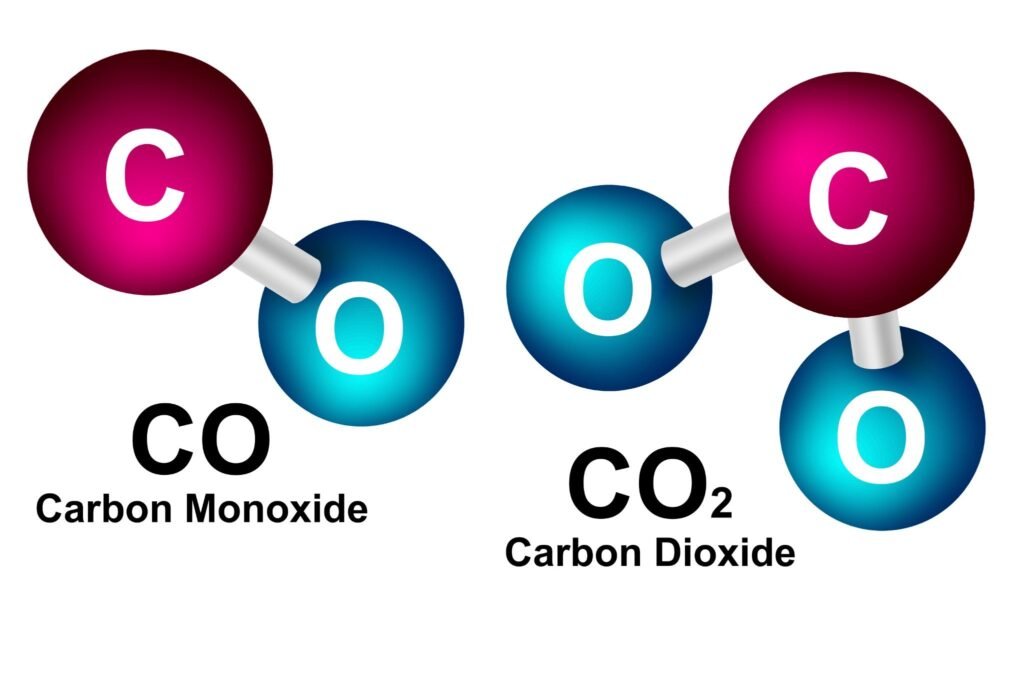
The process of carbon fixation stands at the heart of photosynthesis, driving the conversion of inorganic carbon dioxide into organic compounds that form the foundation of life on Earth.
Understanding the intricate photosynthetic pathways reveals how ecosystems thrive and adapt. Here are four critical aspects of carbon fixation:
- Calvin Cycle: The principal pathway, where carbon dioxide is incorporated into sugar molecules.
- C4 Pathway: An efficient mechanism that minimizes photorespiration in hot climates, enhancing productivity.
- CAM Pathway: A strategy utilized by succulents, allowing carbon fixation at night, conserving water.
- Impact on Climate: Carbon fixation directly influences atmospheric carbon levels, thereby regulating climate and ecosystem health.
How Respiration Contributes to Carbon Cycling
Often overlooked in discussions about the carbon cycle, respiration plays an essential role in regulating atmospheric carbon levels. Through cellular respiration, organisms convert organic matter into energy, releasing carbon dioxide as a byproduct. This process not only fuels crucial biological functions but also maintains carbon balance within ecosystems.
As you understand, when you breathe, you’re actively participating in this intricate cycle—facilitating energy release that supports life while contributing to the greenhouse gas pool. The carbon dioxide emitted during respiration is then available for photosynthesis, creating a dynamic interplay between producers and consumers.
Why Decomposition Is Key to Nutrient Recycling
Decomposition plays a pivotal role in nutrient recycling within ecosystems, acting as a bridge between dead organic matter and new life. By facilitating the breakdown of organic materials, you enhance nutrient availability, which is essential for sustaining healthy ecosystems.
Here are four critical aspects of decomposition processes:
- Microbial Activity: Decomposers like bacteria and fungi break down complex organic compounds, releasing crucial nutrients.
- Soil Health: Enhanced decomposition improves soil structure, increasing its fertility and water retention capacity.
- Carbon Cycling: As organic matter decomposes, it contributes to the carbon pool, influencing climate regulation.
- Ecosystem Resilience: Efficient nutrient recycling through decomposition strengthens ecosystems, enabling them to withstand environmental stresses.
Understanding these dynamics empowers you to appreciate the intricate balance sustaining life on Earth.
How Human Activities Disrupt the Carbon Cycle
While human activities have driven technological and economic progress, they’ve also greatly disrupted the carbon cycle, leading to profound environmental consequences. Deforestation impacts are significant, as you eliminate trees that absorb carbon dioxide, exacerbating greenhouse gas concentrations. Industrial emissions further complicate this scenario, releasing vast amounts of CO2 and other pollutants into the atmosphere.
| Human Activity | Carbon Cycle Disruption |
| Deforestation | Increased atmospheric CO2 |
| Industrial Emissions | Elevated greenhouse gases |
| Fossil Fuel Combustion | Enhanced climate change |
These actions not only alter ecosystems but also threaten global stability. Integrating bioremediation compounds and microbes into environmental restoration efforts can help reduce pollution, restore contaminated ecosystems, and support a more balanced carbon cycle alongside emissions reduction strategies. Understanding the depth of these disruptions is essential for anyone seeking to wield influence in climate-related discussions.
Strategies for Mitigating Climate Change Through Carbon Management
To effectively combat climate change, it’s essential to implement robust carbon management strategies that address both emissions reduction and carbon sequestration.
Here’s how you can take action:
- Enhance Carbon Offsetting Strategies: Invest in projects that balance emissions through renewable energy and forest conservation.
- Promote Soil Carbon Sequestration: Adopt agricultural practices that increase soil organic matter, enhancing its carbon storage capacity.
- Support Reforestation Initiatives: Engage in large-scale tree planting to absorb atmospheric CO2 effectively.
- Invest in Carbon Capture Technologies: Develop and deploy technologies that capture carbon emissions directly from industrial processes. Integrating these efforts with ozone treatment in water purification can further reduce environmental pollution by improving water quality and complementing broader climate and ecosystem management strategies.

RELATED STUDIES ABOUT CARBON CYCLE CHEMICAL COMPOUNDS
In understanding the carbon cycle, you realize its profound impact on both climate and ecosystem health. Did you know that deforestation alone accounts for nearly 10% of global greenhouse gas emissions? This staggering statistic highlights the urgent need for action. By recognizing how our actions disrupt this delicate balance, you can appreciate the importance of sustainable practices. Embracing carbon management strategies isn’t just crucial for our planet’s future; it’s essential for preserving the ecosystems that sustain us all.
Impact of graphene addition on intermetallic compounds (IMC) and mechanical properties of Sn–Bi solder alloys under thermal cycling
This study investigates the influence of graphene nanosheets (GNSs) as a nanofiller reinforcement in Sn-Bi solder alloys to enhance their reliability under severe thermal conditions. As the electronics industry shifts toward low-temperature assembly—particularly for miniaturized components—Sn-Bi alloys have become essential; however, their mechanical reliability under prolonged thermal stress remains a critical engineering challenge.
Key Research Findings
- Microstructural Refinement: The addition of GNSs promotes the refinement of the primary \beta-Sn phase through heterogeneous nucleation, which helps manage the alloy’s microstructure.
- Optimal Concentration: The research identifies an optimal GNS concentration of approximately 0.05 wt% to 0.1 wt%.
- Samples with 0.05% GNS demonstrated the most significant refinement of the $\beta$-Sn phase.
- Additions exceeding 0.3 wt% lead to GNS agglomeration, causing microstructural heterogeneity and reduced reinforcement efficiency.
- Intermetallic Compound (IMC) Control: GNSs act as effective diffusion barriers at the solder/copper interface.
- At 0.05 wt% GNS, the thickness of the interfacial IMC layer was reduced by more than 40% post-reflow and 34% after thermal cycling.
- Mechanical Properties:
- The addition of GNSs enhances the elastic modulus of the solder joints.
- Post-reflow, a 0.1 wt% GNS addition resulted in a 16% increase in the modulus of elasticity.
- Following thermal cycling, samples with 0.3 wt% GNS showed a 50% increase in the modulus of elasticity compared to the unreinforced alloy, indicating superior resistance to elastic deformation.
Core Mechanisms
The study highlights that GNSs function through a combination of mechanisms:
- Heterogeneous Nucleation: GNSs provide sites for the primary \beta-Sn phase to nucleate, resulting in smaller, more refined grains.
- Diffusion Barrier Effect: Due to their compact covalent structure and high surface area, GNSs increase the effective diffusion path and restrict the migration of Sn and Cu atoms, effectively retarding the growth of the Cu_{6}Sn_{5} IMC layer.
- Morphological Modification: GNSs help fragment and disrupt the continuous, brittle Bi-rich lamellar networks typically found in Sn-Bi alloys, improving the spatial homogeneity of the microstructure.
Conclusion
Incorporating a small percentage of graphene nanosheets (optimally < 0.1 wt%) into Sn-Bi solder alloys significantly improves microstructural stability, restricts undesirable IMC layer growth, and enhances mechanical stiffness under thermal cycling. These improvements offer a viable pathway for increasing the reliability of next-generation, low-temperature electronic packaging.
| REFERENCE: Gabriel F.R.C. Padua, Gabriela Silva da Rocha, Nayra Reis do Nascimento, Roberto Maia Augusto, Isomar Lima da Silva, José Costa de Macêdo Neto, Impact of graphene addition on intermetallic compounds (IMC) and mechanical properties of Sn–Bi solder alloys under thermal cycling, Materials & Design, Volume 264, 2026, 115697, ISSN 0264-1275, https://doi.org/10.1016/j.matdes.2026.115697. (https://www.sciencedirect.com/science/article/pii/S0264127526002704) |
Sustainable extraction of bioactive compounds: a life cycle perspective on technologies, solvents, and process scale-up
This study explores the integration of graphene nanosheets (GNSs) as a reinforcing nanofiller in Sn-Bi solder alloys to enhance their reliability under severe thermal cycling conditions. As the electronics industry increasingly adopts low-temperature reflow applications, Sn-Bi alloys serve as critical lead-free alternatives; however, optimizing their microstructural stability and intermetallic compound (IMC) growth remains essential for high-reliability components.
Key Findings
- Microstructural Refinement: The addition of GNSs promotes the refinement of the primary \beta-Sn phase.
- GNSs act as heterogeneous nucleation agents, increasing the density of \beta-Sn nuclei and restricting dendrite growth.
- The most effective refinement was observed at a concentration of 0.05 wt%.
- Concentrations exceeding 0.3 wt% result in GNS agglomeration, which compromises the uniformity of nucleation and leads to a loss of efficiency.
- Control of IMC Growth: GNSs function as a physical diffusion barrier at the interface between the solder and the copper substrate.
- The 0.05 wt% GNS composition achieved a reduction in IMC layer thickness of more than 40% post-reflow and 34% after thermal cycling compared to the unreinforced alloy.
- This barrier effect restricts the mass transport of Sn and Cu atoms, effectively retarding the growth of the \eta-Cu_{6}Sn_{5} intermetallic layer.
- Mechanical Properties: The inclusion of GNSs enhances the mechanical integrity of the solder joints.
- Post-reflow samples with 0.1 wt% GNS showed a 16% increase in the elastic modulus.
- After 1000 thermal cycles, samples with 0.3 wt% GNS exhibited a 50% increase in the elastic modulus, suggesting that GNSs effectively stabilize the matrix stiffness even under cyclic thermal stress.
Experimental Context
The researchers prepared Sn-Bi-xGNS alloys (ranging from 0.0 to 0.5 wt% GNS) and applied them to copper substrates using standard industrial reflow processes. Reliability was tested by subjecting these joints to 1000 thermal cycles (between -40^{circ}C and $85{\circ}C) according to the IPC-9701A standard. Microstructural and interfacial evaluations were conducted using optical and electron microscopy, while mechanical properties were assessed via nanoindentation.
Conclusion
The study concludes that small additions of graphene nanosheets (ideally < 0.1 wt%) significantly improve the performance and reliability of Sn-Bi solder joints. By refining the microstructure and suppressing the kinetics of interfacial IMC growth, GNS reinforcement offers a practical solution for the assembly of next-generation, thermally sensitive electronic devices.
| REFERENCE: Justin Z. Lian, Tie Liu, Jintian Yang, Hengyi Zhu, Nalinpat Chalermchotiwong, Yemima Grain, Long Yue, Xiang Luo, Stefano Cucurachi, Jian Li, Fanran Meng, Bin Dong,Sustainable extraction of bioactive compounds: a life cycle perspective on technologies, solvents, and process scale-up,vRSC Sustainability,vVolume 4, Issue 3,v2026,vPages 1180-1202,vISSN 2753-8125, https://doi.org/10.1039/d5su00832h. (https://www.sciencedirect.com/science/article/pii/S2753812526000327) |
The critical role of iron redox cycling in organic carbon dynamics of earthworm casts
This study investigates the effect of incorporating graphene nanosheets (GNSs) as a reinforcing nanofiller into Sn-Bi solder alloys to enhance their reliability under severe thermal conditions. As the electronics industry increasingly focuses on low-temperature, miniaturized surface-mount technology (SMT), the mechanical reliability of Sn-Bi alloys during thermal cycling has become a critical engineering focus.
Key Findings
- Microstructural Refinement: The addition of GNSs promotes the refinement of the primary \beta-Sn phase through heterogeneous nucleation.
- The most favorable refinement was observed at a concentration of 0.05 wt%.
- Additions exceeding 0.3 wt% lead to GNS agglomeration, causing microstructural heterogeneity and a loss of refining efficiency.
- Control of IMC Growth: GNSs act as effective diffusion barriers, restricting the growth of the interfacial intermetallic compound (IMC) layer, identified primarily as \eta-Cu_{6}Sn_{5}.
- At 0.05 wt% GNS, the IMC layer thickness was reduced by more than 40% post-reflow and 34% after thermal cycling.
- Mechanical Stability: The incorporation of GNSs improves the local mechanical stiffness of the solder joints.
- Post-reflow, a 0.1 wt% GNS addition increased the elastic modulus by 16%.
- After 1000 thermal cycles, the 0.3 wt% GNS sample exhibited a 50% increase in the elastic modulus compared to the unreinforced alloy, indicating enhanced resistance to elastic deformation and better microstructural stability.
Experimental Methodology
The study prepared Sn-Bi-xGNS alloys with GNS concentrations of 0.0%, 0.05%, 0.1%, 0.3%, and 0.5 wt%.
- Reflow Process: Samples were subjected to a reflow profile with a peak temperature of 245^{\circ}C to ensure proper melting and wetting.
- Thermal Cycling: Soldered samples were subjected to 1000 thermal cycles (totaling 500 hours) between -40^{\circ}C and 85^{\circ}C, following the IPC-9701A standard.
- Analysis: Microstructural features and IMC thickness were evaluated using optical and scanning electron microscopy (SEM) , while mechanical properties were assessed via nanoindentation.
Conclusion
The addition of GNSs at concentrations between 0.05 wt% and 0.1 wt% offers an optimal balance for improving the microstructural homogeneity, retarding interfacial IMC growth, and maintaining mechanical stability in Sn-Bi solder joints under thermal stress. While higher concentrations may lead to agglomeration, the findings demonstrate that graphene reinforcement is a highly effective strategy for increasing the reliability of low-temperature lead-free solder systems in advanced electronics.
| REFERENCE: Zheng Ni, Bin Jia, Xiangwei Wang, Kecheng Zhu, Yanpei Li, Yunjia Sun, Halina Hamaila, Hanzhong Jia, The critical role of iron redox cycling in organic carbon dynamics of earthworm casts, Geoderma, Volume 470, 2026, 117827, ISSN 0016-7061, https://doi.org/10.1016/j.geoderma.2026.117827. (https://www.sciencedirect.com/science/article/pii/S0016706126001552) |
CONCLUSION
Ultimately, wrapping our heads around carbon cycle chemical compounds brings us back to a simple, grounding reality: every atmospheric molecule, every plant cell, and every soil microbe is interconnected. As an environmental consultant, I see firsthand that managing human impact requires more than just reactive policies; it demands a deep respect for the chemical mechanisms that keep our planet habitable. Nature has spent billions of years perfecting carbon management, establishing complex feedback loops between the oceans, atmosphere, and terrestrial ecosystems to stabilize climate and support life.
Our current environmental challenges stem from disturbing these natural feedback systems faster than ecosystems can self-correct. However, by combining rigorous science, sustainable industrial practices, and scalable carbon management techniques such as soil enhancement, forest conservation, and cleaner industrial technologies we can work alongside these natural cycles rather than against them.
Protecting our climate isn’t about inventing entirely new planetary systems; it’s about restoring and safeguarding the chemical balance that already sustains us all. Every step we take toward eco-friendly alternatives and responsible chemical stewardship helps secure that balance for future generations.