
In my years as a veterinary chemist and clinical researcher, I’ve seen few active ingredients as double-edged as dexamethasone. On one hand, its synthetic glucocorticoid design offers unmatched potency when halting runaway inflammatory cascades or stabilizing acute immune-mediated responses. On the other hand, its strength demands absolute respect.
In clinical settings, I often speak with pet owners who are caught off guard when trying to navigate their animal’s treatment wondering if the benefits outweigh the rapid changes they see in their pet’s daily routine. When an animal suffers from severe allergic reactions, respiratory distress, or autoimmune flare-ups, dexamethasone acts like a swift therapeutic circuit breaker. However, because it alters baseline metabolic pathways and immune responses so profoundly, administering it is never a decision to take lightly.
My goal with this guide is to bridge the gap between complex biochemical mechanisms and practical, real-world care. Whether you are evaluating a prescribed protocol for your companion animal or working alongside your veterinary team to manage a chronic condition, understanding how this active ingredient operates at a cellular level empowers you to advocate effectively for your animal’s long-term health and well-being.
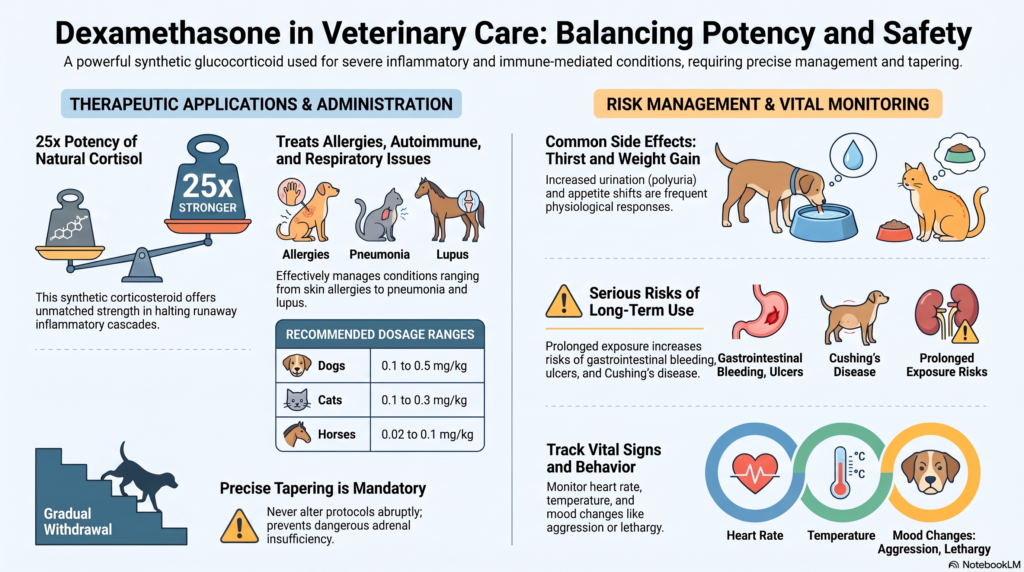
Dexamethasone is a potent synthetic corticosteroid that effectively reduces inflammation and suppresses the immune response in animals. It’s commonly used to treat conditions like allergies, autoimmune disorders, and respiratory issues. Dosages depend on the species, requiring careful monitoring for potential side effects like increased thirst and weight gain. Abrupt withdrawal can lead to adrenal insufficiency, so it’s crucial to follow your veterinarian’s guidance. To explore more about this medication and its alternatives, keep exploring your options.
KEY TAKEAWAYS
- Dexamethasone is a synthetic corticosteroid used to reduce inflammation and suppress the immune response in various animal health conditions.
- It effectively treats allergic reactions, inflammatory conditions, autoimmune disorders, and respiratory issues in animals.
- Dosages of dexamethasone vary by species, with specific recommendations for dogs, cats, and horses to ensure safe administration.
- Common side effects include increased thirst, weight gain, and potential serious reactions like gastrointestinal bleeding; monitoring is essential.
- Alternatives include prednisone and natural remedies; consulting a veterinarian is crucial for informed treatment decisions and tailored care.
WHAT IS DEXAMETHASONE AND HOW DOES IT WORK IN ANIMALS?
Dexamethasone is a powerful synthetic corticosteroid commonly used in veterinary medicine to reduce inflammation and suppress the immune response in animals. Dexamethasone (brand names Azium®, Dexasone®, Decadron®, Dexium®, Dexameth-a-Vet®, Dex-a-vet®, Maxidex®, Neofordex®, Hexadrol®) is a glucocorticoid steroid medication used to treat many inflammatory conditions, patients with adrenal gland disease, and patients with immune-mediated diseases. It can also be used to diagnose Cushing’s disease (see handout “Dexamethasone Suppression Tests” for information about this diagnostic use of dexamethasone).
Its dexamethasone mechanism involves binding to glucocorticoid receptors, which then modulate gene expression to exert profound glucocorticoid effects. This action leads to decreased production of pro-inflammatory cytokines and a reduction in immune cell activity, effectively managing conditions such as allergies, autoimmune diseases, and certain neoplasms.
By blocking inflammatory pathways and regulating immune activity, the active ingredient provides targeted therapeutic effects that help veterinarians manage a wide range of inflammatory and immune-mediated conditions while supporting better clinical outcomes for animal patients.
By understanding the intricacies of dexamethasone’s mechanism, you can leverage its efficacy in treatment protocols, ensuring ideal animal health outcomes.
The strategic use of this corticosteroid empowers you as a veterinary professional to wield control over inflammatory responses while safeguarding your patients against adverse immune reactions.
Common Conditions Treated With Dexamethasone in Veterinary Medicine
When treating various conditions in animals, veterinarians often turn to dexamethasone for its effectiveness in managing inflammation and immune responses. This potent glucocorticoid is particularly beneficial for addressing allergic reactions and various inflammatory conditions.
| Condition Type | Common Examples | Dexamethasone Role |
| Allergic Reactions | Skin allergies, asthma | Reduces immune response |
| Inflammatory Conditions | Arthritis, dermatitis | Alleviates swelling and pain |
| Autoimmune Disorders | Lupus, pemphigus | Modulates immune activity |
| Respiratory Issues | Pneumonia, COPD | Decreases inflammation in lungs |
In food-producing animals, dexamethasone may also be used as part of a broader treatment strategy when inflammation accompanies bacterial diseases, while florfenicol antibiotic cattle therapies are prescribed to target susceptible respiratory pathogens under veterinary supervision.
Dexamethasone Dosages by Animal Species
Administering the correct dosage of dexamethasone is essential for achieving ideal therapeutic outcomes in different animal species.
Understanding dexamethasone administration guidelines and species-specific considerations is key to effective treatment.
Consider the following dosages:
- Dogs: Typical dosages range from 0.1 to 0.5 mg/kg, depending on the condition being treated.
- Cats: Use about 0.1 to 0.3 mg/kg for inflammatory or allergic reactions.
- Horses: Dexamethasone dosages can vary from 0.02 to 0.1 mg/kg, especially in cases of severe inflammation.
Always tailor the dosage to the individual animal’s needs, ensuring you monitor their response closely.
Proper dexamethasone administration can greatly impact recovery and overall health.
Potential Side Effects of Dexamethasone
When considering dexamethasone for your patients, it’s essential to recognize both common side effects and potential serious adverse reactions. Dexamethasone is a synthetic corticosteroid with approximately 25 times the anti-inflammatory potency of naturally occurring cortisol. Corticosteroids such as dexamethasone are important in normal protein, carbohydrate and fat metabolism, and for their role in controlling inflammation. These drugs have both strong beneficial effects and a definite potential to cause negative side-effects. Dexamethasone commonly is used in both small- and large-animal veterinary medicine. It may be given by injection, inhalation, orally, or topically. Preparations for topical use may include other active ingredients such as antibiotics, antifungals, or miticides.
You’ll also want to be aware of the long-term health risks that may arise with prolonged use. Understanding these factors can help you make informed decisions about treatment protocols.
Common Side Effects
Although dexamethasone is an effective anti-inflammatory and immunosuppressive medication, it can lead to several common side effects that practitioners should monitor closely.
Recognizing these effects will enhance your ability to manage treatment effectively.
- Increased thirst and urination – Animals may exhibit polydipsia and polyuria, often linked to dosage considerations.
- Weight gain – You might notice an increase in appetite, leading to rapid weight gain.
- Behavioral changes – Dexamethasone interactions can cause increased agitation or lethargy in some patients.
Serious Adverse Reactions
While dexamethasone is often well-tolerated, it’s crucial to remain vigilant for serious adverse reactions that can occur, particularly in long-term use or higher doses.
Potential risks include gastrointestinal bleeding, which may arise from increased gastric acid secretion, and opportunistic infections due to immunosuppression.
Animals with pre-existing conditions, such as diabetes or kidney disease, are at heightened risk for these reactions.
Monitoring for signs of behavioral changes, excessive thirst, or lethargy can provide early indications of complications.
Additionally, abrupt withdrawal after extended treatment can lead to adrenal insufficiency, presenting further dangers.
LONG-TERM HEALTH RISKS
From a research perspective, managing a patient on dexamethasone requires a continuous balancing act between therapeutic efficacy and adverse physiological shifts. In clinical trials and field observations, we frequently note that while dexamethasone rapidly resolves target symptoms, it simultaneously induces noticeable side effects like polydipsia, polyuria, and sudden shifts in appetite. As a pet owner or caregiver, observing these behavioral and physiological changes can feel alarming.
If your pet is currently prescribed this medication, I always recommend maintaining a detailed daily log tracking their vital signs, food and water intake, energy levels, and any mood alterations such as unusual agitation or lethargy. If you notice mild allergic symptoms or side effects becoming burdensome, there is no harm in discussing potential adjustments with your primary veterinarian.
Crucially, if the treatment is addressing environmental or dietary allergies, drug administration should always be paired with active efforts to identify and eliminate the underlying triggers whenever possible. Never stop or alter a steroid protocol abruptly on your own; managing synthetic glucocorticoids requires precise tapering to prevent adrenal insufficiency and protect your animal’s internal balance.
Long-term use of dexamethasone can lead to a range of health risks that warrant careful consideration. Understanding these long-term effects is vital, especially if your animal is managing chronic conditions.
Here are three significant risks:
- Immunosuppression: Prolonged use can weaken the immune system, making your pet more susceptible to infections.
- Endocrine Disorders: It may disrupt hormonal balance, leading to conditions like Cushing’s disease or adrenal insufficiency.
- Gastrointestinal Issues: Chronic use can increase the risk of ulcers and gastrointestinal bleeding, particularly in sensitive animals.
Being aware of these potential side effects can empower you to make informed decisions about your pet’s health while managing their chronic conditions effectively.
Regular veterinary check-ups are essential for monitoring these risks.
Monitoring Your Pet’s Response to Dexamethasone
Monitoring your pet’s response to dexamethasone is essential for ensuring their well-being. Dexamethasone is most often given to dogs as an injection. Because of this, your vet will most likely oversee its administration. The 2 mg/mL injection is the only form of dexamethasone that is FDA approved for use in dogs.
Pay close attention to any behavioral changes, as these can indicate how well your pet is adjusting to the medication.
Additionally, regularly check important signs to track any physiological shifts that may arise during treatment.
Observe Behavioral Changes
As you begin administering dexamethasone to your pet, it’s important to closely observe any behavioral changes that may arise.
Dexamethasone can induce significant mood changes in animals, so vigilant monitoring is vital. Here are key behavioral observations to track:
- Increased Aggression: Watch for signs of irritability or hostility towards humans or other pets.
- Lethargy or Hyperactivity: Note any drastic shifts in energy levels, whether your pet becomes unusually tired or overly active.
- Changes in Appetite: Be aware of any fluctuations in food intake, as this can indicate discomfort or distress.
These behavioral observations will help you gauge your pet’s response to treatment and facilitate timely discussions with your veterinarian if needed.
Monitor Vital Signs
How can you guarantee your pet’s safety while they’re on dexamethasone? Consistently employing effective monitoring techniques is essential.
Begin with important sign assessment, focusing on heart rate, respiration, and temperature. An elevated heart rate can indicate stress or side effects, while rapid respiration may signal complications. Regularly check your pet’s temperature to detect fever, a potential sign of infection or adverse reaction.
Keep a detailed log of these measurements to identify trends over time. If any important signs fall outside normal ranges, consult your veterinarian immediately.
This proactive approach not only enhances your pet’s safety but also empowers you to take charge of their health during dexamethasone treatment, ensuring favorable outcomes and peace of mind.
Administering Dexamethasone: Tips for Pet Owners
Administering dexamethasone can seem intimidating for many pet owners, but with the right approach, it becomes manageable.
Here are three essential tips to guarantee effective administration:
- Follow the Dosing Schedule**: Adhering to the prescribed dosing schedule is vital for maximizing therapeutic effects while minimizing side effects.
- Choose the Right Administration Route**: Dexamethasone can be given orally or via injection. Consult your veterinarian to determine the best method for your pet.
- Monitor for Side Effects: Be vigilant for signs of adverse reactions, such as increased thirst or urination.
Reporting these to your vet will help in adjusting the treatment plan if necessary.
Alternative Medications to Dexamethasone
While dexamethasone is a powerful anti-inflammatory and immunosuppressive medication, there are alternative options available for managing similar conditions in pets. You might consider corticosteroid alternatives such as prednisone or prednisolone, which can offer similar benefits with different side effect profiles. Additionally, natural remedies like omega-3 fatty acids or turmeric may provide anti-inflammatory support without the risks associated with long-term corticosteroid use.
Depending on the diagnosis, veterinarians may also consider ketoprofen veterinary injection as an alternative or complementary option for managing pain and inflammation in cases where non-steroidal anti-inflammatory therapy is more appropriate than corticosteroid treatment.
| Alternative Medication | Mechanism of Action | Considerations |
| Prednisone | Corticosteroid | Similar side effects |
| Omega-3 Fatty Acids | Anti-inflammatory | Generally safe |
| Turmeric | Natural anti-inflammatory | Consult your vet |
These options can empower you to make informed choices for your pet’s health.

RELATED STUDIES ABOUT DEXAMETHASONE VETERINARY USE
In conclusion, dexamethasone can be a powerful ally in managing your pet’s health, but it’s crucial to wield this medication with care. Picture a skilled artist delicately painting a masterpiece; just as they balance each brushstroke, you must monitor your pet’s response and adjust dosages accordingly. With attentive observation and communication with your veterinarian, you can navigate the complexities of treatment, ensuring your furry friend thrives under your watchful eye.
Overnight dexamethasone suppression and cortisol index tests in clinically healthy horses and with crib-biting
This study investigated whether the dexamethasone suppression test (DST) and cortisol index (CI) could distinguish between clinically healthy horses and those exhibiting crib-biting, a common stereotypic behavior.
Key Findings
- No Diagnostic Distinction: Neither the DST nor the CI successfully differentiated between horses with crib-biting and non-crib-biting horses.
- Cortisol Dynamics: Serum cortisol concentrations and the CI were similar across both groups, showing no statistically significant differences.
- HPA Axis Response: All animals responded positively to the DST, suggesting that there were no apparent alterations in the HPA axis for either group under the conditions tested.
- Circadian Rhythm: Both groups demonstrated expected circadian patterns, with higher morning cortisol concentrations compared to the afternoon, regardless of their clinical condition.
Conclusions and Recommendations
The researchers concluded that the currently used CI and DST protocols are ineffective for identifying cortisol-related stress dynamics specifically associated with crib-biting. The study highlights the following needs for future research:
- Higher Precision Techniques: Implementation of more precise diagnostic methods (such as liquid chromatography-mass spectrometry) is necessary to reduce the variability associated with standard immunoassays.
- Specific Reference Values: Existing cutoff points for these tests were established for Pituitary Pars Intermedia Dysfunction (PPID) and are not appropriate for the multifactorial nature of crib-biting. New, condition-specific reference values and cutoff points must be developed.
- Comprehensive Longitudinal Studies: Future investigations should incorporate larger sample sizes, standardized sampling times aligned with stereotypic behavior episodes, and the inclusion of additional markers such as adrenocorticotropic hormone (ACTH) and corticotropin-releasing hormone (CRH).
| REFERENCE: J.J. Osorio-Cardona, V.M. Usuga-Moreno, J.R. Martínez-Aranzales, Overnight dexamethasone suppression and cortisol index tests in clinically healthy horses and with crib-biting, Journal of Equine Veterinary Science, Volume 151, 2025, 105628, ISSN 0737-0806, https://doi.org/10.1016/j.jevs.2025.105628. (https://www.sciencedirect.com/science/article/pii/S0737080625002862) |
Dexamethasone treatment does not alter mortality but reduces pulmonary pathology in Nipah virus-infected Syrian hamsters
This study evaluated the therapeutic potential of dexamethasone, both as a monotherapy and in combination with the antiviral remdesivir, for treating Nipah virus (NiV) infection using a Syrian hamster model. Given that NiV causes severe respiratory inflammation similar to severe COVID-19, where dexamethasone has proven beneficial, researchers tested whether this corticosteroid could mitigate NiV-induced disease severity.
Key Findings
- Pulmonary Pathology: Treatment with an anti-inflammatory dose ($0.2\text{ mg/kg}$) of dexamethasone reduced pulmonary pathology and decreased the presence of viral antigen in the lungs of NiV-infected hamsters.
- Survival Rates: Despite the reduction in lung pathology, dexamethasone monotherapy did not improve survival rates following NiV challenge.
- Impact of Immunosuppressive Dosing: A higher, immunosuppressive dose of dexamethasone ($2\text{ mg/kg}$) showed no beneficial effect on NiV infection.
- Combination Treatment: While remdesivir monotherapy improved survival in infected hamsters, the combination of dexamethasone and remdesivir negated the survival benefit observed with remdesivir alone.
- Inflammatory Response: Dexamethasone and remdesivir monotherapies reduced the expression of proinflammatory cytokines in the lungs; however, this reduction was not observed with the combined treatment.
- Virus Replication: Dexamethasone did not increase virus replication in tissues or viral shedding from the respiratory tract.
Conclusions and Recommendations
The study concludes that although anti-inflammatory doses of dexamethasone reduced pulmonary pathology in the NiV-infected Syrian hamster model, it failed to improve overall survival. Furthermore, the findings indicate that combining dexamethasone with remdesivir may be detrimental, as the combination reduced the survival benefits otherwise provided by remdesivir. Consequently, the researchers caution against the clinical use of dexamethasone in NiV patients, particularly in combination with other antivirals, in the absence of preclinical validation.
| REFERENCE: Kerry Goldin, Bridget Brackney, Tessa Lutterman, Brandi N. Williamson, Manmeet Singh, Christopher Winski, Kathleen Cordova, Meaghan Flagg, Emmie de Wit, Dexamethasone treatment does not alter mortality but reduces pulmonary pathology in Nipah virus-infected Syrian hamsters, Antiviral Research, Volume 242, 2025, 106263, ISSN 0166-3542, https://doi.org/10.1016/j.antiviral.2025.106263. (https://www.sciencedirect.com/science/article/pii/S0166354225001895) |
Combined Toxicological Effects of Acetylsalicylic Acid and Dexamethasone on Mytilus galloprovincialis
This study investigated the multi-level biological responses of the Mediterranean mussel (Mytilus galloprovincialis) to single and combined exposure to Acetylsalicylic Acid (ASA, 0.1~\mu g/L) and Dexamethasone (DESA, 4ng/L) over a 14-day period. As pharmaceutical contaminants often occur as “chemical cocktails” in coastal ecosystems, the study aimed to assess whether their co-occurrence induces synergistic or additive toxicological effects not observed with individual compounds.
Key Findings
- Detoxification & Efflux Modulation: Combined exposure triggered a distinct molecular response, characterized by the significant downregulation of Phase I (cyp4y) gene expression and a potent, highly significant upregulation of Phase II (GST activity) and Phase III (abcb transporter) detoxification mechanisms.
- Oxidative Stress & Antioxidant Response: The combination of ASA and DESA caused a pervasive increase in antioxidant enzymatic activities (SOD, CAT, and GPx). However, this response was overwhelmed, leading to a significant decrease in Total Antioxidant Capacity (TAC) and a concurrent increase in lipid peroxidation (LPO).
- Inflammation & Apoptosis: Co-exposure induced pro-inflammatory signaling (NF-kB activation) and activated apoptotic pathways, evidenced by the significant up-regulation of Caspase-2 and Caspase-8.
- Neurotoxicity & Metabolic Strain: The combined mixture inhibited Acetylcholinesterase (AChE) activity and forced a metabolic shift, characterized by increased mitochondrial respiratory potential (ETS activity) and the depletion of glycogen reserves to fuel the compensatory stress response.
- Histopathological Damage: Molecular and biochemical stress translated into severe structural decay in the primary target organs: lamellar hyperplasia and haemocytic infiltration in the gills, and tubular atrophy with epithelial loss in the digestive gland.
Conclusions and Recommendations
Principal Component Analysis (PCA) confirmed that the co-exposure group represents a distinct toxicological phenotype characterized primarily by oxidative destabilization and apoptotic induction, which significantly exceeds the impact of individual exposures. The study concludes that the combined presence of non-steroidal anti-inflammatory drugs and glucocorticoids at environmentally relevant concentrations poses a cumulative threat to marine homeostasis. These findings underscore the necessity of incorporating pharmaceutical mixture toxicity and multi-level biomarker integration into environmental risk assessment frameworks for coastal environments.
| REFERENCE: Antonella Iaconis, Gianluca Antonio Franco, Graziano Vinci, Federica Davì, Francesca Inferrera, Nicla Tranchida, Roberta Fusco, Marika Cordaro, Davide Di Paola, Multi-level biomarker responses in the marine mussel Mytilus galloprovincialis exposed to a mixture of Dexamethasone and Acetylsalicylic Acid, Comparative Biochemistry and Physiology Part C: Toxicology & Pharmacology, Volume 306, 2026, 110553, ISSN 1532-0456, https://doi.org/10.1016/j.cbpc.2026.110553. (https://www.sciencedirect.com/science/article/pii/S1532045626001110) |
CONCLUSION
Reflecting on both clinical research and daily veterinary practice, dexamethasone remains one of our most indispensable tools, yet its success ultimately hinges on post-prescription monitoring and thoughtful long-term planning. As recent scientific literature highlights, corticosteroid therapy is rarely a one-size-fits-all solution, and its interactions across complex physiological systems from endocrine stability to cellular stress responses require careful, ongoing oversight.
Looking forward, the field of animal health continues to evolve rapidly. We are constantly refining how we utilize potent synthetic therapeutics while exploring complementary options, such as targeted nutraceuticals, natural anti-inflammatories, or selective non-steroidal alternatives when long-term steroid use presents too high a risk profile.
My core advice to every pet parent and caregiver is to view treatment as a dynamic partnership between yourself, your veterinary care team, and the active compounds being introduced. By pairing rigorous scientific awareness with attentive, compassionate observation at home, you can navigate complex medical diagnoses safely and ensure your animals enjoy the highest possible quality of life.